A blocked Iranian flight is behind latest spiral of violence between Saudis and Houthis
CAIRO, Egypt (AP) — A volley of fire between the Iranian-backed Houthis and Saudi Arabia has threatened to upend a 2022 truce in Yemen and open another front in the already expanding war in the Middle East after the collapse of the fragile ceasefire between the US and Iran.
“Yemen today faces a greater risk of renewed large-scale conflict than at any point since the UN-brokered truce of April 2022, ” UN envoy Hans Grundberg warned.

The escalation, he said, risks “jeopardizing the gains of the 2022 truce… while also drawing the country into a broader regional confrontation, with devastating consequences for its people.”
Grundberg said he has engaged in intensive talks with Yemeni parties and regional governments to avert further escalation.
The tit-for-tat attacks started July 13 with a Saudi airstrike that hit the runway of the airport in Yemen’s capital, Sanaa, preventing the landing of an Iranian flight carrying a high-ranking Houthi delegation.
Flying a flight without prior permission from the Saudi-led coalition — a decade-long, war-related requirement — was an attempt by the Houthis to establish a new reality on the ground, challenging the coalition’s control over Yemeni airspace.
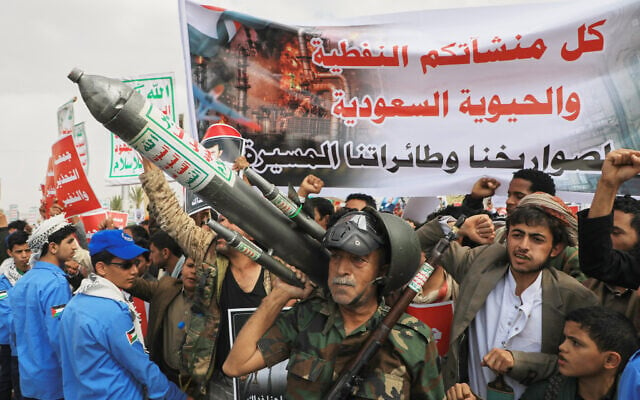
The rebels, apparently emboldened by the fallout of the US-Israeli war against Iran, sought to gain political and economic concessions from Saudi Arabia, and insisted on lifting the Saudi blockade on territories they control in Yemen.
They turned down an offer by the Saudi-backed internationally recognized government in Yemen to facilitate the Houthi delegation’s travel to Sanaa on a non-Iranian airline, said government and Houthi officials who spoke on condition of anonymity to discuss the talks.
The Houthis proceeded with the flight operated by Iranian-privately owned, US-sanctioned Mahan Air, forcing the Saudi-led strike that disabled the Sanaa airport.
The Saudi-led coalition eventually allowed the flight to land in the Houthi-controlled city of Hodeida, as part of Omani-led effort to avert an escalation, said a Gulf official, who demanded anonymity to discuss the matter.
Yasmeen al-Eryani, an analyst at the Sana’a Center for Strategic Studies, argued that the Mahan Air flight saga is part of Iran’s escalation of the war.
“By activating the Yemeni front, Tehran reiterates the strategic value of that pressure lever and signals that attacks on Iran can produce costs elsewhere, particularly for Saudi Arabia and the Gulf,” she said.
Following the Sanaa airport strike, the Houthis attacked the Abha airport in southwestern Saudi Arabia and announced a blockade on Saudi shipping in the Red Sea. They attacked Saudi vessels as well as oil facilities inside the kingdom, adding further disruption to the global economy.
The Saudi-led coalition responded with strikes on Hodeida and Kamaran, Yemen’s largest island in the Red Sea. It has also reinforced Yemeni troops along the front lines in Yemen to launch a ground offensive on Houthis, the Yemeni officials said.
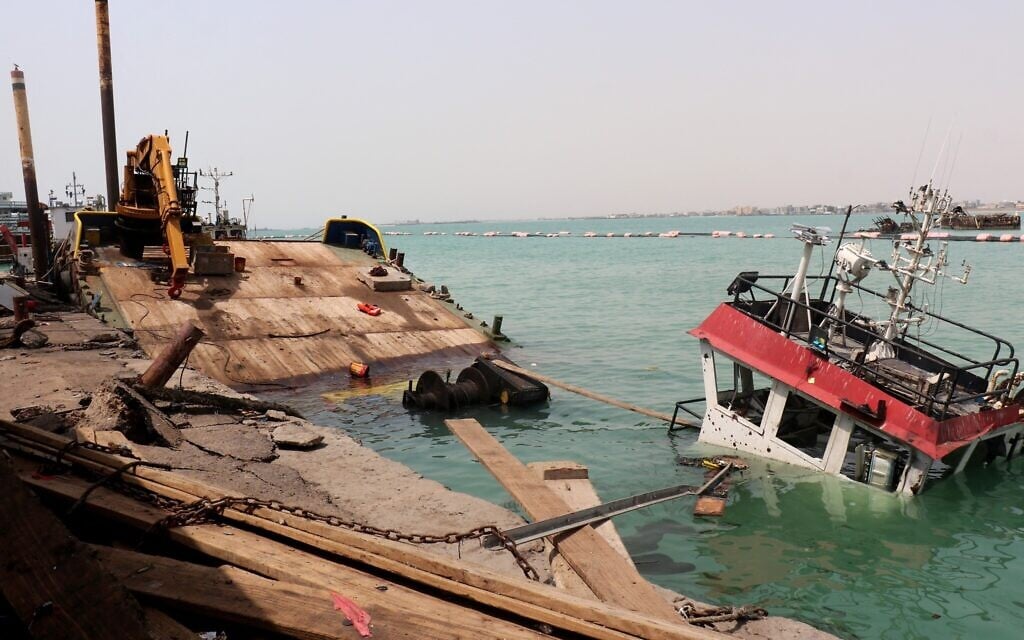
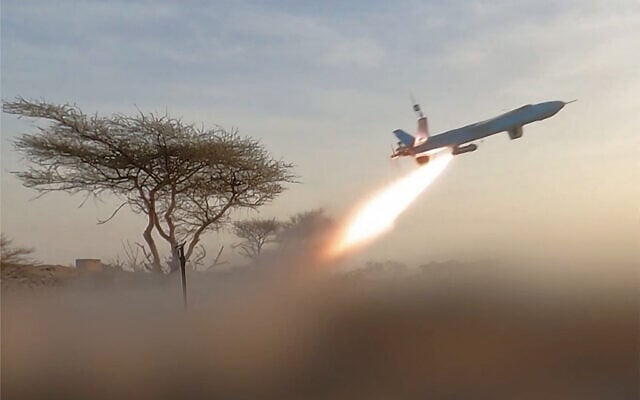
Anticipating a ground offensive, the rebels launched dozens of missiles and drones on military camps in central and southern Yemen, which killed dozens of troops and civilians. They also attacked the Red Sea city of Mokha, severely damaging the city’s crucial port, which remains under the control of the internationally recognized government.
Reportedly, Ansar Allah (Houthi rebels) in Yemen have launched a large attack on the port of Mocha, which is controlled by a Saudi-led coalition of mercenaries in Yemen. pic.twitter.com/0PaPUMCNwC
— Tomthunkit™ (@TomthunkitsMind) August 10, 2026
In recent years, the Houthis have faced growing internal challenges that stem from deteriorating living conditions in their territories.
“A prolonged situation of ‘no war, no peace’ has raised public expectations for tangible economic and living improvements, generating growing internal pressure on the group,” Salah Ali Salah, a Yemeni researcher, said.
They sought to turn the blame on Saudi Arabia for its air and naval blockade on their territories and framed the escalation as an extension of the Yemen war, rather than a new front in the Iran war, he said.
The blockade was part of the war efforts by the Saudi-led coalition that entered the conflict in March 2015, six months after the Houthis descended from their northern stronghold and took control of Sanaa, forcing the government to flee to the south then to Saudi Arabia.
The war has turned Yemen into one of the world’s worst humanitarian crises, and people living in the Houthi-held territories are the most hungry.
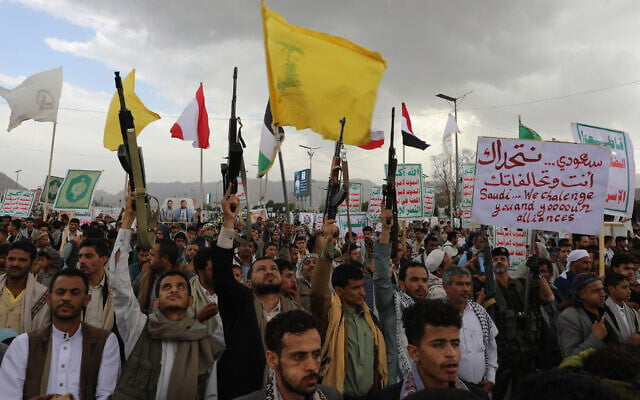
The conflict eventually deteriorated into a stalemate and the warring parties reached a truce in April 2022 that ended major fighting across the country and stopped Houthi missile and drone attacks on Saudi Arabia and the United Arab Emirates, which quit the coalition over a year ago.
The Omani back-channel talks focused on averting the collapse of the 2022 truce, but have yet to produce a compromise.
Ahmed Nagi, a senior Yemen analyst at the International Crisis Group, said the escalation reflected a broader shift in Houthi priorities, from attempting to extract confidence-building measures, such as payment of salaries to civil servants in Houthi-controlled areas, to clearly casting the conflict as being about Yemen’s sovereignty over its airspace, ports and territorial waters.
“By taking direct action to reassert this view, the Houthis have raised the political stakes and made future compromise considerably more difficult,” he said.

As a multimedia journalist, my job is to take the quality, fact-based journalism produced by The Times of Israel newsroom and make it accessible across every platform — from Instagram posts to podcasts to short-form videos.
This is how many, especially young people, consume news these days. But misinformation is rampant on social media. Our team at ToI produces accurate, responsible short-form reporting on Israel and the Jewish world.
If you believe in the importance of factual social media journalism, please consider joining our reader support group, The Times of Israel Community. Your financial support is essential to sustain responsible multimedia reporting.
— Gabriella Jacobs, multimedia journalist

We’re really pleased that you’ve read X Times of Israel articles in the past month.
That’s why we started the Times of Israel – to provide discerning readers like you with must-read coverage of Israel and the Jewish world.
So now we have a request. Unlike other news outlets, we haven’t put up a paywall. But as the journalism we do is costly, we invite readers for whom The Times of Israel has become important to help support our work by joining The Times of Israel Community.
For as little as $6 a month you can help support our quality journalism while enjoying The Times of Israel AD-FREE, as well as accessing exclusive content available only to Times of Israel Community members.
Thank you, David Horovitz, Founding Editor of The Times of Israel


A recent surge in hostilities between Iranian-backed Houthis and Saudi Arabia threatens to unravel the 2022 UN-brokered truce in Yemen, potentially escalating the conflict into a broader regional confrontation. The current escalation began on July 13 when a Saudi airstrike disabled Sanaa airport, preventing an Iranian flight carrying a Houthi delegation from landing. This flight, operated without prior coalition permission, was seen as a Houthi attempt to challenge Saudi control over Yemeni airspace and secure political and economic concessions, including lifting the blockade on Houthi-controlled territories. UN envoy Hans Grundberg warned that "Yemen today faces a greater risk of renewed large-scale conflict than at any point since the UN-brokered truce of April 2022."
- Following the Sanaa airport strike, Houthis attacked Abha airport in Saudi Arabia, announced a Red Sea shipping blockade, and targeted Saudi vessels and oil facilities.
- The Saudi-led coalition retaliated with strikes on Hodeida and Kamaran and reinforced Yemeni troops for a potential ground offensive.
- Houthis launched missiles and drones on military camps in central and southern Yemen, killing dozens, and severely damaged the port of Mokha.
- Analysts suggest this escalation reflects Iran's strategy to create leverage and a shift in Houthi priorities towards asserting sovereignty over Yemeni airspace and waters, making future compromises more difficult.
© All rights to the original article belong to the source. Din Online shows a headline, an excerpt and a link only. The objectivity rating is computed automatically and is an estimate only.
Discussion
No comments yet — be the first to comment.