A Gaza stabilization force could end up stabilizing Hamas
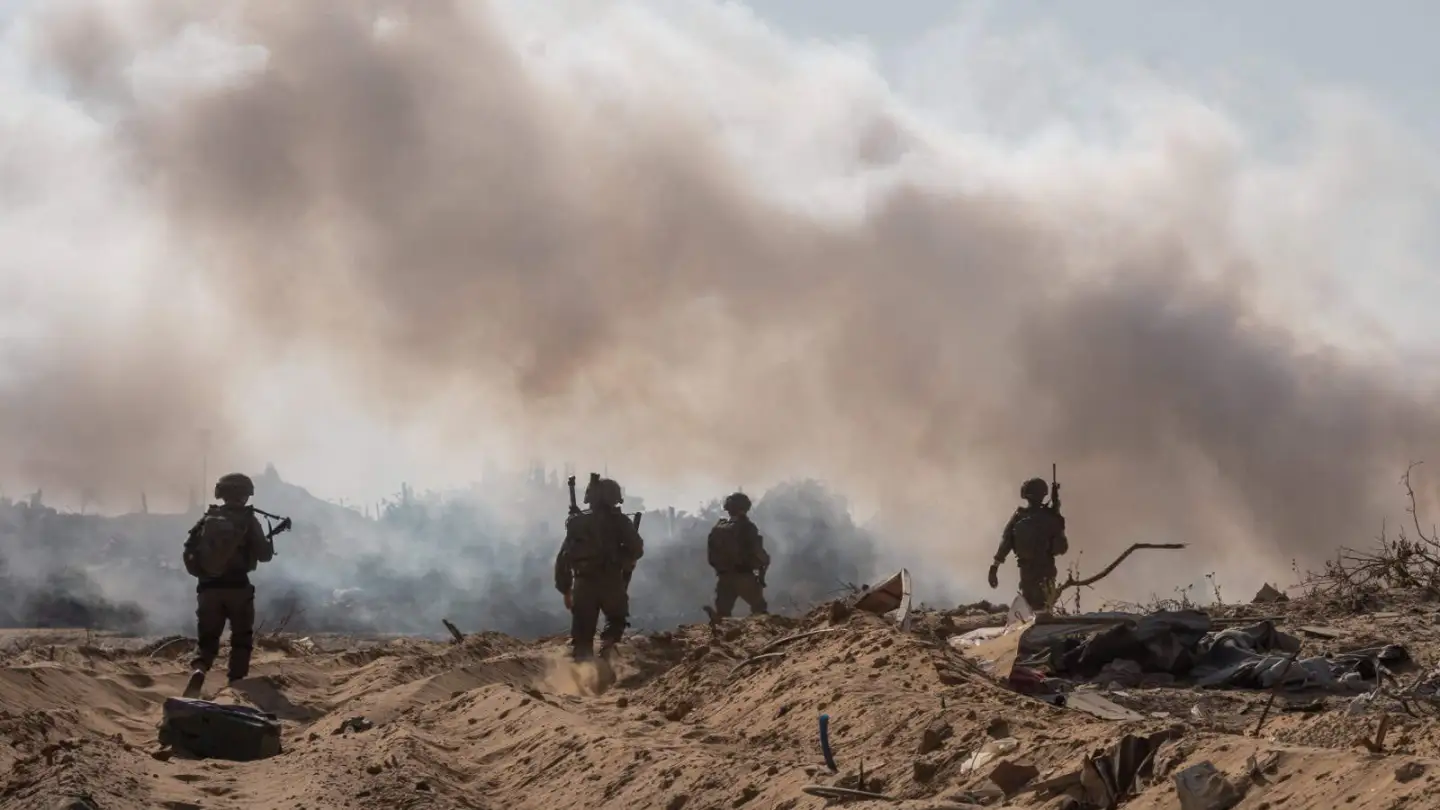

The Israeli cabinet’s approval of an International Stabilization Force for Gaza is being presented as a practical step toward the “day after.” The force is supposed to support demilitarization, assist vetted Palestinian police, secure humanitarian aid and eventually help enable further Israeli withdrawals based on verified progress.
Yet the central question remains unanswered: Who will compel Hamas to disarm, and what will happen when it refuses?
The latest declarations expose the gap. U.S. President Donald Trump announced an agreement for the complete disarmament of Hamas and other armed groups and said Israel was pleased with it. Hamas, however, described a broader framework whose implementation depends on Israel first fulfilling earlier commitments, while avoiding an unequivocal commitment to begin disarming immediately.
Former senior Fatah official Mohammed Dahlan then said Jared Kushner had assured him that Israel would halt its attacks in Gaza starting that Sunday, only to walk the claim back within hours as Israeli strikes continued through the weekend.
Whether or not all these understandings are implemented, they reveal a dangerous ambiguity over sequence: Israel may be expected to restrict its freedom of action before Hamas has surrendered its weapons, tunnels and coercive power.
One can argue that the stabilization force itself is intended to implement demilitarization and that its deployment therefore does not formally violate the framework. Legally, that may be correct. Strategically, it misses the point. A process should not advance before the parties define who can enforce its central condition, how compliance will be measured and what consequences will follow noncompliance.
Hamas has controlled Gaza since 2007. For nearly two decades, it has prevented meaningful political alternatives from developing and crushed potential challengers. There is no reason to assume that, after retaining its coercive power through a devastating war, it will voluntarily allow a technocratic committee or a new police force to take away its real authority.
Hamas may be willing to relinquish formal responsibility for ministries, sewage, electricity, hospitals and food distribution. These are costly and politically damaging responsibilities that it would prefer the international community to finance and administer.
But it will seek to retain what truly determines who rules: weapons, tunnels, operatives, intelligence networks, intimidation and the ability to veto decisions by force. Transferring civilian responsibility is not necessarily a transfer of power. It may simply improve the Hamas model: Others will pay and administer, while Hamas continues to rule from behind the scenes.
Gaza has already demonstrated how a well-designed international mechanism can fail when confronted by systematic deception. After Operation Protective Edge in 2014, Israel, the Palestinian Authority and the United Nations established the Gaza Reconstruction Mechanism to facilitate rebuilding while tracking construction materials and preventing dual-use supplies from reaching Hamas.
As head of COGAT’s Operations Branch at the time, I dealt with this mechanism daily. I saw how Hamas and the system around it learned to exploit it. Needs were inflated during data entry and approval, allowing quantities greater than those actually required to be authorized. High-quality materials entering from Israel were diverted to the black market and terrorist infrastructure. In some cases, cheaper materials smuggled from Egypt were used to repair homes, while superior materials were redirected elsewhere.
International organizations produced databases, tables and monitoring procedures. Hamas produced a different reality. The mechanism functioned administratively but failed to achieve its security purpose.
That experience is directly relevant to the new stabilization force. The danger is not limited to what the force may fail to enforce. Its very presence could unlock a civilian administration, expanding aid programs and large-scale reconstruction before Hamas has lost its military and coercive capabilities.
Every project will create budgets, institutional interests and pressure not to “destroy progress.” Every violation will be described as temporary. Every delay will be justified as necessary to give the process more time. Eventually, enforcement itself will be framed as a risk to the force, to reconstruction, to the entire framework. A mechanism intended to condition reconstruction on demilitarization could gradually become a reason to postpone enforcement instead.
The experience of UNIFIL in Southern Lebanon provides an additional warning. On paper, the United Nations force was supposed to help create an area free of weapons and armed forces other than those of the Lebanese state. In practice, Hezbollah spent years building military infrastructure within UNIFIL’s area of operations and, in some cases, close to its positions.
UNIFIL did not become Hezbollah’s partner by intent. But restrictive rules of engagement, dependence on the Lebanese Armed Forces, fear of confrontation and the desire to preserve the mission created incentives not to see too much or confront too forcefully. Institutional helplessness became routine, and that routine acquired international legitimacy.
The real test in Gaza will come when the stabilization force is asked to enter a building Hamas declares off-limits, confiscate weapons, arrest a commander or expose a tunnel beneath a populated neighborhood. Will contributing countries risk their soldiers to dismantle Hamas’s military power? Or will they report a “temporary difficulty,” refer the matter to a coordination mechanism and continue the mission?
If the answer is the latter, this will not be a demilitarization force. It will become a Hamas-preservation force.
The operational rules should have been established before the force’s entry was approved. Who may search, arrest and confiscate weapons? How will tunnels and weapons-production sites be destroyed? What are the measurable milestones? Who independently verifies compliance? What happens when Hamas refuses?
No further Israeli withdrawal and no large-scale reconstruction should occur without proven progress in dismantling Hamas’s military infrastructure and command networks. Israel must retain full intelligence access and freedom of action if the force is unable or unwilling to carry out its mission. Restrictions on Israeli operations cannot precede verified and irreversible steps by Hamas.
Israel is already starting from a position of weakness. Hamas has not fulfilled the central condition, yet the system is moving toward the next stage. Once the force enters, a civilian administration is established and reconstruction begins, international pressure to continue will increase, while the willingness to stop or reverse course will decline.
Israel knows this trap. The first violation is described as minor or temporary. Israel is then asked to allow more time. Later, it is warned that enforcement will endanger the agreement, the international force and the reconstruction effort. In the end, the agreement survives on paper while the threat survives on the ground.
A stabilization force can be useful only if it enters Gaza to dismantle Hamas’s military power, not to learn how to live alongside it. If Israel accepts its deployment while Hamas remains armed and continues to rule in practice, it is not building the day after. It is giving Hamas time to rebuild for the next round.



Get the latest updates in our WhatsApp group.







An international stabilization force in Gaza, approved by the Israeli cabinet, risks becoming a shield for Hamas's continued rule if deployed before the group is disarmed. The article argues that while the force is intended to support demilitarization, secure aid, and enable Israeli withdrawals, it lacks a clear mechanism for compelling Hamas to disarm. The author, drawing on experience with the Gaza Reconstruction Mechanism after Operation Protective Edge in 2014, highlights how Hamas exploited international systems to divert materials for its own purposes. Similarly, the presence of a stabilization force could inadvertently facilitate Hamas's control by expanding aid and reconstruction without genuine demilitarization.
"A mechanism intended to condition reconstruction on demilitarization could gradually become a reason to postpone enforcement instead."
The article warns that without clear operational rules on searching, arresting, and confiscating weapons, and without measurable milestones and consequences for non-compliance, the force could become a "Hamas-preservation force." It emphasizes that Israel must retain intelligence access and freedom of action if the force proves unwilling or unable to fulfill its mission, and that restrictions on Israeli operations should not precede verified, irreversible steps by Hamas.
© All rights to the original article belong to the source. Din Online shows a headline, an excerpt and a link only. The objectivity rating is computed automatically and is an estimate only.
Discussion
No comments yet — be the first to comment.