A sunken ship raises an Israeli divide from the depths
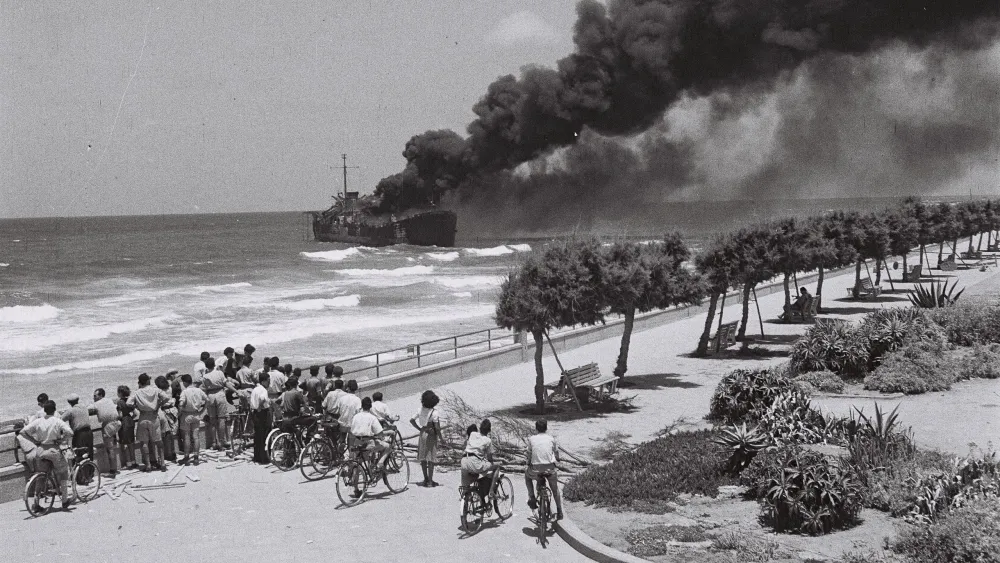
Seventy-eight years after it was sunk in June 1948, the vessel Altalena has been located at a depth of 503 meters off Israel’s Mediterranean coast, apparently intact. The discovery has returned one of the most contested episodes of Israel’s founding to public debate, but its importance lies in more than the recovery of a historical wreck. It offers an opportunity to reconsider not only what happened in 1948, but how one interpretation became embedded in Israeli collective memory, and how the power to define the past can shape the political categories through which a society understands its present.Most Israelis were raised on a relatively straightforward account: The State of Israel had just been established, the Israeli Defense Forces had been created, and Zionist leader David Ben-Gurion faced the task of establishing a single sovereign authority. The paramilitary Irgun, under the command of Menachem Begin, brought a ship carrying immigrants and…

The recently discovered wreckage of the Altalena, sunk in June 1948, has reignited debate about a pivotal moment in Israel's founding. Located at a depth of 503 meters off Israel’s Mediterranean coast, the ship's discovery offers an opportunity to re-examine the historical narrative surrounding the incident.
- The traditional account, championed by David Ben-Gurion, portrayed the shelling of the Altalena as a necessary act to establish a single sovereign authority and army, with Ben-Gurion later calling the cannon used against the ship the “holy cannon.”
- However, a more nuanced perspective highlights that the Irgun, led by Menachem Begin, had already agreed to integrate into the IDF, with the dispute primarily concerning the allocation of weapons, including those for Jerusalem and former Irgun battalions.
- Sixteen Irgun members and three IDF soldiers died in the confrontation, during which Begin reportedly instructed his men not to retaliate.
- The article argues that the prevailing political establishment after 1948, particularly Ben-Gurion's Mapai (later Labor Party), significantly influenced the historical narrative, associating one political camp withAutomatically generated summary based on the original article; quotes are from the source.
© All rights to the original article belong to the source. Din Online shows a headline, an excerpt and a link only. The objectivity rating is computed automatically and is an estimate only.
Discussion
No comments yet — be the first to comment.