A US government map of Africa mislabeled every country at global AIDS conference
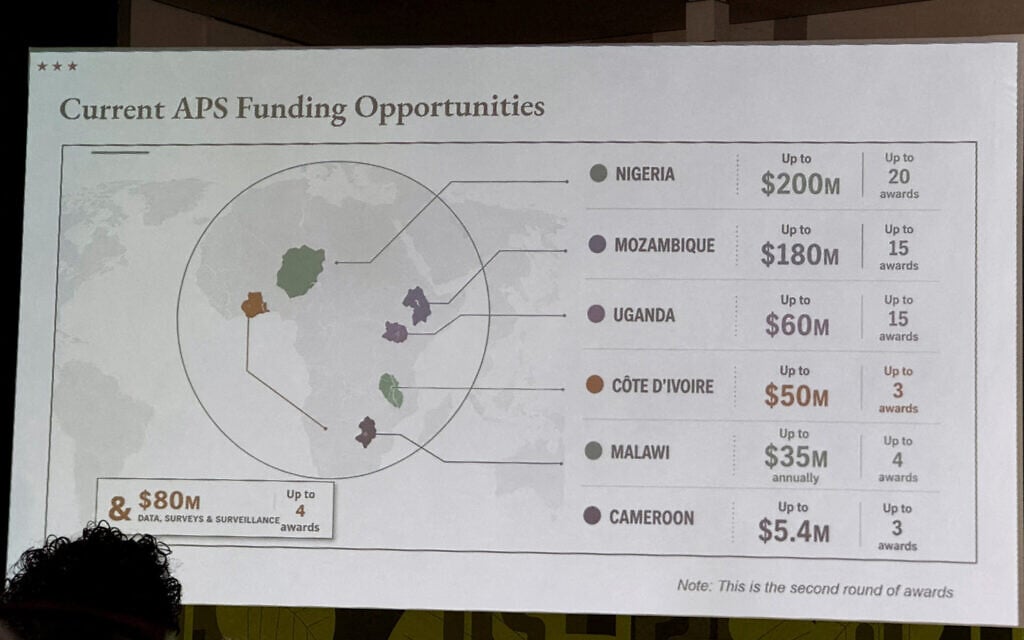
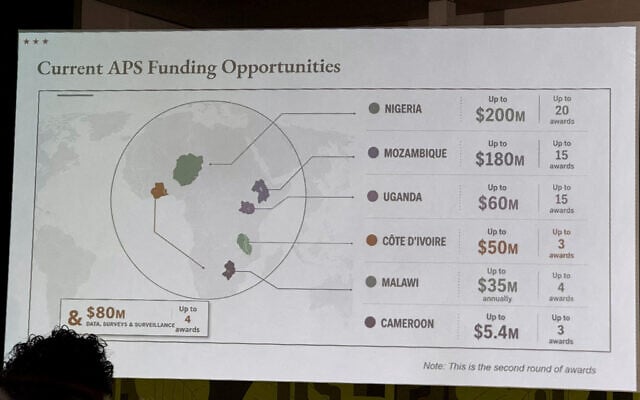
REUTERS — A US government map of Africa mislabeled every country during a State Department presentation at a global conference taking place in Brazil this week, causing a stir among attendees who took screenshots and posted them online.
Reuters viewed a video of the presentation given at the AIDS 2026 conference in Rio de Janeiro, which shows the errant map displayed halfway during a presentation about the State Department’s new health agreements.
A Reuters analysis found the image of the map included in the presentation contained an artificial intelligence watermark that signals it was made with OpenAI tools. The company said it was investigating the report.
The State Department said it took “full responsibility” for the confusion caused and that the map had been produced by a team member who hastily changed the slide deck before the event.
The map showed Nigeria, where the US currently has several hundred troops deployed, as landlocked in the Sahara Desert. Mozambique, which is in southeastern Africa, was relocated to the Horn of Africa, while Ivory Coast in West Africa was placed on the other side of the continent.
Screenshots of the map first appeared in a Substack post by AIDS expert Emily Bass and were widely shared on LinkedIn, with one post garnering some 40,000 views.
“Whoever created and approved this slide did not know where countries in Africa are and did not care to check their work,” wrote Matt Petit, who focuses on AI and geopolitics at the Atlantic Council, in the post.
In a statement, the State Department said: “We take full responsibility for the confusion and misrepresentation it caused for attendees, including our African partners.”
The speaker at the conference was Jeff Graham, the top US health envoy who oversees an initiative known as the President’s Emergency Plan for AIDS Relief, or PEPFAR. He did not reply to requests for comment.
The State Department said the discussions at the conference were “substantive and constructive” despite the map and that it remains committed to fighting AIDS with real results.
The Trump administration’s decision last year to pause funding pending a review disrupted aid programs worldwide but PEPFAR’s core work such as the provision of life-saving drugs has largely resumed.
The US is scaling back other areas of its spending including on prevention and surveillance, and plans to fully phase out the program in South Africa.
The war with Iran has been draining for all of us in Israel. But when I heard about a high casualty incident – ballistic missile impacts in Arad and Dimona that left nearly 200 people wounded – I drank a cup of coffee, packed a bag, and headed south.
There, I spoke with Shilgit, the head of an after-school program for underprivileged youth. Standing outside her destroyed center, Shilgit said it was a miracle that no children were hurt and spoke about the community coming together in the hours since.
As a Times of Israel reporter, I’m committed to telling stories of resilience like Shilgit’s. But my colleagues and I can't do this alone. If you value work like this, please consider joining our reader support group, The Times of Israel Community. Your financial support is essential to keep real human reporting like this going.
— Stav Levaton, military reporter

We’re really pleased that you’ve read X Times of Israel articles in the past month.
That’s why we started the Times of Israel – to provide discerning readers like you with must-read coverage of Israel and the Jewish world.
So now we have a request. Unlike other news outlets, we haven’t put up a paywall. But as the journalism we do is costly, we invite readers for whom The Times of Israel has become important to help support our work by joining The Times of Israel Community.
For as little as $6 a month you can help support our quality journalism while enjoying The Times of Israel AD-FREE, as well as accessing exclusive content available only to Times of Israel Community members.
Thank you, David Horovitz, Founding Editor of The Times of Israel








During a State Department presentation at the AIDS 2026 conference in Rio de Janeiro, a US government map of Africa mislabeled every country, causing significant online stir. The erroneous map, which included an AI watermark suggesting it was made with OpenAI tools, was displayed during a discussion on new health agreements. The State Department took "full responsibility" for the error, stating it was produced by a team member who hastily updated the slide deck. The map incorrectly depicted countries like Nigeria as landlocked and misplaced Mozambique and Ivory Coast. Screenshots of the map, initially shared by AIDS expert Emily Bass, garnered widespread attention. The State Department affirmed its commitment to fighting AIDS despite the incident, noting the discussions at the conference were "substantive and constructive."
© All rights to the original article belong to the source. Din Online shows a headline, an excerpt and a link only. The objectivity rating is computed automatically and is an estimate only.
Discussion
No comments yet — be the first to comment.