After centuries in India, the last Cochin Jews try to keep their history alive
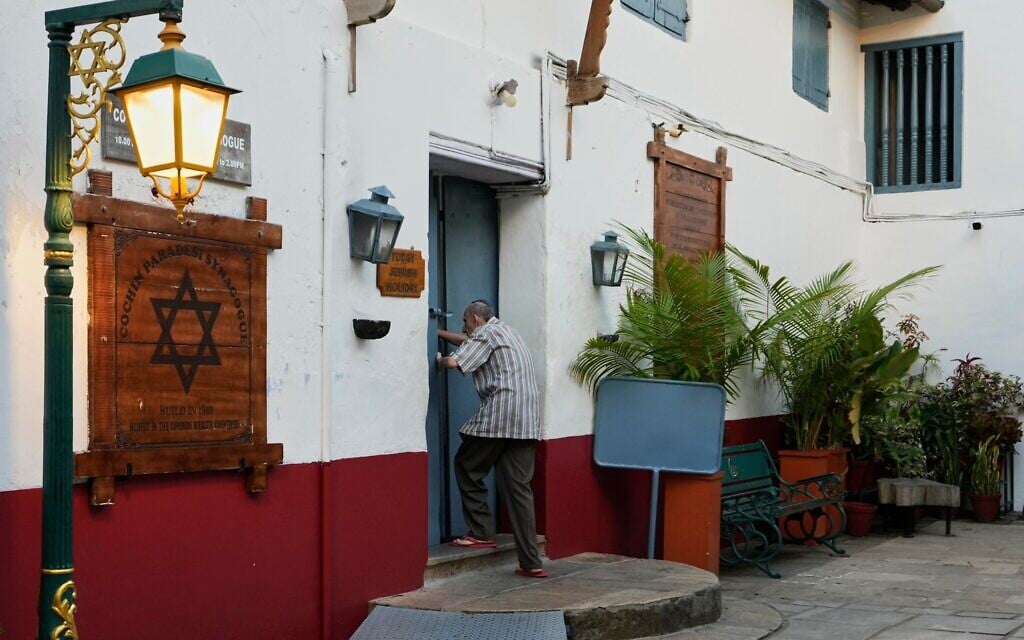
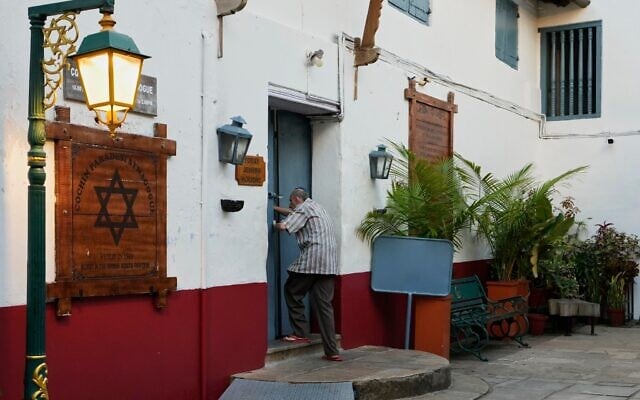
KOCHI, India (AP) — As the sun set over Kochi’s historic Jew Town neighborhood, Keith Hallegua donned a gray kippah and began a solitary walk to the synagogue at the end of his cobbled street.
It was Shavuot, the Jewish holiday commemorating God giving the Torah to Moses. Hallegua reached the 458-year-old Paradesi Synagogue where he knew he would pray alone — without a minyan, the quorum of 10 males required for a communal service there.

Hallegua is the synagogue’s last local congregant — the only Jew left in Jew Town.
Across the city at the centuries-old Kadavumbagam Synagogue, Elias “Babu” Josephai remembered the “chukkunda” — fried dough balls his grandmother used to make for Shavuot.
“It wasn’t much,” he said, wiping away tears. “But at that time, it was everything.”
They ache for what’s already gone and work to preserve what’s left.
In the 1950s, much of the Jewish community in Kochi (historically known as Cochin), a seaport on India’s southwestern coast, immigrated to Israel, leaving behind their homes, synagogues and cemeteries.
Hallegua and Josephai stayed. Now they represent the final chapter for the Cochin Jews who have lived peacefully — and without fear of antisemitism — for centuries alongside Hindu, Muslim and Christian neighbors. There are now fewer than 5,000 Jewish citizens in all of India, the world’s most populous country.
But the Cochin Jewish community’s complex history includes both religious freedom and internal divisions over class and colorism. Hallegua is a Paradesi Jew, the once-dominant group whose fair-skinned, Sephardic ancestors from Spain and Portugal fled the Spanish Inquisition in the 16th century. They brought enslaved people with them, and their freed descendants, known as the Meshuchrarim Jews, were relegated to a lower social status and had to fight for religious equality.
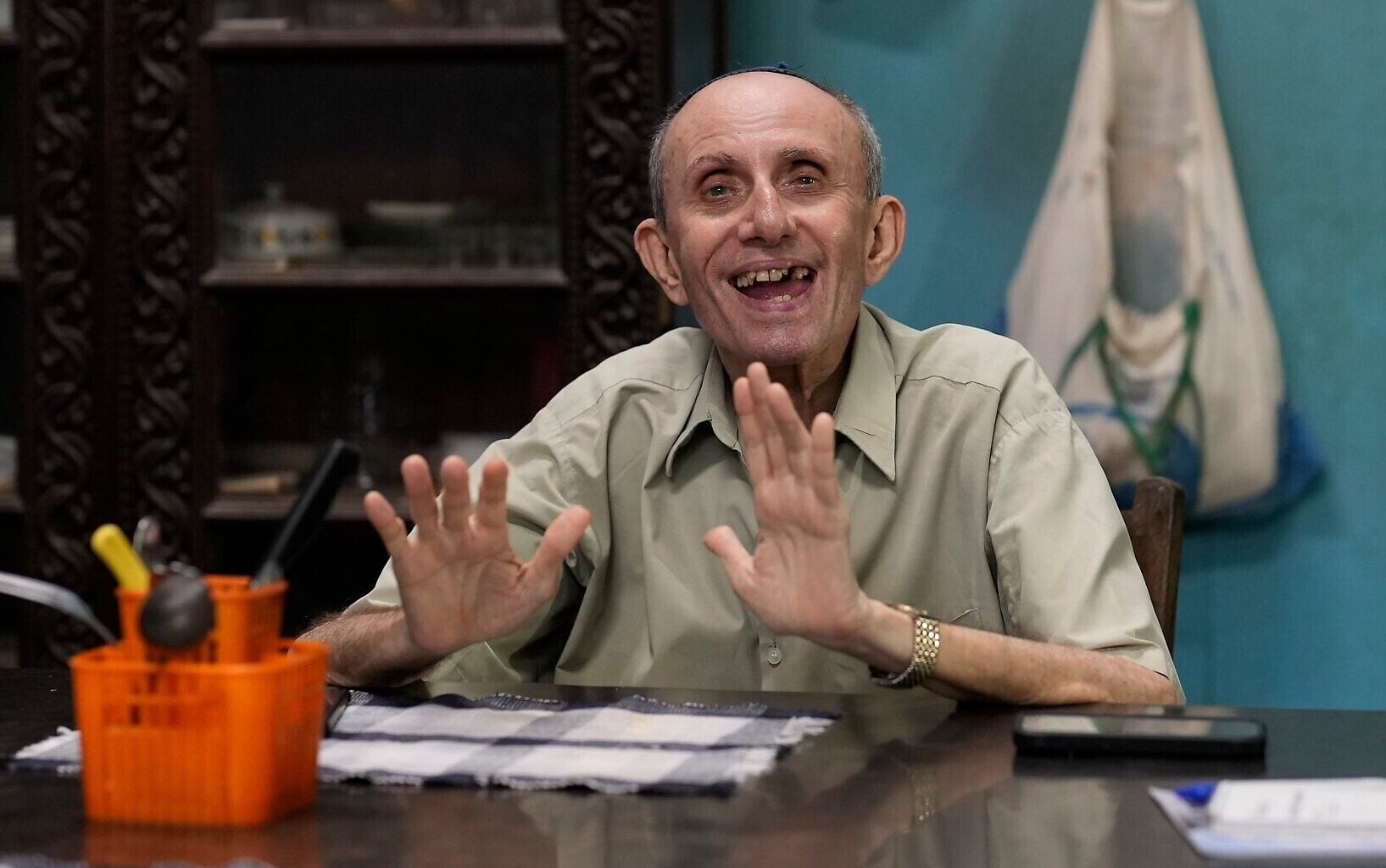
Josephai is a Malabari Jew. The group’s darker-skinned ancestors trace their roots back more than 2,000 years to King Solomon’s time. They also faced past discrimination from the Paradesi community. While these divisions didn’t survive after the Cochin Jews migrated to Israel and elsewhere, the bitter remnants still haunt the community’s legacy.
Though Hallegua and Josephai rarely meet, both are intensely proud of their ancient heritage.
Josephai spent years resurrecting Kadavumbagam Synagogue, the last functioning Malabari house of worship. Services are rare; it’s up to Josephai to light the lamps and keep the prayers going, often alone. He weeps for the past, when the synagogue was filled with people, prayers and songs.
“That will never come back,” he said.
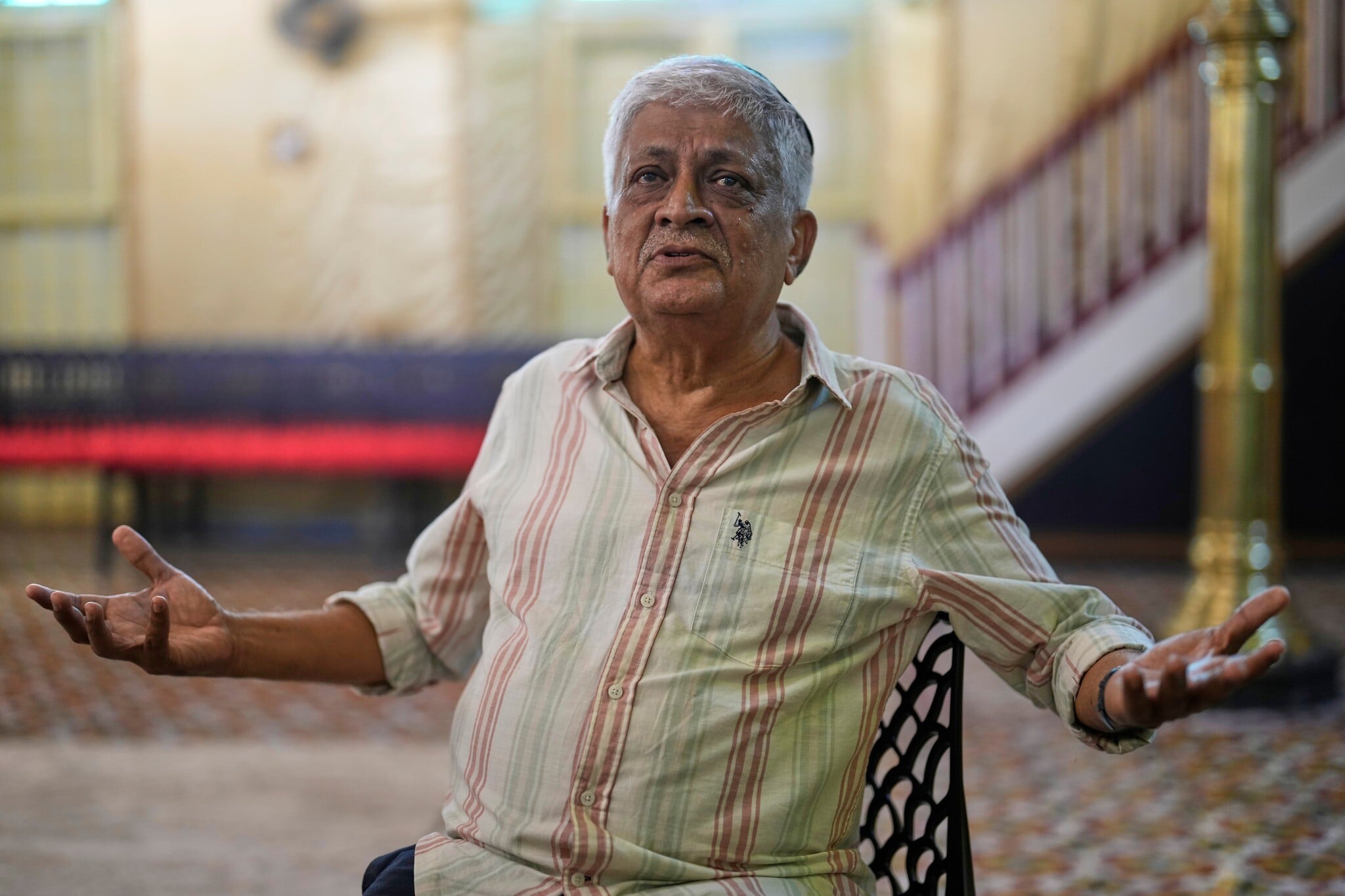
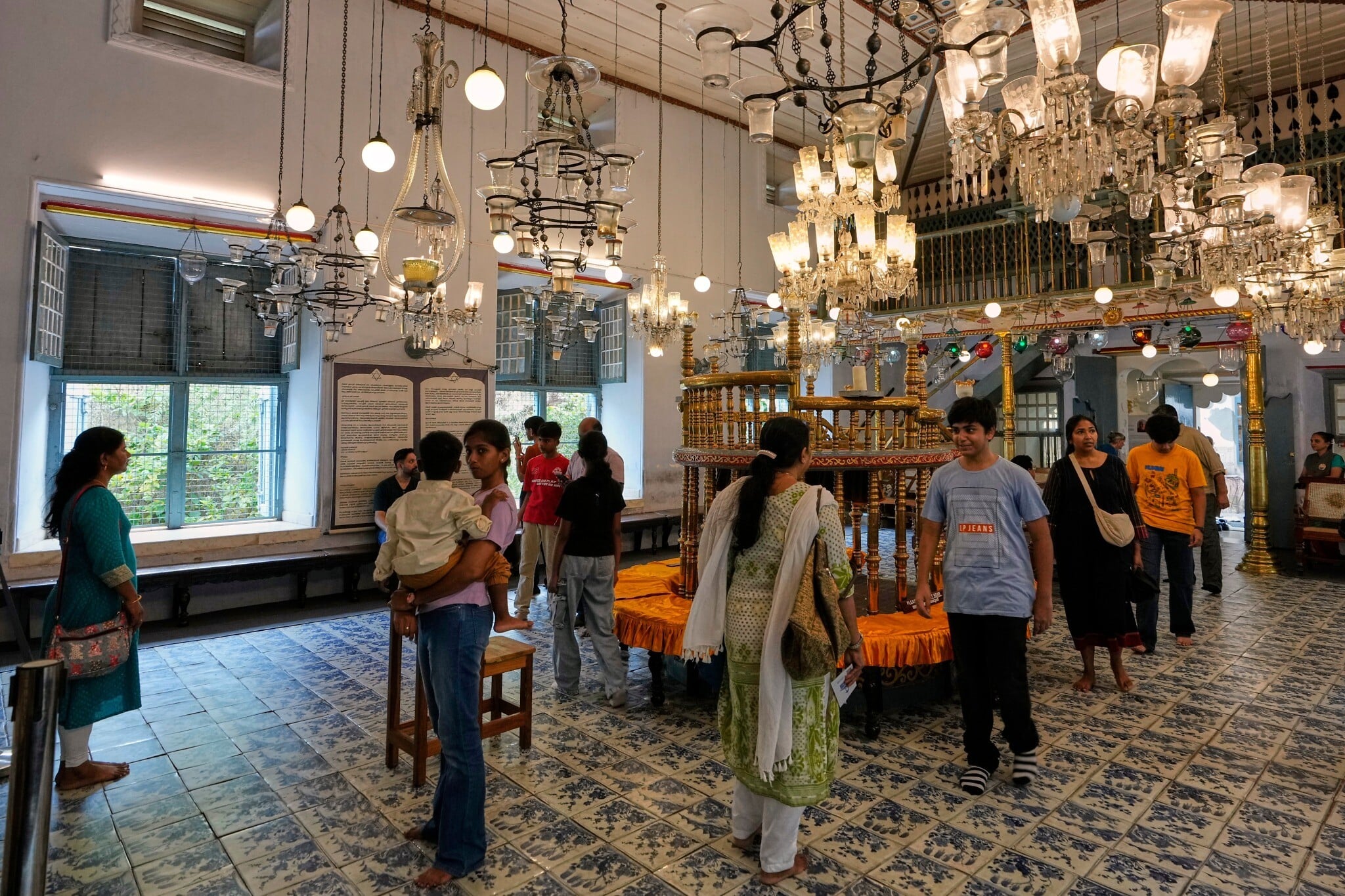
Hallegua is the last local member of Paradesi Synagogue, which now relies on tourists and visitors to have a quorum for services.
“Quite often, I walk to the synagogue and I ask HaShem (God), why have you done this?” Hallegua said. “I never hear a response.”
On a recent morning, tourists crowded the Paradesi Synagogue and Synagogue Lane, the street it anchors. Former homes are now occupied by spice warehouses and stores selling antiques and handicrafts. Historically, the Jewish community played a major role in the spice trade in Kochi, a hub for black pepper, cardamom and nutmeg.
The synagogue’s entryway leads to a main hall with blue and white Chinese porcelain tile floors. Nineteenth century Belgian crystal chandeliers and colorful glass lanterns adorn the sanctuary. A carved teakwood Torah ark stands at the western wall facing Jerusalem. As in other Kochi synagogues, the women’s section is upstairs. Visitors slip off their shoes, in keeping with regional etiquette.
Synagogue trustee M.C. Praveen says his life’s mission is protecting Cochin Jewish history. Praveen, a Hindu, spent his childhood in Jew Town, attending school with Hallegua’s family members, eating Shabbat dinners, playing cricket near the synagogue.
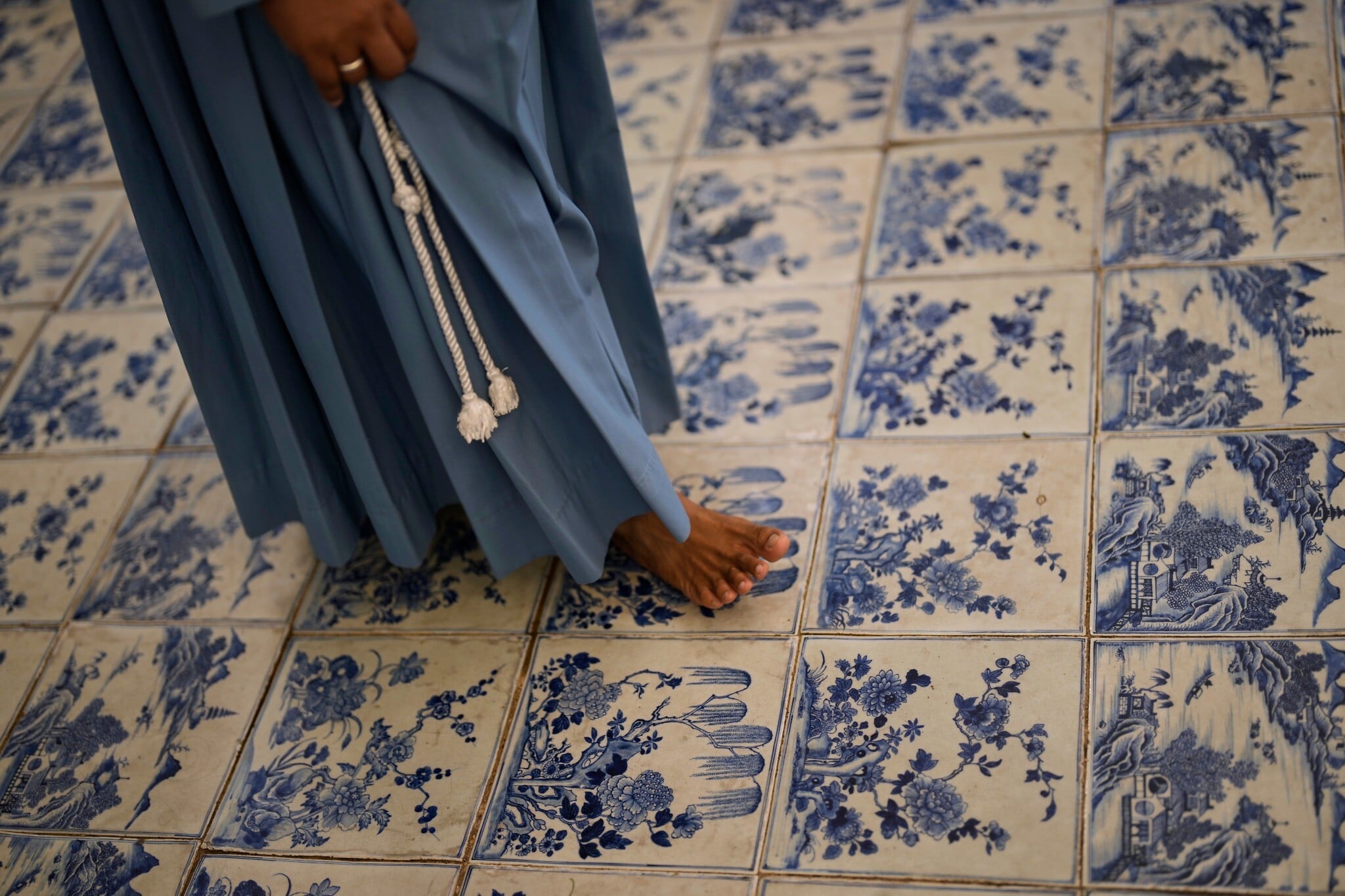
“I want to make sure future generations know the history of this town and the people who lived here,” said Praveen, who seeks guidance from the community’s former residents and their far-flung children.
The connections transcend geography. Trustee Shulamit Kotzer, 55, was born in Jew Town and spent vacations there after moving to Israel at age 2. She dreams of opening a hotel in the neighborhood.
“I consider Cochin not a second home, but my home,” she said.
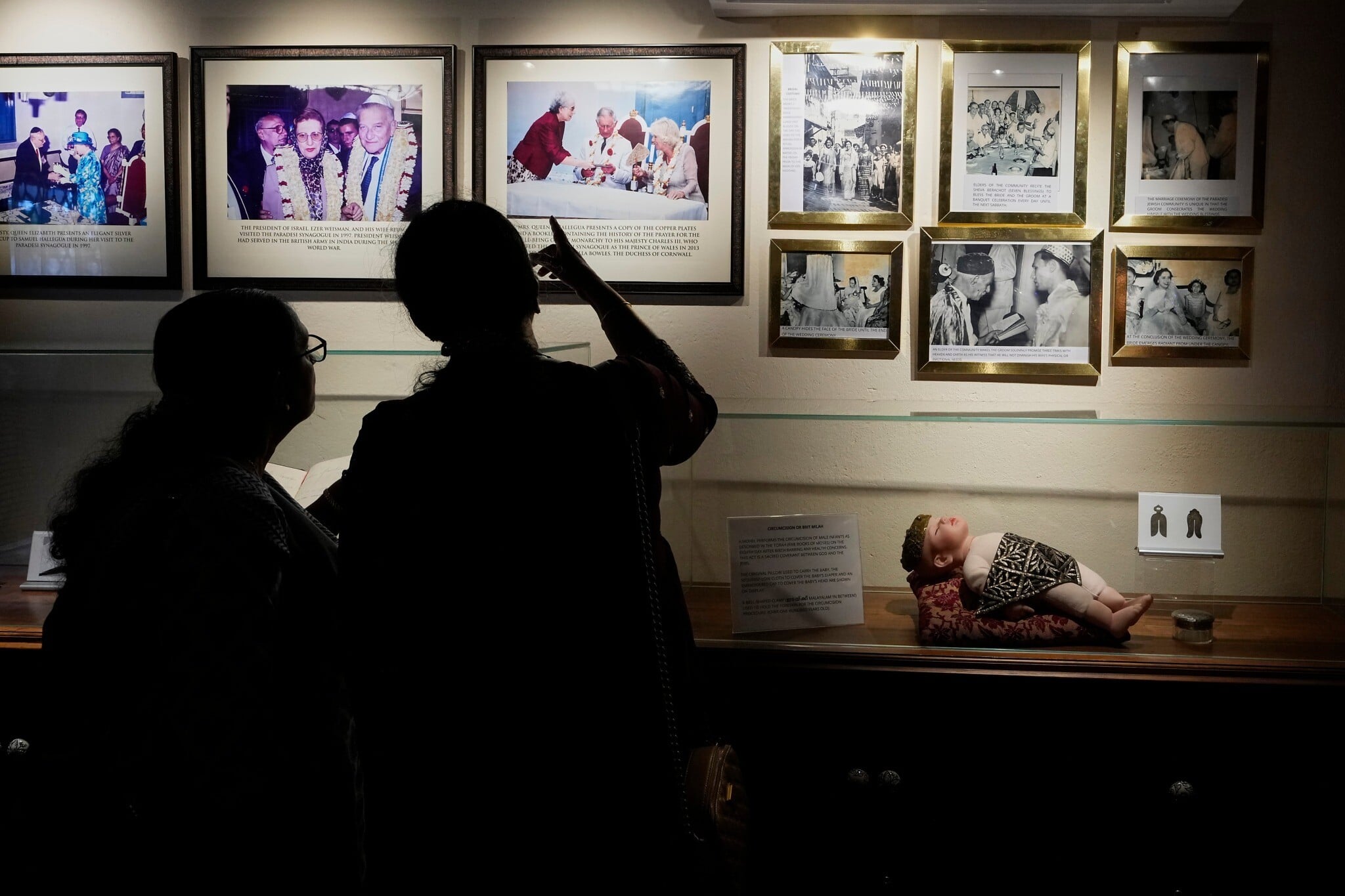
Earlier this year, synagogue leaders opened a museum showcasing Kochi’s Jewish history. It features the settlement’s original deed: two copper plates bearing a Hindu king’s charter from 1000 CE granting the community religious freedom.
Praveen is not the only non-Jew trying to ensure the community’s culture survives.
Thaha Ibrahim, a Muslim, forged a profound connection with the late Sarah Cohen, one of the neighborhood’s Jewish matriarchs. He now runs her embroidery shop on Synagogue Lane. Cohen, or “Sarah aunty” as he calls her, taught him how to do Cochin Jewish embroidery.
“I’m teaching my son to do this embroidery so he can continue Sarah aunty’s legacy,” he said.
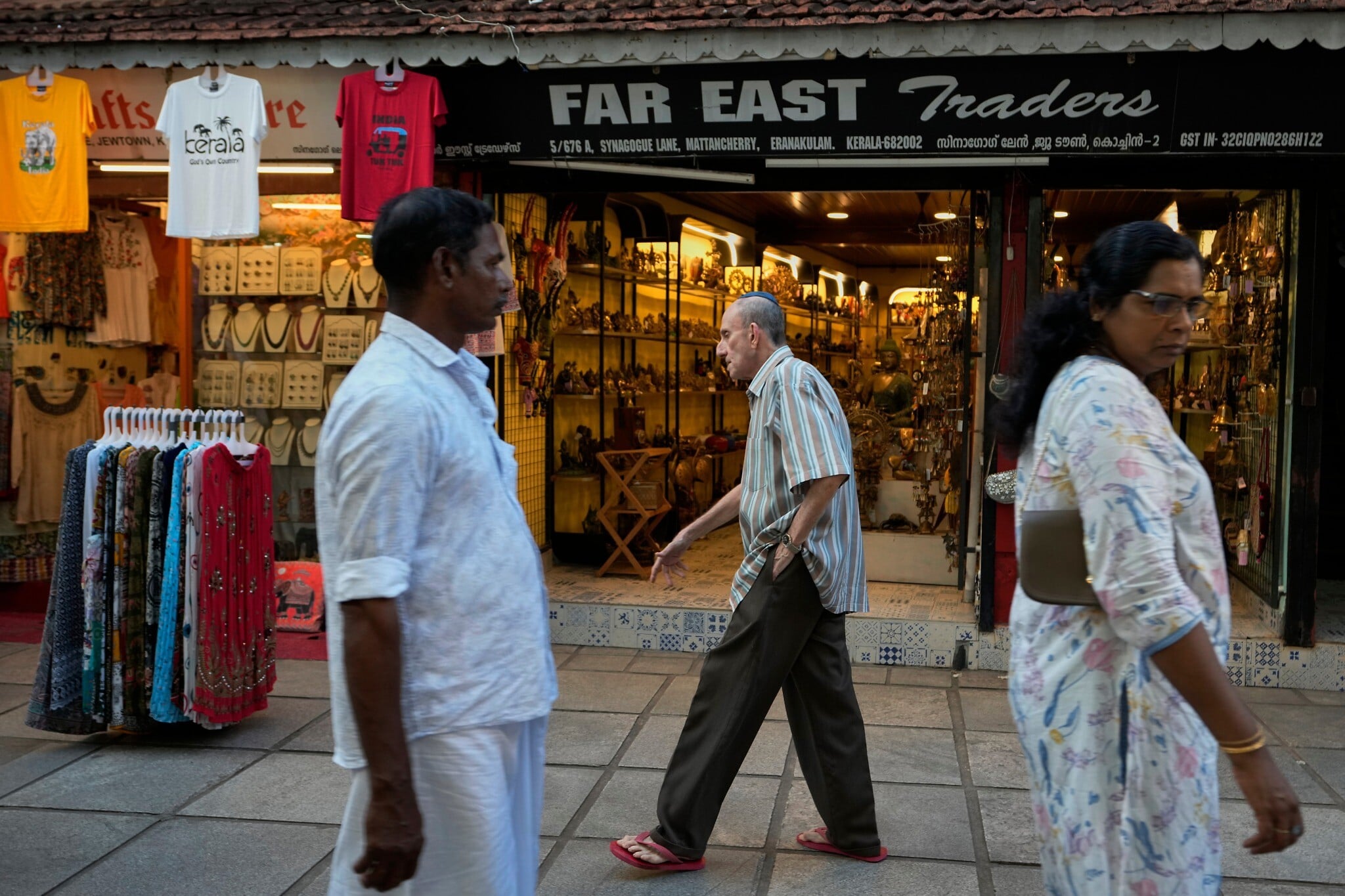
Ibrahim lights Shabbat candles on Fridays and closes his shop on Saturdays. Muslim-Jewish tensions elsewhere in the world are not a deterrent, he says.
“This is not about religion, it’s about human connection.”
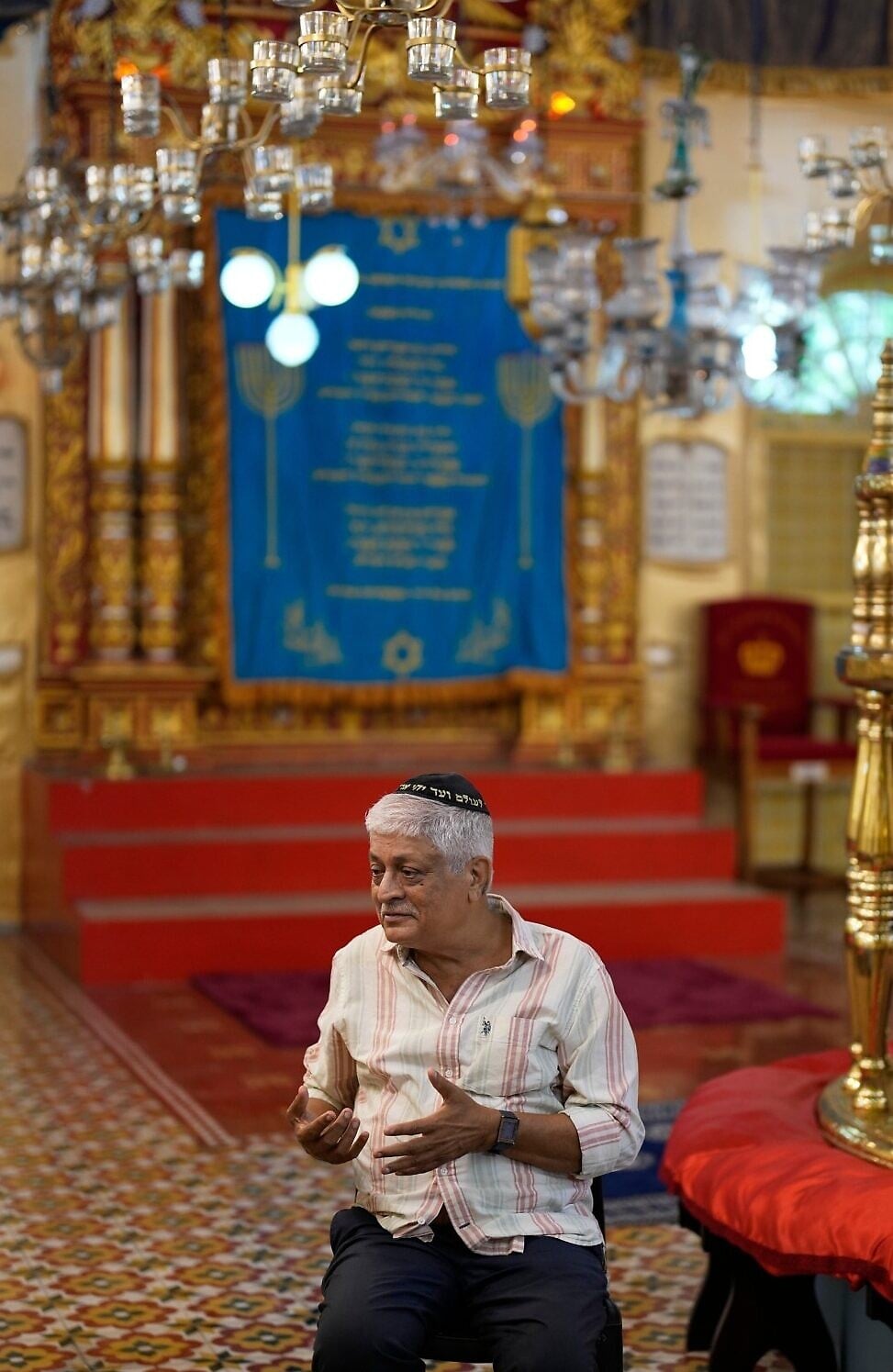
Across the city in Ernakulam, Josephai shoulders the preservation of Malabari Jewish heritage. The 12th century Kadavumbagam Synagogue, which he saved after vandals destroyed it, is tucked behind the store where he sells aquarium fish and plants. The renovated interior features hand-crafted tile and a red-and-gold Torah ark.
Josephai is proud that people of different faiths helped him rebuild. A Muslim donated the lamps, a Christian gave a Ten Commandments plaque, a Hindu foundation paid for the chandeliers.
An oil lamp hangs in front of the ark, its flame kept burning by Josephai. He also keeps the synagogue prayers going, a promise made to his grandmother after his siblings moved to Israel in 1972.
“Every Jew has a dream that his last breath should be in Israel,” he said. “I believe my last breath should be inside this synagogue.”
Josephai, 70, hopes a Jewish organization will take over the synagogue, along with the library and museum he is building.
“Once I’m gone, there is no one who can tell these stories,” he said. “But this is our fate and that’s how it is.”
Thapan Dubayehudi, a Malabari Jew who moved to Vienna in 2022, called Josephai “a one-man army” keeping the history alive. He remembers sitting with Josephai as they assembled and lit hundreds of lamps in the sanctuary during Hanukkah.
“I’d carry that memory with me if God gives me 90 years of life,” he said.
Keith Hallegua also stayed to fulfill family responsibilities.
“Never did I ever think that I would be the last Jew in Jew Town,” said Hallegua, who remained to care for his brother and mother.
His mind teems with memories. Singing the Paradesi Jewish tunes that blended Sephardic chants with local folk elements. The aroma of his mother’s chili chicken. His grandmother’s frantic cleaning ahead of Passover, Hallegua’s favorite season. The new clothes for Rosh Hashanah.
“That’s never going to come back,” Hallegua said.
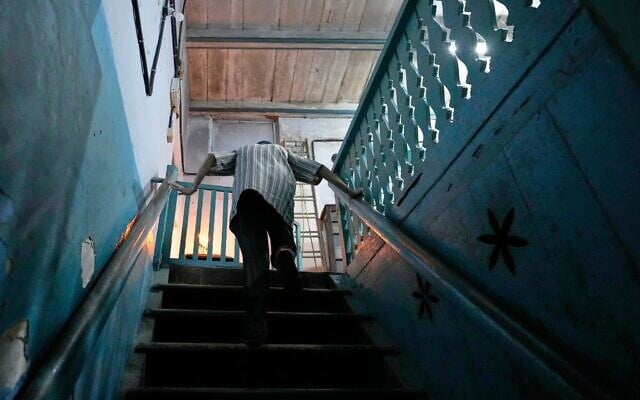
He realizes his memories will vanish with him. It’s deeply painful, and some days he wants to leave Jew Town.
But he is grounded by his homeland and its history.
As he once explained, “I was born a Jew in India and I shall die in India, a Jew.”

As a multimedia journalist, my job is to take the quality, fact-based journalism produced by The Times of Israel newsroom and make it accessible across every platform — from Instagram posts to podcasts to short-form videos.
This is how many, especially young people, consume news these days. But misinformation is rampant on social media. Our team at ToI produces accurate, responsible short-form reporting on Israel and the Jewish world.
If you believe in the importance of factual social media journalism, please consider joining our reader support group, The Times of Israel Community. Your financial support is essential to sustain responsible multimedia reporting.
— Gabriella Jacobs, multimedia journalist

We’re really pleased that you’ve read X Times of Israel articles in the past month.
That’s why we started the Times of Israel – to provide discerning readers like you with must-read coverage of Israel and the Jewish world.
So now we have a request. Unlike other news outlets, we haven’t put up a paywall. But as the journalism we do is costly, we invite readers for whom The Times of Israel has become important to help support our work by joining The Times of Israel Community.
For as little as $6 a month you can help support our quality journalism while enjoying The Times of Israel AD-FREE, as well as accessing exclusive content available only to Times of Israel Community members.
Thank you, David Horovitz, Founding Editor of The Times of Israel




The last remaining Cochin Jews in Kochi, India, Keith Hallegua and Elias "Babu" Josephai, are working to preserve their community's centuries-old history as their numbers dwindle. Hallegua, the sole remaining congregant of the 458-year-old Paradesi Synagogue, and Josephai, who single-handedly maintains the Kadavumbagam Synagogue, represent the final chapter of a community that once thrived peacefully in India. Most Cochin Jews immigrated to Israel in the 1950s, leaving behind a rich heritage marked by both religious freedom and internal divisions over class and colorism.
"Quite often, I walk to the synagogue and I ask HaShem (God), why have you done this?" Hallegua said. "I never hear a response."
Efforts to preserve this legacy extend beyond the Jewish community, with Hindu and Muslim neighbors, like M.C. Praveen and Thaha Ibrahim, actively involved in maintaining synagogues, museums, and traditional crafts. Josephai, who rebuilt his synagogue after vandalism with interfaith support, stated, "I believe my last breath should be inside this synagogue."
© All rights to the original article belong to the source. Din Online shows a headline, an excerpt and a link only. The objectivity rating is computed automatically and is an estimate only.
Discussion
No comments yet — be the first to comment.