Al-Hayya's Ascent: A Pragmatic Hardliner for a Post-Sinwar Hamas
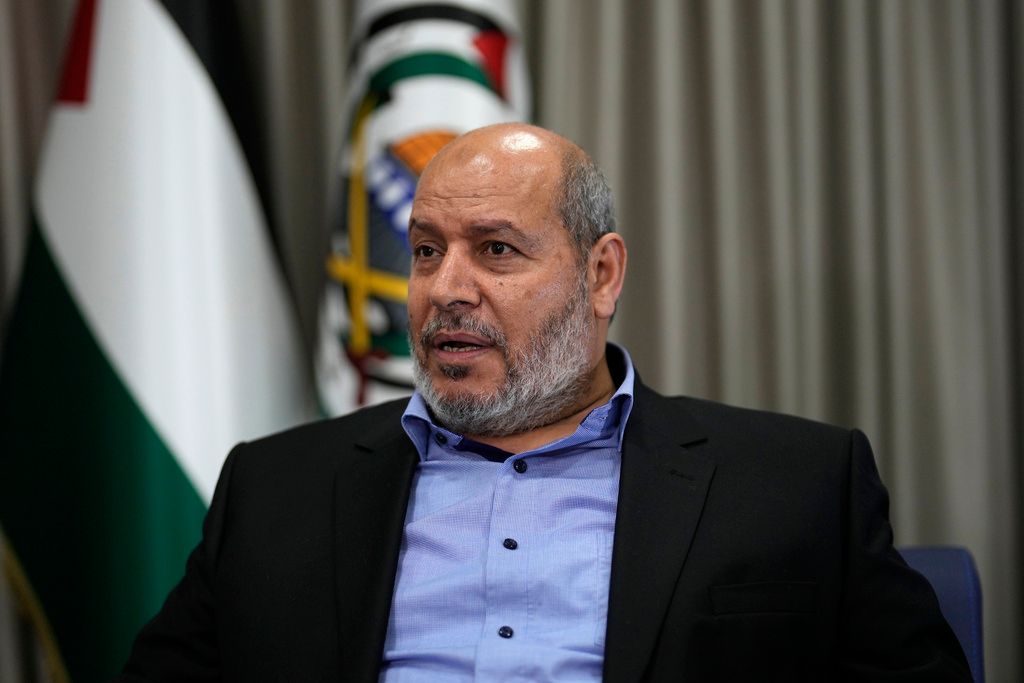
The dust of war, still thick over Gaza, has barely settled on the graves of Yahya al-Sinwar and Ismail Haniyeh, yet Hamas has already moved to fill the leadership vacuum, electing Khalil al-Hayya as its new overall leader. This swift transition, announced on Monday, is more than a mere administrative formality; it signals a calculated evolution within the militant group, one that seeks to balance internal continuity with external strategic demands in an era defined by profound loss and relentless pressure. Al-Hayya, 64, a veteran negotiator and a figure with deep ties to Iran, now stands at the helm, a choice that speaks volumes about Hamas's immediate priorities and its long-term vision in the crucible of conflict.
The Ascendancy of the Negotiator-Hardliner
Al-Hayya's election to head Hamas's political bureau, succeeding the 'martyred leader' Yahya al-Sinwar, is a testament to his rising influence and his unique blend of diplomatic engagement and unyielding ideological commitment. For months, al-Hayya has been the group's lead negotiator in the indirect ceasefire talks with Israel, often based in Doha alongside other senior Hamas figures. This role has granted him significant visibility and practical experience in the complex dance of international mediation, a skill set now critical for a group facing unprecedented military and political isolation. Yet, his negotiating posture has been anything but soft. He is described as being **'close to the regime in Iran,'** a crucial detail that underscores Hamas's enduring reliance on its patron and its commitment to the 'axis of resistance.' Al-Hayya's personal history also paints a picture of deep commitment and sacrifice: he lost a son in the Gaza conflict and two sons in previous wars, a tragic narrative that resonates deeply within Hamas's constituency and reinforces his credentials as a hardened leader.

His appointment follows a turbulent period of leadership decapitation, with Sinwar killed by Israeli forces in October 2024 and Haniyeh assassinated earlier that year. Al-Hayya himself survived an Israeli assassination attempt in Qatar last year, a stark reminder of the perils of leadership within Hamas. This succession of targeted killings has undoubtedly shaped the group's internal calculations, perhaps favoring a leader like al-Hayya who has demonstrated resilience and strategic acumen on both the diplomatic and ideological fronts. His defeat of former leader Khaled Mashaal for the top spot suggests an internal consensus favoring a more directly involved, yet still externally focused, leadership.
Balancing Internal Cohesion and External Alliances
One of the critical challenges for al-Hayya will be to maintain internal cohesion within Hamas while navigating the treacherous waters of regional and international relations. The group, which announced his election through an official statement posted to Telegram, will need to project an image of strength and unity after the significant losses of Sinwar and Haniyeh. Al-Hayya's background as a Gaza-born official, combined with his Doha-based diplomatic activities, positions him as a bridge between the group's operational leadership in the Strip and its external political wing. This dual identity could be instrumental in ensuring that the decisions made in Doha are reflective of the realities on the ground in Gaza and vice-versa.
His strong ties with Iran are particularly noteworthy. In the aftermath of the recent conflict, and with the severe degradation of Hamas's military capabilities in Gaza, the strategic alliance with Iran becomes even more paramount. Iran provides not only financial and military support but also a crucial diplomatic shield and a regional network that Hamas desperately needs. Al-Hayya's established rapport with Tehran suggests a continuation, if not an intensification, of this relationship, which could have significant implications for the future trajectory of the Israeli-Palestinian conflict and regional stability. This reliance on Iran also signifies a potential shift in the group's strategic focus, perhaps emphasizing external support and regional coordination as much as, if not more than, internal resistance.
The Road Ahead: Negotiation, Resistance, and Survival
The election of Khalil al-Hayya sends a clear message: Hamas, despite its losses, is determined to continue its struggle on multiple fronts. His role as a lead negotiator indicates a willingness to engage in talks, albeit from a position of strength and without compromising core demands. However, his hardline stance and close ties to Iran signal that any diplomatic overtures will be framed within the broader context of 'resistance.' The term 'mujahid' (jihadist brother) used in Hamas's official statement to describe al-Hayya is not merely ceremonial; it reinforces the ideological underpinnings of his leadership and the group's foundational principles. The 'Islamic Resistance Movement' has chosen a leader who embodies both its pragmatic need for negotiation and its unwavering commitment to its stated goals.
The historical parallel here is instructive: groups that suffer significant leadership losses often either fragment or consolidate around figures who can project both continuity and adaptability. Al-Hayya appears to be such a figure. His experience in wartime negotiations suggests a strategic mind capable of assessing the group's options in a weakened state, while his personal history and ideological alignment ensure he will not be perceived as compromising the group's core tenets. The question now is how he will leverage his unique position to rebuild Hamas's capabilities, maintain its relevance, and advance its agenda in a post-war landscape, particularly as Israel continues its stated objective of eradicating the group. His ascent marks a new chapter for Hamas, one where a resilient negotiator with strong regional backing takes the reins in a desperate fight for survival and influence. The world watches to see if al-Hayya can truly usher in a new era for Hamas, or if he is merely another leader in a long line of those caught in the relentless cycle of conflict and attrition.
Coverage Sources & References:
- Hamas Names Khalil Al-Hayya As New Overall Leader, Succeeding Sinwar [Google News]
- Hamas elects Khalil al-Hayya as its new leader; Israel tried to kill him last year [The Times of Israel]
- Hamas names Qatar-based Khalil al-Hayya as new overall leader [Google News]
- Who is Khalil al-Hayya, Hamas’s newly elected political chief? [Google News]
- Hamas appoints Khalil al-Hayya as ‘political’ chief [Google News]
- Live updates • Hamas names Khalil al-Hayya as the group's new leader, succeeding Yahya Sinwar [Google News]
- Hamas names Khalil al-Hayya, former wartime negotiator, as new head of political bureau [The Jerusalem Post]
An original opinion-analysis column by the Din Online desk, based on current coverage from a range of sources. Views expressed are the desk’s own. Some content is produced with automated tools.
Discussion
No comments yet — be the first to comment.