Al-Sharaa’s army will reveal what his new Syria really is
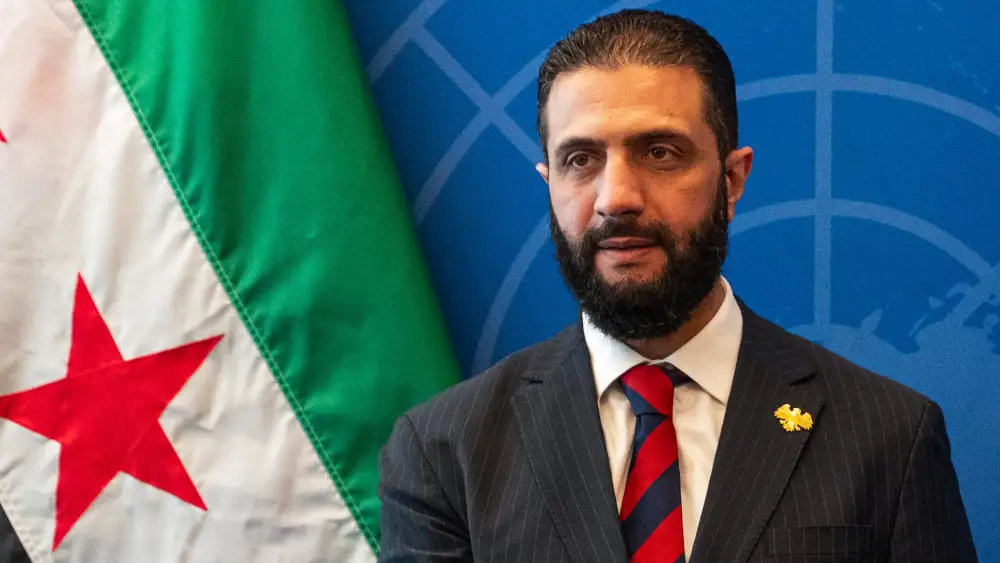

Israel’s Aug. 18 strike on the Abu al-Duhur military air base in Syria’s northwestern Idlib province, not far from the Turkish border, should not be viewed as just another episode in the increasingly tense relationship between Israel and Turkey. It exposed a much more important question about the state that the new Syrian President Ahmed al-Sharaa is building.
Israeli officials said the strike followed intelligence indicating that Turkey was preparing to deploy military personnel, radar and air-defense capabilities at the base. Ankara and Damascus denied that a permanent Turkish deployment was planned, although Syrian officials acknowledged that a Turkish delegation had visited the facility shortly before the strike.
 Xiaomi Smart Band 10 Review: The Ultimate Budget Fitness Tracker for 2026
See the review →
Xiaomi Smart Band 10 Review: The Ultimate Budget Fitness Tracker for 2026
See the review →
The dispute over exactly what Turkey intended to place at Abu al-Duhur will continue. But the larger development is already clear: Syria’s military reconstruction is moving beyond speeches, ceremonies and new uniforms. Air bases are being rehabilitated, foreign military cooperation is expanding and the foundations of a new Syrian military architecture are taking shape.
That makes another issue increasingly urgent, because the question is no longer whether Syria is rebuilding an army. The issue is what kind of army al-Sharaa is rebuilding. The hardware matters. So do the men who will operate it.
In July, more than 1,000 personnel graduated from Syria’s air force academy at the Khalid ibn al-Walid Air Base, formerly Kweires, east of Aleppo. The ceremony was intended to demonstrate the revival of Syrian military aviation after years of civil war. Yet images from the event also showed uniformed personnel performing a synchronized raised arm salute strongly evocative of fascist and Nazi imagery.
Weeks later came an even more disturbing scene. Syrian soldiers standing in formation near the Damascus Citadel were filmed chanting threats against Jews, including, “I am coming for you, Jew!” and a promise to make Jewish blood “flow in rivers.”
One gesture does not define an army, and one chant does not define a state. But armies are institutions in which symbolism, discipline and command responsibility matter enormously. When such behavior appears among uniformed personnel in a military being constructed largely from forces that emerged from Islamist and jihadist movements, it cannot simply be dismissed as theater.
The concern is not that every soldier in the new Syrian army is an extremist. The concern is whether al-Sharaa is actually transforming the armed movements that brought him to power into a professional national military or merely placing a state uniform over their existing ideology.
That distinction has already been tested beyond the parade ground.
In March 2025, Alawite civilians—members of the minority community to which the former ruling Assad family belongs—were massacred along Syria’s Mediterranean coast. A Reuters investigation documented 1,479 victims across dozens of sites, attributing the killings to a mix of factions that included units tied to the new government’s security architecture.
A subsequent investigation by the United Nations found that war crimes were likely committed by multiple parties, not the government alone, a finding that deepens rather than resolves the question of who really controls those forces. Al-Sharaa condemned the killings and promised accountability.
Then came Suwayda, the Druze-majority province in southern Syria. The violence there was more complicated, and serious abuses were committed by multiple actors, including Druze armed groups. But that complexity does not erase documented killings and executions of Druze civilians by government forces and their allies.
These incidents do not prove that al-Sharaa ordered atrocities. They raise a different, and ultimately more important question: Can he control the forces operating in his name? That is the real test of a state.
A related sovereignty test is now emerging in southern Syria. On Aug. 22, Israel targeted an operative in Beit Jinn, roughly six miles from the Israeli border. The IDF said the target was advancing terrorist attacks that had reached their final stages of preparation and posed an immediate threat to Israeli forces.
There is no evidence that Damascus directed the terror activity, and it would be wrong to suggest otherwise. But that is precisely the point. A government seeking to be recognized as Syria’s sovereign authority must eventually demonstrate that armed actors cannot organize attacks from territory under its claimed control. Sovereignty is not just a flag over Damascus; it is the ability to establish and enforce a monopoly on force.
That is why Abu al-Duhur matters as well. Turkey has every right to build relations with the Syrian government, and Syria has every right to seek military partners. But the type of military relationship being constructed matters. Training Syrian soldiers is one thing. Building infrastructure that could eventually support foreign radar and air-defense systems, or a permanent Turkish military presence in Syria, is something strategically different.
These developments present al-Sharaa with three tests. The first is personnel: Who is being recruited, promoted and placed in command of the new Syrian military? The second is military culture: What behavior is punished, what rhetoric is tolerated, and what ideology is being transmitted through training and command structures? The third is strategic orientation: Will the Syrian military become an institution devoted to defending and stabilizing the Syrian state, or will it become a vehicle through which jihadist ideology and the agendas of outside powers acquire formal state capabilities?
These questions remain far more important than al-Sharaa’s wardrobe, his interviews with Western media or the diplomats willing to shake his hand. The international community has understandably welcomed the possibility that Syria may finally emerge from years of dictatorship, civil war and fragmentation. A functioning Syrian state would be preferable to permanent chaos. Israel, too, has no inherent interest in a failed state on its northeastern frontier.
A stronger Syria is therefore not automatically a more dangerous Syria. But a stronger military is very different from a more professional military. If Syria’s new armed forces are disciplined, accountable to civilian authority, protective of minorities, and capable of suppressing independent jihadist and terrorist networks, then their development could become evidence that al-Sharaa is genuinely transforming the country.
If, however, former jihadist structures are merely being institutionalized; if antisemitic threats are tolerated in the ranks; if minority civilians can be murdered without meaningful accountability; and if strategic military infrastructure becomes a platform for competing ideological and foreign agendas, then Syria may be rebuilding state power without truly changing the forces that now possess it.
That would be a far more consequential development than any individual speech or diplomatic agreement.
Al-Sharaa wants the United States, Europe and the region to judge him as the leader of a new Syrian state. That is a reasonable request. If so, he should be judged as a state-builder—that is, not by what he says about the country he intends to create, but by the institutions he actually builds. And no institution will reveal more about the future of al-Sharaa’s Syria than the army he is building.

Get the latest updates in our WhatsApp group.



The reconstruction of Syria's military under President Ahmed al-Sharaa is revealing the true nature of his new state, according to a JNS analysis. Recent events, including an Israeli strike on the Abu al-Duhur air base, the graduation of over 1,000 personnel from Syria’s air force academy, and incidents involving Syrian soldiers chanting antisemitic threats, highlight concerns about the military's ideology and control. The article questions whether al-Sharaa is genuinely transforming armed movements into a professional national military or merely institutionalizing existing extremist ideologies. Incidents like the massacre of Alawite civilians and killings of Druze civilians by government forces further raise doubts about al-Sharaa's control over forces operating in his name. The author states, "No institution will reveal more about the future of al-Sharaa’s Syria than the army he is building."
© All rights to the original article belong to the source. Din Online shows a headline, an excerpt and a link only. The objectivity rating is computed automatically and is an estimate only.
Discussion
No comments yet — be the first to comment.