Amid war and persecution, Iranians remain hungry for change
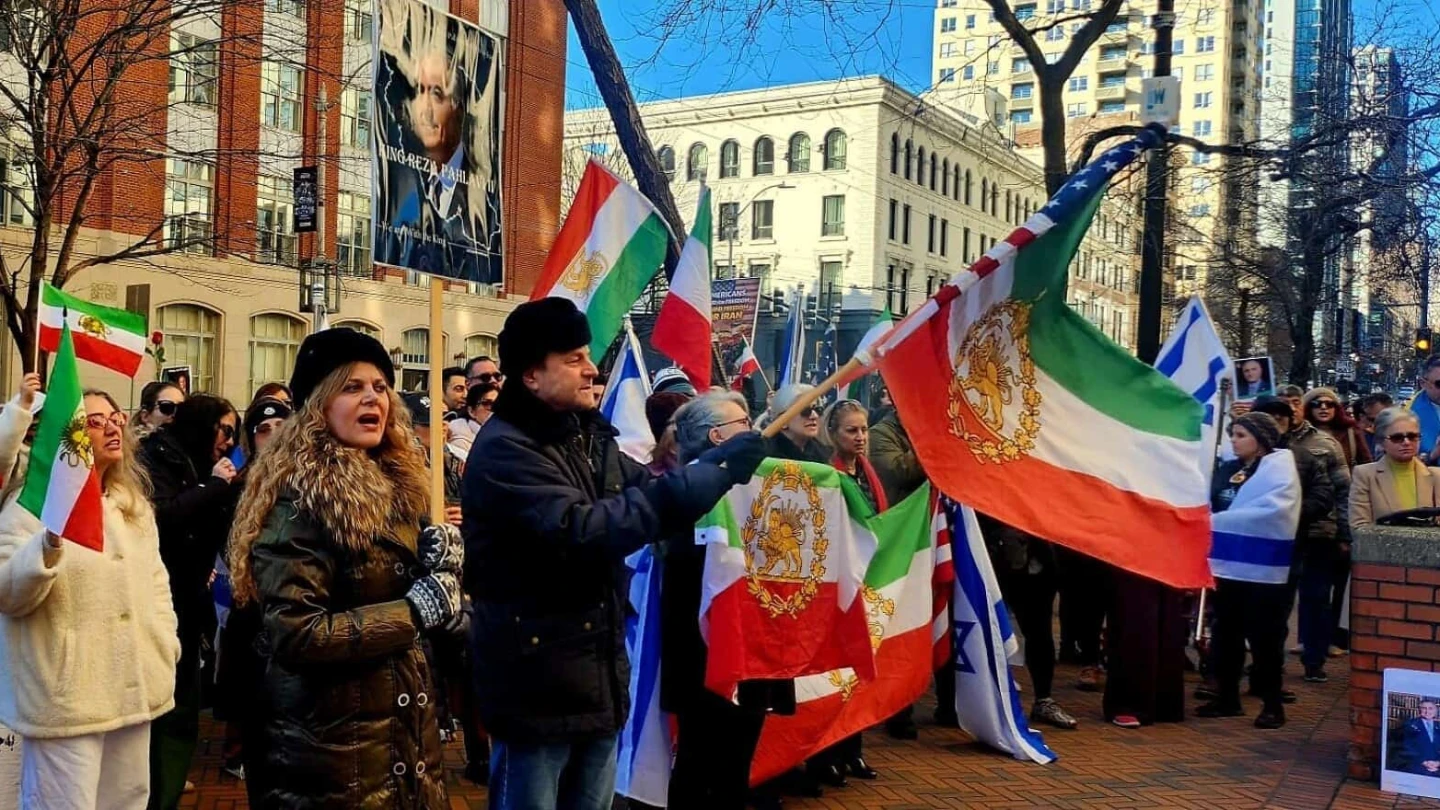


The vast majority of Iranians despise the Islamic regime that has ruled over them with an iron fist since 1979.
A clear majority of Iranians oppose the regime’s drive to obtain a nuclear weapon.
A significant number express approval for U.S. President Donald Trump (44%) and Israeli Prime Minister Benjamin Netanyahu (51%), while Russian President Vladimir Putin is viewed positively by only 15%.
Most Iranians detest regime slogans like “Death to Israel”—rejected by 62% of them—while upwards of 70% endorse the chants of the civil-society protest movement, among them “Women, Life, Freedom” and “Death to the Dictator.”
These are just some of the eye-catching revelations of the latest survey of opinion among Iranians inside Iran, published last week by the Group for Analyzing and Measuring Attitudes in Iran (GAMAAN), a Netherlands-based research project.
It’s understandable that many readers might question the reliability of this data, given that Iran’s rulers run a brutal theocracy that incarcerates, tortures and executes those with dissenting views. That is why GAMAAN is careful to explain its methodology, as well as honest enough to acknowledge that the difficulties of working inside Iran may result in a greater margin of error without compromising the data’s fundamental credibility.
The answers of more than 31,000 respondents were weighted to conform to the demographic characteristics of the “literate” population aged 15 and above (one reason why it’s worth remembering that Iran is a country where more than 40% of the population is below the age of 30, while around 73% were born after the Islamic Revolution in 1979). Their answers were solicited and received in online interactions carried out through three VPN tools—Psiphon, Lantern and MahsaNet—that assist Iranians in circumventing the regime’s efforts to censor the internet.
Using these tools generates data that is far more reliable than answers received through phone calls, which would cause many, if not most, respondents to censor themselves for fear of reprisal. In that regard, one of the most striking statistics in the survey concerns participation in the January demonstrations against the regime—six weeks before the United States and Israel mounted their combined military attack on Iran on Feb. 28—during which more than 40,000 protesters were slaughtered and well over 50,000 arrested.
According to the survey, 25% of the population, equivalent to about 14 million people, joined the protests in January. Another 50% said they didn’t participate, while 25% preferred not to answer the question. Among those latter two groups, one can reasonably assume that there were a fair few who did, in fact, protest, but understandably didn’t want to risk giving themselves away even when using a VPN.
What is unmistakable is the depth of loathing for the Islamic Republic among its long-suffering citizens. At 71%, “dissatisfaction with the Islamic Republic” was the top reason for joining the protests. Other reasons cited included anger against the corruption and high prices that mark the regime’s management of the economy, heeding the call of the exiled Prince Reza Pahlavi to join the protests, and even Trump’s own encouragement, early on, for the protests to continue.
In the same vein, when asked about the current war, 52% said that they were not saddened to learn that the regime’s “Supreme Leader,” Ayatollah Ali Khamenei, was eliminated on the opening day of hostilities, with a further 24% judiciously offering no opinion on his removal from the scene. When it came to nuclear ambitions, 59% said they were opposed to Iran developing nuclear weapons.
What this picture suggests is that Iranians understand their regime with much greater clarity than Western governments that continue to appease it, along with broad swaths of Western public opinion that are either indifferent or even sympathetic to the regime, out of some misguided, inchoate sense of “anti-colonialism.”
As the war against Iran’s regime stutters along, locked in a pattern in which punishing U.S. strikes are followed by days of inaction, the GAMAAN survey is a timely reminder that the current war erupted against the background of a new wave of anti-regime protests.
This realization once again begs the question of whether and how regime change can be achieved. Notably, the GAMAAN survey does not point to an obvious path to overthrow and replace the Islamic Republic. Among respondents, 47% said they supported wholesale regime change, while only 13% expressed support for its survival. But within that huge mass of opposition are some important divides.
Although support for Pahlavi has picked up in recent months, the claimant to the Peacock Throne does not command universal support, with 48% of respondents expressing positive views of him and 35% negative. Iranians are additionally divided on the type of political system that would replace the Islamic Republic, with 34% supporting some form of monarchy and 28% opting for a republic. They are also divided on the means of getting to either of these outcomes; a plurality of 44% believes that the domestic protest movement is the key, while 14% back armed resistance to the regime and 30% are sympathetic to foreign military intervention.
Such divides are to be expected, and certainly should not be interpreted as a reason—or more precisely, an excuse—to keep the regime in power. Perhaps the most palpable sign of Iranian hunger for meaningful change lies in one of the underreported findings of the survey: Despite all the misery wrought by the regime, 46% of respondents said they had no plans to migrate from Iran, demonstrating a real commitment among a near-majority to owning the process of change and reaping the benefits it will hopefully bring.
For the United States, unquestionably the global leader in confronting Iran’s rulers, there is reason enough here to factor the Iranian population into its calculations for the future conduct of the war, including the likelihood that protests will reignite.
The final demolition of the regime will almost certainly bring an end to the regime’s nuclear and ballistic-missile programs, as well as its support for terrorist proxies across the region. The other side of the coin concerns the creation of lasting, accountable institutions in Iran geared toward increasing the liberty and prosperity of the Iranian people—arguably a much trickier goal, yet one Iranians themselves clearly want to achieve.









A recent survey by the Netherlands-based GAMAAN research project reveals widespread dissatisfaction with Iran's Islamic Republic among its citizens. Conducted online using VPNs to ensure anonymity, the survey of over 31,000 respondents found that 71% cited "dissatisfaction with the Islamic Republic" as their primary reason for joining protests. A significant 25% of the population, approximately 14 million people, participated in January protests, with 59% opposing Iran's nuclear ambitions and 62% rejecting the slogan "Death to Israel."
"Women, Life, Freedom"
and "Death to the Dictator" were endorsed by over 70% of respondents. While 47% support wholesale regime change, Iranians are divided on the future political system and the means to achieve it, with 44% favoring domestic protest. Notably, 46% expressed no plans to migrate, indicating a commitment to internal change.
© All rights to the original article belong to the source. Din Online shows a headline, an excerpt and a link only. The objectivity rating is computed automatically and is an estimate only.
Discussion
No comments yet — be the first to comment.