At 129, the Zionist Congress still calls us to action
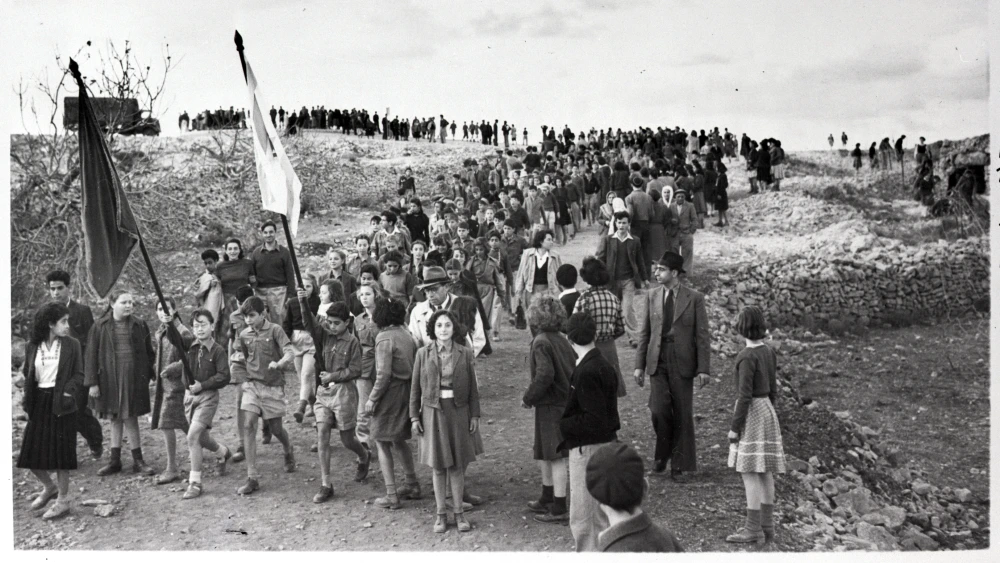

In 1897, more than 200 Jewish delegates from 17 countries (including five Americans) gathered in Basel, Switzerland, for three days—from Aug. 29 to Aug. 31—for an audacious purpose: to transform the ancient Jewish longing for Zion into an organized political movement.
Convened by journalist and father of modern Zionism Theodor Herzl, the First Zionist Congress established the Zionist Organization (later renamed the World Zionist Organization) and adopted the “Basel Program” as the platform of the Zionist movement. A dispersed people had created a forum through which it could debate, decide and act together.

This year, as we mark the 129th anniversary of the Congress, Basel is again drawing attention but for a very different reason. Swiss police are investigating an unauthorized rally advertised for Aug. 29 near the original Congress site under the slogan “Death to Zionism.” The timing is intentional. So must be our response: not fear, retreat or apology, but renewed clarity about what Zionism is, what it has accomplished and why its work remains essential.
Zionism is the national liberation movement of the Jewish people. It affirms that Jews are not solely adherents of a religion, but a people bound by shared history, culture, destiny and a connection to our ancestral homeland. It insists upon the right of that people to self-determination in a sovereign Jewish and democratic state, and upon the right of Israelis to live in peace and security.
The contrast between the two gatherings envisioned in Basel could hardly be sharper. The Congress built an institution through persuasion, representation and collective action. The planned rally answers an idea with a call for its death. Criticism of any Israeli policy is legitimate, as is vigorous debate within the Zionist movement. But a demand to eradicate Zionism is a demand that the Jewish people surrender a right routinely claimed by other peoples: the right to shape their future in their homeland.
Herzl understood that ideas require institutions. The Congress did more than articulate a dream; it gave that dream structure. Over the decades, the Zionist movement helped lay the political, diplomatic and social foundations for the establishment of the State of Israel. Its national institutions helped Jews make aliyah; build and develop the country; revive Hebrew culture and education; and sustain the relationship between Israel and Jewish communities worldwide.
That work did not end in 1948. Israel is a thriving, sovereign state, but the responsibilities of Zionism remain unfinished. The World Zionist Organization, the Jewish Agency for Israel and Keren Kayemeth LeIsrael-Jewish National Fund continue to strengthen Israel, assist aliyah, cultivate Jewish identity and connect Jews across borders.
They help communities confront antisemitism, deepen Zionist education, develop the land and create encounters through which Diaspora Jews and Israelis recognize their shared fate. Countless people know Israel more deeply and understand themselves as part of a global Jewish people because these institutions turned solidarity into action.
Today, action is urgently needed. Jewish communities are living with the consequences of a climate in which hostility toward Israel and Zionism too often spills into intimidation and violence against Jews.
From the harrowing murder of 15 people who were celebrating Chanukah on Bondi Beach, Australia, to the car-ramming in March at Temple Israel in Michigan while young children were inside, to Jews demonstrating for the release of the Israeli hostages getting attacked in June 2025 with Molotov cocktails in Boulder, Colo., the events of recent years have only reinforced the gravity of this threat. These incidents occurred in different places and circumstances, but together they underscore a disturbing reality: Jews are increasingly targeted in communal spaces and public gatherings because of their identity, their connection to Israel or both.
The planned “Death to Zionism” demonstration in Basel must be understood within that reality. Language that calls for the destruction of Jewish national self-determination cannot be dismissed as harmless rhetoric, especially when Jews around the world are already confronting fear, isolation and physical danger.
Zionism’s promise of Jewish security and solidarity is not a relic of the circumstances Herzl faced. At this difficult moment, it remains a source of responsibility: to protect one another, strengthen our communities and affirm Jewish belonging.
The First Zionist Congress also offers a lesson for our own divided moment. Zionism was never a single viewpoint. From its earliest days, the movement brought together people who differed sharply over religion, economics, politics, culture and the best path toward Jewish national renewal. What united them was not uniformity, but shared purpose.
That pluralism remains one of Zionism’s greatest strengths. The American Zionist Movement today encompasses 51 national Jewish Zionist organizations across a broad ideological, political and religious spectrum. We do not ask that every Zionist to think alike. We ask Zionists to recognize their common stake in Israel, the Jewish people and our collective future, and to turn disagreement into dialogue rather than disconnection.
For American Jews, this is especially urgent.
Zionism connects us not only to Israel, but to one another. It gives us a language of peoplehood and mutual responsibility at a time when Jewish identity is too often defined for us by hostility from others. We must teach the next generation that Zionism is not a slogan imposed by its opponents. It is a living, evolving expression of Jewish empowerment, belonging and hope.
An anniversary becomes meaningful when memory leads to responsibility. In our schools, synagogues, community organizations and homes, we should study the debates of the First Zionist Congress; celebrate the achievements of the movement it launched; and confront the challenges facing Zionism and the Jewish people.
Herzl famously wrote that at Basel, he had founded the Jewish state, predicting that the world would recognize it within 50 years. History vindicated his vision, but it did not complete the work he began.
Today, as Israel and Jewish communities worldwide face surging antisemitism and other profound challenges, our task is to draw strength and purpose from that legacy. We must carry Zionism forward confidently, inclusively and together.



Get the latest updates in our WhatsApp group.




The article reflects on the 129th anniversary of the First Zionist Congress, convened by Theodor Herzl in Basel, Switzerland, from August 29-31, 1897. This foundational event brought together over 200 delegates from 17 countries to establish an organized political movement for Jewish national renewal, creating the Zionist Organization and adopting the "Basel Program." The author contrasts this historical gathering with a planned "Death to Zionism" rally near the original site on August 29 this year, which Swiss police are investigating. The article emphasizes that Zionism is the national liberation movement of the Jewish people, affirming their right to self-determination in a sovereign Jewish and democratic state. It highlights the ongoing work of Zionist institutions like the World Zionist Organization, the Jewish Agency for Israel, and Keren Kayemeth LeIsrael-Jewish National Fund in strengthening Israel, promoting aliyah, and combating antisemitism. The author concludes by urging renewed clarity about Zionism's accomplishments and its essential, continuing work, especially in the face of rising global antisemitism and threats to Jewish communities.
© All rights to the original article belong to the source. Din Online shows a headline, an excerpt and a link only. The objectivity rating is computed automatically and is an estimate only.
Discussion
No comments yet — be the first to comment.