Beth Judah Temple: A Jersey jewel
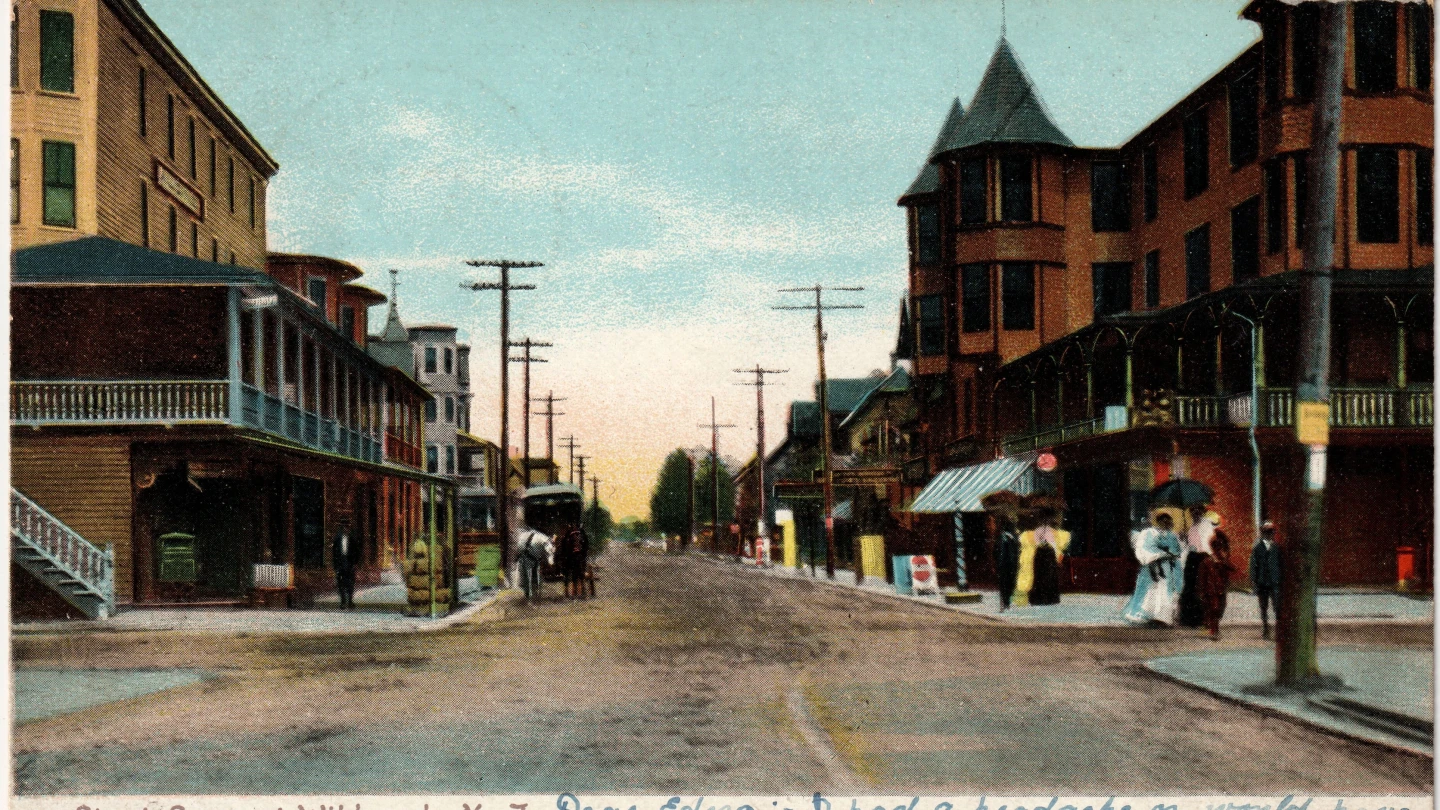
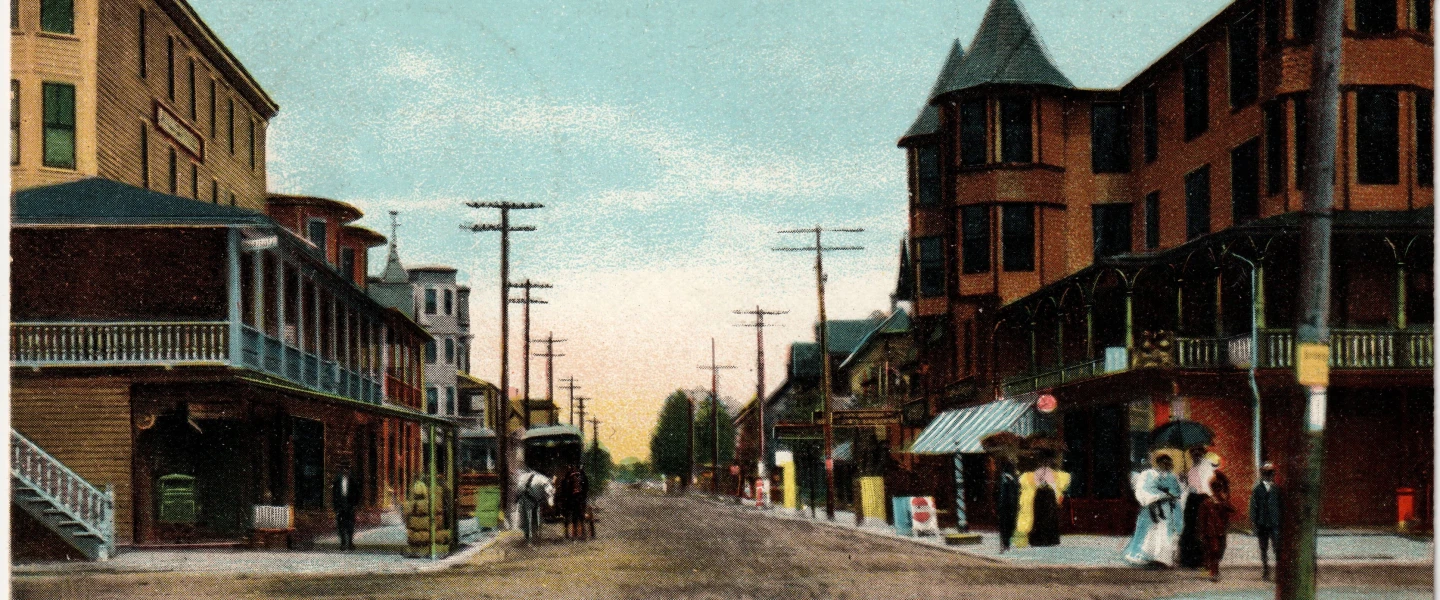
It was 2018 at the Jersey shore, and Ruth Edelman was adamant: “If I’m going stay here, I need a Jewish community.”
Recently retired, she and her husband, Morey, had decided to live full-time at their summer home in Avalon, N.J. Beth Judah Temple in nearby Wildwood had just begun summer services. Only a 20-minute drive away, they drove to check it out.
It didn’t take long. They liked the synagogue and the services, conducted by Canadian Rabbi Ron Isaacs. Equally important, they liked the vibe and soon became involved. Eight years later, Morey is now president of the Temple. Ruth is chairperson for several committees. A dedicated historian, she says, “I delve into the history to put stories together.” True to form, much of the early history of the Temple has been documented by Ruth.
There’s no mistaking the building on Pacific Avenue as a synagogue. A tall chanukiyah is built into the outer wall. Each branch is proudly lit during the eight days of Chanukah. A plaque proclaims that in 2025, Beth Judah Temple was listed on both the New Jersey and the National Registers of Historic Places.
More recently, plans have been made to establish a Museum and Cultural Center, where visitors and the community can learn about the Temple’s history, traditions and culture.
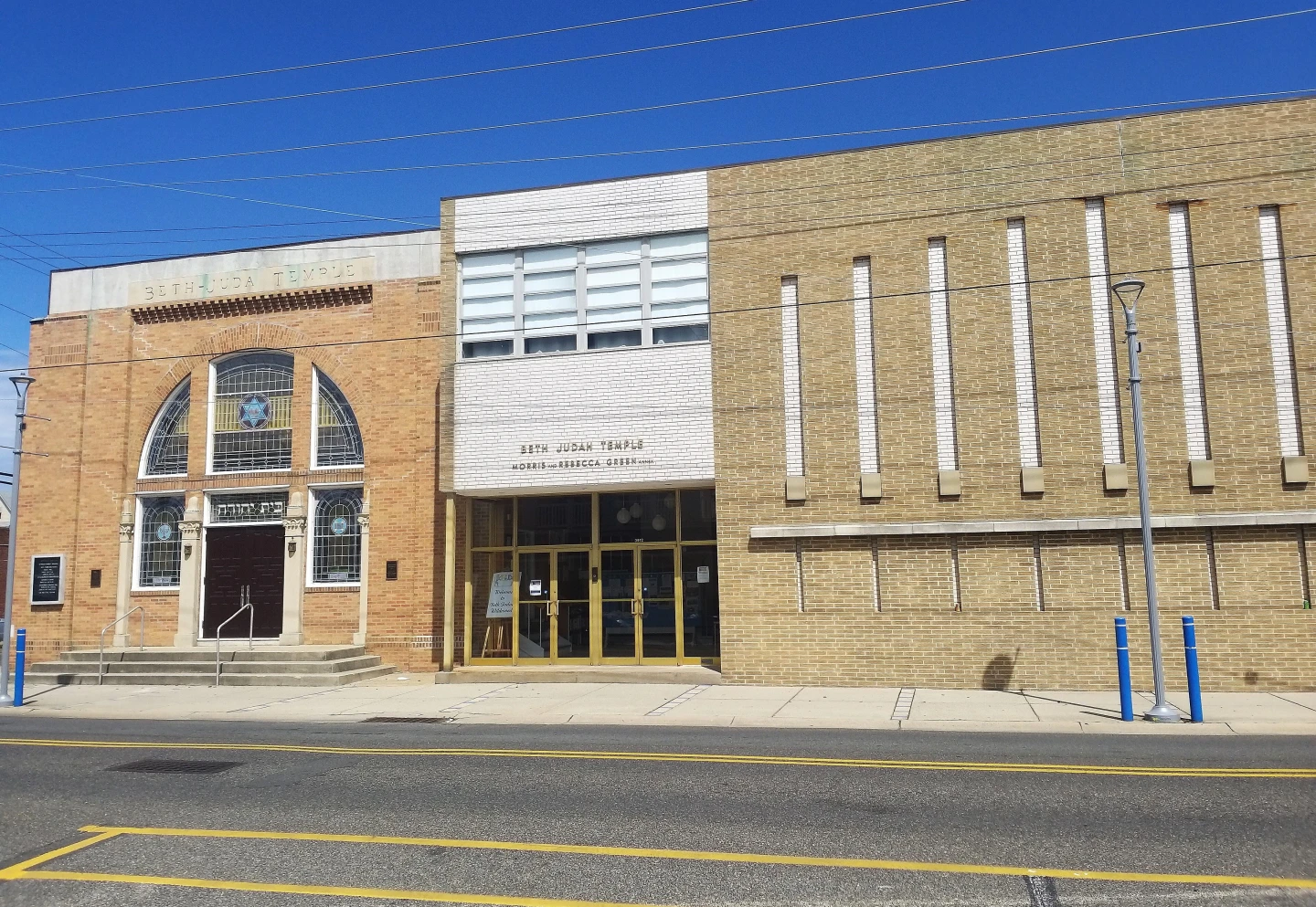
The story of Beth Judah Temple—the only continuing operating synagogue in Cape May County, N.J.—is rooted in a quest for survival and freedom. It holds the history of a people who fled the brutality of Russian Cossacks and almost certain death. Families were divided—some left behind, while others bravely trekked over land and sea to a new world.
In May 1882, 43 Jewish families arrived in Alliance, the settlement named in honor of a Jewish charitable organization that helped sponsor Russian immigration. Located at the northwest corner of Cape May County, the land was a wilderness. Centuries of overgrown vegetation and trees needed to be cleared.
As they learned a new language, the colonists struggled to master unfamiliar farming skills. The U.S. military provided makeshift tents until three large barracks were built. More immigrants arrived, and by July 1882, the colony had expanded to 125 Jewish families—more hands to do the back-breaking agricultural work.
From New York and London, Jewish philanthropists and charities helped. The Hebrew Emigrant Aid Society (HEAS) provided grants for farm equipment, horses and seeds (it is distinct from the later, more familiar Hebrew Immigrant Aid Society but was involved in some of the same areas of charitable work). In 1891, Baron Maurice de Hirsch, a wealthy Jewish industrialist, established a $2.4 million trust fund to bring more than 600 families from Eastern Europe to Woodbine, N.J. It was the beginning of successful farming growth in South Jersey.
Peddlers in the Old Country, the colonists now learned to plow and plant. It was reported that the first generation cleared 50 acres in time for late planting and managed a modest harvest. The sandy soil was perfect for a variety of berries, peaches, corn and potatoes.
In following years, produce was loaded onto horse and buggy to be sold in Philadelphia and New York, where the quality of sweet potatoes brought high prices in the cities and in the borough of Brooklyn. Holding fast to their religion amid an isolated geographical area, services were held in the residences of homesteaders. They worked on Sunday, respecting the Jewish Sabbath on Saturday, with no objections from the local community.
By 1889, Alliance was well on the way to becoming a self-supporting farming community. Kosher meat was brought in from Philadelphia. With an overabundance of fresh produce, a canning factory was built, along with grocery stores, butchers and blacksmiths. It was another step toward economic stability. Jewish schools were established for the children of families.
For years, services were held in private homes until 1914, when Beth Judah Hebrew Temple of Worship was incorporated. After years of fundraising, ground was broken in March 1929. Beth Judah Temple was officially dedicated on Sept. 22, 1929—the holiday of Rosh Hashanah—a month before the stock market crash and the start of the Great Depression.
Jews came from all over the county to worship; however, there was no money to pay a rabbi. In trade, the community recompensed him with homegrown food. If a rabbi wasn’t available, a colonist conducted services.
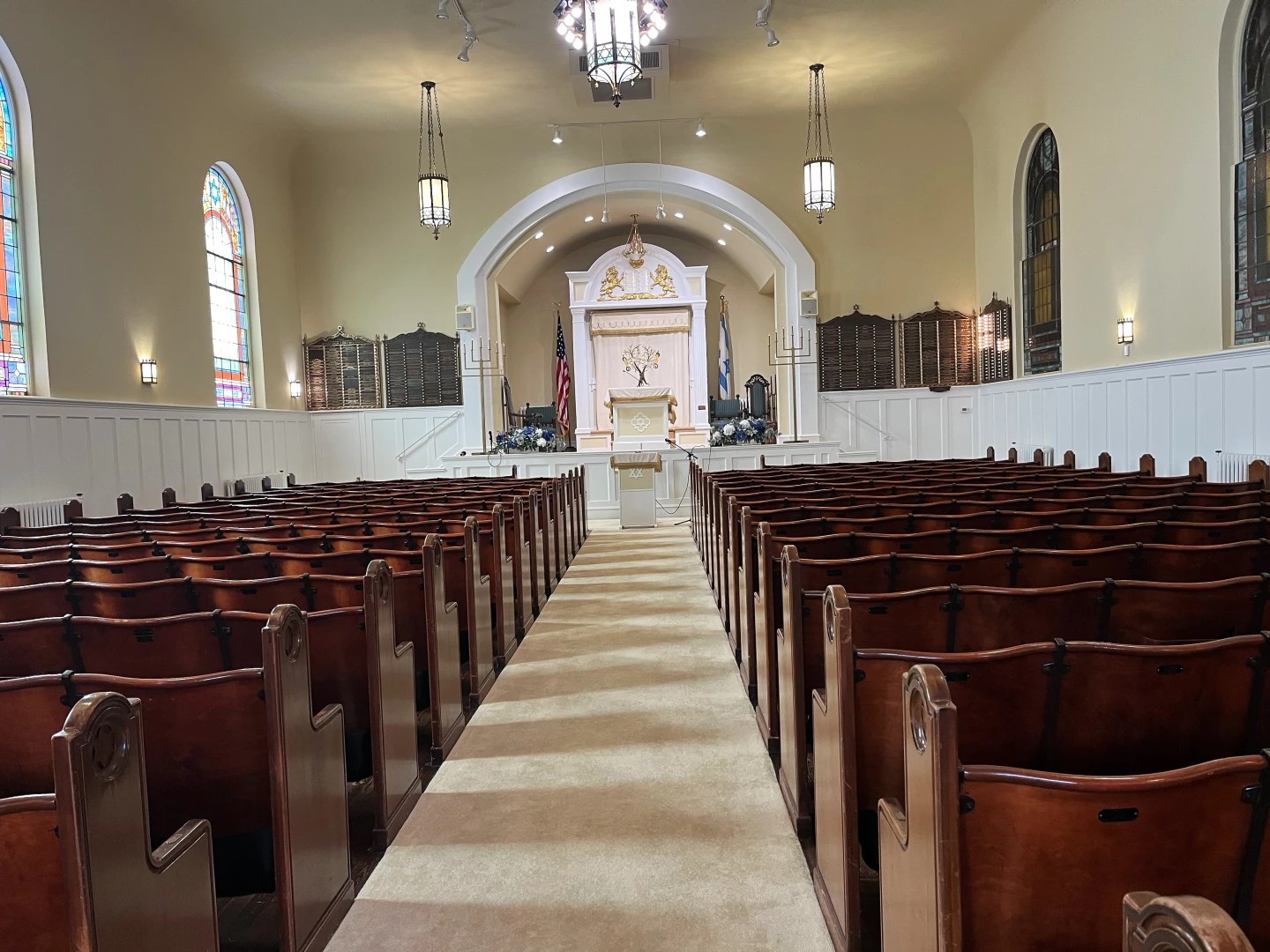
The land, and this building, was for some their first taste of freedom. Inside the sanctuary, outdoor sounds are muffled. Light filters through stained-glass windows, rays falling onto polished wooden seats carved by first-generation colonists, with a balcony overtop where once only women sat. Surrounded by these walls, the once-exiled came to pray in grief, joy and gratitude.
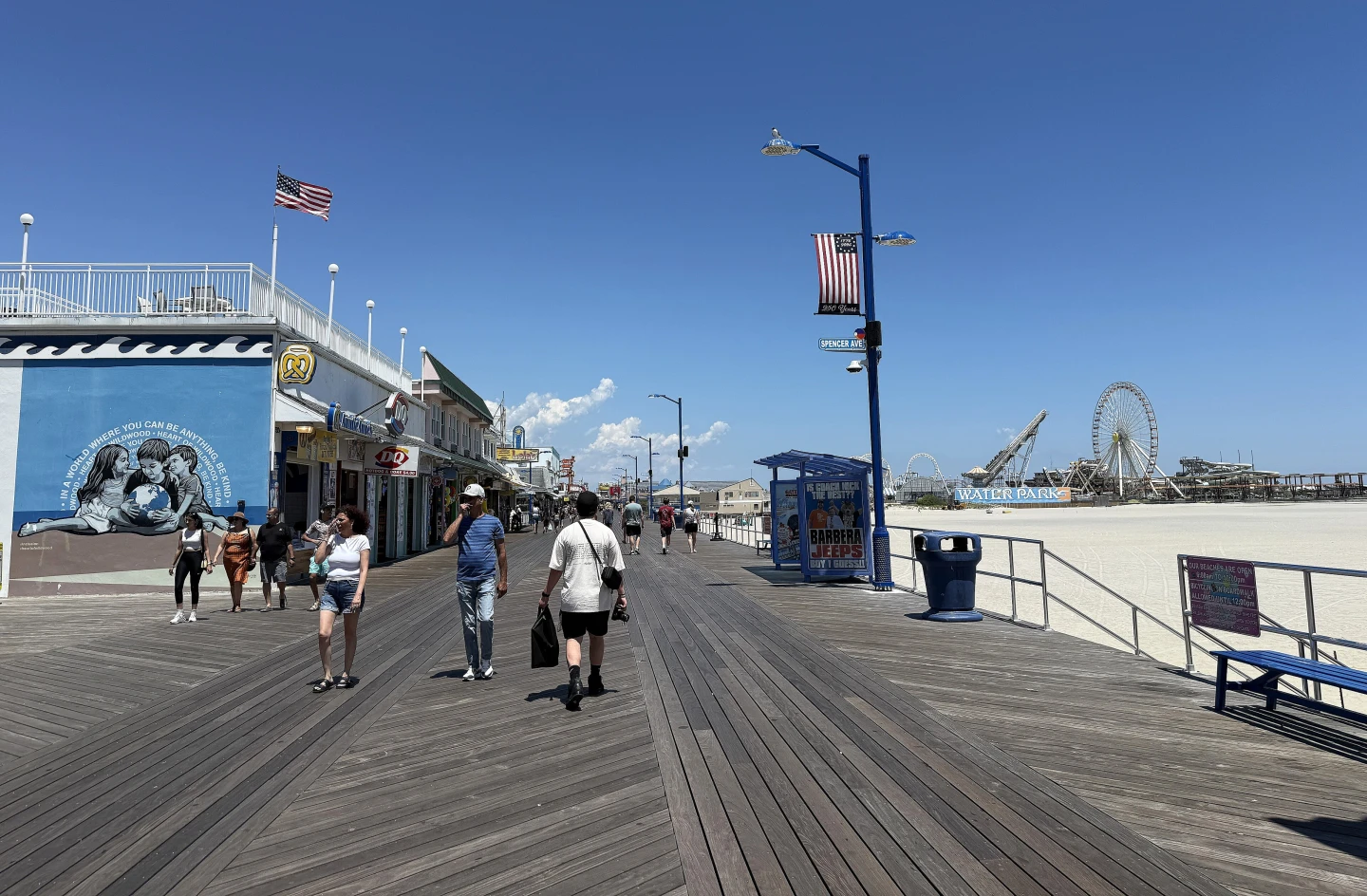
In the early part of the 20th century, visitors were attracted to Wildwood for the warm summers. A second generation provided other skills and professions: doctors, dentists, pharmacists. Colonists were quick to see business opportunities. They brought novelties, candy and snacks to the visitors crowding the boardwalk. Storefront shops were opened, packed with souvenirs, clothing and beach blankets. Many became moderately wealthy. At the time, since Jews were banned from hotels and restaurants, they built their own.
Today, the Wildwood boardwalk teems with souvenir shops, candy and popcorn, beach toys, hot dogs and hamburgers. No kosher restaurants remain.
Ruth explains the continuity, saying that “people who have roots in the area—some are fourth-generation original settlers. They remember the houses their grandparents lived in—the stores, the visits, the food. These are adults who have a hunger for their Jewish connection. Finding Temple Beth Judah is the connection they’ve been searching for. And with Zoom, they can stay in touch.”
Although they may be far from South Jersey and live across the country, these are the folks who support Temple Beth Judah, and some join as members. Several families who can trace their ancestors to the original colonists have moved back into family homes.
The numerous stories are heartwarming, an example of a supportive, respectful community where faiths come together. In the early 1960s, local pastors donated to send Rabbi Yakov Hilsenrath, the leader of Beth Judah, to Israel. (“Peace and Unity” was a series of gatherings between Tabernacle United Methodist Church and Temple Beth Judah.) He led the congregation for 11 years, until 1964, when he left for Highland Park Conservative Temple, two hours north. He died at age 81 in 2014.
Bruce Tell, a non-Jewish volunteer at the Wildwood Historical Museum, often attends Temple events. His wife, Peary, is on the Temple Advisory Committee. Summer happenings, like bagel brunches, are open to everybody, and can attract as many as 120 or people—a mix of residents and visitors. Indeed, summer is where Wildwood shines as a tourist resort on the Jersey shore. A recent Passover seder was celebrated with Temple Beth Shalom in Brigantine, N.J.
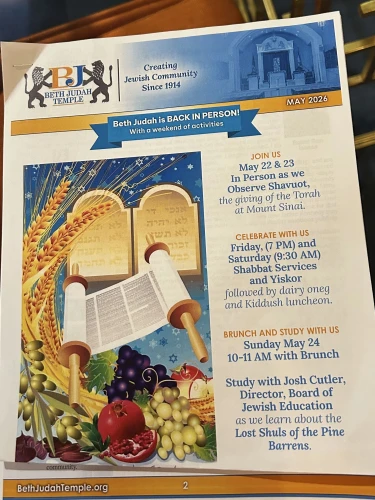
In the off-season, during the High Holidays, non-members will come to pray. Historical programs draw a mix of Jews, non-Jews, visitors and residents. Committees like “Family Promise” donate new clothing for women and children in need. And there’s outreach to the Cape May Coast Guard Center, where cadets come to services and Sunday-morning breakfast. The vision statement in the 12-page newsletter packed with coming events ends with the declaration “… to redefine what it means to be Jewish in today’s world.”
From brunches, lectures, music and learning, Temple Beth Judah has it all, serving a community of faith. It is a beacon—a place where people can come together to celebrate, pray, learn and socialize just as its courageous founders did more than 100 years ago.
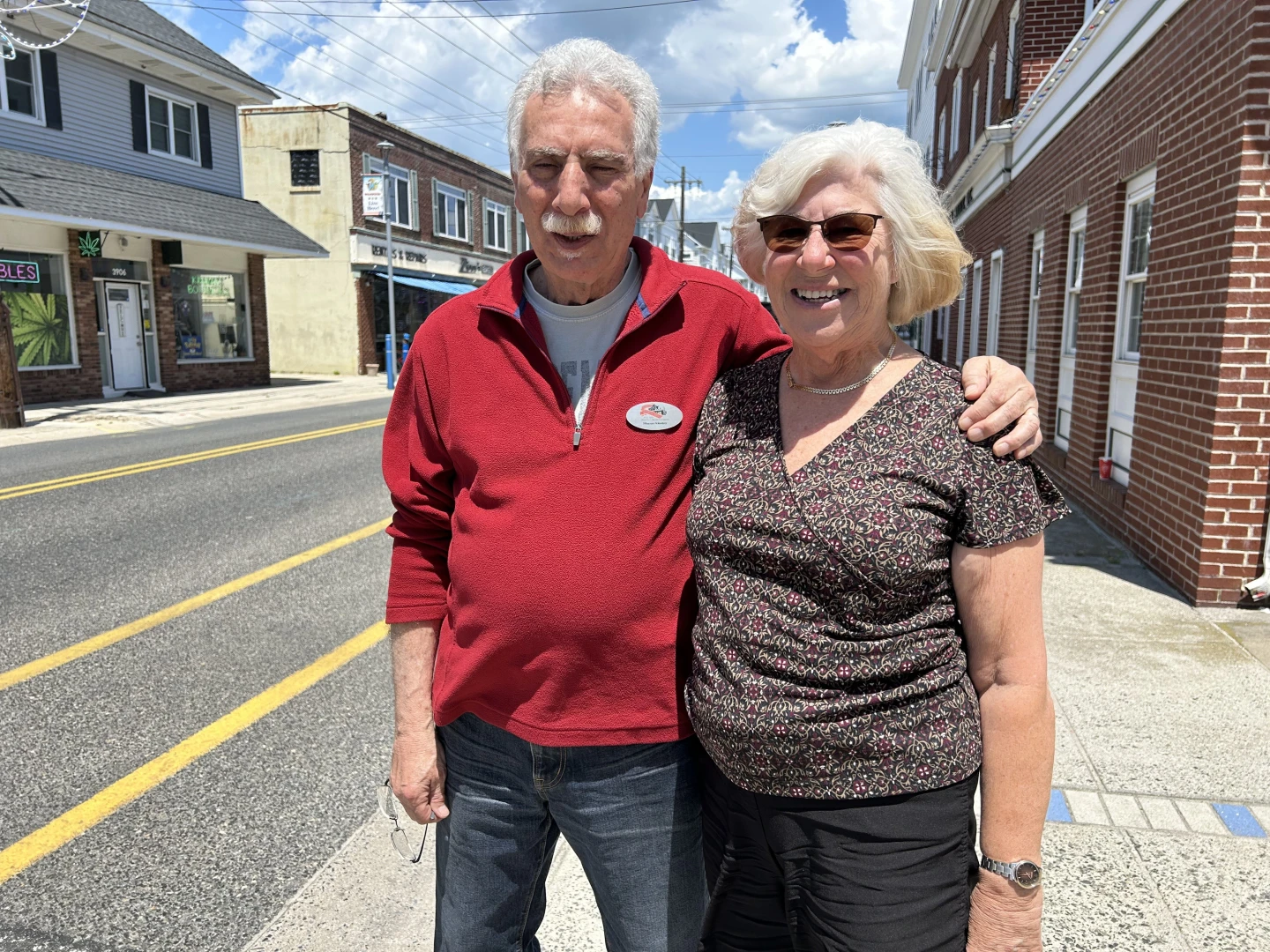
As Ruth Edelman notes, “At Beth Judah, everyone is welcome. We’re a community gathering place—not only for Jews.”
Temple Beth Judah is located at 3912 Pacific Ave., Wildwood, N.J. 08282 (www.bethjudahtemple.org). The Alliance Heritage Center Museum at Stockton University, Galloway, N.J., documents the history of the first successful Jewish farming community in America.
Below is a recipe for a sweet fruit purée thickened with potato or cornstarch—a compote popular with Eastern European Jews, using fruit produced in their adopted land. Get the berries while still at their peak for a fresh sip of summer.
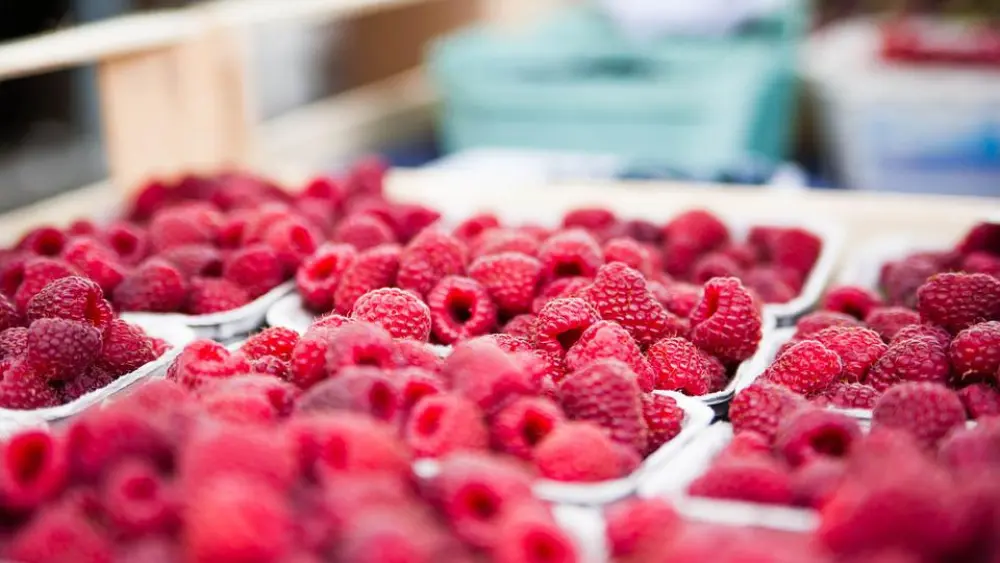
Raspberry Peach ‘Kissel’ (Pareve)
3 tablespoons freshly squeezed lemon juice
In a medium saucepan, combine the peaches, raspberries, sugar, lemon juice and 2 cups water.
Stir and bring to a boil over a medium-high heat.
Reduce heat to simmer. Cover and cook until the fruit is soft, about 10 minutes.
Mix the cornstarch with the remaining half-cup water. Blend until smooth. Add to the fruit.
Bring to a boil over medium heat, stirring constantly until thickened and clear, about three to four minutes. Transfer to a blender or food processor. Purée until smooth.
If desired, strain to remove any seeds. Pour into small glass dessert dishes.
Cover, refrigerate and serve cold.




Get the latest updates in our WhatsApp group.







Beth Judah Temple in Wildwood, N.J., the only continuously operating synagogue in Cape May County, has a rich history rooted in the late 19th-century arrival of Russian Jewish immigrants fleeing persecution. These families established Alliance, a Jewish farming community, in 1882, developing agricultural skills and maintaining their religious practices in an isolated area. The synagogue, officially dedicated in 1929, served as a vital community hub, with early services sometimes compensated with homegrown food.
- In 2025, Beth Judah Temple was listed on both the New Jersey and National Registers of Historic Places.
- Plans are underway to establish a Museum and Cultural Center to preserve and share the Temple's history and traditions.
- The Temple continues to thrive, attracting both long-time residents and new members like Ruth and Morey Edelman, who became deeply involved after moving to the area.
- It serves as an inclusive community gathering place, hosting events open to all faiths and engaging in outreach, embodying its vision to "redefine what it means to be Jewish in today's world." As Ruth Edelman states, "At Beth Judah, everyone is welcome. We're a community gathering place—not only for Jews."
© All rights to the original article belong to the source. Din Online shows a headline, an excerpt and a link only. The objectivity rating is computed automatically and is an estimate only.
Discussion
No comments yet — be the first to comment.