Beyond 1979: Tehran, Jerusalem and the battle for a New Middle East
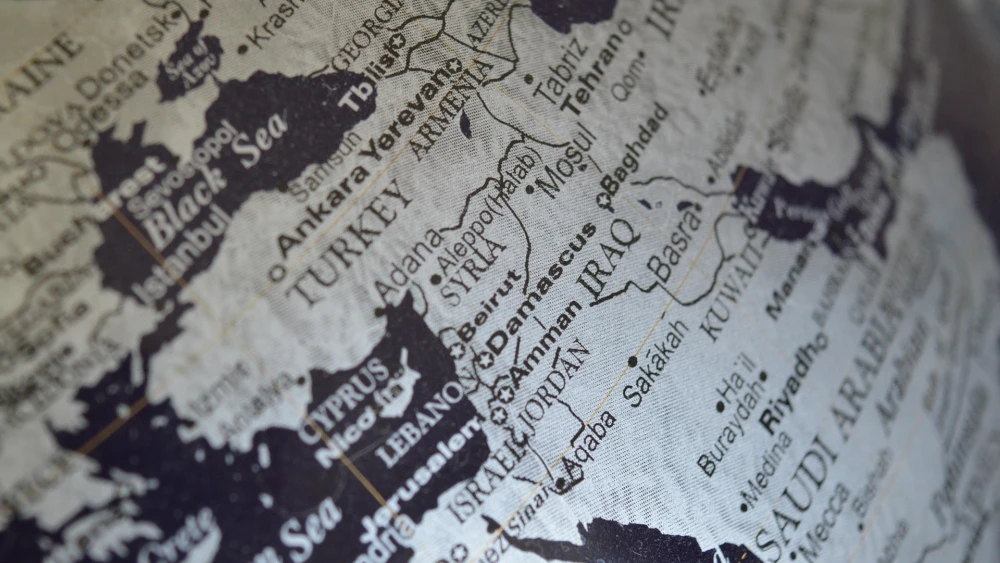
There is an old and uncomfortable habit in international politics: The grandest strategic arguments are often constructed far from the people expected to bear their consequences.We speak confidently of deterrence, strategic equilibrium, regional order and spheres of influence. Nations become pieces on a geopolitical chessboard, governments become instruments of balance, and millions of ordinary people disappear beneath abstractions. Yet behind every theory of the balance of power lies a question that political realism too often avoids: Who is expected to pay for that balance and for how long?In conversations with people from Iran’s neighboring countries, I have increasingly encountered an argument that deserves serious consideration. Many who make it neither admire the Islamic Republic nor approve of its ideology, proxies or regional behavior. Their concern is geopolitical.Somebody, they argue, must counterbalance Israel. Without the Islamic Republic as a formidable adversary, Israel could emerge as the uncontested military power of the…

The article argues against the notion that the Islamic Republic of Iran is a necessary counterbalance to Israel in the Middle East, a view held by some who fear an unchecked Israeli military power. It challenges the idea that the Iranian people should sacrifice their political future to maintain this balance, emphasizing that Iran and the Islamic Republic are distinct entities. The author suggests that a post-1979 Iran, even if powerful, could be secular, nationalist, and friendly towards Israel, restoring pre-1979 relations. Such a transformation would fundamentally alter the strategic architecture of the Middle East, potentially leading to a regional order of strong, sovereign states balancing each other without subjugation. The article concludes by stating, "Security matters. Balance matters. But human beings matter, too," advocating for a future where Iran and Israel could be partners rather than adversaries.
© All rights to the original article belong to the source. Din Online shows a headline, an excerpt and a link only. The objectivity rating is computed automatically and is an estimate only.
Discussion
No comments yet — be the first to comment.