Board of Peace’s Gaza envoy denies financial deal with Hamas: ‘Not on the table’
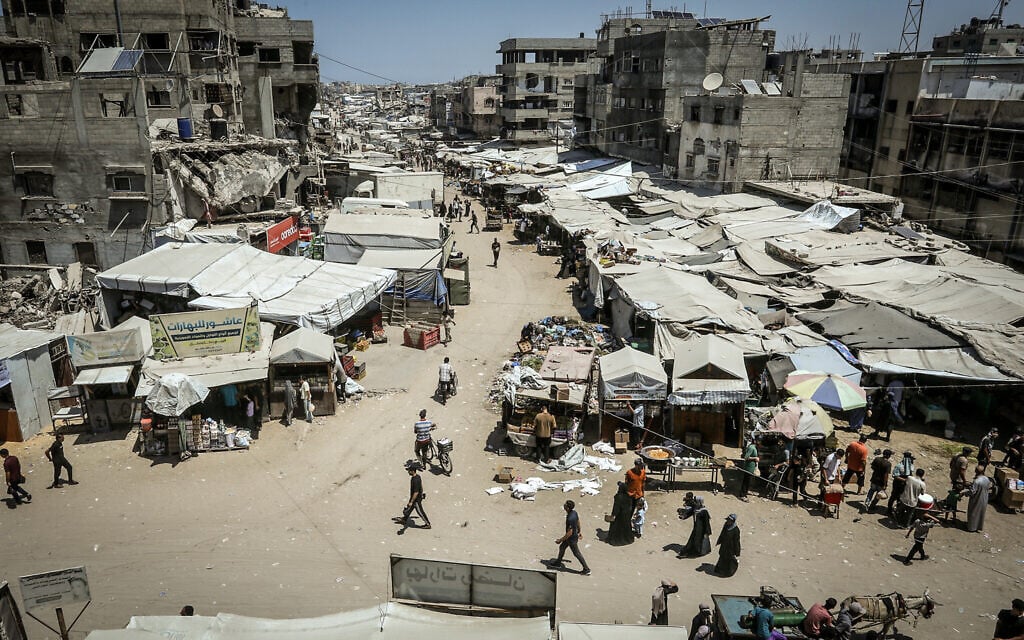
The Board of Peace on Wednesday denied that there is any “financial agreement” with Hamas, after the Kan public broadcaster reported that the body agreed to cover $400 million of Hamas’s debt to outside parties as part of its roadmap for the terror group’s disarmament.
Instead, the sum earmarked in the disarmament plan will be used to pay severance to Hamas civil servants who don’t end up being hired by the new Palestinian technocratic government meant to run the territory, an Arab diplomat from one of the mediating countries told The Times of Israel on Wednesday.

“The claims that there is a financial agreement between the Board of Peace and Hamas are false,” Board of Peace Gaza envoy Nickolay Mladenov wrote in Hebrew on X on Wednesday. “No such proposal was discussed, negotiated, or considered, and it will not be on the table in the future either.”
“Hamas will have no role in the governance of Gaza and will have no access to funds,” he continued.
The issue gained attention on Tuesday when Kan reported that Hamas was assured by mediators that $400 million of its debt would be covered by the Board of Peace if it agreed to the disarmament plan.
Prime Minister Benjamin Netanyahu publicly rejected the Board of Peace’s disarmament plan on Sunday, when he said Israeli troops would not withdraw from the enclave until Hamas is “genuinely disarmed.” Despite the public rejection, a Board of Peace official told Reuters on Monday that the disarmament plan was still on the table and that discussions with Israel were continuing.
Clause 5 of the plan states that the new Palestinian technocratic government, known as the National Committee for the Administration of Gaza (NCAG), “shall seek to assess the legitimate commitments to suppliers, contractors and other parties — up to a total amount of no more than $400M — and address them.”
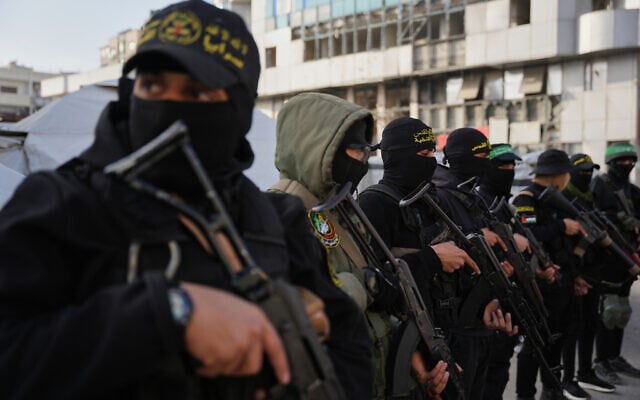
The NCAG is overseen by the Board of Peace. A Board of Peace official stressed to The Times of Israel that the clause is not the same as a financial agreement.
“It allows legitimate outstanding obligations, such as unpaid public servants or suppliers who provided genuine services to the population, to be assessed on their merits. That should not be confused with paying Hamas or covering obligations linked to terrorism, corruption or financial mismanagement,” the official said.
Explaining the policy further, another source familiar with the matter told The Times of Israel that, upon taking power, the NCAG will conduct a lengthy audit of Hamas’s finances.
If the audit uncovers payments to contractors for “legitimate” activity that were not paid by Hamas, the NCAG will use that $400 million fund to pay back the contractors, the source said, adding that background checks will also be conducted to ensure that the contractors are not tied to terrorism.
In addition, the $400 million will be used to provide severance packages for Hamas civil servants who do not end up being hired by the NCAG, the Arab diplomat said.
The diplomat noted that the severance packages are a legal requirement and necessary for limiting poverty in Gaza, much of which was destroyed in the war.
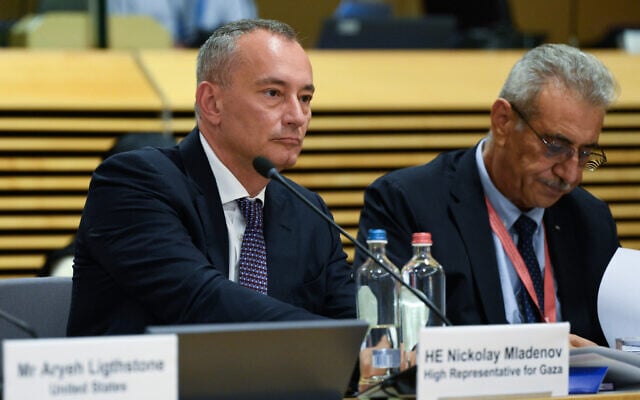
Mladenov, in his Hebrew post, said contracts and payments would be reviewed.
“Board of Peace funds are not transferred through Hamas,” Mladenov wrote. “Every contract undergoes review and approval, every project is verified before payment, and all accounts are fully open to audit by donor governments.”
“There are more than enough genuine challenges in this effort. There is no need to invent additional ones,” he added.
Mladenov also again pushed Israel to endorse the roadmap for Gaza disarmament, saying it is Jerusalem’s best option.
“Israel is not required to rely on trust or take irreversible steps before verified actions are taken on the ground,” Mladenov said. “The goal remains the complete dismantling of weapons and ensuring that Gaza can never again pose the kind of threat Israel experienced on October 7.”
“The alternatives are for Hamas to remain in power and rebuild its military capabilities, or for Israel to resume control over Gaza’s entire population, at an enormous human, military and economic cost,” he argued.
“The Board of Peace offers a third option: full disarmament, civilian governance, an international security presence under American command, and oversight and verification mechanisms,” Mladenov said.
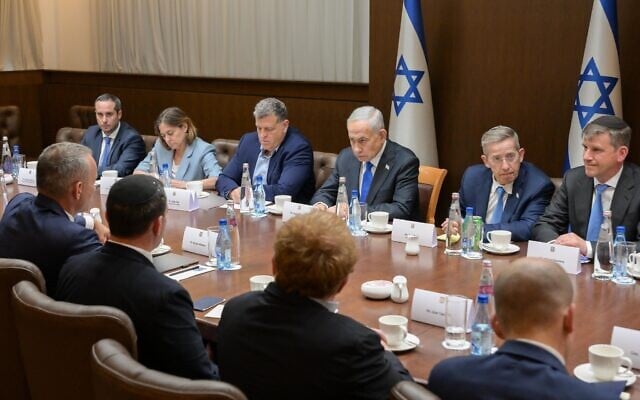
That international security presence, known as the International Stabilization Force, he stressed, is meant to “support disarmament and the establishment of a civilian government in which Hamas has no role. That has been our position from the outset, and it has not changed.”
Morocco is slated to be the first country to actually deploy troops in Gaza under that framework, officials familiar with the Board of Peace’s plans have told The Times of Israel. Three other countries — Albania, Kazakhstan and Kosovo — have also agreed to contribute troops to the ISF.
The Board of Peace envisions the establishment of a pilot humanitarian zone in the Rafah area of southern Gaza, from which Israeli troops would withdraw and be replaced by personnel from the ISF. The arrangement would allow an initial group of vetted Gazans to relocate from Hamas-controlled territory.
Mladenov also said that a mechanism has begun functioning for monitoring violations of the ceasefire in Gaza, which began last October.
Trump announced last month that there had been a breakthrough in his peace plan for the Gaza Strip, in the form of the 15-point proposal for the IDF to withdraw and Hamas to hand over its weapons and transfer governance of Gaza to the technocratic committee.
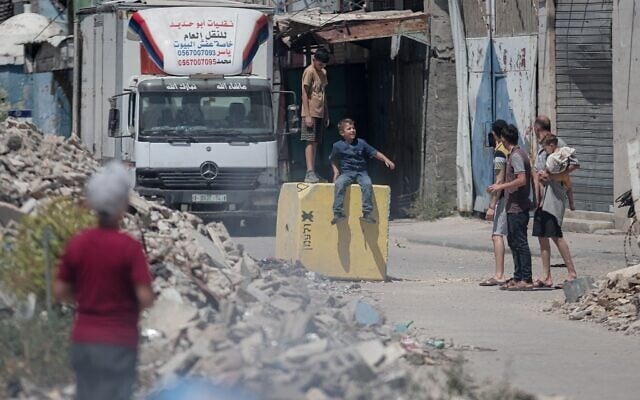
Despite Netanyahu’s claim that Israel has rejected the terms of the proposal, IDF soldiers in the Gaza Strip told Channel 12 on Monday that the rules of engagement have changed dramatically since the disarmament roadmap was publicized, suggesting that there are quiet agreements with the board to drastically rein in operations.
For example, The Times of Israel reported that the IDF had halted a special operation to hunt down and kill every person involved in the October 7, 2023, massacre, which began the war in Gaza.

As a multimedia journalist, my job is to take the quality, fact-based journalism produced by The Times of Israel newsroom and make it accessible across every platform — from Instagram posts to podcasts to short-form videos.
This is how many, especially young people, consume news these days. But misinformation is rampant on social media. Our team at ToI produces accurate, responsible short-form reporting on Israel and the Jewish world.
If you believe in the importance of factual social media journalism, please consider joining our reader support group, The Times of Israel Community. Your financial support is essential to sustain responsible multimedia reporting.
— Gabriella Jacobs, multimedia journalist

We’re really pleased that you’ve read X Times of Israel articles in the past month.
That’s why we started the Times of Israel – to provide discerning readers like you with must-read coverage of Israel and the Jewish world.
So now we have a request. Unlike other news outlets, we haven’t put up a paywall. But as the journalism we do is costly, we invite readers for whom The Times of Israel has become important to help support our work by joining The Times of Israel Community.
For as little as $6 a month you can help support our quality journalism while enjoying The Times of Israel AD-FREE, as well as accessing exclusive content available only to Times of Israel Community members.
Thank you, David Horovitz, Founding Editor of The Times of Israel







© All rights to the original article belong to the source. Din Online shows a headline, an excerpt and a link only. The objectivity rating is computed automatically and is an estimate only.
Discussion
No comments yet — be the first to comment.