Britain’s new leadership means a tougher Israel policy
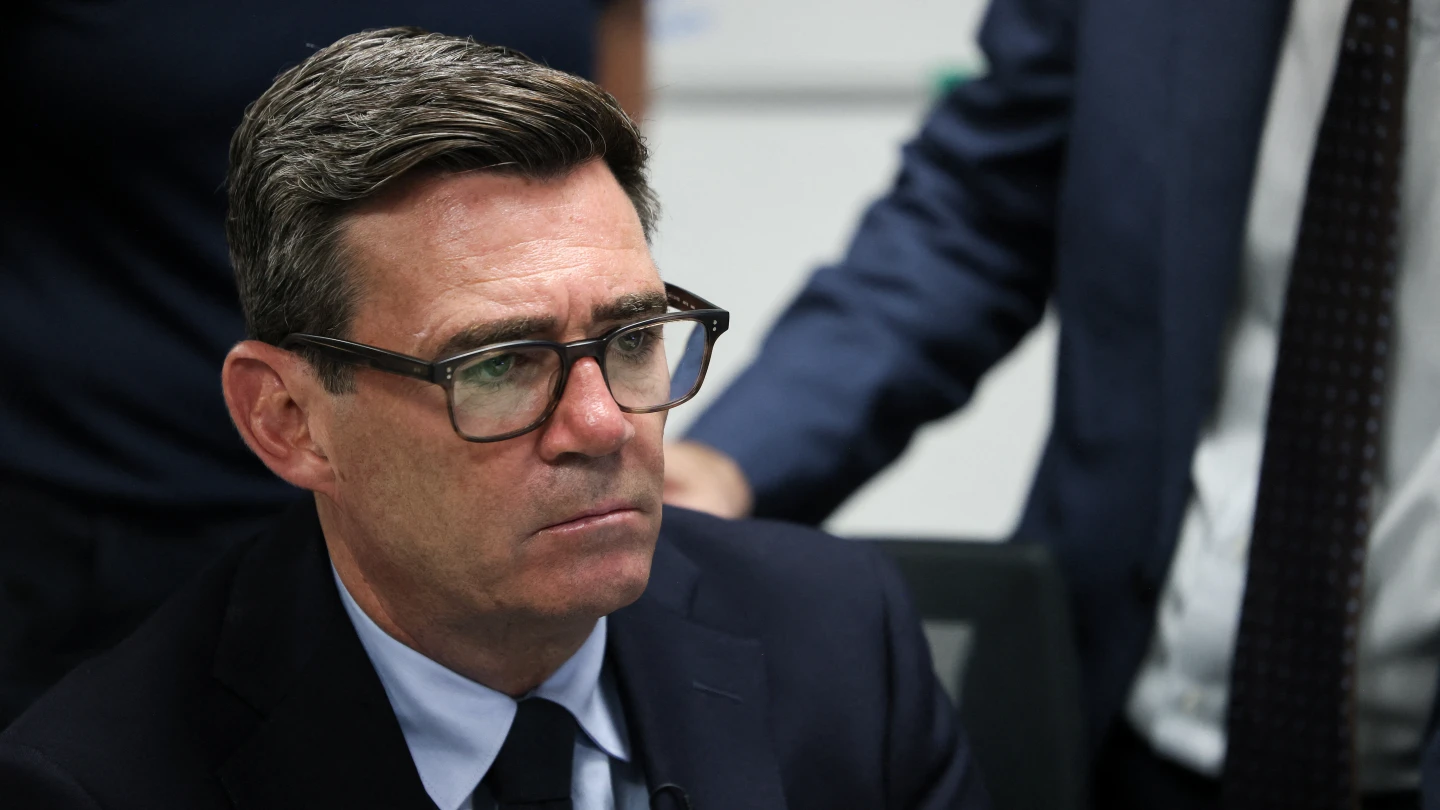

The United Kingdom has a new prime minister, Andy Burnham, and, at the same time, Britain is taking an increasingly tough line on Israel. That process did not begin with Burnham, but his early decisions suggest he intends to continue and intensify it. From expanding sanctions to trade restrictions on settlements, the architecture of his policies is already beginning to take shape.
Burnham spent almost a decade as mayor of Greater Manchester, which is home to one of Europe’s largest Jewish communities. Perhaps this influenced his historically pro-Israel stance. In 2015, he joined Labour Friends of Israel, a parliamentary group dedicated to strengthening U.K.-Israel relations and opposing the BDS movement. That same year, Burnham declared that, if elected leader, his first overseas visit would be to Israel. Fast forward to 2026 and it is clear that things have changed.
As a harbinger of things to come, Burnham has recently released statements apologizing for his party’s previous stance on Israel and Gaza, saying that Labour had “not got it right.” He promised Labour would “do better” under his government and signaled that he was prepared to consider further sanctions and a ban on trade with Israeli settlements.
This was concerning in and of itself, but so was the timing of Burnham’s statements. They came just prior to his installation as prime minister. Critics and Jewish organizations argued that the premature announcement was divisive, signaling that Israel would be among the first issues on which Burnham intended to distinguish his leadership.
Perhaps tellingly, Burnham’s choice for his first long-form interview as prime minister was not with the mainstream media, but with celebrity football commentator Gary Lineker on Lineker’s YouTube podcast. Lineker recently left the BBC after facing extensive criticism over allegations of antisemitism relating to his social media activity. This included incendiary commentary about Israel and a post he shared that featured a picture of a rat captioned, “Zionism explained in two minutes.”
For a politician who had once cultivated close ties with Britain’s Jewish community, it was a striking choice for Burnham.
That said, some perspective is in order. For a substantial number of politicians on the progressive left, Israel’s right to exist is not taken as a given but as a proposition to be debated. The Green Party’s leader Zack Polanski has described Israel as a “genocidal apartheid state.” At the Greens’ last conference, delegates planned a motion calling for a “single Palestinian state” and the right to achieve it using “armed struggle.” Last week, Hackney’s newly elected Green mayor announced she wanted to “un-twin” the London borough from the Israeli city of Haifa. She then ghoulishly gave Haifa until October 7 to respond.
When the bar is set that low, it is tempting to feel relief that Labour, with its commanding majority, is in government rather than the Greens. But the Green Party remains an important force shaping the political environment in which Labour formulates its Israel policy. Since Polanski became leader, the Greens have gained support, especially among younger voters and those disillusioned with Labour, who are dissatisfied because they believe Labour has not taken a sufficiently hard line on Israel. Burnham cannot ignore this political reality. He faces pressure not only from within his own party, but also from the Greens to Labour’s left, who compete for many of the same voters.
Labour has not yet crossed certain red lines. Has it called for Israel’s destruction? No. Does it recognize Israel’s right to exist? Yes. Does it accept Israel’s right to defend itself? Yes. But professing those principles is one thing; pursuing policies that uphold them is another. Labour’s increasingly hardline approach to Israel sits uneasily next to its commitments. A state’s right to exist is inseparable from its ability to safeguard its own people and exercise its sovereignty. Policies that weaken Israel’s capacity to do either render Labour’s professed principles hollow in practice.
The party continues to advocate for a two-state solution and has already recognized “Palestine” as a state, which was announced while Israeli hostages were still being held in Gaza. The party also argues that the expansion of Israeli settlements in Judea and Samaria undermines prospects for peace. Burnham has said there is an “unjustifiable humanitarian disaster” unfolding there. He has also been pressured by a letter signed by 80 parliamentarians to recognize the U.N.’s commission of inquiry findings that Israel is committing a genocide.
Burnham’s appointment of Ed Miliband as foreign secretary emphasizes the direction his government is likely to take. In his first statement, Miliband said he would “work tirelessly to seek a sustainable peace in Palestine and Israel, including an end to the terrible suffering of the people of Gaza and security for the people of Israel.”
Miliband also declared the government’s intention to “seek to end the conflict in Iran and fully reopen the Strait of Hormuz.” This aspiration is difficult to reconcile with reports that he led a cabinet revolt against allowing the United States to use British bases during its military action against Iran. This indicates that the Burnham government may be less willing to support such military action than either Washington or Jerusalem would expect or prefer, and is more inclined to pursue diplomacy over military alignment.
Miliband will be advised by Stephen Doughty, the minister of state for the Middle East who also oversees Britain’s sanctions regimes. Doughty has repeatedly voiced concern about Israeli settlement activity and told the House of Commons that “settler violence is intense and threatens the integrity of the state of Palestine.”
Doughty has also made clear that sanctions against violent settlers are only the beginning. In July, he told the House of Commons that although there have been sanctions against violent settlers, he was concerned that he could not yet sanction “a contractor working on the settlements,” adding, “We need to expand our sanctions powers.”
That ambition is already beginning to translate into policy: The Burnham government has confirmed it is drawing up plans to prohibit imports from and exports to Israeli settlements in Judea and Samaria. Such a ban would go well beyond the existing targeted sanctions on violent settlers, potentially cutting off a range of goods and commercial activity linked to the settlements themselves. This would impact anyone doing business in the area, directly affecting ordinary people’s livelihoods.
Exactly when these expanded sanctions will be introduced remains uncertain. Officials within the Foreign Office have reportedly questioned how enforceable it would be under the existing sanctions framework, which suggests that delivering on Burnham’s stated ambitions may require not only political will but also practical changes to the way Britain’s sanctions regime is designed and enforced.
There are also political considerations. Some parliamentary critics of Israel are concerned that imposing sanctions before Israel’s October elections could prove counterproductive, allowing Israeli Prime Minister Benjamin Netanyahu to use international criticism to rally voters and boost his electoral prospects.
Burnham’s early decisions, the appointments he has made and the policies his ministers are developing all point in the same direction: a government willing to increase diplomatic and economic pressure on Israel. Political constraints, legal questions and practical difficulties may slow aspects of Labour’s agenda, but for Jerusalem the broader trajectory is already clear. Britain is moving towards a more confrontational relationship with the Jewish state characterized by criticism, diplomatic pressure, trade restrictions and harsher sanctions.



Get the latest updates in our WhatsApp group.






Britain's new Prime Minister, Andy Burnham, is signaling a tougher policy towards Israel, a shift from his previously pro-Israel stance. His government is developing plans to expand sanctions and implement trade restrictions on Israeli settlements. This includes a potential ban on imports from and exports to settlements in Judea and Samaria, going beyond existing targeted sanctions on violent settlers. Burnham's appointments, such as Ed Miliband as Foreign Secretary and Stephen Doughty as Minister of State for the Middle East, reinforce this direction. Doughty has expressed concerns about Israeli settlement activity and the need to expand sanctions powers. While Labour still recognizes Israel's right to exist and defend itself, its policies are increasingly seen as undermining these principles. The timing of Burnham's statements, made just before becoming prime minister, and his choice of an interview with Gary Lineker, who has faced antisemitism allegations, have drawn criticism.
© All rights to the original article belong to the source. Din Online shows a headline, an excerpt and a link only. The objectivity rating is computed automatically and is an estimate only.
Discussion
No comments yet — be the first to comment.