Bronx walking tour animates Fordham neighborhood’s forgotten Jewish sites
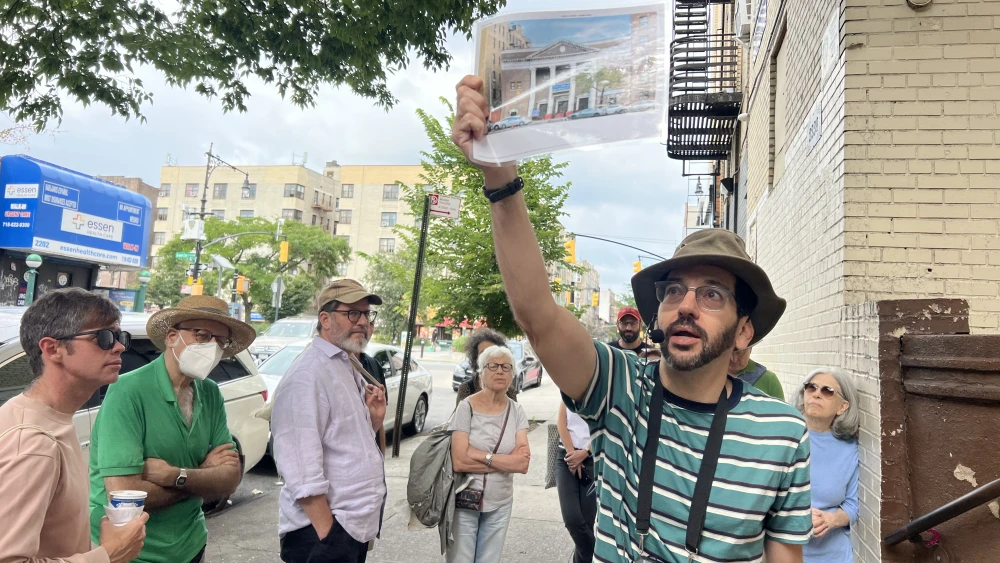
On a breezy Sunday morning in the Bronx, about 20 people gathered near the 182nd-183rd Street subway station to explore a side of the neighborhood near Fordham University that is easy to miss today—its Jewish past.
“I find it fascinating that there are so many layers of history that people aren’t aware of,” David Herszenson, a physician and licensed city guide, told JNS at the end of the Aug. 30 “Jewish life” walking tour, which ran for two hours.
 Xiaomi Smart Band 10 Review: The Ultimate Budget Fitness Tracker for 2026
See the review →
Xiaomi Smart Band 10 Review: The Ultimate Budget Fitness Tracker for 2026
See the review →
Herszenson told attendees that the Bronx used to be called the “Jewish borough.”
“It was almost half Jewish,” he told the group, on a tour organized by the Fordham Center for Jewish Studies as part of its Bronx Jewish History Project.
“The south Bronx was majority Jewish for a while,” he said.
Herszenson’s tour, which he has been leading since the pandemic, didn’t actually cover the campus of Fordham, a private Jesuit school, but it snaked around the neighborhood, including sites that used to be synagogues, movie theaters, businesses and other landmarks, all of which offered glimpses of the Jewish community that once lived there.
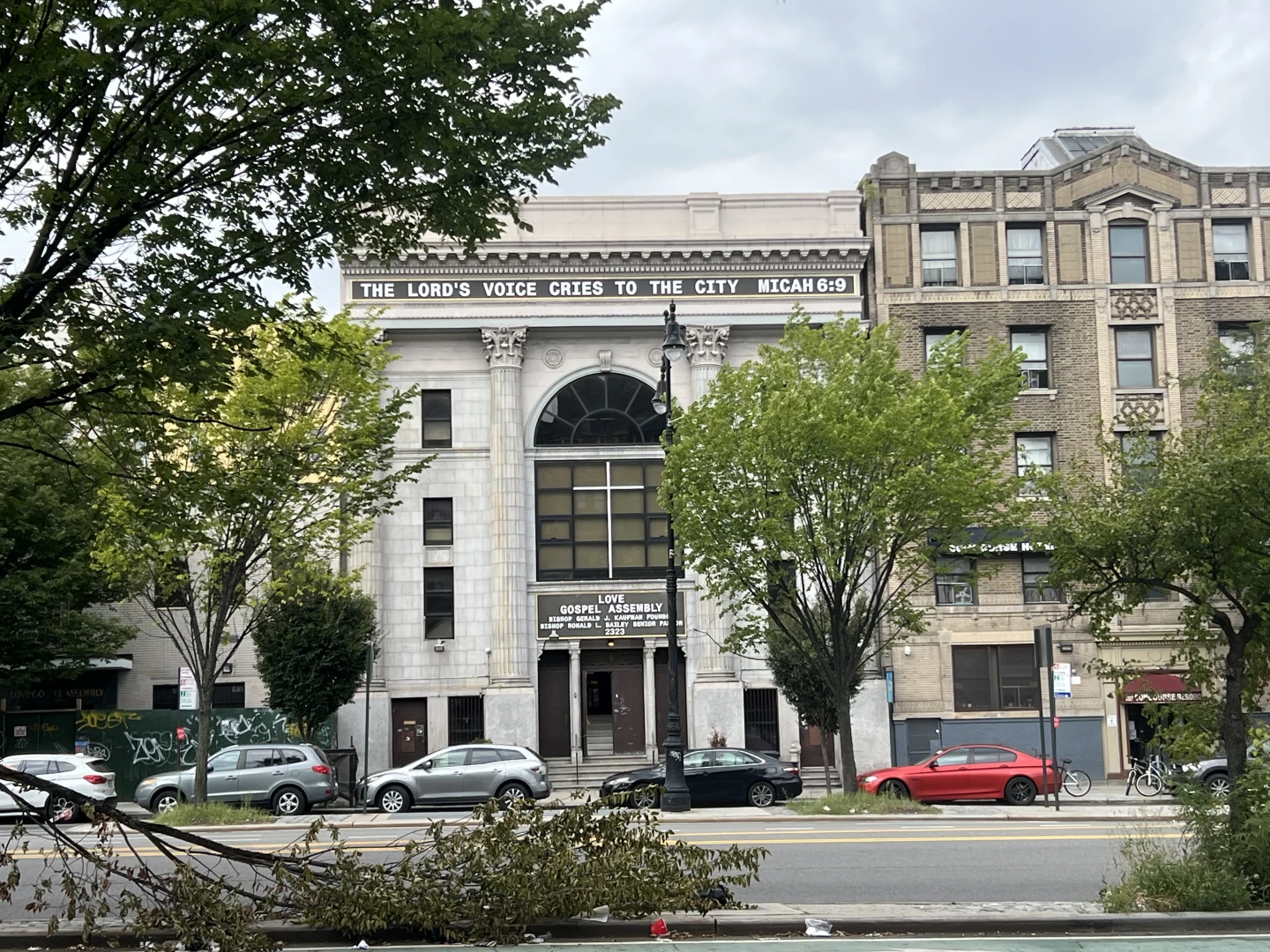
Across the street from Love Gospel Assembly, a church with two Corinthian columns on the facade and an inscription quoting “the Lord’s voice cries to the city” from Micah 6:9, Herszenson drew the attention of participants to two Jewish stars embedded in the stones above some ironwork.
The stars, dwarfed by a large cross closer to street level and traces of the former Concourse Center of Israel, were easy to miss, and participants appeared to be surprised when the guide pointed them out.
“They retain some Jewish elements,” Herszenson said of the church, which he said still has the original ark and Ten Commandments inside. He passed around photos of those architectural elements in the interior.
“I actually emailed them asking if we could go in, but they didn’t reply,” he told the group.
Herszenson also told participants about the site of the former Reform synagogue Tremont Temple Gates of Mercy, which was constructed around 1920 for a congregation that traces its roots back 10 years prior.
The synagogue, which served German Jews, was converted to a church and has since been demolished. Herszenson shared a photograph of the ark doors, which are preserved at Congregation Beit Simchat Torah in Manhattan.
He told attendees that the synagogue used to be an ornate building, which came to be surrounded by a high-density apartment development, and which is now being developed for housing.
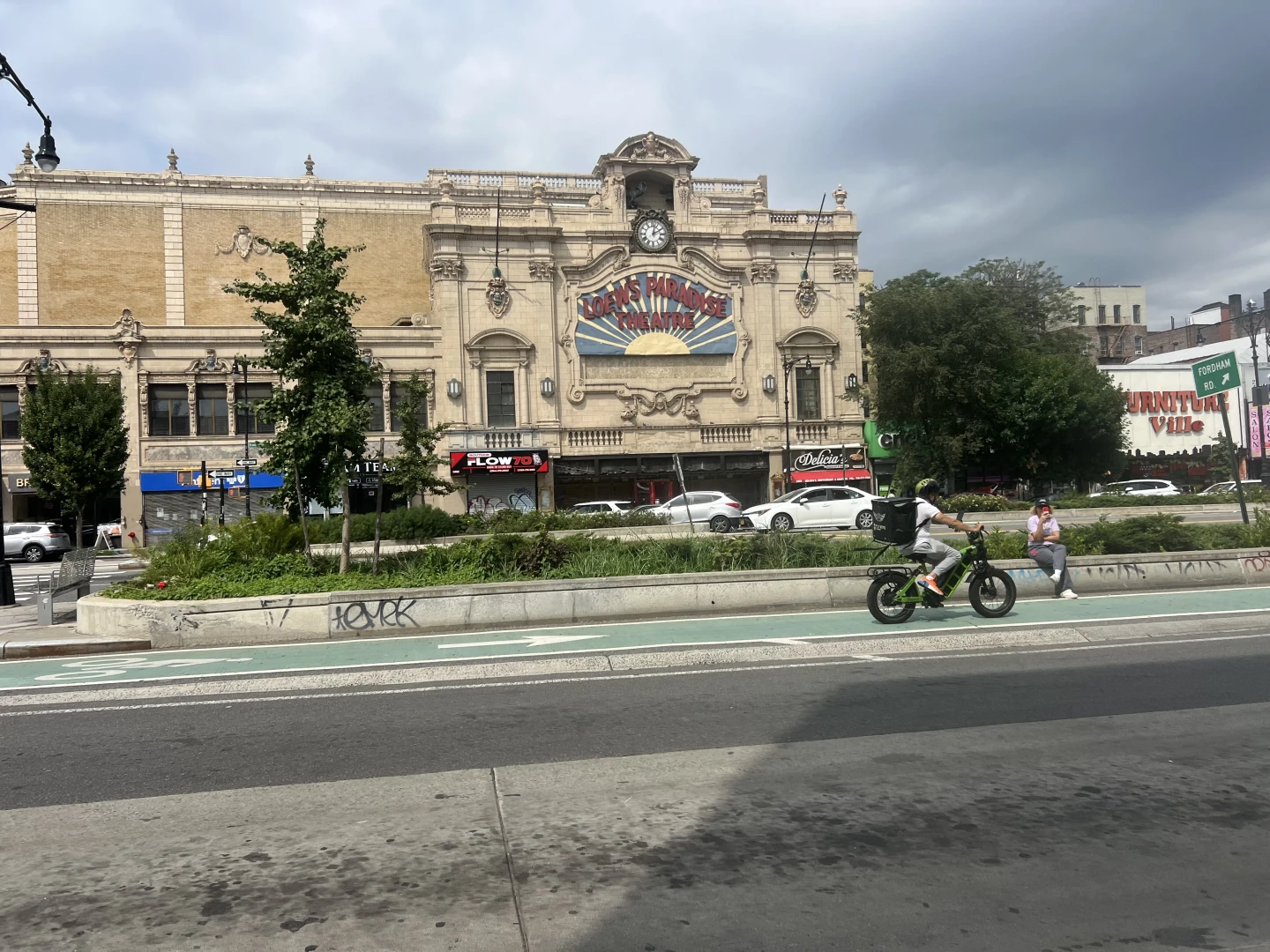
In addition to the two former synagogues, Herszenson told participants about business and entertainment venues that once drew Jewish crowds, and which have since faded away and been replaced by other kinds of stores.
Stanley Kubrick, the filmmaker and photographer, and other Jews used to go to movies at theaters, including the former Loew’s Paradise Theatre, which inspired the young Kubrick, according to Herszenson. He showed the group the facade of the building, a city landmark which still contained the Loew’s name, set in front of a stylized sun and beneath a clock.
Herszenson also told attendees about the ice cream parlor Krum’s, which used to be across the street from Loew’s and which once had five soda fountains and 17 “soda jerks,” or people operating the soda fountains.
On Saturday nights, crowds became so large that people would form a mass several feet deep trying to reach the counter, Herszenson said.
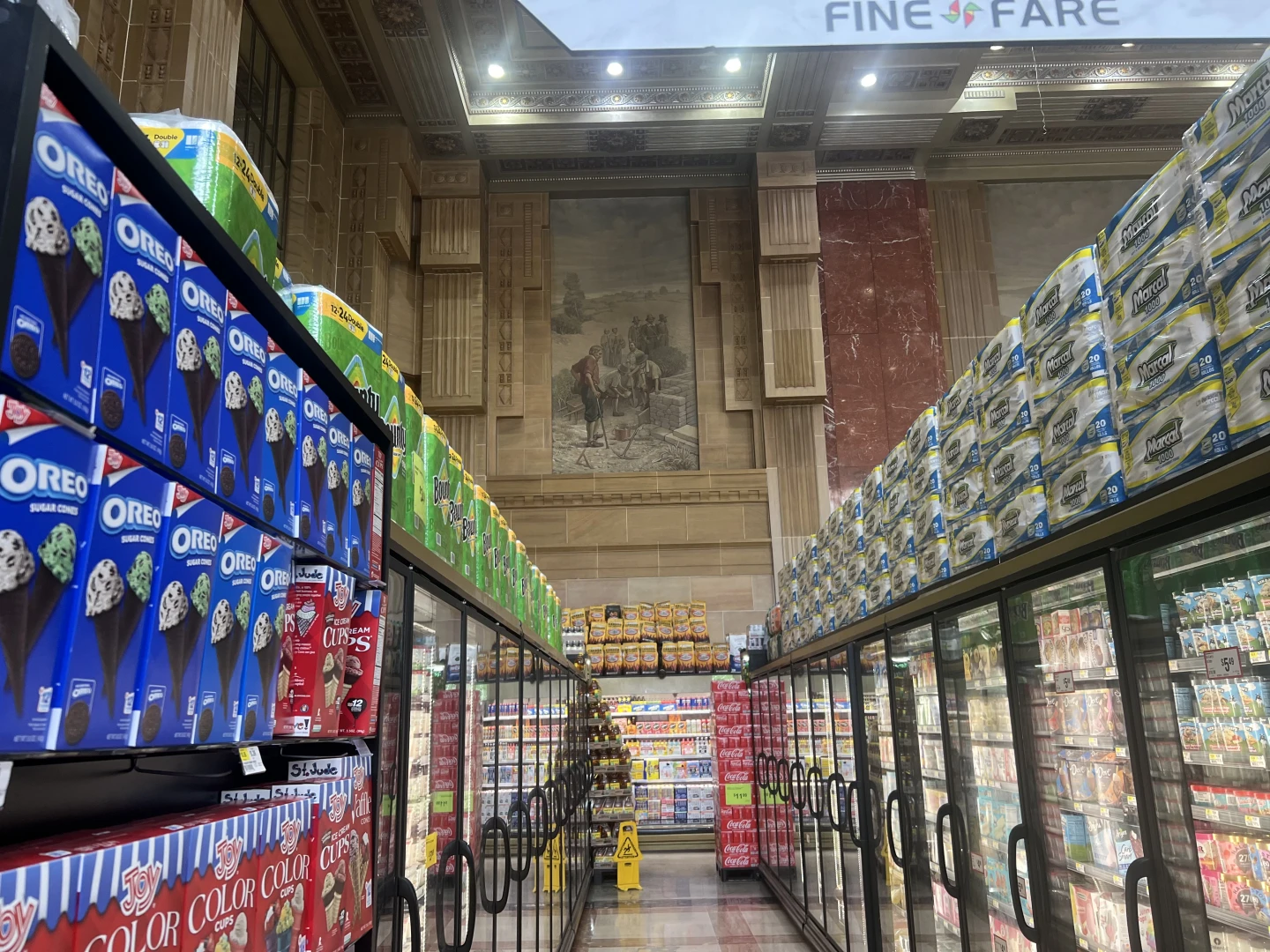
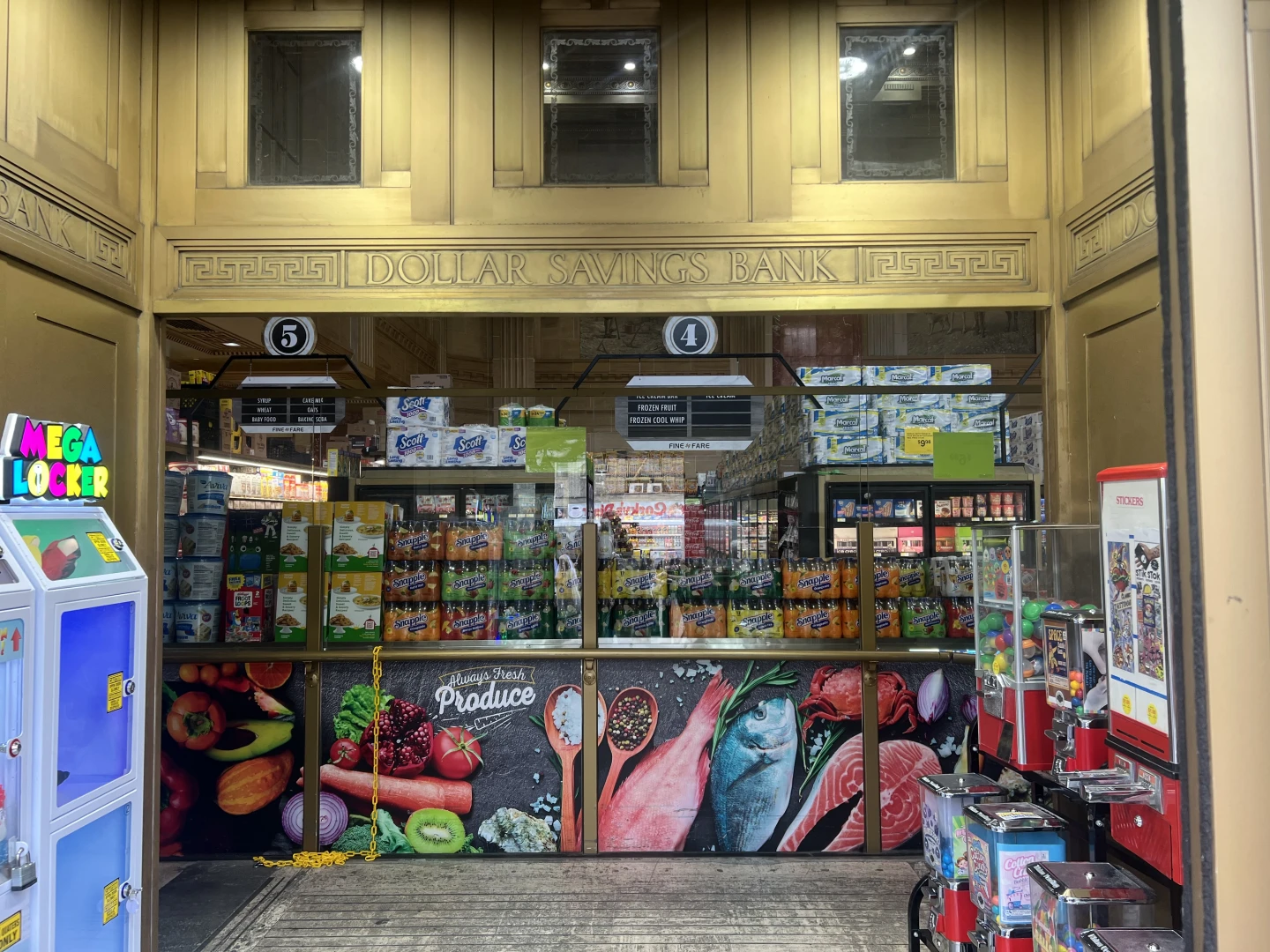
The tour also took attendees into a Fine Fare supermarket, where signage from the former Dollar Savings Bank and five murals could be seen behind food aisles.
He told participants that the murals depict “erecting the first stone house,” the “original bridge connecting the Bronx to Manhattan” (the Kingsbridge), “welcoming settlers at Fort Schuyler,” “early settlers gathering at the first community house” and “Jonas Bronck buying the land from the Indians.”
The mural of the fort, the last of the five to be installed, was placed in 1957, Herszenson said.
Herszenson said that Fordham developed from colonial-era settlements into an urban neighborhood, as transportation infrastructure expanded, including New York and Harlem Railroad in the 1840s, and the Third Avenue elevated line and the Grand Concourse, in 1909.
By the 1920s and 1930s, Fordham had become a bustling commercial area, where residents could find shopping, religious institutions, entertainment, transportation and banking within a relatively small area.
After World War II, the Bronx transformed with new public housing and highway construction and, in the 1970s, with widespread fires and disinvestment. What was once a largely Jewish and Italian neighborhood also changed in its demographics and now has become more black, Puerto Rican, Dominican and, most recently, West African, he said.
“People say that the subways made the Bronx and the highways killed it,” he said on the tour.
As the tour began, Herszenson asked participants to introduce themselves and share why they had joined. Some said that they were curious, and others said that they had personal connections to the area or a broad interest in history.
I-Fong Wu, 62, of New Jersey, told JNS that although he is not Jewish, a close Jewish friend, who died, inspired him to learn more about Jewish history.
“I’m curious about the history of Jewish people in a major New York area,” he told JNS. “I hope to take away an understanding of why they chose to be here and why they chose to move away.”
Herszenson told JNS that getting reactions like Wu’s is one of the best parts of leading tours.
“I love doing this,” he said. “I love the Bronx, and I love its history.”
He began exploring the Bronx more deeply during the pandemic, walking through different neighborhoods and researching former businesses and other historic sites.
“I would go across other areas that I found really interesting,” he told JNS. “You start to read about some of these places, and there are just so many layers.”
He enjoys introducing tour participants to places they might walk past without appreciating, including, on Sunday’s tour, the former Alexander’s department store site, the Wagner Building and the former Jacob H. Schiff Centre, a Jewish center.
“I do hours and hours of research and people can learn everything I learned in two hours,” he told JNS.



Get the latest updates in our WhatsApp group.



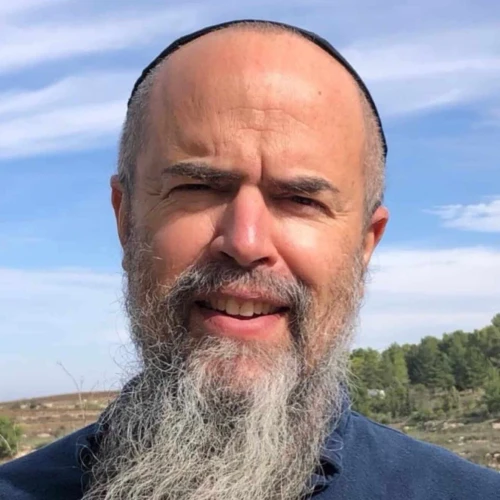

On August 30, a walking tour organized by the Fordham Center for Jewish Studies explored the forgotten Jewish history of the Fordham neighborhood in the Bronx. Led by physician and licensed city guide David Herszenson, the two-hour tour highlighted sites that were once synagogues, businesses, and entertainment venues, revealing the area's past as a predominantly Jewish community. Herszenson noted that the Bronx was once called the “Jewish borough” and that “It was almost half Jewish.”
- The tour visited the former Concourse Center of Israel, now the Love Gospel Assembly church, where Jewish stars are still embedded in the facade.
- Participants learned about the former Reform synagogue Tremont Temple Gates of Mercy, which served German Jews and has since been demolished, with its ark doors preserved in Manhattan.
- Herszenson pointed out the Loew’s Paradise Theatre, a city landmark that inspired filmmaker Stanley Kubrick, and Krum’s ice cream parlor, which once had five soda fountains.
- The tour also entered a Fine Fare supermarket, where murals from the former Dollar Savings Bank depict scenes of the Bronx's early history.
Herszenson explained the Bronx's transformation from colonial settlements to a bustling commercial area, and its demographic shifts post-WWII, stating, “People say that the subways made the Bronx and the highways killed it.”
© All rights to the original article belong to the source. Din Online shows a headline, an excerpt and a link only. The objectivity rating is computed automatically and is an estimate only.
Discussion
No comments yet — be the first to comment.