Cohen, Levin, Ohana and Regev top Likud primary, with over 60% of vote counted
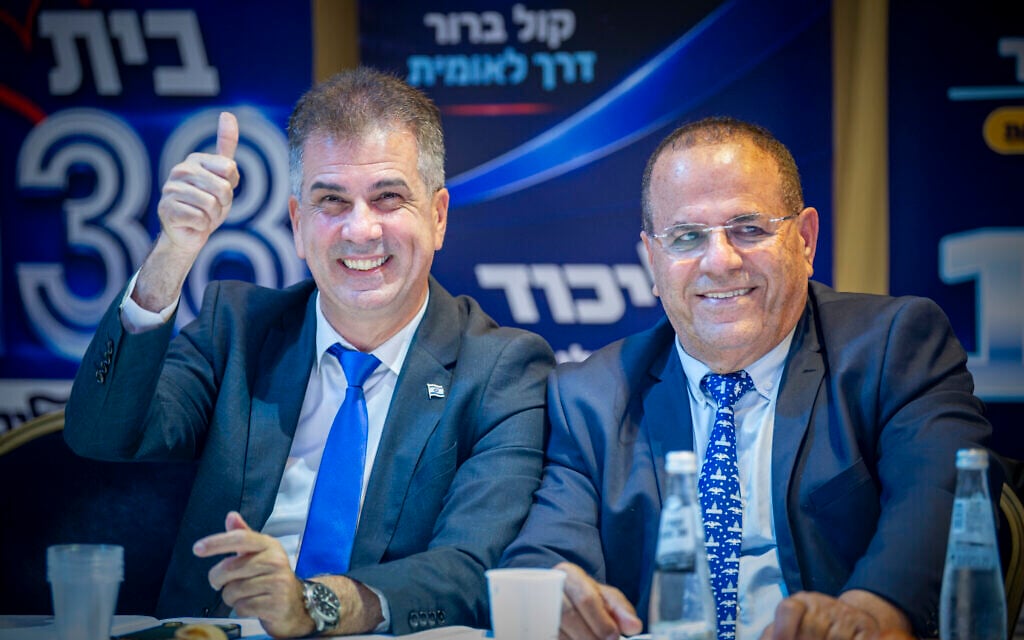

Energy Minister Eli Cohen was poised to win first place in the Likud party primary after operatives from Prime Minister Benjamin Netanyahu’s finished counting over half of the vote before dawn on Tuesday.
Cohen was trailed by Justice Minister Yariv Levin, Knesset Speaker Amir Ohana, Transportation Minister Miri Regev and coalition whip Ofir Katz.
After ballots from 302 of 501 total polling stations across the country were counted, the results were as follows:
1. Eli Cohen
2. Yariv Levin
3. Amir Ohana
4. Miri Regev
5. Ofir Katz
6. Yoav Kisch
7. Miki Zohar
8. Almog Cohen
9. Amichai Chikli
10. David Amsalem
11. Moshe Saada
12. David Bitan
13. Tally Gotliv
14. Shlomo Karhi
15. Nir Barkat
16. Boaz Bismuth
Given that Prime Minister Benjamin Netanyahu’s Likud party has consistently been polling in the low 20s, and given that roughly one-third of the first 30 slots on the Likud list are reserved for candidates hand-picked by the premier, those who do not finish in the top 16 in the Likud primary are not expected to make it into the next Knesset.
If the current results hold, that would mean current ministers Ze’ev Elkin, Gila Gamliel, May Golan, Idit Silman and Avi Dichter will be out of a job come October, along with current Likud MKs Hanoch Milwidsky, Keti Shitrit, Ariel Kallner, Amit Halevi and Nissim Vaturi.
Polls closed in the Likud primary election after eleven hours of voting on Monday night, with 53.5 percent of the party’s roughly 140,000 members having cast ballots, according to a party spokesman.
The turnout marked a decrease in voter participation since the last Likud primary in 2022, when close to 58% of members voted.
In the hours before voting ended, Likud ministers and MKs gathered at their respective voting centers across Israel to make a last-minute appeal to voters.
One of the few parties to determine its electoral lineup through a primary, Likud has long prided itself on its internal democratic process. However, changes to the system this year have shrunk the number of open spots on the roster, after Netanyahu was granted the ability to handpick eight candidates in the top 30 spots, and another reserved slot was allocated to Defense Minister Israel Katz.

That Likud is slated to win significantly fewer seats than it currently holds has further tightened the race.
Opinion polls have suggested that Netanyahu’s party will win between 22 and 24 mandates, meaning that many of the 32 Likud lawmakers currently serving in the Knesset are likely to lose their seats.
Both these factors combined meant that a host of veteran lawmakers and newcomers alike were competing for a drastically reduced number of realistic slots on the list.
Apart from his own slot atop the slate, which was not up for grabs in Monday’s vote, Netanyahu controls the 3rd, 5th, 9th, 11th, 15th, 18th, 26th and 29th slots on the list. So far, he has tapped Foreign Minister Gideon Sa’ar, Likud Central Committee chair Haim Katz, and political newcomer Oren Dobronsky to fill three of these eight slots, although he hasn’t clarified their exact placements.
According to Hebrew media reports, the premier’s push for reserved slots was based on concerns that the primary could elevate candidates who are highly popular among the Likud base — including firebrand Likud MK Tally Gotliv and ministers Shlomo Karhi and May Golan — but who internal party polling suggests are less appealing to moderate right-wing and swing voters whose support could prove decisive in the upcoming national election. It was also reportedly motivated by Netanyahu’s desire to settle scores with internal critics such as Economy Minister Nir Barkat.

As a multimedia journalist, my job is to take the quality, fact-based journalism produced by The Times of Israel newsroom and make it accessible across every platform — from Instagram posts to podcasts to short-form videos.
This is how many, especially young people, consume news these days. But misinformation is rampant on social media. Our team at ToI produces accurate, responsible short-form reporting on Israel and the Jewish world.
If you believe in the importance of factual social media journalism, please consider joining our reader support group, The Times of Israel Community. Your financial support is essential to sustain responsible multimedia reporting.
— Gabriella Jacobs, multimedia journalist

We’re really pleased that you’ve read X Times of Israel articles in the past month.
That’s why we started the Times of Israel – to provide discerning readers like you with must-read coverage of Israel and the Jewish world.
So now we have a request. Unlike other news outlets, we haven’t put up a paywall. But as the journalism we do is costly, we invite readers for whom The Times of Israel has become important to help support our work by joining The Times of Israel Community.
For as little as $6 a month you can help support our quality journalism while enjoying The Times of Israel AD-FREE, as well as accessing exclusive content available only to Times of Israel Community members.
Thank you, David Horovitz, Founding Editor of The Times of Israel


Energy Minister Eli Cohen was leading the Likud party primary results with over 60% of the vote counted, followed by Justice Minister Yariv Levin and Knesset Speaker Amir Ohana. The primary, which saw 53.5% voter turnout among Likud's 140,000 members, determines the party's electoral lineup for the upcoming Knesset elections. Due to a reduced number of realistic slots and Prime Minister Benjamin Netanyahu's ability to handpick eight candidates, many current Likud lawmakers are not expected to retain their seats. The top 16 finishers are most likely to enter the next Knesset, given that Likud is polling in the low 20s for mandates.
© All rights to the original article belong to the source. Din Online shows a headline, an excerpt and a link only. The objectivity rating is computed automatically and is an estimate only.
Discussion
No comments yet — be the first to comment.