Crown Heights leaders decry sentence in Chabad headquarters car-ramming
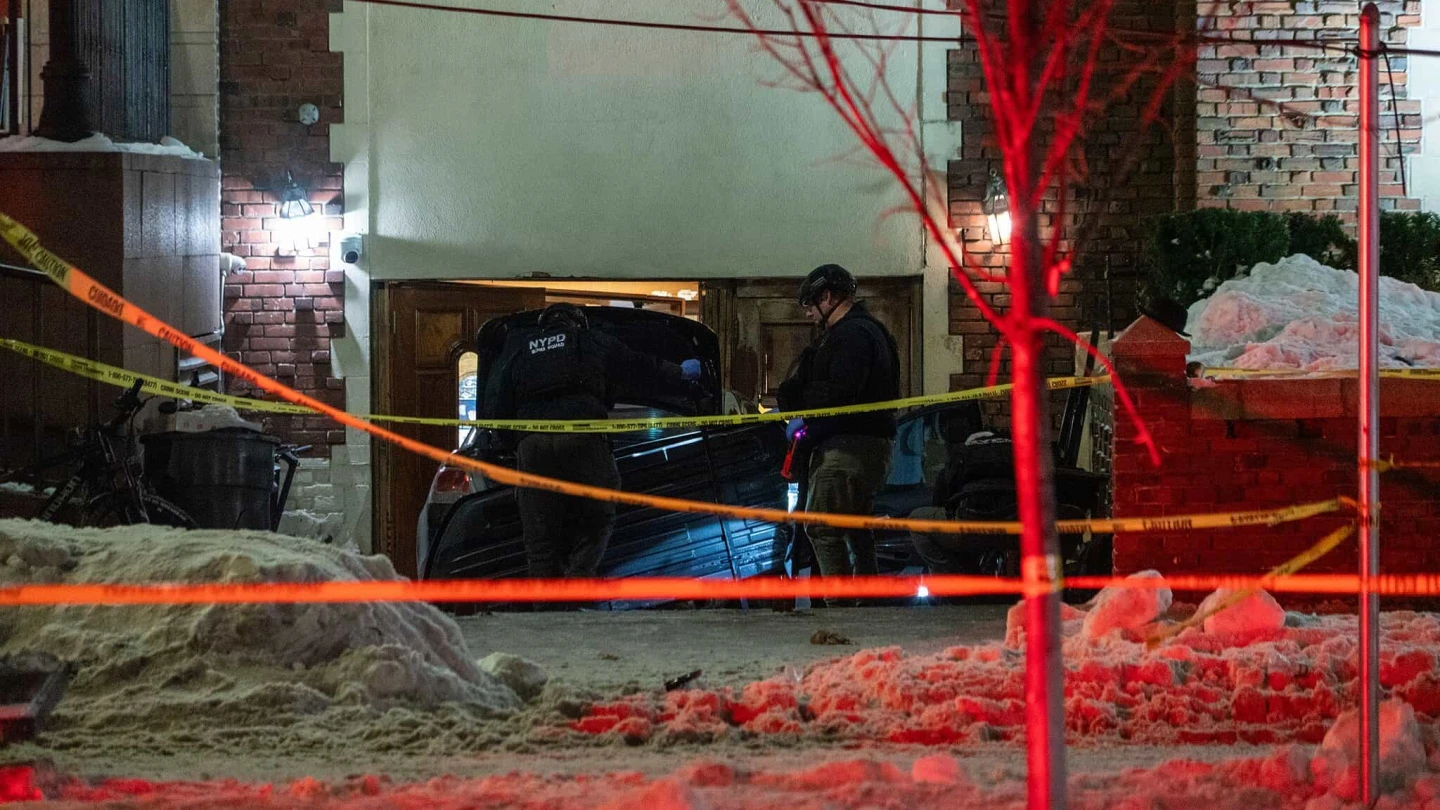
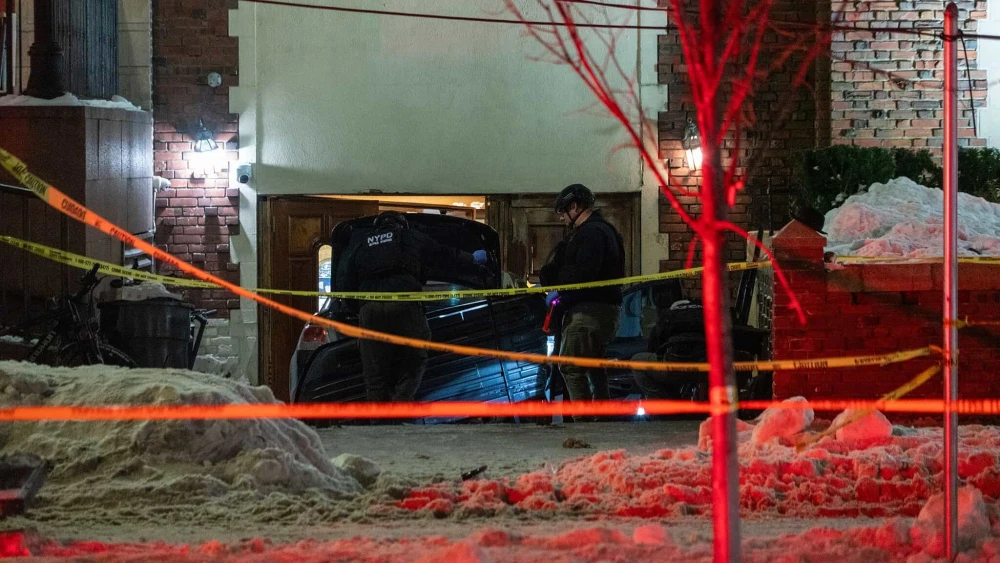
Community leaders in the Crown Heights neighborhood of Brooklyn say that the sentence handed to the man convicted of repeatedly ramming his car into the world headquarters of Chabad-Lubavitch minimizes the seriousness of the attack.
Dan Sohail, 36, of Carteret, N.J., pleaded guilty to one federal count of damaging religious property after driving his Honda Accord down a ramp leading to the handicapped-access entrance at 770 Eastern Parkway on Jan. 28.

After first removing protective barriers, he repeatedly rammed the vehicle into the synagogue entrance five times, reversing between each impact. The crashes knocked the doors off their hinges. No one was injured.
Eric N. Vitaliano, a judge in the U.S. District Court for the Eastern District of New York, sentenced him to time served plus seven days, rejecting a request from prosecutors for a 14-month prison term. With his release from federal prison expected next week, Sohail would have served just over six months.
Before driving into the building, Sohail motioned for people standing near the entrance to move out of the way. Inside the synagogue, however, hundreds of yeshivah students and other worshippers had gathered for Yud Shevat, one of the busiest dates on the Chabad calendar.
The day commemorates the anniversary of the passing of Rabbi Yosef Yitzchak Schneersohn and the beginning of the leadership of Rabbi Menachem Mendel Schneerson, the Lubavitcher Rebbe.
Yaacov Behrman, a liaison for Chabad headquarters, told JNS that had people been exiting through the entrance, the attack could have resulted in mass casualties.
Behrman cannot understand why Sohail was never federally charged with a hate crime, he said.
“Deliberately choosing a synagogue and driving a car into it while 2,000 people were inside is inherently an act of hate, regardless of what was happening in his mind,” he told JNS.
Eli Cohen, a Crown Heights resident, also expressed his disappointment at Sohail’s sentence for an attack that he said was “definitely deliberate.”
“This is more than a property crime. It could have been devastating,” said Cohen, who spoke personally rather than as director of advocacy and community relations at the Crown Heights Jewish Community Council.
“He was stopped only because he hit the post between the two doors at that entrance,” he told JNS. “People inside could have been hit while coming out. He could have driven straight into the shul.”
He added that the building “was packed at the time.”
Cohen told JNS that authorities minimized the severity of the crime. “To say it was just a property crime is ridiculous,” he said.
John Marzulli, a spokesman for the U.S. Attorney’s Office for the Eastern District of New York, declined to say why prosecutors did not pursue a federal hate-crime charge.
“We don’t make statements about charging decisions,” he told JNS. “Those are internal deliberations.”
The advisory federal sentencing guidelines recommended a prison term of zero to six months, but prosecutors sought a 14-month sentence. They argued in a sentencing memorandum that the longer term reflected “the seriousness of the offense, the need to promote respect for the law and protect the public and the need for general deterrence.”
At sentencing, Vitaliano criticized that request sharply while acknowledging that antisemitic crimes are a “stain on the soul of this city,” Courthouse News Service reported.
“We’re living in a terrible time of crime against Jewish people, Jewish institutions, motivated by hate or animus,” the judge said, per the news service. “That’s what converts the property crime into something more.”
He concluded that Sohail could only be sentenced for the crime to which he pleaded guilty.
“A property crime is what was charged here. Not a hate crime,” Vitaliano said. He added that he was “saddened” by the government’s sentencing request, because “it asks the court to sentence based on the general misunderstanding of the public.”
Court filings also detailed concerns about Sohail’s mental health.
His mother previously told police that her son was emotionally unstable, and prosecutors said that Sohail was involved in a fight with another detainee in a courthouse holding cell and twice refused to appear for court proceedings.
His attorney, Mia Eisner-Grynberg of Federal Defenders of New York, argued in a sentencing memorandum that Sohail’s actions stemmed from severe mental illness rather than antisemitic animus.
“Gripped by mental illness, Mr. Sohail irrationally drove his vehicle into the Chabad headquarters, home of an entity that had welcomed and embraced him and in which he had sought acceptance,” she wrote.
“Rather than an act of hate, as it reasonably appeared at first blush, Mr. Sohail saw his actions as a desperate call for help,” she added.
Sohail initially faced state hate-crime charges following his arrest, but those charges were dismissed after he pleaded guilty in federal court.
As part of his sentence, he must pay more than $19,000 in restitution and participate in treatment for post-traumatic stress disorder and a personality disorder.
For many in Crown Heights, however, the outcome remains deeply disappointing.
“Beyond this individual case, I am deeply concerned about the broader message the sentence sends, particularly at a time when Jewish people face growing danger around the world,” Behrman told JNS.




Get the latest updates in our WhatsApp group.







Crown Heights community leaders are criticizing the sentence given to Dan Sohail, 36, who pleaded guilty to damaging religious property after repeatedly ramming his car into the Chabad-Lubavitch world headquarters in Brooklyn on January 28. Sohail drove his Honda Accord into the synagogue entrance five times, knocking doors off their hinges, though no one was injured. U.S. District Judge Eric N. Vitaliano sentenced Sohail to time served plus seven days, rejecting prosecutors' request for a 14-month prison term. Community members, including Yaacov Behrman, a Chabad liaison, expressed disappointment that Sohail was not federally charged with a hate crime, stating, "Deliberately choosing a synagogue and driving a car into it while 2,000 people were inside is inherently an act of hate." The judge acknowledged the rise in antisemitic crimes but stated he could only sentence Sohail for the crime to which he pleaded guilty, citing that "A property crime is what was charged here. Not a hate crime." Sohail's attorney argued his actions stemmed from severe mental illness, not antisemitic animus. Sohail must pay over $19,000 in restitution and undergo treatment for PTSD and a personality disorder.
© All rights to the original article belong to the source. Din Online shows a headline, an excerpt and a link only. The objectivity rating is computed automatically and is an estimate only.
Discussion
No comments yet — be the first to comment.