Damascus is proposing a ‘hudna,’ not a security deal
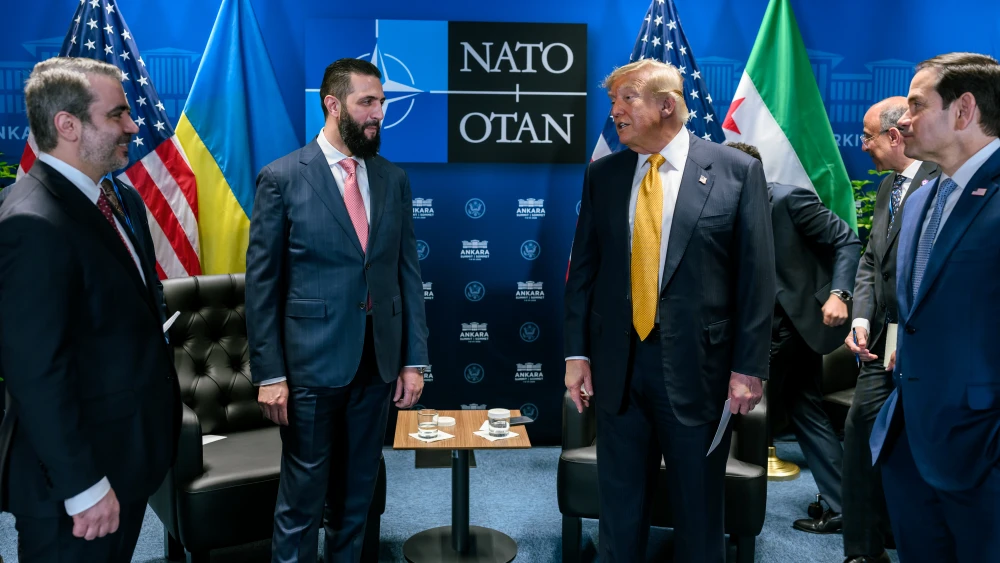

Syrian Foreign Minister Al-Shaibani urged Israel to seize a “historic opportunity” and said Syria is “extending its hand for understandings, for peace, for diplomacy” in a Reuters interview on Aug. 22. However, he added, “We do not trust Israel currently” and there are no plans for peace, normalization or recognition of sovereignty over the Golan Heights.
What Syria is offering is a narrow security deal focused on borders, removing the presence of the IDF and curtailing Israel’s freedom of action. There is a reason for this: In jihadist ideology, one does not make real peace with an enemy. At most, you reach a temporary arrangement called a hudna. The hudna is used to rearm and discarded once conditions improve.

Some say Syria’s President Ahmed al-Sharaa is now a moderate politician who seeks genuine accommodation. They point to his recent moderate statements, as compared to those he made while he was an internationally wanted jihadist terrorist.
The evidence, however, indicates that he has not moderated.
In a 2018 statement documented by MEMRI, al-Sharaa told his fighters that, after Damascus, “Jerusalem awaits us as well.” In October 2023, the organization he led, Hay’at Tahrir al-Sham (HTS), issued an official letter congratulating Hamas on the Oct. 7 terrorist attacks in southern Israel and describing the Jewish state as an entity that will perish.
After taking power in December 2024, al-Sharaa’s language did shift: He spoke more moderately, saying he sought a return to the 1974 disengagement agreement and pledging that Syria would not launch attacks on Israel.
But in December 2025 at a Liberation Day parade attended by senior ministers, al-Sharaa’s soldiers threatened to turn Israeli blood into rivers and called for a return to Al-Aqsa. Earlier this month, The Jerusalem Post reported that uniformed Syrian soldiers chanted outside the Damascus Citadel, “I am coming for you, Jew. I will make your blood flow in rivers.”
Words are not the only evidence. Since the fall of longtime Syrian dictator Bashar Assad, the new authorities have persecuted minorities all over the country. They committed massacres and abductions targeting the Druze in 2025, attacked Christian communities in the Valley of the Christians and committed violence against Alawites and Kurds. All of this occurred after al-Sharaa began portraying himself as a moderate.
Taken together, it appears to show that al-Sharaa’s moderate speech is not backed up by a change in behavior. The gap between rhetoric and action is the strongest reason to treat any agreement as a hudna, rather than a genuine peace initiative, as it suggests that jihadist ideology continues to guide the leader’s policies.
We have already seen a hudna in action. It is how Hamas treated every ceasefire with Israel, and we saw the results on Oct. 7.
The same dynamic and ideology likely apply to any deal with the new Syrian president. Al-Sharaa is likely using moderate messaging to appeal to Western and Gulf audiences, who are crucial to Syria’s reconstruction and his own consolidation of power. Indeed, he faces internal rivalries from jihadist factions that compete for recruits and street credibility. This is emphasized by the fact that, last November, reports indicated that Syria had thwarted two Islamic State assassination plots against al-Sharaa. Thus, the president needs to secure quick and tangible wins like ending blackouts, preventing famine, creating jobs and providing basic services. He has strong motivations to appear as moderate as possible.
The hudna framework also explains the deadlock in indirect U.S.-mediated talks between Syria and Israel that same month. Reuters and i24News reported that the talks ran aground on sovereignty issues, with Syria offering only a narrow security pact focused on full IDF withdrawal and demilitarization, yet refusing anything approaching peace, while Israel sought a comprehensive deal. Ultimately, Israel withdrew from the negotiations because the status quo was already advantageous.
The IDF operates with complete freedom across Syrian airspace and on the ground in southern Syria. It holds dominant positions on Mount Hermon and provides a protective umbrella for Druze communities. Additionally, Syria offers the clearest flight route for Israeli aircraft to Iran, a crucial advantage in the ongoing conflict with the Islamic Republic.
The immediate priority for Israel’s security establishment is making practical arrangements that safeguard freedom of action, protect the Druze population, and prevent Turkish advances and Iranian attempts to reestablish their land corridor to Hezbollah. This perspective is reflected in a May 2026 assessment by the Institute for National Security Studies titled “Prospects for Syria-Israel Relations.” A narrow deal that restricts Israeli freedom of action would sacrifice Israel’s advantages for a promise of peace that history suggests will not hold.
Therefore, for Israel to relinquish that freedom, it must gain something worthwhile.
Since the current situation favors Israel, it should refuse any narrow security framework. The only deal that justifies limiting Israeli freedom of action is a comprehensive one that builds on the practical measures from the November talks, demilitarization, Druze protections, retention of Mount Hermon and access to flight routes.
There should be two additional demands:
First, there must be formal Syrian recognition of Israeli sovereignty over the Golan Heights west of the 1974 line. The Golan was acquired during the 1967 defensive war, and a minority of legal scholars, including Eugene Kontorovich, have argued that territory gained in self-defense can be retained to achieve secure borders. Recognition would also help eliminate the unjust “occupied” label and solidify control over this strategically significant high ground.
Once secured, Israel should leverage Syrian recognition to secure additional recognition of the Golan. This will provide Israel with a lasting achievement that will persist even if Syria breaks any agreement. Over time, pragmatism and realpolitik will likely lead many countries to recognize Israeli sovereignty, since it is challenging to maintain that the Golan is occupied when, even on paper, Syria acknowledges that it is Israeli land.
Additionally, the issue of the Golan’s Druze population does not evoke the same level of outrage as the Palestinian issue, which facilitates the acceptance of Israeli sovereignty.
It is likely that al-Sharaa will fiercely resist any demand for recognition of the Golan as Israeli territory and might counter with vague phrases like acknowledging current “lines of control.” Rejecting this is crucial as it does not benefit Israel.
However, al-Sharaa could be given incentives to recognize Israel’s sovereignty over the Golan, such as structured sanctions relief and reconstruction support contingent upon meeting benchmarks for demilitarization, Druze safety and restrictions on Turkish forces. This could be presented to him as a one-time opportunity that helps him secure his position. This is a low-risk, high-reward strategy.
Second, there must be ironclad, verifiable guarantees that prevent Turkish military entrenchment and expansion. These guarantees should include explicit bans on Turkish bases, radar installations and the deployment of forces south of defined lines. They should be backed by automatic monitoring and enforcement, preferably by the United States, given its leverage over Turkey.
Since the fall of Assad, Turkey has been training and equipping the Syrian army under a memorandum of understanding signed in 2025. Additionally, Turkey has been expanding its military presence on the ground. This became very clear on Aug. 17-18 when Israeli jets struck the Abu al-Duhur airbase in Idlib. The Israeli Prime Minister’s Office had previously stated that Damascus was “on the verge of breaching” an agreed-upon status quo by allowing Turkish troops, a radar system and air defenses to deploy at the base.
It was never a step toward normalization
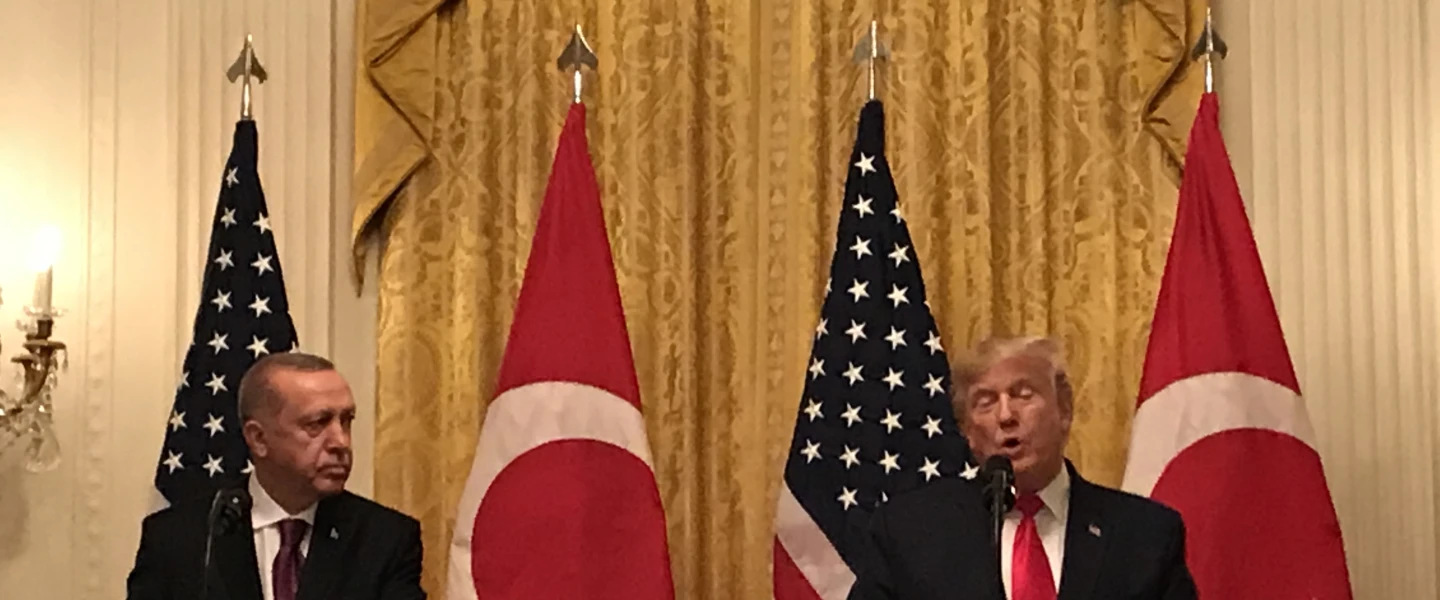
Israel might be able to get U.S. President Donald Trump on board with its position if it emphasizes that it validates his 2019 Golan recognition as visionary, shifting America from an isolated actor to a trendsetter.
Furthermore, provisions prohibiting Turkish bases in Syria would prevent direct clashes between Israel and Turkey, resolving a major dilemma for Washington. Such clashes would involve a confrontation between a major NATO country and America’s closest Middle Eastern ally. While they wouldn’t trigger NATO involvement, since Turkey’s actions in Syria don’t fall under NATO protection, they would still pose a substantial diplomatic problem.
Israel can afford to aim high in its talks with Syria because the current status quo is in Israel’s favor. Moreover, the potential benefits are numerous: a diplomatic opportunity for further Golan recognition, protection for Israel’s northern border and increased costs for any future Syrian violations.
Holding firm also incurs lower costs than it seems for a specific reason: A narrow border-security agreement was never a step toward normalization. Syria rejected the more comprehensive November 2025 package, which came close to including recognition, to avoid conceding Golan sovereignty or making any gestures toward formal peace. Without such concessions, there is no normalization at risk.
In any case, the ideology of the current Syrian leadership and the pattern of previous hudnas make any lasting peace unlikely. Thus, realism should guide Israel’s approach. It should refuse any narrow deal that trades away its current freedom of operation for short-term quiet. It should insist instead on the full package discussed in 2025, plus formal recognition of the Golan and ironclad barriers against Turkish entrenchment.
Only those terms can convert a temporary truce into lasting strategic gains.


Get the latest updates in our WhatsApp group.



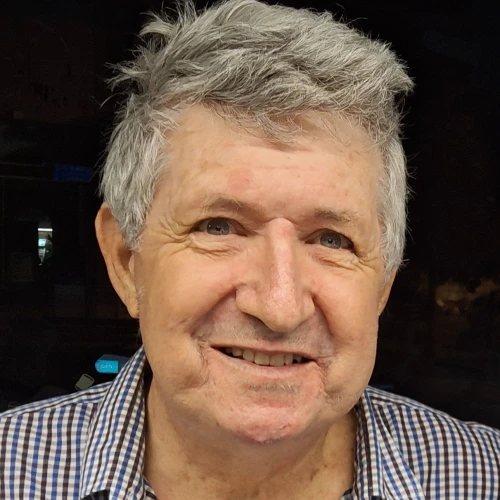

Syria is proposing a limited "hudna," or temporary security arrangement, with Israel, not a comprehensive peace deal, according to an analysis of recent statements and actions. Syrian Foreign Minister Al-Shaibani stated on August 22 that Syria is "extending its hand for understandings, for peace, for diplomacy" but clarified there are no plans for peace or recognition of Israeli sovereignty over the Golan Heights. This offer, focused on border security and IDF withdrawal, is viewed as a tactical move by President Ahmed al-Sharaa to consolidate power and secure reconstruction aid, rather than a genuine shift from jihadist ideology. Evidence suggests al-Sharaa's moderate rhetoric is contradicted by his organization's past statements, including congratulating Hamas on the October 7 attacks, and ongoing persecution of minorities.
- Israel should demand formal Syrian recognition of its sovereignty over the Golan Heights west of the 1974 line in exchange for any agreement, leveraging incentives like sanctions relief and reconstruction support.
- Any deal must include ironclad, verifiable guarantees, preferably U.S.-backed, to prevent Turkish military entrenchment and expansion in Syria, including explicit bans on Turkish bases and forces south of defined lines.
- The current status quo is advantageous for Israel, allowing freedom of action in Syrian airspace and southern Syria, and providing strategic flight routes to Iran.
- A narrow security deal that restricts Israeli freedom of action without significant gains, such as Golan recognition and Turkish military restrictions, would be detrimental, as a hudna is often used to rearm and is discarded when conditions improve.
© All rights to the original article belong to the source. Din Online shows a headline, an excerpt and a link only. The objectivity rating is computed automatically and is an estimate only.
Discussion
No comments yet — be the first to comment.