E1 and the question nobody asks
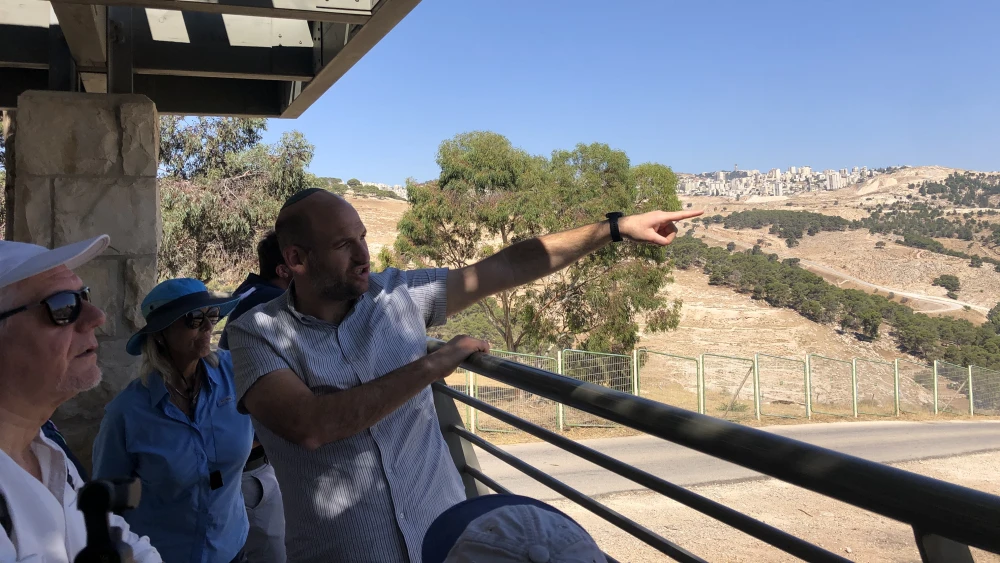

The world is once again in high dudgeon over Jews building homes near Jerusalem.
This time, the cause is E1, a roughly 12-square-kilometer area between Jerusalem and the city of Ma’ale Adumim. Britain, for example, has reacted to Israel’s latest construction plans as though bulldozers were about to bury the peace process.

Before accepting such rhetoric, it helps to understand the map.
The Oslo Accords divided Judea and Samaria into Areas A, B and C. There is no “Area E.” E1 is simply a planning area within Area C.
Area A contains the major Palestinian population centers under Palestinian Authority civilian and internal security control. In Area B, the P.A. exercises civilian authority while Israel retains overriding security responsibility. Area C remained under Israeli control for security, land-use planning and zoning pending a permanent status agreement.
The demographics of the area matter as well. Area A comprises only about 18% of Judea and Samaria, but contains 55% of its Palestinian population. Area B, roughly 20% of the territory, contains approximately 41% of the Palestinian population. Thus, about 96% of Palestinians in Judea and Samaria live in Areas A and B, which together account for less than 40% of the total area.
E1 is in Area C. It wasn’t transferred to Palestinian control under Oslo.
Thus, the argument is not about who is entitled to control E-1. According to agreements signed by the Palestinians themselves, the controlling party is Israel. The real argument is about geography.
As noted above, E1 sits between Jerusalem and Ma’ale Adumim, the latter being a city of roughly 40,000 Israelis. If you have driven from Jerusalem to the Jordan Valley or the Dead Sea, you have passed through E1. Israeli governments have understood for decades that maintaining a physical connection between the two cities is strategically important. Thus, plans for construction in E-1 long predate the present Israeli government.
Opponents to Israel’s plans make their case in one word: contiguity. Building in E-1, they argue, would interfere with Palestinian territorial contiguity and make it harder to connect Palestinian population centers around Jerusalem in a future Palestinian state.
In other words, Palestinian contiguity is treated as an absolute requirement. Israeli contiguity apparently counts for nothing.
If Palestinians have a legitimate interest in linking their population centers, Israelis have an equally legitimate interest in linking Jerusalem to Ma’ale Adumim. Yet diplomatic criticism assumes that E1 must belong to the Palestinians, even if doing so narrows Israel’s corridor eastward from its capital.
That is not neutrality. It is choosing one side’s territorial claim in advance.
There is an additional irony to Europe’s sudden alarm over “facts on the ground.” For years, the European Union and its member states have financed Palestinian homes, classrooms and other structures in Area C, including communities in and around the E1 corridor. You can see an E.U. logo displayed on these homes and structures. The E.U. says its Area C programs are intended to preserve the viability of a contiguous Palestinian state.
It appears that creating facts on the ground is objectionable only when Israelis create them.
That is the double standard at the heart of the E1 controversy. Palestinian construction intended to preserve a Palestinian territorial corridor is called humanitarian assistance. Israeli construction intended to preserve the Jerusalem-Ma’ale Adumim corridor is called an obstacle to peace.
Nor should “contiguity” obscure the population map. As noted, the overwhelming majority of Palestinians in Judea and Samaria already live in communities in Areas A and B. They are not evenly spread across an empty map waiting for E1 to slice them in half.
What critics are demanding is preservation of a particular territorial configuration for a future Palestinian state. That is a political demand, not a geographic one.
Israel has advanced transportation plans intended to preserve north-south Palestinian movement around the Ma’ale Adumim bloc. Critics dismiss that as “transportational contiguity” and insist on territorial contiguity. But why should Palestinian territorial contiguity come at the expense of Israeli territorial contiguity?
There is another problem with demanding that Israel leave E1 untouched: Palestinian construction has pushed into the spaces surrounding the Jerusalem-Ma’ale Adumim corridor. Preventing Israeli construction while Palestinian development continues does not preserve the status quo. It changes the facts on the ground in only one direction.
Security matters. The Jerusalem-Ma’ale Adumim route is a principal eastern approach from the capital toward the Jordan Valley. After decades of terrorism, especially after Oct. 7, Israelis can hardly be expected to evaluate control of Jerusalem’s approaches solely according to someone else’s preferred map of a future Palestinian state. Israel need not accept this.
Those who object to Israel’s plans for E1 are entitled to say that they make their preferred map of a Palestinian state more difficult. What they are not entitled to do is to disguise that political preference as an immutable requirement of geography or pretend that only one people’s need for contiguity matters. Israel’s contiguity matters, too.



Get the latest updates in our WhatsApp group.





The article discusses the international controversy surrounding Israeli construction plans in E1, an area between Jerusalem and Ma’ale Adumim. It highlights that E1 is a planning area within Area C, which, according to the Oslo Accords, remains under Israeli control. Critics argue that building in E1 would disrupt Palestinian territorial contiguity, while the article contends that Israeli contiguity between Jerusalem and Ma’ale Adumim is equally important. It points out a perceived double standard, noting that European Union-financed Palestinian construction in Area C, including around E1, is considered humanitarian aid, while Israeli construction is deemed an obstacle to peace. The article concludes that demanding Israel leave E1 untouched while Palestinian development continues unilaterally alters facts on the ground and that Israel's security interests in controlling approaches to Jerusalem, especially after October 7, are paramount.
© All rights to the original article belong to the source. Din Online shows a headline, an excerpt and a link only. The objectivity rating is computed automatically and is an estimate only.
Discussion
No comments yet — be the first to comment.