Elisheva Levy, Jerusalem’s fairy godmother
Sarah Tuttle-Singer, The Times of Israel social media editor, is an LA expat (reluctantly) growing roots in Israel. She’s also a contributing editor at Kveller.com. Dangerous when bored.
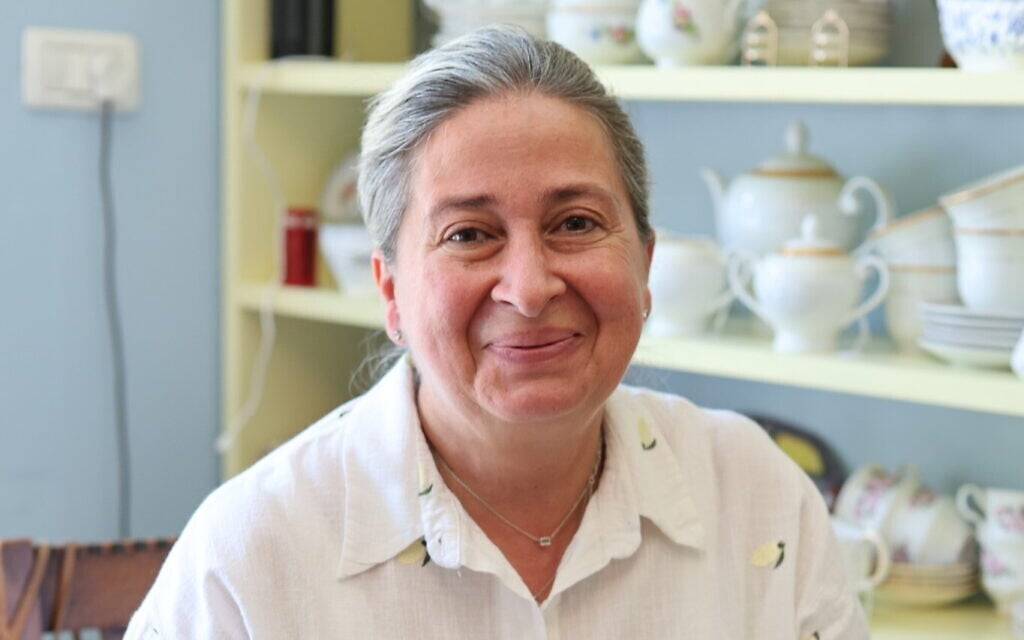
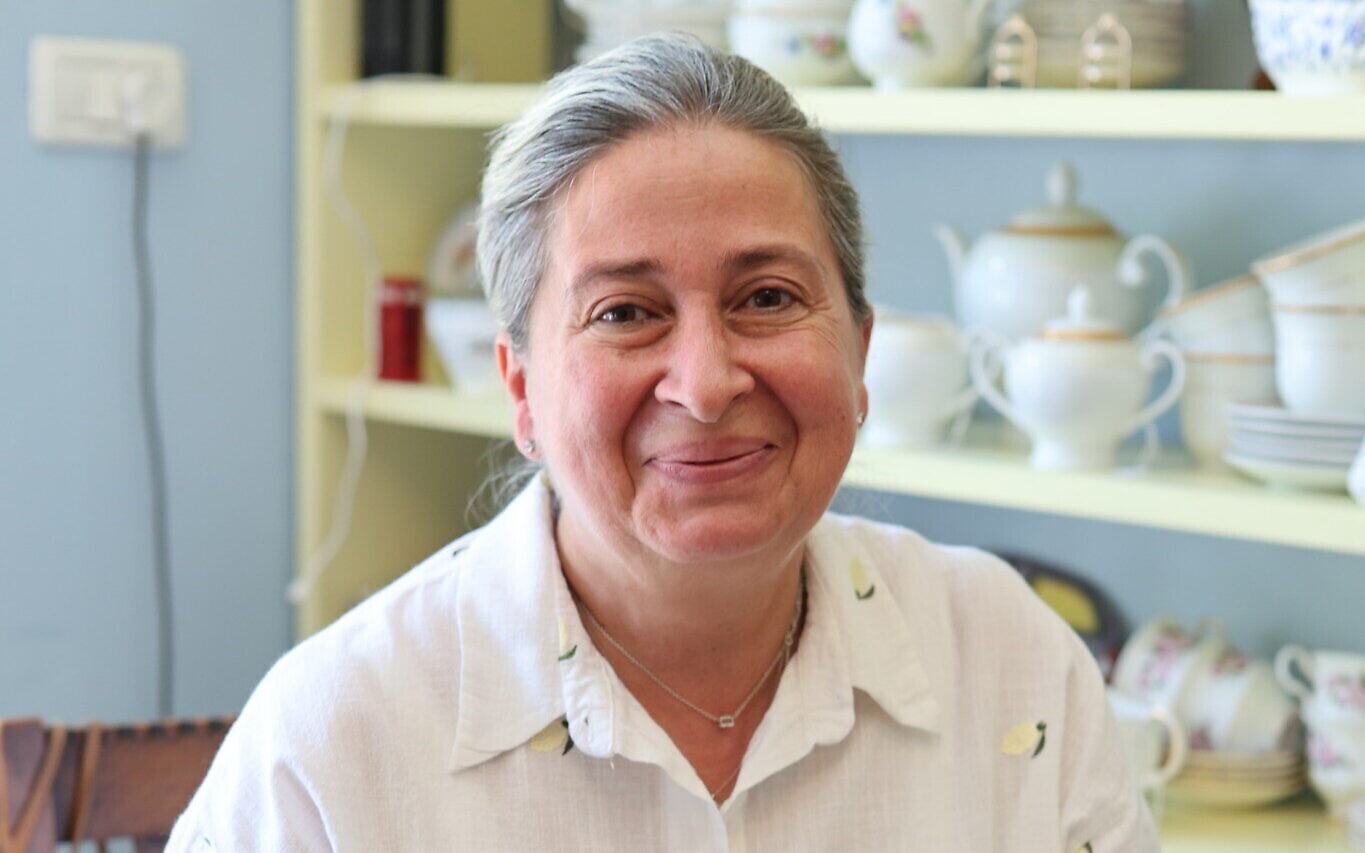
“Sit,” owner Elisheva Levy says before you’ve even had a chance to look at the menu. “What would you like? Tea? Coffee? Have a scone.”

By the time you’ve been there five minutes, it already feels less like a café and more like someone’s home.
That is precisely what Levy wants.
If one of her regulars misses their morning tea for more than a few days, she starts making phone calls.
“I’ll ring them just to make sure they’re okay,” she says. “To see if they’re alive.”
She laughs after saying it, but only because it’s true.
After five years running Kumkum Tea House, the line between customer and family has almost disappeared.
“It became more than a business,” Levy says. “It’s my life.”
For Levy, home has never been a simple concept.
She grew up in Manchester, United Kingdom, in an Orthodox Moroccan Jewish family, one of five children in a community where being Mizrahi often meant feeling like an outsider.
“I was always a fish out of water,” she says.
By the age of 20, she knew she wanted something else.
She came to Jerusalem intending to volunteer for six months in the neonatal unit at Shaare Zedek Medical Center. Instead, she stayed.
Her first day in Israel happened to be Israel’s Independence Day.
The taxi dropped her outside the nursing school with her suitcase, but the building was deserted.
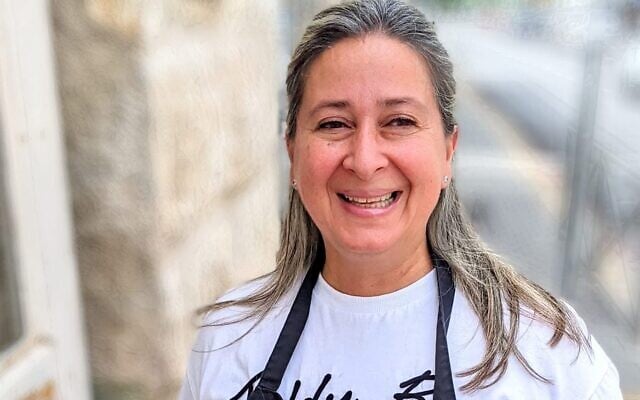
“I couldn’t understand why nobody was there,” Levy recalls. Only later did she realize the country had stopped to celebrate Independence Day. That evening, fireworks burst over nearby Mount Herzl, visible from the dormitory where she was staying.
“I loved Jerusalem straight away,” she says. “The white stone. The weather. Everything.”
Nearly four decades later, Levy still speaks with an unmistakable Mancunian accent. But Jerusalem became the place where the rest of her life unfolded.
She studied nursing, married, raised three children and spent years abroad while her then-husband served in Israel’s Foreign Ministry, living in India, Belgium and the United States before eventually returning to Jerusalem.
Her children, she says with a smile, are “more Israeli than I am.” When her sons served in the military, she taped the names of their units to the refrigerator, afraid she would hear one mentioned on the news.
“I didn’t know all the terminology,” she says. “I had to write everything down.”
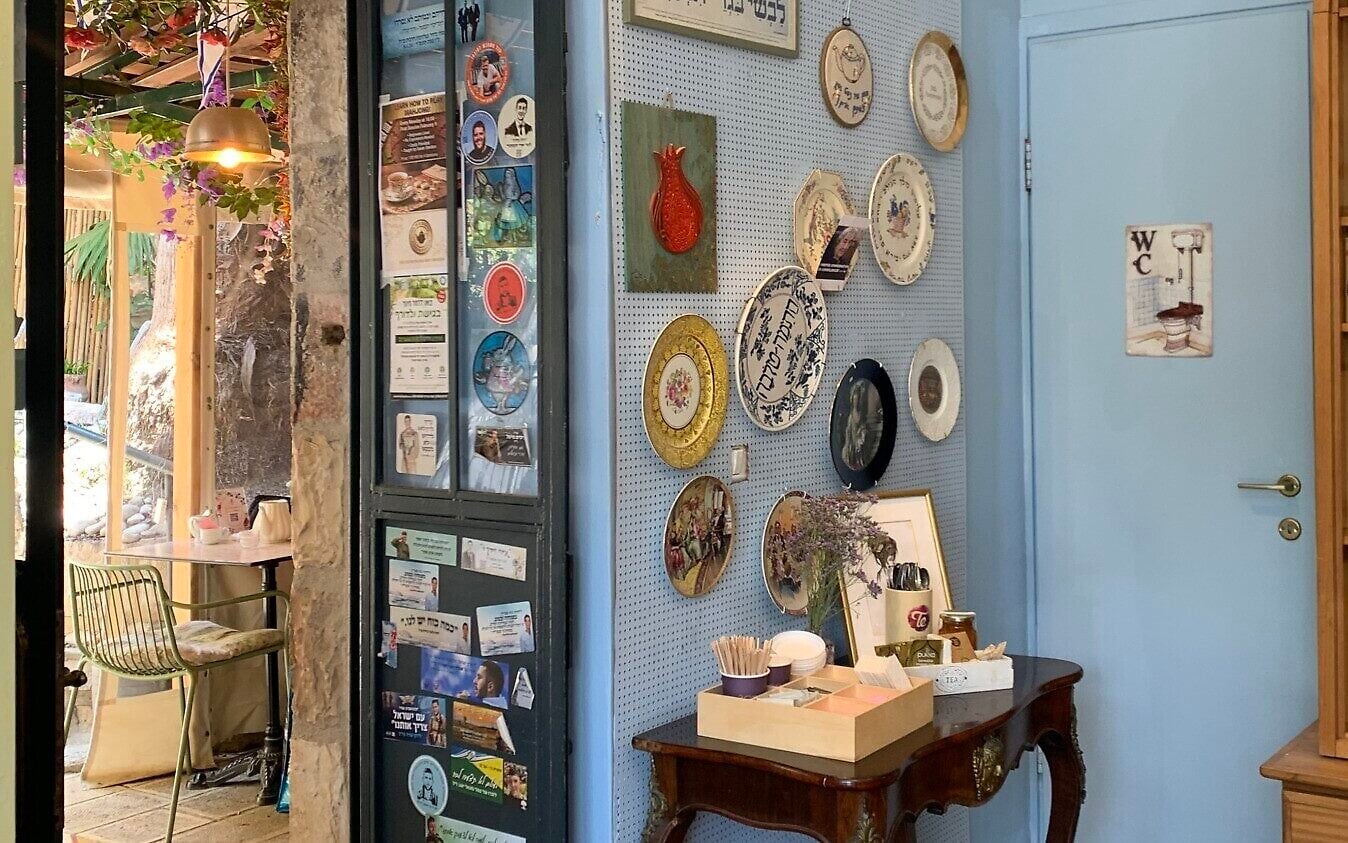
By the time she opened Kumkum in July 2021, Levy wasn’t simply dreaming of serving tea. She wanted to create a place where people could slow down. There are homemade scones and proper pots of English tea, of course. But there are also books for sale, conversations that stretch long after the cups are emptied, literary evenings, book launches, jazz performances, and bridge club afternoons. People sit outside in the garden under a fragrant lemon tree.
“The dream was always for it to be a meeting place,” she says. “Not just somewhere for tea and coffee.”
Somehow, that’s exactly what happened.
Residents from the retirement home across the street became daily regulars. British immigrants discovered a taste of home. Students opened laptops beside retirees lingering over tea. Authors launched books. Neighbors wandered in for “just a quick coffee” and left two hours later after half a dozen conversations.
Some regulars became part of the café’s story. Every morning at exactly 9:20, one elderly couple arrived together. She ordered a small cappuccino. He drank a large Americano with milk on the side. They shared a croissant with butter and jam. Every single day. Until one day, they just weren’t there anymore.
When the wife died, her family brought Levy one of her paintings. Later, her husband died as well. The painting still hangs inside the café.
Then there is Amos, a 94-year-old choreographer who spends several months each year teaching dance workshops in Berlin. One evening before a flight, he called Levy. The airport transport service had refused to carry his luggage down from his third-floor apartment. Could she help? Of course she could.

Afterward, Levy found herself thinking about the endless paperwork, taxes and worries that come with owning a small business.
Sometimes, she admits, she wonders why she keeps doing it.
“And then moments like that happen,” she says. “And I think, that’s what it’s for.”
The café took on an even deeper role after October 7, 2023. Although both of her sons had been called up to reserve duty and were serving in Gaza as Israel defended itself after the bloody Hamas invasion, Levy decided to open almost immediately. People, she felt, needed somewhere to gather.
Parents whose children had been killed in the war sat beneath the lemon tree with psychologists.

Young widows returned to tables where they had shared coffee with their husbands only days before they were killed.
There were conversations that belonged nowhere else.
For all its unmistakably British character, Kumkum has become something profoundly Jerusalem: Religious and secular Jews. Christian tourists. Arabs. Veteran Israelis. New immigrants. Diplomats. Artists. Students. Retirees.
“The melting pot,” Levy smiles. “I always wanted people to feel like they were coming into my home.”
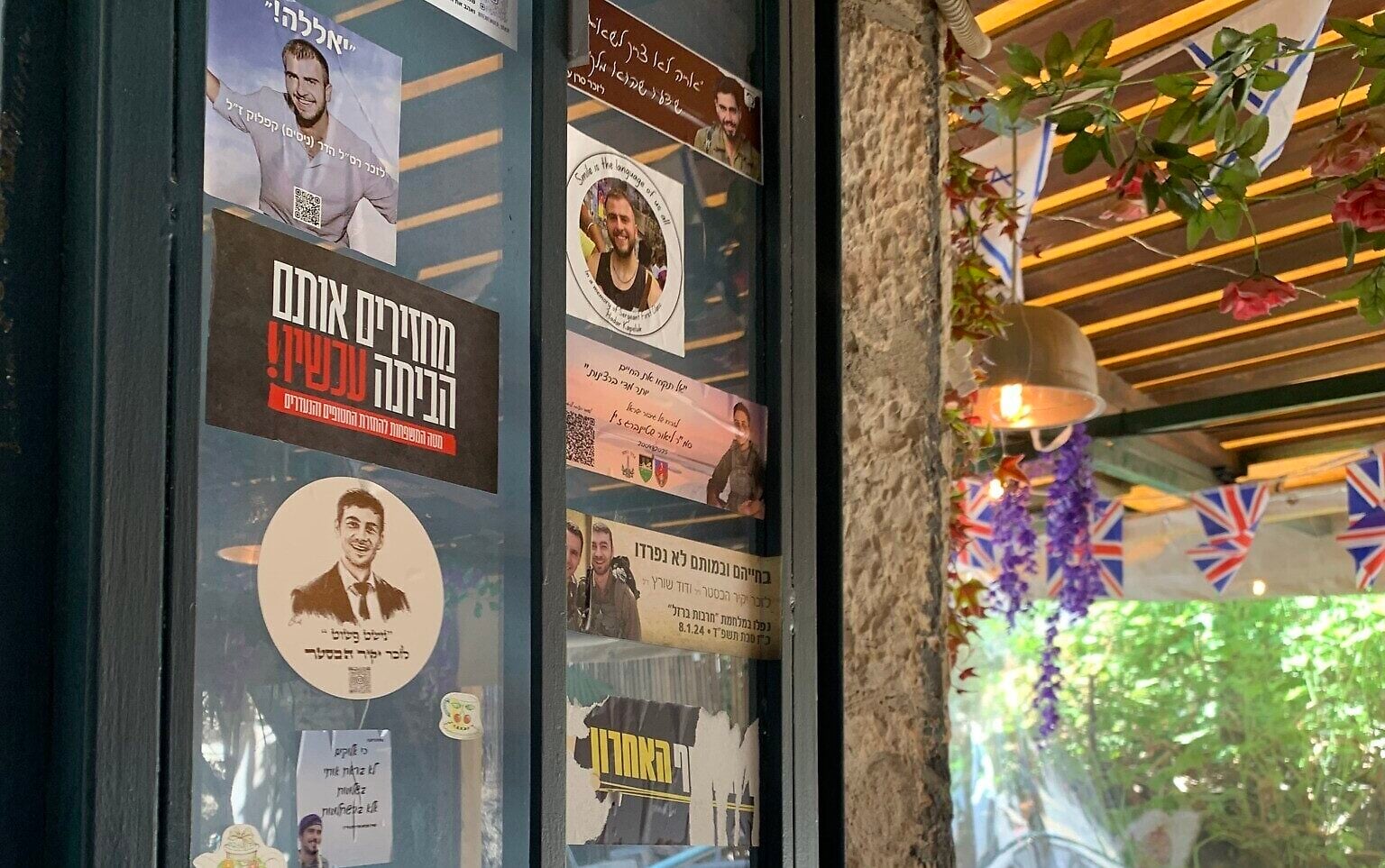
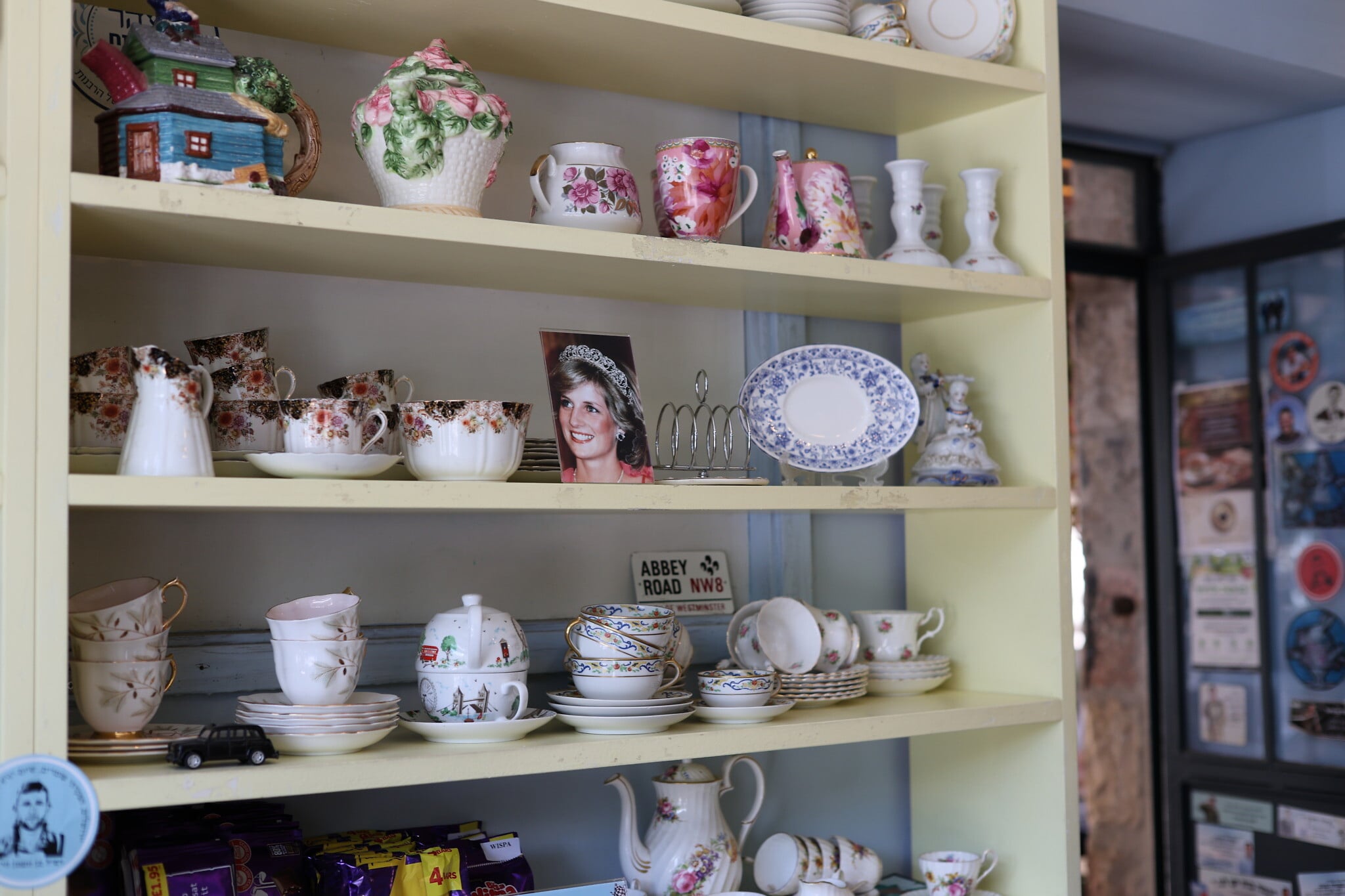
It feels a little like stepping into a Beatrix Potter story by way of the Mad Hatter’s tea party, hosted by the unmistakable soul of a Jewish fairy godmother who won’t let you leave until you’ve had something to eat. Shelves overflow with floral teapots and books line the shelves. Handwritten notices announce book launches, author talks and community events. An elegantly framed photo of the late Princess Diana smiles down. Every corner feels thoughtfully collected rather than decorated, as though each object has arrived with a story of its own.
Among the flowers are memorial stickers bearing the faces of Israeli soldiers who were killed in the war.
It is a gentle but unmistakable reminder that this little English-style tea house exists not in some imagined countryside far from war, but in Israel.
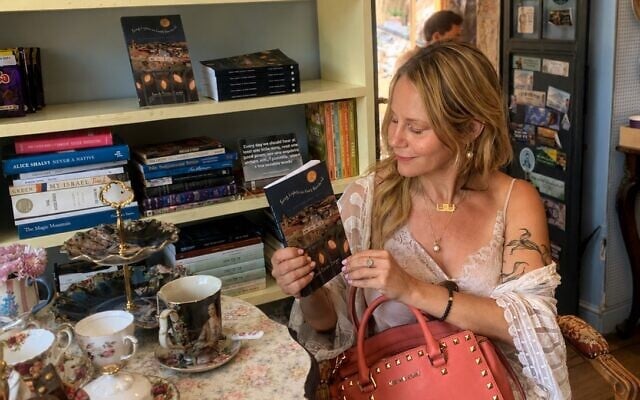
As our interview ends and the cameras stop rolling, Levy slips effortlessly back into her natural role.
“What would you like to drink?” she asks.
Before anyone answers, another question follows.
“What would you like to eat?”
She starts making tea before we’ve even decided.

350g self-rising flour, plus more for dusting
1 tsp baking powder
85g butter, cut into cubes
3 tbsp caster sugar
175ml milk
1 tsp vanilla extract
squeeze of lemon juice
beaten egg, to glaze
jam and cream, to serve
Step 1
Heat the oven to 220C/200C fan/gas 7. Pour the self-rising flour into a large bowl with ¼ tsp salt and the baking powder, then mix.
Step 2
Add the butter, then rub in with your fingers until the mix looks like fine crumbs. Stir in the caster sugar.
Step 3
Put the milk into a jug and heat in the microwave for about 30 seconds until warm, but not hot. Add the vanilla extract and a squeeze of lemon juice, then set aside for a moment.
Step 4
Put a baking tray in the oven. Make a well in the dry mix, then add the liquid and combine it quickly with a butter knife — it will seem pretty wet at first.
Step 5
Scatter some flour onto the work surface and pour the dough out. Dredge the dough and your hands with a little more flour, then fold the dough over 2-3 times until it’s a little smoother. Pat into a round about 4cm deep. Take a 5cm cutter (smooth-edged cutters tend to cut more cleanly, giving a better rise) and dip it into some flour. Plunge into the dough, then repeat until you have four scones. You may need to roll what’s left of the dough back into a ball to cut out another four.
Step 6
Brush the tops with a beaten egg, then carefully arrange on the hot baking tray. Bake for 10 minutes until risen and golden on top. Eat just warm or cold on the day of baking, generously topped with jam and clotted cream. If freezing, freeze once cool. Defrost, then put in a low oven (about 160C/140C fan/gas 3) for a few minutes to refresh.

As a multimedia journalist, my job is to take the quality, fact-based journalism produced by The Times of Israel newsroom and make it accessible across every platform — from Instagram posts to podcasts to short-form videos.
This is how many, especially young people, consume news these days. But misinformation is rampant on social media. Our team at ToI produces accurate, responsible short-form reporting on Israel and the Jewish world.
If you believe in the importance of factual social media journalism, please consider joining our reader support group, The Times of Israel Community. Your financial support is essential to sustain responsible multimedia reporting.
— Gabriella Jacobs, multimedia journalist



















Elisheva Levy, originally from Manchester, UK, established Kumkum Tea House in Jerusalem in July 2021, aiming to create a community meeting place rather than just a café. Having moved to Jerusalem nearly four decades ago, Levy's tea house reflects her journey, offering a blend of British charm and Jerusalem's diverse culture. The café quickly became a hub for various community activities, including literary evenings, jazz performances, and bridge club afternoons, attracting a wide range of patrons from retirees to students and new immigrants. Levy emphasizes the personal connection, stating, "It became more than a business. It’s my life." Following the events of October 7, 2023, Kumkum took on an even more significant role, providing a much-needed gathering space for people to find solace and connection amidst difficult times, embodying Levy's vision of a welcoming "melting pot" where everyone feels at home.
© All rights to the original article belong to the source. Din Online shows a headline, an excerpt and a link only. The objectivity rating is computed automatically and is an estimate only.
Discussion
No comments yet — be the first to comment.