Ex-hostage Evyatar David details struggles with PTSD, a year after Hamas forced him to dig own grave
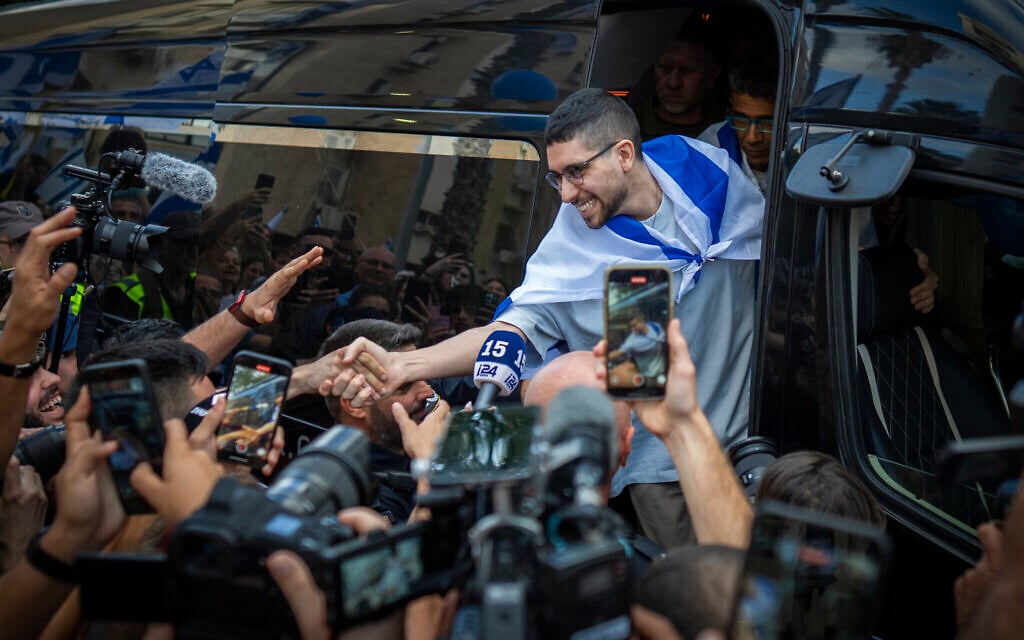
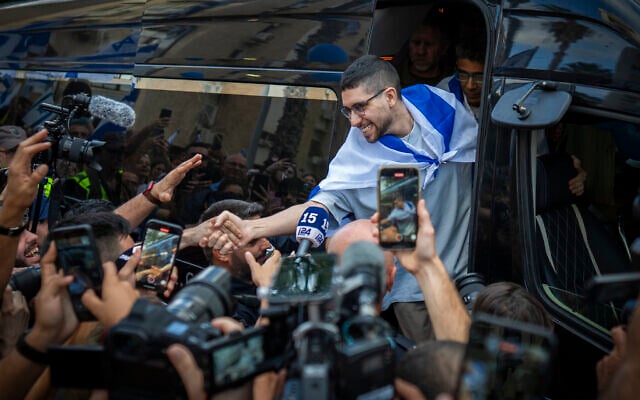
Former hostage Evyatar David, who spent over two years in Hamas captivity in Gaza, revealed that he was suffering from post-traumatic stress disorder that brings him back to the tunnels and the daily battle for survival he faced.
David, who has barely spoken publicly since his October 2025 release, recounted part of his ordeal on Channel 12’s “Uvda” program aired Thursday evening, alongside his good friend and fellow hostage Guy Gilboa-Dalal. David is remembered for being starved by his captors and forced to dig his own grave as part of a propaganda video published by the Palestinian terror group.
“After more than two years in captivity, I was sure that after what I’ve been through, nothing would be beyond me,” David wrote on social media before “Uvda” was broadcast.
“I went to dance at the Nova [festival], and in one moment my life was turned upside down. I was kidnapped and put in a dark tunnel, and all I thought about was surviving another day, and another day, until I return home,” he says.
“In the moments when I almost broke down, what kept me afloat were thoughts of my parents, family, friends, and the hope that nobody would give up on me,” David recounts.
“When I returned, I received more love than is imaginable. People whom I didn’t know told me they had prayed that I come back,” he continues. “After everything I saw there, the Nation of Israel reminded me that there is good in the world as well.”
“But slowly, I understood that even when you return home, not everything returns with you. I am dealing with PTSD and flashbacks. There are moments when I am in a safe place, surrounded by people I love, but my head still goes back there. I understood that surviving captivity is one thing, but complete rehabilitation is a different battle,” the 25-year-old writes.
“I am not writing this to be pitied. I am writing because I want to win this battle as well. My dream is to be rehabilitated, to marry, to start a family and truly return to normal life. But the rehabilitation journey is long, and friends and family have started a crowdfunding campaign for me, so I can focus on healing,” he said, asking the public to donate and share (Hebrew link).
“Again, thanks for fighting for me.”
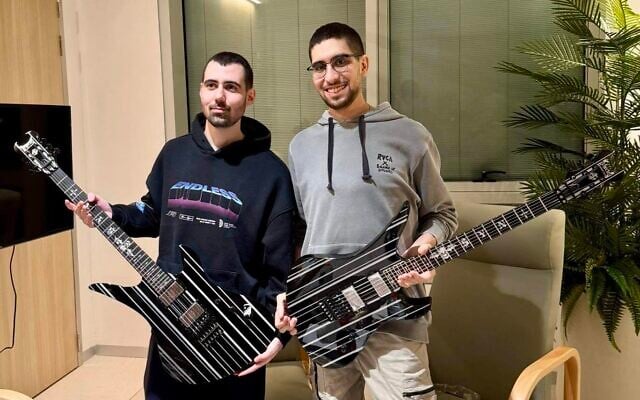
Speaking with Channel 12, Gilboa-Dalal and David recounted their abduction from Nova and the conditions of their captivity in Gaza, with the latter describing the experience of digging his own grave in a Hamas tunnel.
“They starved us throughout the captivity,” David said. “The real serious starvation began about three months before the video. We were already in a situation of having not to speak in order to conserve energy.”
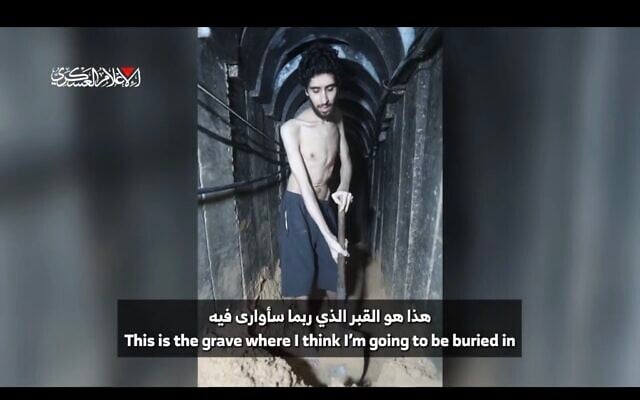
The footage, released in early August last year and filmed a few days prior, sparked outcry and became one of the most harrowing images of the plight of the hostages kidnapped by Hamas in the terror group’s October 7, 2023, attack.
In the video, a skeletal David described how he had not eaten for a few days, held a shovel and dug a pit in a tunnel.
“This is the grave I think I’m going to be buried in,” he said in the video. “Time is running out. You are the only ones who can end this.”
In the “Uvda” interview, David remembered smelling food being eaten by his captors as they took him to film the video.
“They tell me, come, we’re going somewhere else for a moment,” he recalled. “On the way, we pass by their big room… I was blindfolded, and I remember the smell of tea they’re preparing and cakes, and hear them chewing. And a skeleton is walking by them now, and they’re enjoying cake and tea.”
His captors then showed him a pit and instructed him to dig, he said.
“Then we get to this place, and I see a half-dug pit, and they say, ‘Here, take this, here’s a shovel, go in, this will be your grave,” Davis said. “I dug this grave. It was close to impossible to do physically. I told myself in my head, it could be that if I’m really going to die, I’ll go lay down in this pit.”
He added, “Think of what it is to dig your own grave. Maybe I am going to die of hunger?”
David was released in October along with the rest of the surviving hostages upon the signing of a ceasefire deal in Gaza.
“I was freed from captivity, but the things I went through there continue with me,” David said. “How people know me, through this terrible video, is so different from how I look today, but in the end that skinny guy with the spoon digging a grave is still with me.”
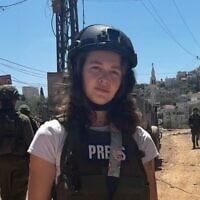
The war with Iran has been draining for all of us in Israel. But when I heard about a high casualty incident – ballistic missile impacts in Arad and Dimona that left nearly 200 people wounded – I drank a cup of coffee, packed a bag, and headed south.
There, I spoke with Shilgit, the head of an after-school program for underprivileged youth. Standing outside her destroyed center, Shilgit said it was a miracle that no children were hurt and spoke about the community coming together in the hours since.
As a Times of Israel reporter, I’m committed to telling stories of resilience like Shilgit’s. But my colleagues and I can't do this alone. If you value work like this, please consider joining our reader support group, The Times of Israel Community. Your financial support is essential to keep real human reporting like this going.
— Stav Levaton, military reporter

We’re really pleased that you’ve read X Times of Israel articles in the past month.
That’s why we started the Times of Israel – to provide discerning readers like you with must-read coverage of Israel and the Jewish world.
So now we have a request. Unlike other news outlets, we haven’t put up a paywall. But as the journalism we do is costly, we invite readers for whom The Times of Israel has become important to help support our work by joining The Times of Israel Community.
For as little as $6 a month you can help support our quality journalism while enjoying The Times of Israel AD-FREE, as well as accessing exclusive content available only to Times of Israel Community members.
Thank you, David Horovitz, Founding Editor of The Times of Israel





Evyatar David, a former hostage held by Hamas in Gaza for over two years, recently revealed his ongoing struggle with post-traumatic stress disorder (PTSD) on Channel 12’s “Uvda” program. David, released in October 2025, recounted the harrowing experience of being starved and forced to dig his own grave for a Hamas propaganda video. He described the physical and emotional toll, stating, “This is the grave I think I’m going to be buried in.” Despite receiving immense support upon his return, David acknowledged that “complete rehabilitation is a different battle” and is seeking public assistance for his recovery journey.
© All rights to the original article belong to the source. Din Online shows a headline, an excerpt and a link only. The objectivity rating is computed automatically and is an estimate only.
Discussion
No comments yet — be the first to comment.