יום שני, אוגוסט 17, 2026 עברית|English Log in Free sign-up
LIVE
The Likud primary: Trolling as a way to gain support – opinionUS synagogue volunteer guards learn mass casualty response from Israeli medicsFeel the burn: 90% of people heal faster by focusing on their pain — Israeli studyShas officials jump shipTwo drones attack Kurdistan Regional Government prime minister, head of protection agencyPublic urged to pray for beloved rabbiLikud internal primaries begin as tensions continue over Netanyahu's expanded slate controlsConditions aboard USS Lincoln 'exacerbated by decision to start Iran war,' senators tell HegsethIran saw MoU as attempt by Israel, US to buy time for larger attack, so it did the same – reportLikud threatens legal action against initiative to bring Israelis abroad back to voteVietnam targets natural birth sex ratio by 2035 with crackdown on fetal sex selectionEU planning to expand sanctions against Russia, foreign policy chief Kaja Kallas saysThe Likud primary: Trolling as a way to gain support – opinionUS synagogue volunteer guards learn mass casualty response from Israeli medicsFeel the burn: 90% of people heal faster by focusing on their pain — Israeli studyShas officials jump shipTwo drones attack Kurdistan Regional Government prime minister, head of protection agencyPublic urged to pray for beloved rabbiLikud internal primaries begin as tensions continue over Netanyahu's expanded slate controlsConditions aboard USS Lincoln 'exacerbated by decision to start Iran war,' senators tell HegsethIran saw MoU as attempt by Israel, US to buy time for larger attack, so it did the same – reportLikud threatens legal action against initiative to bring Israelis abroad back to voteVietnam targets natural birth sex ratio by 2035 with crackdown on fetal sex selectionEU planning to expand sanctions against Russia, foreign policy chief Kaja Kallas says
Health

Feel the burn: 90% of people heal faster by focusing on their pain — Israeli study
5h ago ·  Source: The Times of Israel 92Objectivity score92/100

Feel the burn: 90% of people heal faster by focusing on their pain — Israeli study

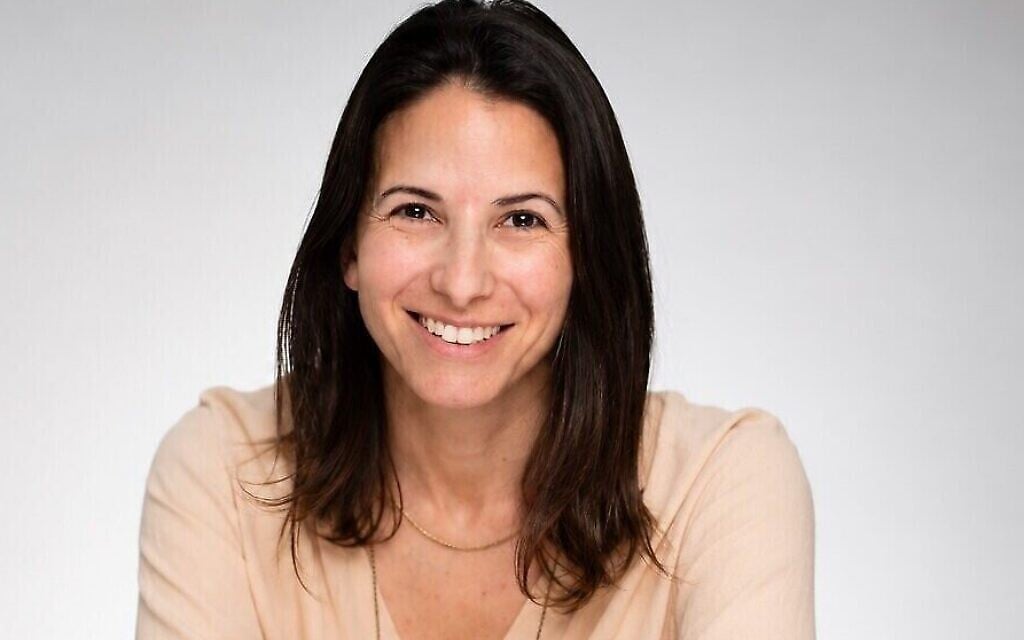
Reporter at The Times of Israel

Illustrative: A woman having shoulder and neck pain (kieferpix; iStock via Getty Images)

Which works better to heal inflammation — distraction from the pain or attention to it?

New research from Bar-Ilan University found that contrary to popular belief, 90% of people who focused their conscious attention on an inflamed spot on their body recovered faster than those who tried to ignore it.

The landmark study, published today in Nature Human Behaviour, demonstrates for the first time that focused attention can dial down acute biological inflammation in real time.

“I’ve studied humans for more than 20 years, and this was the most striking effect I’ve ever seen,” said Dr. Liron Rozenkrantz, assistant professor at the university’s Azrieli Faculty of Medicine, who supervised the study. Dr. Nofar Mizrachi led and conducted the research in collaboration with Prof. Menachem Rottem, head of the Allergy, Asthma and Immunology Service at Emek Medical Center in Afula.

The researchers said the findings could help people learn to use targeted attention training alongside traditional medical treatments to relieve chronic inflammatory conditions and autoimmune diseases.

“Our cognitive processes can shape how the body regulates itself,” Rozenkrantz said. “Feeling pain does contribute to the healing process.”

“People are aware of the placebo effect, when someone is given a sham drug, and they think it’s real and they get better,” Rozenkrantz said.

Researchers in her lab take that idea one step further to explore how people’s perceptions can alter a disease’s progress or improve treatment efficacy.

“We tend to think of the immune system, injury, or inflammation resolution as something that can take care of itself without any involvement of any high cognitive function,” Rozenkrantz said. “But what happens if the mind focuses on the pain? Does directing the brain toward the injury actually impact its healing? That’s never been studied in humans before.”

To test this question, the lab invited 57 people, aged 20 to 45, to participate in the experiment.

“We did a very standardized procedure to induce acute inflammation in the skin,” Rozenkrantz explained. “It’s called a histamine skin prick test, and basically it’s like an allergy test to cause acute skin inflammation.”

תמונת סיקור

“Within less than 30 seconds, you already see the response,” she said. “It’s sort of like the skin has been stung by something. There’s a bump in the middle, and a flare-up or redness all around it.”

The inflammation lasts about 20 to 30 minutes, and then it resolves quickly, Rozenkrantz said.

During the experiment, Mizrachi induced inflammation in the participants, who were instructed to pay attention to the sensations in their inflamed arm, or were given videos to watch to remain distracted from thinking about the inflammation.

“We simply told them to pay attention to sensations arising from the inflamed site,” she said. “If attention draws away from it, then bring your attention back. We did the same thing when they were distracted, explaining that if their attention wandered, to return to what was happening on the screen.”

During the experiments, the researchers measured physical swelling and redness with a standard ruler at six distinct time intervals over 20 minutes.

תמונת סיקור

They also recorded heart rate, skin temperature, pulse and breathing rates to monitor the body’s involuntary nervous system.

“The results were significantly different within one minute,” she said.

“Nearly 90 percent of participants showed less inflammation when paying attention to it, with total swelling and redness measuring about 1.5 times smaller than when they were distracted,” she said. “The brain can help regulate immune responses.”

The study could open new pathways to future research.

“This is one of the more clever and fascinating studies done in humans, and it may open new possibilities for treatment based on how the brain and immune system interact,” Asya Rolls, professor of neuroscience at Tel Aviv University’s School of Neurobiology, Biochemistry and Biophysics, who was unconnected to the study, told The Times of Israel.

“We already know that the brain can affect immunity through stress, expectations, conditioning, and the autonomic nervous system,” Rolls said. “But this study goes a step further by showing that attention, something we can actively control, can change an ongoing immune response.”

תמונת סיקור

One of the “biggest challenges” in human studies is showing causality, Rolls said. “The study does this particularly well because the researchers experimentally changed where the same person focused their attention while keeping the inflammatory challenge the same.”

For Rozenkrantz, the study opens the door to new thinking about how people can heal after injury.

“If you underwent surgery and you have scars or stitches, if you pay a little bit more attention to the pain, would it help the scars resolve in a better way?” she asked.

Although she is focused on the physical aspect of healing, she speculated that with emotional trauma or PTSD, some researchers “would probably agree that you need to touch your pain to resolve it.”

“We’re now more aware of what thoughts can do,” she said. “They’re not just passive; they are actually active. We don’t know everything, but it’s a question we’re asking, and something we’d all be happier to learn more about.”

תמונת סיקור

As a multimedia journalist, my job is to take the quality, fact-based journalism produced by The Times of Israel newsroom and make it accessible across every platform — from Instagram posts to podcasts to short-form videos.

This is how many, especially young people, consume news these days. But misinformation is rampant on social media. Our team at ToI produces accurate, responsible short-form reporting on Israel and the Jewish world. 

If you believe in the importance of factual social media journalism, please consider joining our reader support group, The Times of Israel Community. Your financial support is essential to sustain responsible multimedia reporting.

— Gabriella Jacobs, multimedia journalist

תמונת סיקור

We’re really pleased that you’ve read X Times of Israel articles in the past month.

That’s why we started the Times of Israel – to provide discerning readers like you with must-read coverage of Israel and the Jewish world.

So now we have a request. Unlike other news outlets, we haven’t put up a paywall. But as the journalism we do is costly, we invite readers for whom The Times of Israel has become important to help support our work by joining The Times of Israel Community.

For as little as $6 a month you can help support our quality journalism while enjoying The Times of Israel AD-FREE, as well as accessing exclusive content available only to Times of Israel Community members.

Thank you, David Horovitz, Founding Editor of The Times of Israel

A slice of pizza. Beta-casein, successfully engineered into a plant at Jerusalem's Hebrew University, is one of the milk proteins responsible for making cheese melts. (Proformabooks, iStock by Getty Images)
This combo image shows then-director of US National Intelligence Tulsi Gabbard (L) in a White House briefing on July 23, 2025, and Islamic Revolutionary Guard Corps Gen. Ahmad Vahidi im Tehran, Iran, July 2, 2026. (AP Photo/Julia Demaree Nikhinson, Office of the Iranian Supreme Leader via AP)
Police stationed outside Central Synagogue in New York City, November 4, 2022. (Luke Tress/Times of Israel)
Prime Minister Benjamin Netanyahu leaves 10 Downing Street after a meeting with Britain’s Prime Minister Rishi Sunak in London, March 24, 2023. (AP Photo/Alberto Pezzali)
An undated photo showing Mali (left) and Liel Yahalomi, an Israeli mother and daughter who went missing in Vienna on August 7, 2026, and were found alive and well in Argentina on August 14, 2026. (Israel's Embassy in Austria)
US envoy Jared Kushner (left) and Hamas chief Khalil al-Hayya (right) in a photo montage. (Fabrice COFFRINI / AFP; AP/Khalil Hamra)
Mali and Liel Yahalomi located on a bus in Argentina by police on August 14, 2026. (Screen capture/Israel Police)
Elisheva Levy at Kumkum Tea House, 2026 (Yitzchak Ledee)
X
google
apple
facebook
timesofisrael
google
apple
facebook
timesofisrael
timesofisrael
google
apple
facebook
timesofisrael
check your email
X
X
Confirm Mail
💬 Want to join the discussion and comment? Sign up — free, and get the weekly digest too.
🗞️ In-depth summary

A new Israeli study from Bar-Ilan University, published in Nature Human Behaviour, found that focusing attention on an inflamed area can accelerate healing. Contrary to the belief that distraction aids recovery, 90% of participants who consciously focused on an acute skin inflammation healed faster than those who were distracted. Dr. Liron Rozenkrantz, who supervised the study, stated, "Our cognitive processes can shape how the body regulates itself." The research suggests that targeted attention training could complement traditional medical treatments for chronic inflammatory and autoimmune conditions, highlighting that "Feeling pain does contribute to the healing process."

Automatically generated summary based on the original article; quotes are from the source.
This story is based on reporting by The Times of Israel.
Read the full article at the source →

© All rights to the original article belong to the source. Din Online shows a headline, an excerpt and a link only. The objectivity rating is computed automatically and is an estimate only.

Related

Discussion

No comments yet — be the first to comment.

Add a comment