Following Europe, Israel braces for dayslong extreme heat wave on Friday
Reporter at The Times of Israel
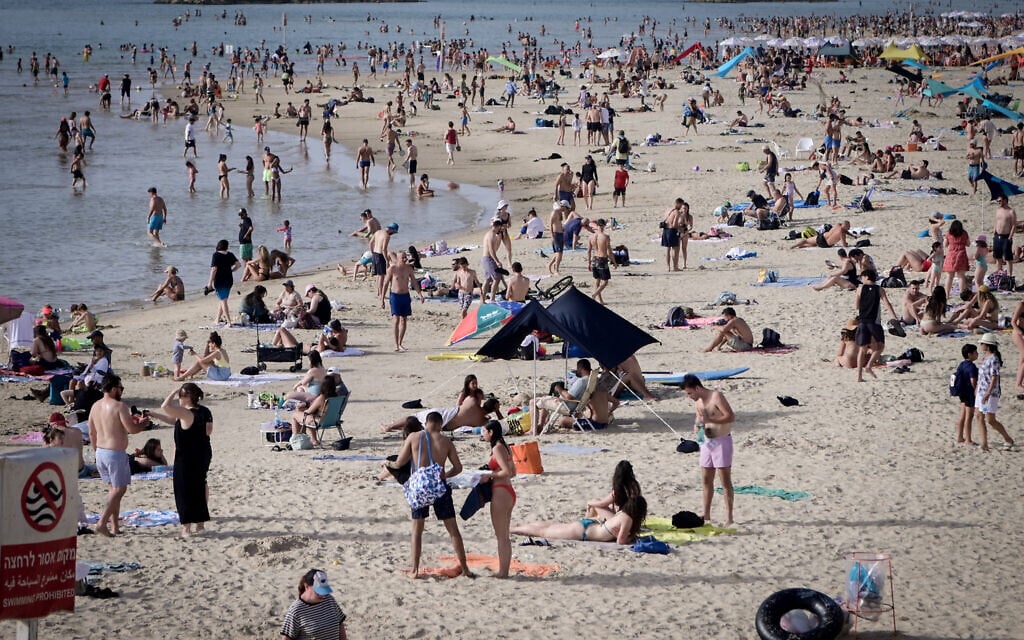
A four-day extreme heat wave is expected to hit Israel on Friday, with temperatures slated to spike to 47 degrees Celsius (116 degrees Fahrenheit) in some areas of the country, according to the Israel Meteorological Service (IMS).

“This is the most significant and prolonged heat wave of the current season,” IMS director Dr. Amir Givati told the Ynet news site. “There will be very low humidity, which means we are concerned about fires.”
The region’s heat wave comes amid record-smashing highs in Europe, sparking wildfires and causing more than 1,000 deaths in France alone.
The extreme heat will hit the Jordan Valley hardest, with temperatures set to soar to around 46°C (115°F), about six degrees above the seasonal norm.
Peak temperatures in the Golan Heights, the Galilee Panhandle and the Negev are predicted to reach 38-42ºC (100-107ºF), and 35-36ºC (95-97ºF) in the country’s central area, including Jerusalem and Tel Aviv.
The UV index in some coastal areas, including Tel Aviv, may peak at a dangerous level of 11 in the middle of the day. The UV index in other parts of the country will reach 10, which falls into the very high risk category.
The Health Ministry has urged the public — particularly the elderly, children, pregnant women and those with chronic diseases — to avoid sun exposure. It also stressed avoiding unnecessary physical exertion, drinking as much water as possible and staying in well-ventilated or air-conditioned places.

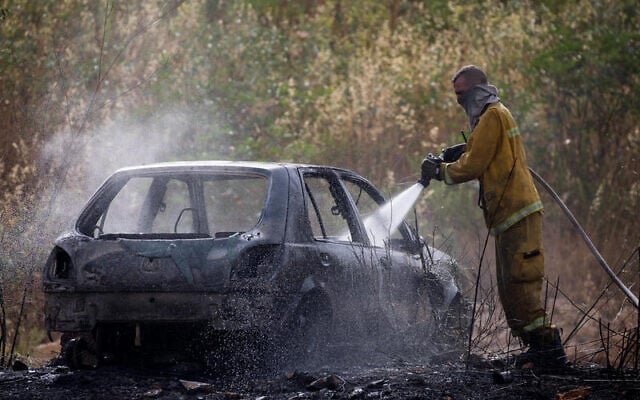
The Nature and Parks Authority has already announced a ban on lighting fires in nature reserves and national parks, except in designated areas, and the agency said that it may close some of the country’s hiking trails as well.
The Israel Electric Corporation has asked the public to be “vigilant” and report to its 103 hotline safety hazards, as well as any tree branches spotted near power lines or fires near electrical facilities.
In a cautionary statement, the Health Ministry reminded the public not to leave children, the elderly or the disabled in an unattended vehicle that is not air-conditioned.
Animals should also not be left in a vehicle or in a building without water and ventilation, the ministry said.
According to the World Health Organization, heat stress is a leading cause of weather-related deaths and can exacerbate underlying illnesses, including cardiovascular disease, diabetes and mental health. It can also increase the risk of transmission of some infectious diseases.
Extreme heat can impact the body’s ability to regulate internal temperature and strain the body as it tries to cool itself.
Heat stroke symptoms include high body temperature, red and hot skin, severe headache, dizziness, nausea, confusion, or loss of consciousness.
“Extreme heatwaves are a real health hazard that can rapidly deteriorate into a life-threatening situation,” said Dr. Khaled Atalla, director of the emergency medicine department at the Galilee Medical Center in Nahariya, in a statement.
In the next five years, the Earth is likely to shatter its hottest-year records, according to new United Nations climate projections.
The World Meteorological Organization also forecasts an overheating Arctic that warms nearly 1.66 degrees Celsius (3 degrees Fahrenheit) between now and 2030.
In its latest study, researchers from the Taub Center for Social Policy Studies said that based on their most recent data on hospital stays during heat waves, Israeli policymakers should plan for additional staffing and hospital beds during extreme heat, since Israelis suffering from cardiac, pulmonary and other diseases require longer hospital stays than during pleasant weather.
“We are used to peaks [of hospital visits] in the winter because of influenza, rather than in the summer,” said Maya Sadeh, who led the study.

The war with Iran has been draining for all of us in Israel. But when I heard about a high casualty incident – ballistic missile impacts in Arad and Dimona that left nearly 200 people wounded – I drank a cup of coffee, packed a bag, and headed south.
There, I spoke with Shilgit, the head of an after-school program for underprivileged youth. Standing outside her destroyed center, Shilgit said it was a miracle that no children were hurt and spoke about the community coming together in the hours since.
As a Times of Israel reporter, I’m committed to telling stories of resilience like Shilgit’s. But my colleagues and I can't do this alone. If you value work like this, please consider joining our reader support group, The Times of Israel Community. Your financial support is essential to keep real human reporting like this going.
— Stav Levaton, military reporter

We’re really pleased that you’ve read X Times of Israel articles in the past month.
That’s why we started the Times of Israel – to provide discerning readers like you with must-read coverage of Israel and the Jewish world.
So now we have a request. Unlike other news outlets, we haven’t put up a paywall. But as the journalism we do is costly, we invite readers for whom The Times of Israel has become important to help support our work by joining The Times of Israel Community.
For as little as $6 a month you can help support our quality journalism while enjoying The Times of Israel AD-FREE, as well as accessing exclusive content available only to Times of Israel Community members.
Thank you, David Horovitz, Founding Editor of The Times of Israel










Israel is preparing for a four-day extreme heat wave starting Friday, with temperatures expected to reach up to 47°C (116°F) in some areas, particularly the Jordan Valley. The Israel Meteorological Service director, Dr. Amir Givati, stated, "This is the most significant and prolonged heat wave of the current season." The Health Ministry has issued warnings, urging the public, especially vulnerable groups, to avoid sun exposure, stay hydrated, and remain in cool environments. The Nature and Parks Authority has banned fires in reserves and may close hiking trails due to fire concerns. The heat wave follows record highs in Europe, which caused over 1,000 deaths in France alone. The Health Ministry and medical professionals emphasize the serious health risks of extreme heat, which can exacerbate existing conditions and lead to life-threatening situations.
© All rights to the original article belong to the source. Din Online shows a headline, an excerpt and a link only. The objectivity rating is computed automatically and is an estimate only.
Discussion
No comments yet — be the first to comment.