Hamas holds mass funeral for 112 people killed in apparent IDF strike at start of Gaza war
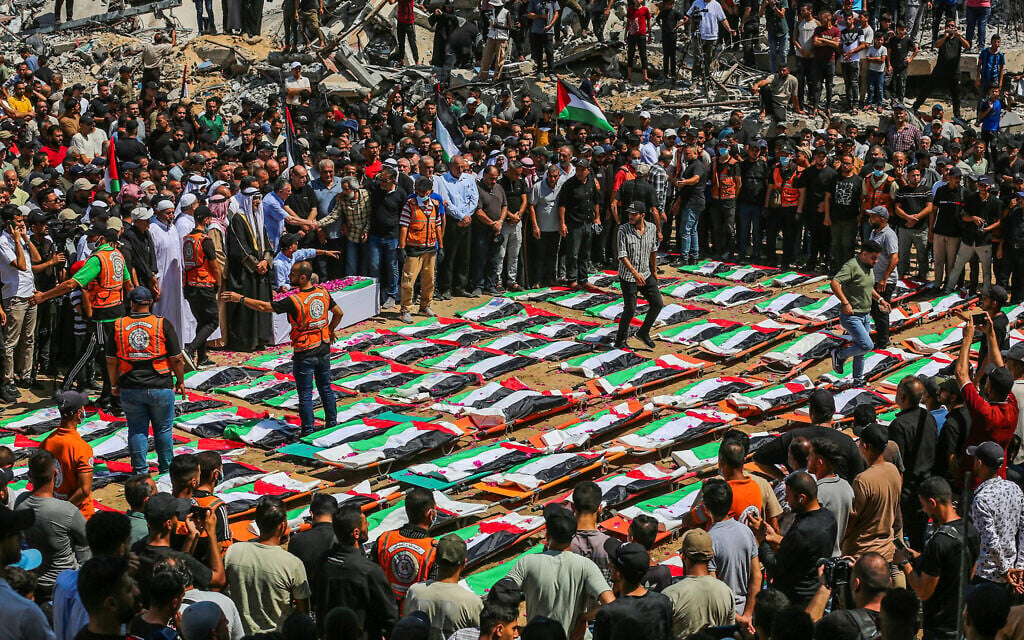
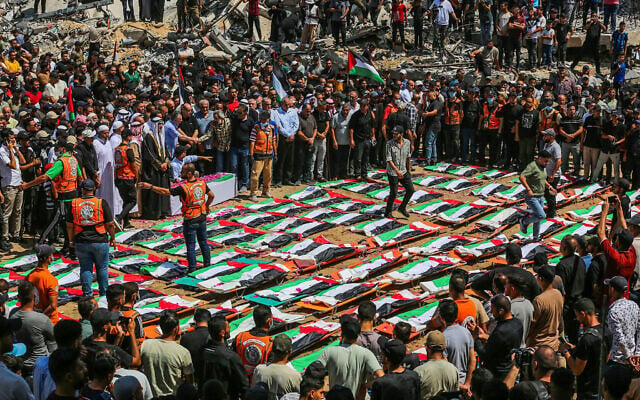
Hamas authorities on Tuesday held a mass funeral for 112 people they said were pulled out of the rubble of a series of residential buildings apparently hit in Israeli strikes in the opening days of the war, after launching an effort to find hundreds of people still missing.
The display of mourning came as the US-backed Board of Peace sought to seal the second phase of US President Donald Trump’s Gaza peace deal, which would see Hamas disarm and Israel stage withdrawals in the Strip.
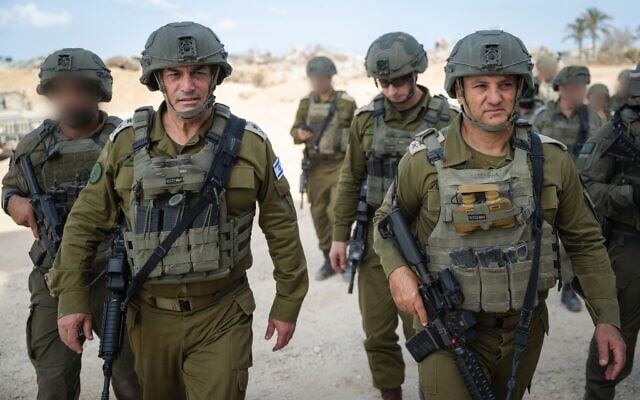
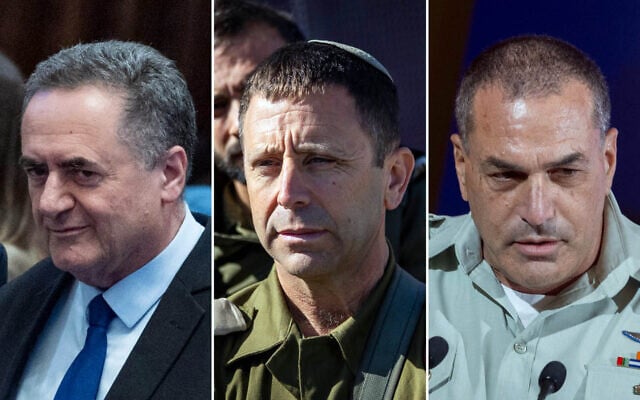
While Israel has balked at demands it halt strikes against terror targets during this phase, the military acknowledged on Tuesday that it had tightened attack regulations, and officials said that at the moment, strikes could only be carried out with the express consent of IDF Chief of Staff Lt. Gen. Eyal Zamir.
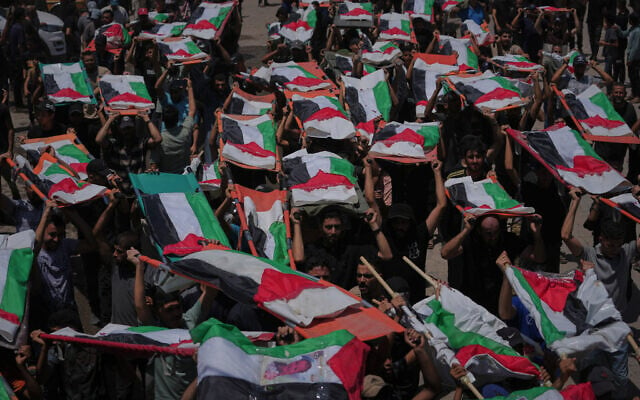
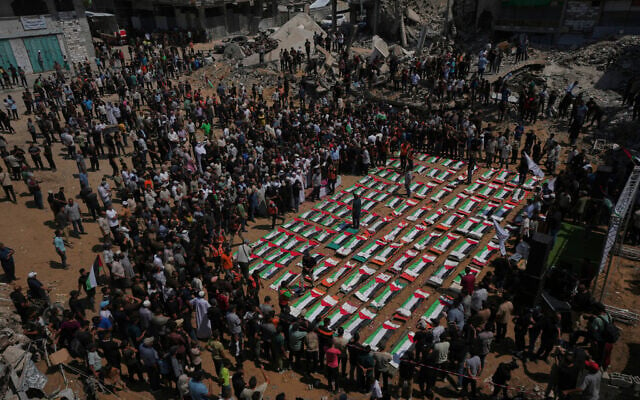
Hundreds of people gathered as the bodies wrapped in Palestinian flags were laid in rows near the destroyed buildings before being carried on stretchers through a narrow street for burial in a nearby cemetery. A sign was adorned with portraits of the dead — men, women and children.
“This day is mixed with grief, and it has reopened our wounds three years after this massacre,” said Taysir Al-Hassayna, a member of one of the two clans that Hamas said were affected by the strike.
“It has brought sorrow back to our children and women,” he said. “But our consolation is that we believe they are martyrs with God.”
The November 2023 strike had hit a residential compound belonging to the Hassayna and Abu Sharia clans in Gaza City’s southern Sabra neighborhood, according to Hamas’s civil defense agency.
The IDF said at the time that it struck some 300 targets across the Gaza Strip. It has not commented specifically on the alleged strike and death toll in Sabra. The military did not immediately respond to a request for comment from Reuters on its account of the incident.
Hamas-affiliated media in the Strip described the mass burial Tuesday as the war’s largest, and said it was the result of a body recovery effort launched on July 14.
The Hamas agency said Saturday that its team had spent some 136 hours digging out the 112 bodies, which included the remains of 40 children, 38 women and seven men with disabilities.
Another 157 people were still buried under the rubble, the agency said. About 40 bodies had also been recovered soon after the strike itself, in a frantic scramble of rough tools and bare hands, according to The Associated Press.
Hamas official Mahmoud Basal, spokesperson for Gaza’s Civil Defense, said identifying the remains required a mixture of forensic evidence and memories gathered from survivors.
“The bodies were decomposed. Relatives identified some through their clothes, injuries and distinguishing marks. Some victims had bone fixation plates on some organs, while some women were identified through jewelry they had on or necklaces bearing their names,” Basal said.
With this recovery operation now over, the team would move on to other accessible areas of Gaza.
“If we had at least 10 excavators, bulldozers, excavators, and cranes needed for the work, the job could be completed in three months,” he told Reuters.
Zaher al-Waheidi, head of the records department in Hamas’s health ministry, has said around 7,400 people are still missing and presumed buried under the rubble from the war.
According to the Hamas health ministry, which does not distinguish between combatants and civilians, over 73,000 people have been killed by Israel since the start of the Gaza war. The IDF believes the toll is largely accurate, with IDF officials estimating that two to three civilians were killed for every dead combatant.
The mass funeral was held amid a push by the Board of Peace to get Israel to halt strikes in the Strip.
Security sources acknowledged that the IDF at the start of this week tightened its policy for “targeted elimination” strikes in the Strip, according to security sources.
The strikes now require prior approval from IDF chief Zamir, where they had previously required only the approval of IDF Southern Command chief Maj. Gen. Yaniv Asor or various division commanders operating in the Strip, the sources said Tuesday.
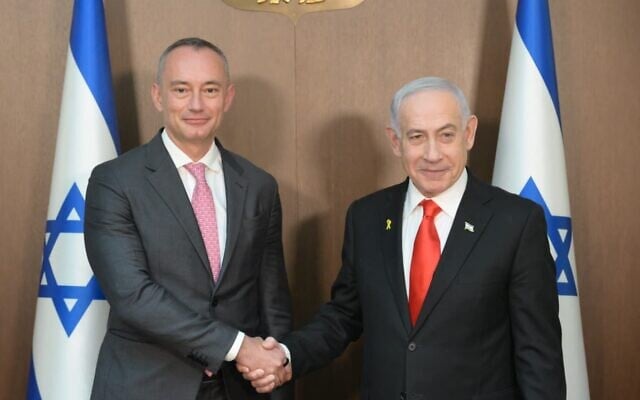
The security sources’ comments followed a meeting Monday between Prime Minister Benjamin Netanyahu and Nickolay Mladenov, the top envoy of the Board of Peace, who had on Sunday lamented Israel’s deadly strikes in Gaza over the previous two days.
The meeting also appeared to result in the Board of Peace walking back a demand that the IDF withdraw from Gaza before Hamas is fully disarmed under a deal announced last week.
On Tuesday, a Hamas official told AFP on condition of anonymity that Hamas and other Palestinian factions “are uneasy with the statement issued by Mladenov after his meeting with Netanyahu.”
Referring to Israel, the official said: “The statement focused solely on the issue of weapons and failed to address the occupation’s obligations, particularly those related to humanitarian aspects and Israel’s commitment to halting its aggression, including aerial and artillery bombardment, gunfire, assassinations and military operations in the Gaza Strip.”
Another Hamas official said the group was waiting for a “clear and official response” from Mladenov regarding the “agreed-upon terms, Mladenov’s position on the Israeli military escalation in Gaza, and the ongoing policy of stalling on the implementation of the agreement.”
Qatar, one of the Gaza truce mediators, blamed Israel on Tuesday for delays in implementing Trump’s Gaza peace plan.
“It is clear to the international community who is obstructing the implementation of the agreement,” Qatari foreign ministry spokesman Majed Al Ansari told reporters. “The full responsibility lies on the Israeli side.”
An increase in Israeli strikes in Gaza over recent days was “nothing more than an attempt to derail the plan’s implementation and block peaceful solutions,” Ansari said. “While Hamas has met its obligations, the international community must pressure Israel to fulfill its obligations.”
In fact, the plan calls for Hamas’s full disarmament, which the Palestinian terror group has so far refused to do.
Former prime minister Naftali Bennett, a leader of the electoral bloc that seeks to unseat Netanyahu in the October 27 election, said Tuesday that there was “a direct line” between Netanyahu, Hamas’s rearming and Qatar’s involvement in “the dangerous agreement” in Gaza.
Bennett has repeatedly lambasted Netanyahu over the so-called Qatargate affair, in which top Netanyahu aides allegedly acted as paid lobbyists for the Hamas-backing Gulf state while working for the prime minister.
“A direct line connects the Prime Minister’s Office in Jerusalem to what is happening here behind the fence,” Bennett said at the Gaza border town of Netiv Ha’asara. “Netanyahu gave up on eliminating Hamas, brought Qatar into the Prime Minister’s Office, and later gave the Qataris the keys to Gaza.”
Qatar had funded Hamas’s elite Nukhba force and “taken back the reins,” and “now a Hamas-istan is rising again under our noses,” all while “the government of Israel has simply thrown up its hands and completely abandoned Gaza,” Bennett charged.
“Hamas has restored its command system; they appointed company commanders, battalion commanders, brigade commanders, rearmed themselves with long-range missiles, UAVs, drones, and weaponry, and are now digging the tunnels anew,” he said, adding that Hamas was “already training for the next massacre.”

The war with Iran has been draining for all of us in Israel. But when I heard about a high casualty incident – ballistic missile impacts in Arad and Dimona that left nearly 200 people wounded – I drank a cup of coffee, packed a bag, and headed south.
There, I spoke with Shilgit, the head of an after-school program for underprivileged youth. Standing outside her destroyed center, Shilgit said it was a miracle that no children were hurt and spoke about the community coming together in the hours since.
As a Times of Israel reporter, I’m committed to telling stories of resilience like Shilgit’s. But my colleagues and I can't do this alone. If you value work like this, please consider joining our reader support group, The Times of Israel Community. Your financial support is essential to keep real human reporting like this going.
— Stav Levaton, military reporter

We’re really pleased that you’ve read X Times of Israel articles in the past month.
That’s why we started the Times of Israel – to provide discerning readers like you with must-read coverage of Israel and the Jewish world.
So now we have a request. Unlike other news outlets, we haven’t put up a paywall. But as the journalism we do is costly, we invite readers for whom The Times of Israel has become important to help support our work by joining The Times of Israel Community.
For as little as $6 a month you can help support our quality journalism while enjoying The Times of Israel AD-FREE, as well as accessing exclusive content available only to Times of Israel Community members.
Thank you, David Horovitz, Founding Editor of The Times of Israel





Hamas authorities conducted a mass funeral for 112 individuals, including 40 children, 38 women, and seven men with disabilities, who were recovered from the rubble of residential buildings in Gaza City's Sabra neighborhood. These buildings were reportedly hit by Israeli strikes in November 2023, at the beginning of the war. The recovery effort, launched on July 14, involved 136 hours of digging, with 157 people still believed to be buried. Hamas official Mahmoud Basal stated that identification of decomposed remains relied on forensic evidence and survivor memories, including clothing, injuries, and personal items. The IDF has not specifically commented on this particular strike or death toll, though it acknowledged tightening attack regulations, now requiring express consent from IDF Chief of Staff Lt. Gen. Eyal Zamir for strikes. This funeral occurred amidst efforts by the US-backed Board of Peace to advance a Gaza peace deal, which has faced delays, with Qatar blaming Israel and former Israeli Prime Minister Naftali Bennett criticizing current Prime Minister Netanyahu's ties with Doha and Hamas's rearmament.
© All rights to the original article belong to the source. Din Online shows a headline, an excerpt and a link only. The objectivity rating is computed automatically and is an estimate only.
Discussion
No comments yet — be the first to comment.