Hezbollah funding survives US-Israeli crackdown
Recent efforts by Washington, Jerusalem and Beirut to clamp down on Hezbollah’s funding channels have complicated the terror army’s reconstruction and rearmament but have not cut it off from funding or significantly weakened its support network, Israeli security experts told JNS.
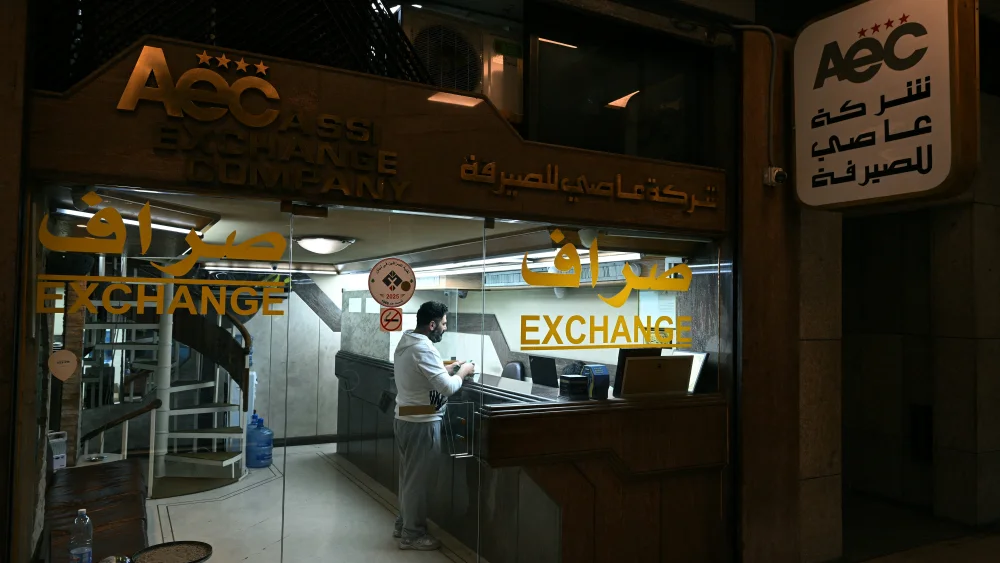
The assessment follows a New York Times investigation published on Aug. 9 that found the Iranian proxy is under its most severe financial strain in years amid a coordinated campaign by Israel, the Trump administration and the Lebanese government targeting its economy, including at Beirut–Rafic Hariri International Airport and heightened central bank scrutiny of currency exchanges.

While these measures have introduced friction and raised transaction costs, analysts emphasize that Hezbollah’s economy was purpose-built to withstand formal banking restrictions.
Decentralized cash and hawala networks
According to Tal Beeri, head of the research department at the Alma Research and Education Center, financial pressure has created operational hurdles for Hezbollah, but has not severed the terror group from its funding sources.
“The pressure has accelerated Hezbollah’s reliance on a parallel financial system that was already well established, particularly on cash, currency exchange businesses and hawala networks,” said Beeri, referring to an informal system that moves money through trusted brokers instead of banks, leaving little or no paper trail.
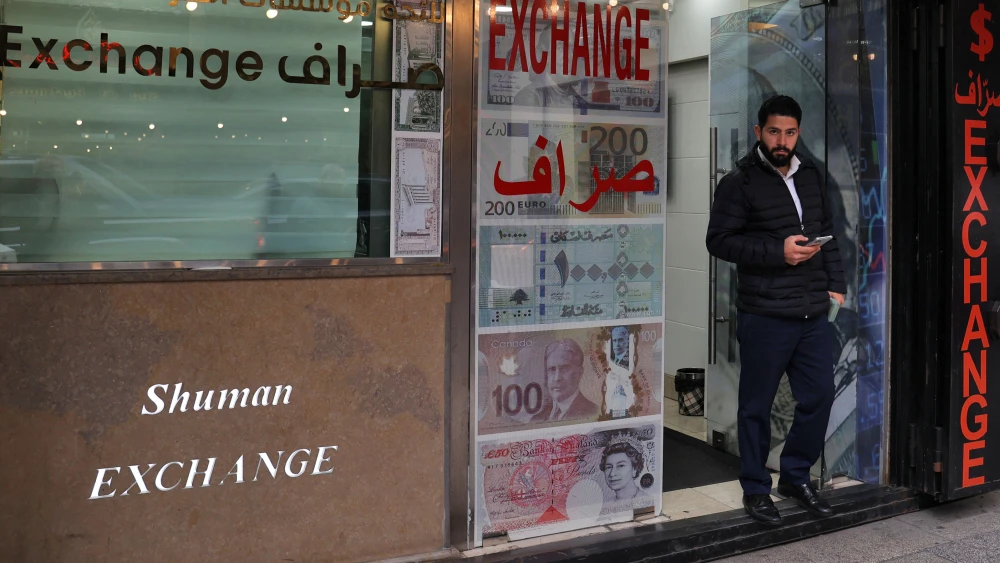
Beeri noted that Hezbollah deliberately constructed its monetary apparatus outside conventional domestic and international banking channels.
“A network of Lebanese currency exchange businesses has enabled the organization to receive Iranian funding and money originating from additional sources, without conventional bank transfers or clear digital traces,” he explained. “Hawala provides Hezbollah with precisely the characteristics it needs under sanctions: decentralization, redundancy, flexibility and a high degree of survivability.”
The U.S. Treasury Department reported on Nov. 6, 2025, that the Iranian Islamic Revolutionary Guard Corps’ Quds Force exploited Lebanon’s cash economy to funnel more than $1 billion to Hezbollah since the beginning of the year.
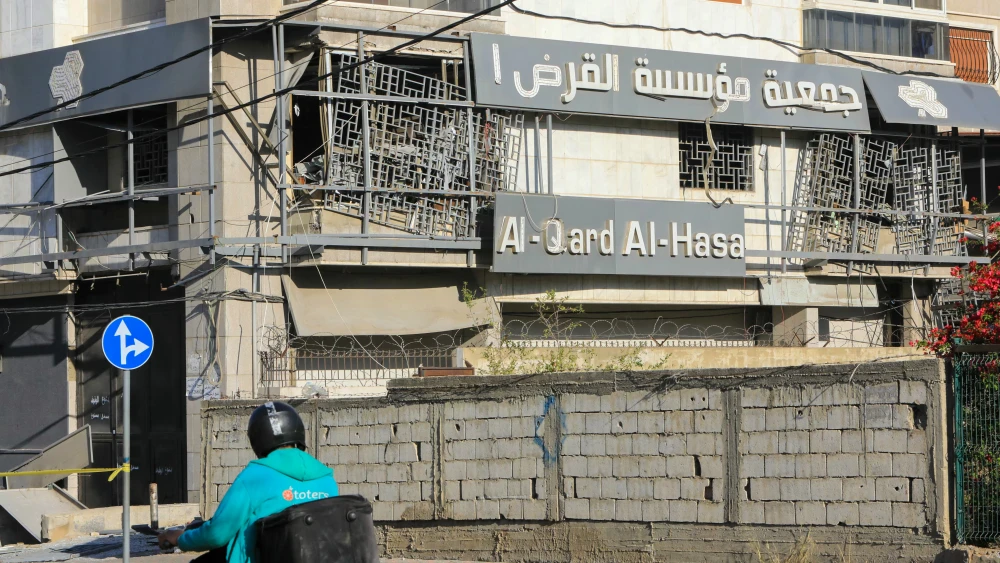
Beyond Iranian state subsidies, Beeri said Hezbollah draws funds from Shi’ite communities abroad and in Lebanon, as well as from involvement in local, regional and international criminal networks. Beeri also noted that Al-Qard Al-Hassan—which Washington sanctioned in 2007 and the Israel Defense Forces repeatedly targeted with airstrikes during the recent war—had reopened branches in Southern Lebanon and intended to open additional locations.
Dr. Jacques Neriah, a senior researcher at the Jerusalem Center for Security and Foreign Affairs and former chief analyst for IDF Military Intelligence, concurred that the group remains financially viable despite belt-tightening in certain civilian sectors.
“Hezbollah is spending less on social services and mainly in the compensation field… promised money for reconstruction has not been delivered,” Neriah told JNS. “However, Hezbollah has not been hit by an economic or financial crisis. The organization has sufficient sources of income, not only from Iran.”
Limits of Lebanese enforcement
While Lebanese authorities have instituted tighter cargo inspections, suspended direct flights from Iran and dismissed compromised personnel at Beirut’s airport since early 2025, experts question whether the state can maintain this posture under Hezbollah intimidation.
Beeri pointed to the escalating political campaign targeting Brig. Gen. Fadi Kfouri, the official responsible for security at Beirut’s airport, as evidence of Hezbollah’s pushback against oversight.
“Hezbollah views Beirut Airport as a strategic asset, and not merely as a transportation hub,” Beeri said. “Historically, it has been used for the transfer of cash, military components, equipment and Iranian personnel.”

Beeri said the same structural problem affects the financial system and enforcement of central bank restrictions. In July 2025, Banque du Liban issued Directive 13735, which sought to protect Lebanon’s financial and economic sector from dealings with unlicensed entities subject to sanctions.
“Some currency exchange companies linked to Hezbollah operate as officially licensed businesses and maintain ties with recognized Lebanese financial institutions,” Beeri said. “Weak enforcement, corruption, political considerations and fear of confrontation with Hezbollah have allowed this system to survive.”
Neriah was similarly skeptical that Lebanon would go beyond the central bank’s existing measures. He said the country’s political system makes meaningful action against Hezbollah’s financial infrastructure unlikely.
“Real measures… most probably will not be taken,” Neriah told JNS.
According to the Alma Center, Hezbollah-affiliated sources claimed that the group had distributed an estimated $400 million in temporary relief to about 140,000 affected cases by the end of January 2025, following the November 2024 ceasefire. The aid was distributed through institutions including Jihad al-Bina, Hezbollah’s Iran-funded construction and reconstruction arm, whose name translates roughly as “Effort for Reconstruction.” The United States has designated Jihad al-Bina as a terrorist entity.
Although delays, insufficient compensation and demands that residents initially finance repairs themselves have caused isolated frustration, Beeri said the strain was not expected to produce a large-scale rupture with Hezbollah’s Shi’ite support base.
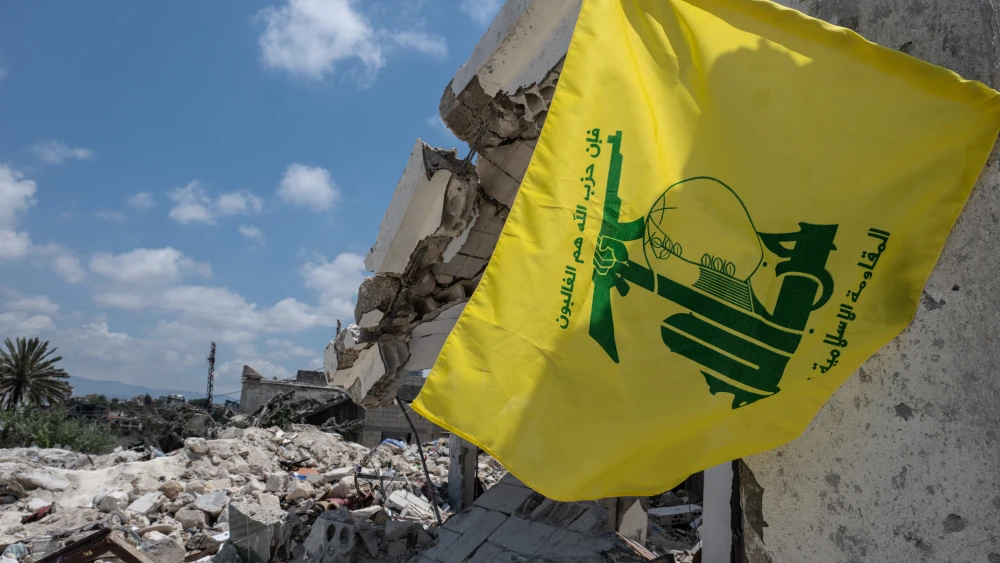
“Economic weakness can strengthen dependency,” Beeri stressed. “In places where the Lebanese state cannot provide an effective alternative, families that depend on Hezbollah-linked institutions for compensation, credit, employment, or basic services may have little practical choice other than to remain within Hezbollah’s ecosystem.”
Beeri concluded that sanctions can only achieve lasting strategic impact if coupled with a viable state alternative for the Lebanese population.
“Financial pressure is most effective when it is accompanied by an alternative,” Beeri said. “If Hezbollah’s resources are cut but no alternative is provided, the result may instead be greater hardship and the continuation, or even deepening, of dependence on whatever assistance Hezbollah is still able to provide.”



Get the latest updates in our WhatsApp group.




Despite coordinated efforts by the U.S., Israel, and Lebanon to disrupt Hezbollah's funding, the Iranian proxy has largely adapted by leveraging informal cash and hawala networks, according to Israeli security experts. These measures have created operational hurdles and increased transaction costs, but have not severed the group's funding or significantly weakened its support base. Tal Beeri of the Alma Research and Education Center noted, "The pressure has accelerated Hezbollah's reliance on a parallel financial system that was already well established, particularly on cash, currency exchange businesses and hawala networks." Hezbollah's financial apparatus was deliberately built outside conventional banking channels, utilizing a network of Lebanese currency exchange businesses and hawala to receive funds from Iran, Shi’ite communities, and criminal networks.
- The U.S. Treasury Department reported that Iran's Quds Force funneled over $1 billion to Hezbollah through Lebanon's cash economy since early 2025.
- While Lebanese authorities have implemented tighter cargo inspections and central bank scrutiny, experts like Dr. Jacques Neriah are skeptical that the state can sustain these measures due to Hezbollah's influence and the country's political system.
- Hezbollah's social services, though experiencing some belt-tightening and delays in compensation, continue to foster dependency among its Shi’ite support base, especially where the Lebanese state provides no effective alternative.
- Experts conclude that financial pressure alone is insufficient; lasting strategic impact requires a viable state alternative for the Lebanese population to reduce reliance on Hezbollah's ecosystem.
© All rights to the original article belong to the source. Din Online shows a headline, an excerpt and a link only. The objectivity rating is computed automatically and is an estimate only.
Discussion
No comments yet — be the first to comment.