High Court freezes key parts of government’s controversial media overhaul law
Jeremy Sharon is The Times of Israel’s legal affairs and settlements reporter

The High Court of Justice on Sunday froze implementation of key parts of a sweeping media industry overhaul law passed by the Knesset last week that petitioners argue specifically benefits pro-government news outlets and will severely harm the political neutrality of broadcast news media.
The court issued a temporary order relating to clauses of the legislation that were slated to go into effect immediately, which include some of the most far-reaching measures, but noted that large sections of the law are not scheduled to come into effect until later and an emergency stay was therefore not necessary for the entire law.
The petitions against the law, filed by several government watchdog groups and opposition parties, raised concerns that clauses of the law coming into effect immediately would “cause irreversible damage to the media market” and be used to sway the October 27 election.
The petitions, including some filed before the bill was passed into law, also allege a slew of severe procedural flaws in the legislative process, which could by themselves give the High Court cause to strike it down.
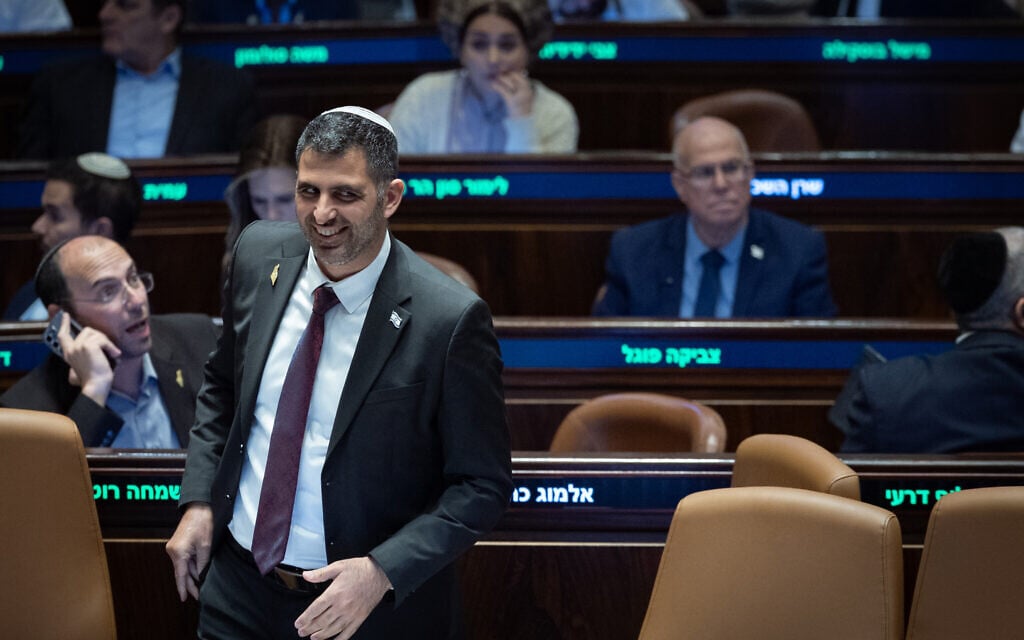
Immediately following the decision, Communications Minister Shlomo Karhi, who authored the legislation and was heavily involved in advancing it through Knesset, called on the government to defy the High Court order, claiming the court “has no authority to suspend or strike down laws” and declared that the legislation “remains fully in force.”
Karhi has several times in the past called on the government to defy the High Court, something it has stopped short of doing but has threatened to do.
Far-right National Security Minister Itamar Ben Gvir accused the justices of “trampling the will of the people’s elected representatives,” Finance Minister Bezalel Smotrich said that the court had “completely lost all restraint in its war against the Knesset and the government of the nationalist camp.”

MK Efrat Rayten of the left-wing Democrats party, who petitioned the court against the law and who was on the special committee which prepared it, welcomed the decision, describing the legislation as having been designed “to serve the political interests of a government headed by a criminal defendant, at the public’s expense.”
In the court decision issued Sunday morning, Justice Ofer Grosskopf called the claims against the procedural problems and the substance of the law itself “weighty.”
He also wrote that because of the broad scope of the changes brought about by the clauses of the law going into immediate effect and their expected impact on the media market, there was a concern of irreversible change to broadcast media in Israel before the court can even reach a final decision. This, he said, justified the partial freeze on implementation of the legislation,
The freeze will be in effect until the court makes a decision as to whether to grant interim orders against the law which would freeze implementation until a final court ruling.
The court gave the government given a week to respond in the meantime.
The law, passed in the final hours of the outgoing Knesset’s legislative term, significantly expands government control over broadcast media and news sector by overhauling media regulation.
It removes longstanding oversight mechanisms, minimum journalistic standards, obligations to invest in original Israeli productions and restrictions on cross-ownership. And it gives the government greater influence over television ratings and state advertising allocation.
The provisions of the law to be frozen include the clause that enabled so-called crossover ownership, whereby satellite and cable companies will be able to own news companies, something the petitioners say will increase market concentration in the media market.

The court order also freezes the cancellation of the requirement that news outlets be held as a separate corporations from the television channel they are broadcast on, a regulation that was designed to reduce political interference in the news from the channel owner.
The order also freezes a provision of the law that allowed a selection committee to be immediately established for the new regulatory body, which was expected to act swiftly in order to begin make regulatory decisions.
Karhi, a far-right member of the Likud who routinely calls on the government to disobey the High Court, said he would boycott the legal proceedings, and called on Knesset Speaker Amir Ohana to pass a special parliamentary resolution rebuking the court.
“I protest in defense of the honor of the people and the dignity of the Knesset of Israel,” said Karhi.
“I do not intend to step onto the field with my hands tied while the referee is wearing the uniform of the opposing team,” he said in reference to his vow not to participate in the court proceedings while the court’s temporary order was in effect.
The Movement for Quality Government in Israel said that the temporary order would help protect the freedom and independence of the press in Israel.
“The law was advanced through a rushed process riddled with flaws, and it grants the political echelon extensive power over the communications market, broadcasting organizations, and news stations,” the organization said.
Ariela Karmel and Times of Israel staff contributed to this report

The war with Iran has been draining for all of us in Israel. But when I heard about a high casualty incident – ballistic missile impacts in Arad and Dimona that left nearly 200 people wounded – I drank a cup of coffee, packed a bag, and headed south.
There, I spoke with Shilgit, the head of an after-school program for underprivileged youth. Standing outside her destroyed center, Shilgit said it was a miracle that no children were hurt and spoke about the community coming together in the hours since.
As a Times of Israel reporter, I’m committed to telling stories of resilience like Shilgit’s. But my colleagues and I can't do this alone. If you value work like this, please consider joining our reader support group, The Times of Israel Community. Your financial support is essential to keep real human reporting like this going.
— Stav Levaton, military reporter

We’re really pleased that you’ve read X Times of Israel articles in the past month.
That’s why we started the Times of Israel – to provide discerning readers like you with must-read coverage of Israel and the Jewish world.
So now we have a request. Unlike other news outlets, we haven’t put up a paywall. But as the journalism we do is costly, we invite readers for whom The Times of Israel has become important to help support our work by joining The Times of Israel Community.
For as little as $6 a month you can help support our quality journalism while enjoying The Times of Israel AD-FREE, as well as accessing exclusive content available only to Times of Israel Community members.
Thank you, David Horovitz, Founding Editor of The Times of Israel


© All rights to the original article belong to the source. Din Online shows a headline, an excerpt and a link only. The objectivity rating is computed automatically and is an estimate only.
Discussion
No comments yet — be the first to comment.