How the IDF clears Hezbollah’s explosive-rigged terrain in Southern Lebanon
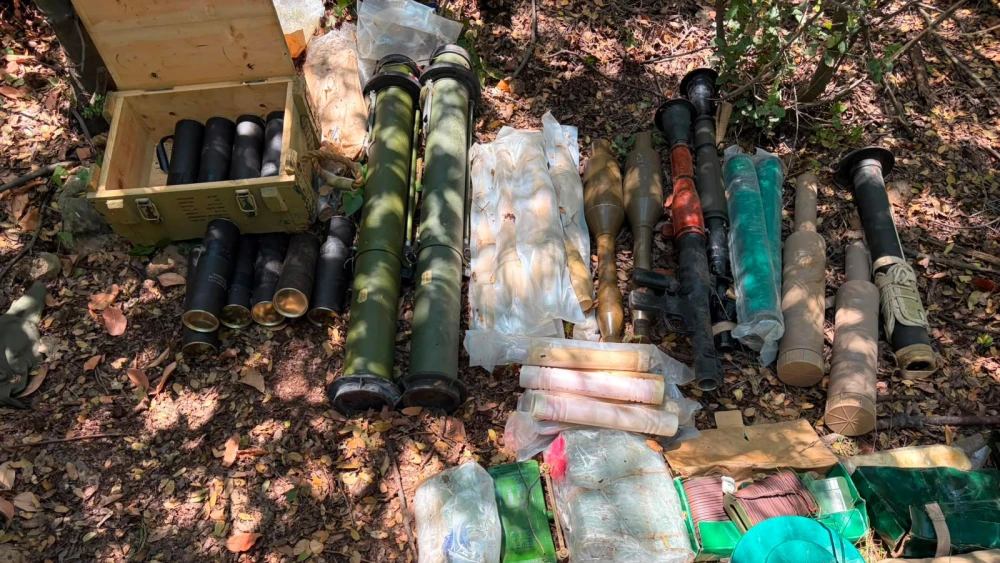

The booby-trap blast that killed two Israeli reservists in a building in the Lebanese village of Majdal Zoun on Aug. 5 has thrown a spotlight on one of the most persistent threats facing Israeli troops operating in the security zone: explosive devices hidden in and around structures that Hezbollah has spent years preparing across its Southern Lebanon strongholds.
Maj. (res.) Harel Birenstock, 34, of Nokdim, and Sgt. Maj. (res.) Tamir Vaknin, 33, of Eilat, were killed in the blast, and four soldiers were wounded during a security operation in Majdal Zoun.
 Xiaomi Smart Band 10 Review: The Ultimate Budget Fitness Tracker for 2026
See the review →
Xiaomi Smart Band 10 Review: The Ultimate Budget Fitness Tracker for 2026
See the review →
JNS has learned that the Majdal Zoun incident occurred not during an offensive mission but during a task in which a force went out to secure an armored bulldozer—a rear-echelon assignment rather than an attack. The area had already been considered cleared, and the explosive device was not inside a structure.
The IDF is examining whether the explosive device had been planted before the April 16 ceasefire or afterward, as well as how it was triggered—whether by the movement of Israeli forces or by Hezbollah operatives nearby.
In response, the IDF struck Hezbollah terror infrastructure in several areas across Southern Lebanon, including weapons storage facilities, a command center and additional terror infrastructure.
A military source told JNS in recent days that Israeli forces in Southern Lebanon, particularly in the area of Majdal Zoun and al-Mansouri, have been operating in terrain saturated with explosive devices.
“Our fighting inside Southern Lebanon, and mainly in this area of Majdal Zoun and al-Mansouri, is saturated with explosive devices. Accordingly, we fight by reduction,” the source said.
This means that before any entry into a structure, forces observe the building, fire on it with a tank, use shoulder-fired missiles against it and scan the interior with drones.
The goal of the procedure is “to reduce the risks in the fighting for the target, to reduce the risk of an enemy or of the presence of an explosive device,” he added.
The source said this reduction process is carried out to such an extent that forces detonate charges and clear the area using armored bulldozers or similarly large equipment meant to trigger any devices already planted there.
“Night after night, time after time, in every raid, we go down and fight in this way,” the source said.
The IDF balances standoff strikes against the need to physically clear terrain, the source said, adding that a great deal can be accomplished from the air or from a distance.
“Last night we were with drones that dropped explosives, and we destroyed structures from a standoff position without entering them,” the source said.
At the same time, he added, clearing the terrain requires taking control of every Hezbollah weapon found, many of them stored inside buildings, and either removing, detonating or destroying them. Thorough work sometimes still requires entering structures.
The approach combines standoff fire with physical entry rather than relying exclusively on either method.
The source also addressed underground infrastructure, saying some structures are known to have subterranean components, with forces seeking to reach them to destroy what lies beneath.
The source said that over two months of operations, his unit found and destroyed more than eight underground zones. He illustrated the scope of the effort with an account of visiting a building destroyed in the northern part of his unit’s sector.
“I went to visit a house that was destroyed in the north, to give a sense of how broad our clearing effort is. I arrived with bulldozers to open up the concrete rubble, to get down into the underground level and blow it up, so as not to leave it for Hezbollah,” the source explained.
As a rule, the source added, underground infrastructure is difficult to deal with from a standoff position, since forces must reach the shaft itself, insert the charge and detonate it.
On the growing use of robotics, the source said the army does not send troops into a structure or down a suspicious street before a robotic system has gone in first.
Armored robotic vehicles are used to push explosive charges into position for reduction procedures, while a robotic device is sent into a structure ahead of every entry.
On the broader state of the fighting in the sector, the source described a brigade that has nearly completed a full clearing of the area in the face of a very sparse enemy presence.
The source said only a small number of terrorists are estimated to remain in the sector, though an enemy presence certainly exists in more distant villages.
More broadly, the source said one clear finding has been that Hezbollah heavily fortified its second line of villages from the Israeli border, citing Majdal Zoun as an example of “a village that was heavily, heavily fortified” by Hezbollah prior to the IDF’s entry.


Get the latest updates in our WhatsApp group.




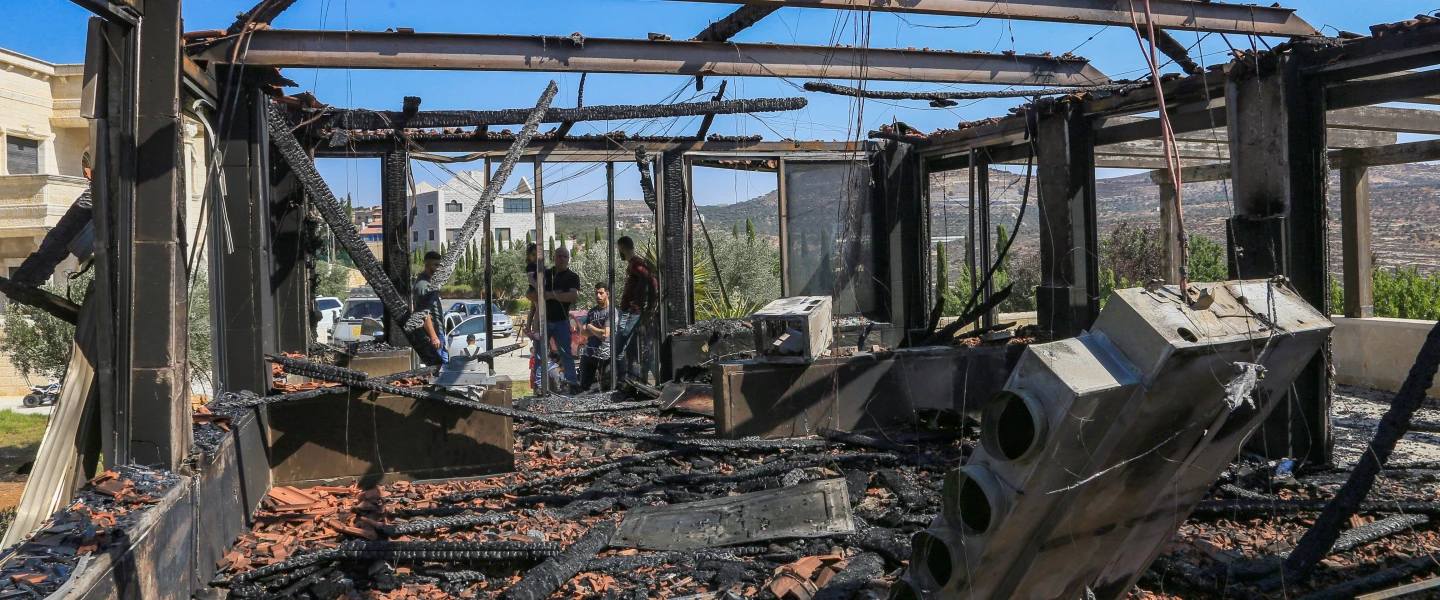


Two Israeli reservists were killed in an explosive device blast in Majdal Zoun, Southern Lebanon, on August 5, highlighting the persistent threat of booby traps in Hezbollah-prepared structures. The incident occurred during a rear-echelon task to secure an armored bulldozer in an area previously considered cleared. The IDF is investigating whether the device was planted before or after the April 16 ceasefire and how it was triggered. A military source described the combat in Southern Lebanon as "saturated with explosive devices."
- Before entering any structure, Israeli forces observe, fire on it with tanks and shoulder-fired missiles, and scan the interior with drones to reduce risks.
- Forces detonate charges and use armored bulldozers to trigger pre-planted devices, with this "reduction process" occurring nightly.
- The IDF balances standoff strikes with physical clearing, using drones to drop explosives and destroy structures remotely, but also entering buildings to remove or destroy Hezbollah weapons and underground infrastructure.
- Robotic systems are deployed ahead of troops to clear suspicious streets and structures, and to position explosive charges.
The source noted that Hezbollah heavily fortified villages like Majdal Zoun prior to the IDF's entry, and that his unit has nearly completed clearing its sector, destroying over eight underground zones.
© All rights to the original article belong to the source. Din Online shows a headline, an excerpt and a link only. The objectivity rating is computed automatically and is an estimate only.
Discussion
No comments yet — be the first to comment.