Humiliation as a tool of war

We’ve all witnessed children bullying and humiliating their peers. It’s uncomfortable, even painful to watch. What motivates humiliation? What reinforces its use? Are there limits to its effectiveness?
To the victim, humiliation is shaming, cruel, embarrassing and hurtful. To the offender, it’s an exercise of power that attempts to redefine another’s identity.

Subordination through physical intimidation or threats challenges the integrity of the victim’s identity. It happens on the playground and in the boardroom. It’s awkward to witness, evoking embarrassment or concern for the victim and sometimes even for the offender who may not realize how damaging their words or actions are.
Humiliation’s power evokes images from childhood spats to slavery and the Holocaust that range from uncomfortable to repulsive. Its power can leave a deep imprint upon the psyche that results in lasting trauma.
Similar dynamics exist between nations. Just as individuals have a psychological self-definition that can be challenged by a bully, countries and cultures have national and cultural identities that can be vulnerable to attack.
In 1979, this was seen when Iran released 52 American hostages minutes after U.S. President Jimmy Carter’s term ended, thus humiliating him and tarnishing his legacy. This kind of behavior is as old as Vlad the Impaler’s grotesque exhibition in fifteenth-century Eastern Europe. Vlad instructed his men to impale thousands of enemy prisoners on a hillside to deter an Ottoman invasion. This was also humiliation by means of power; terror broadcast for effect.
Bullies often want witnesses to their strength, as Iran did when it broadcast the 1979 hostage release worldwide. ISIS opened a new era of humiliation in 2014 with its infamous videos of beheadings, immolations, drownings and mass executions edited for social media consumption.
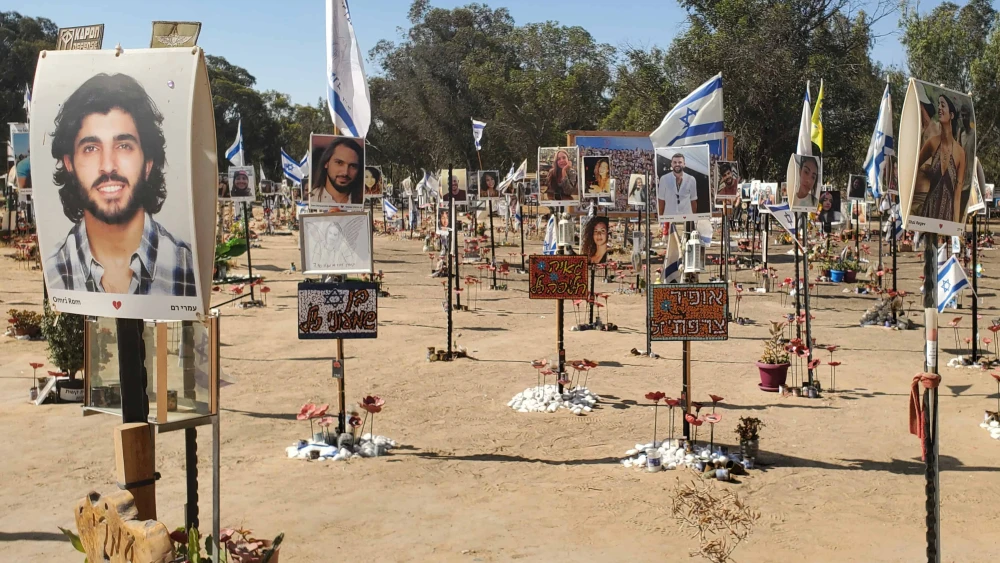
Hamas went a step further in its invasion of Israel on Oct. 7, 2023, by live-broadcasting its systematic sexual violence and rape, facial and genital mutilation, forced nudity and murder of adults and children. Some of the torture was done in the presence of the victim’s family. Some of it was broadcast to victims’ families from their stolen phones.
While the totality of Hamas’s crimes can never be fully known or comprehended, Hamas clearly introduced a new level of horror. As documented in Israel’s 2026 independent Civil Commission report on the crimes, social media was coopted to exponentially expand the atrocity theater. Digital media was deliberately used to intensify suffering. Documentation and dissemination of humiliation became part of the assault itself.
The victims who were tortured, raped and murdered suffered as long as they lived, and amid their suffering would likely not know of the broadcast. The goal of live transmission of horrors far exceeds any individual bully’s ability to display power.
Exhibitionistic and sadistic cruelty implicitly threatens the viewer. It is humiliation by proxy. Unintentionally, these horrors may have another result: Our society is commonly exposed to fictional violence on the screen. Horror is even a genre of entertainment. The addition of real-life images of horror increases the risk of our becoming further desensitized to these images. As we become accustomed to seeing it, violence can inadvertently become normalized.
Humiliation has always sought an audience. The use of technology as part of the Oct. 7 massacre opened a new chapter in the annals of humiliation and its horrors. The world is forced to struggle with how to adjust to it. The public is involuntarily coopted into participation. Technology extends its reach beyond anything previously imagined. As mass humiliation is weaponized, images are no longer records of the crime; they are extensions of it.


Get the latest updates in our WhatsApp group.







The article discusses humiliation as a tool of war, tracing its use from historical examples to modern conflicts. It explains that humiliation, while shaming to the victim, is an exercise of power for the offender, aiming to redefine identity. Historical instances include Vlad the Impaler's use of impalement to deter invasion and Iran's release of American hostages to humiliate President Carter. ISIS escalated this in 2014 with widely broadcast videos of atrocities. Hamas, on October 7, 2023, further intensified this by live-broadcasting systematic sexual violence, mutilation, and murder, often to victims' families via stolen phones. The article notes that "documentation and dissemination of humiliation became part of the assault itself," using digital media to amplify suffering and threaten viewers by proxy. This technological weaponization of mass humiliation, where images become extensions of the crime, forces society to confront a new level of horror and the risk of desensitization to real violence.
© All rights to the original article belong to the source. Din Online shows a headline, an excerpt and a link only. The objectivity rating is computed automatically and is an estimate only.
Discussion
No comments yet — be the first to comment.