IDF admits marking detained Palestinians with numbers during raid, expresses remorse
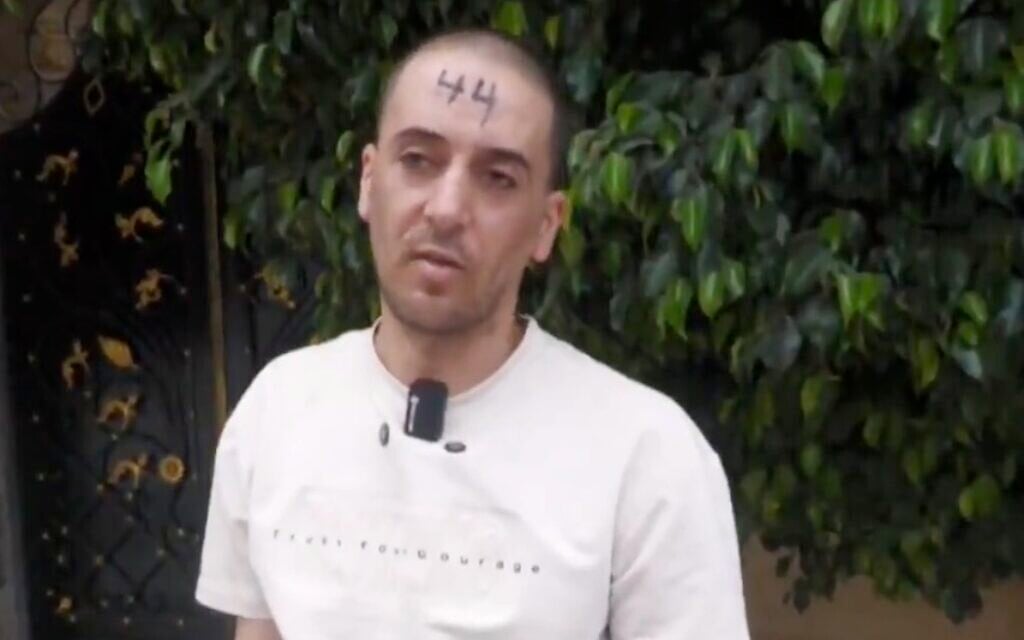
The Israel Defense Forces on Tuesday acknowledged that soldiers had marked detained Palestinian suspects with numbers during a military raid in the northern West Bank village of Qabatiya a day earlier, despite previously acknowledging that the practice was inappropriate.
In a statement to The Times of Israel, the military said that commanders had stressed the seriousness of the conduct to the troops involved and that “lessons have been learned” — echoing remarks the IDF made in April.

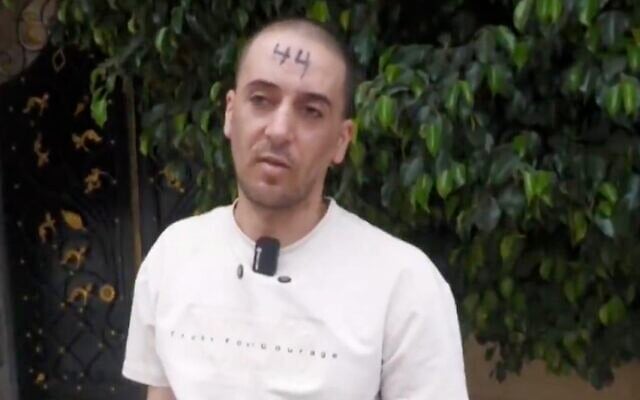
Footage published Monday showed a Palestinian man speaking to local media with the number 44 written across his forehead after he was questioned by Israeli soldiers during the raid.
The man said troops had marked others who were interrogated as well, and that soldiers warned him not to take part in clashes if settlers entered the village.
The Haaretz newspaper reported Tuesday that several Palestinians detained and questioned during the operation had numbers written on their foreheads or elsewhere on their bodies. Palestinian sources cited by the newspaper said some of those detained by the army were beaten.
The military said Monday that during a major operation earlier in the day, commandos of the Duvdevan unit apprehended two Palestinians suspected of planning terror attacks in Qabatiya and in the nearby Far’a camp.
Also in Qabatiya, troops scanned around 100 buildings, “detained terrorists and questioned other suspects,” the IDF said.
Hadash-Ta’al MK Ahmad Tibi strongly condemned the incident on X, calling it “shocking and disgusting,” and said the act reminded him of “dark times.”
מזעזע ומחליא: חיילים וקצינים כותבים מספרי זיהוי על מצחם של פלסטינים בקבאטיה לפני חקירתם.
כך נראית דה־הומניזציה: מוחקים את האדם והופכים אותו למספר.
תמונה שמזכירה תקופות אפלות, ושצריכה לזעזע כל אדם. pic.twitter.com/X6umZQHHGj
— Ahmad Tibi (@Ahmad_tibi) August 18, 2026
Using numbers on skin to identify people has long been taboo in Israel, harking back to the numbered tattoos used by the Nazis to identify concentration and death camp inmates during the Holocaust.
In a formal response Tuesday, the IDF confirmed that security forces had marked suspects who were questioned during the operation in Qabatiya.
“Commanders made clear to the troops the seriousness of the act, and lessons have been learned,” the military said.
The admission closely echoed the army’s response to a similar incident in April, when footage showed Palestinian women with numbers written on their hands after they were briefly allowed to enter the IDF-controlled Jenin refugee camp to collect belongings.
هكذا خرجت نساء مخيم جنين بعد تفقد منازلهن المدمرة بعد عام وأربعة أشهر من الغياب القسري." pic.twitter.com/CeFJbWOwxq
— قدس اليومية (@QUDnewS) April 13, 2026
At the time, the IDF said troops were trying to maintain an orderly return by directing residents to different sections of the camp, which the military had divided into areas identified by numbers and letters.
The army said the idea of writing the relevant section on each resident’s hand had come from the Palestinians themselves, but nevertheless called the practice a case of “poor judgment.”
The military said at the time that proper conduct had been clarified and that “lessons had been learned.”
The April incident took place during the IDF’s prolonged counterterrorism operation in Jenin and other northern West Bank refugee camps. Israel launched Operation Iron Wall in January 2025, saying it was aimed at rooting out terror groups operating in the area.
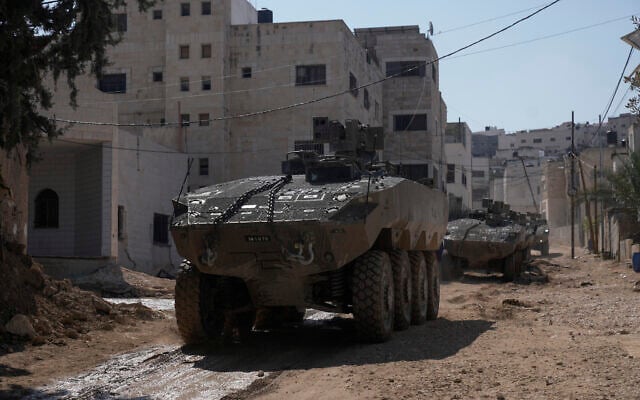
The operation displaced tens of thousands of Palestinians.
In remarks to the UN Security Council last month, Ramiz Alakbarov, the UN deputy special coordinator for the Middle East peace process, asserted that 127 Palestinian communities “have experienced full or partial displacement since January 2023,” 47 of which have been entirely displaced.
Alakbarov also said that just in 2026, around 3,800 Palestinians in the West Bank “have been displaced due to settler violence, demolitions and evictions.”

As a multimedia journalist, my job is to take the quality, fact-based journalism produced by The Times of Israel newsroom and make it accessible across every platform — from Instagram posts to podcasts to short-form videos.
This is how many, especially young people, consume news these days. But misinformation is rampant on social media. Our team at ToI produces accurate, responsible short-form reporting on Israel and the Jewish world.
If you believe in the importance of factual social media journalism, please consider joining our reader support group, The Times of Israel Community. Your financial support is essential to sustain responsible multimedia reporting.
— Gabriella Jacobs, multimedia journalist

We’re really pleased that you’ve read X Times of Israel articles in the past month.
That’s why we started the Times of Israel – to provide discerning readers like you with must-read coverage of Israel and the Jewish world.
So now we have a request. Unlike other news outlets, we haven’t put up a paywall. But as the journalism we do is costly, we invite readers for whom The Times of Israel has become important to help support our work by joining The Times of Israel Community.
For as little as $6 a month you can help support our quality journalism while enjoying The Times of Israel AD-FREE, as well as accessing exclusive content available only to Times of Israel Community members.
Thank you, David Horovitz, Founding Editor of The Times of Israel



© All rights to the original article belong to the source. Din Online shows a headline, an excerpt and a link only. The objectivity rating is computed automatically and is an estimate only.
Discussion
No comments yet — be the first to comment.