Iran claims Saudi-Pakistan-Turkey deal shows ‘change in perception’ toward US
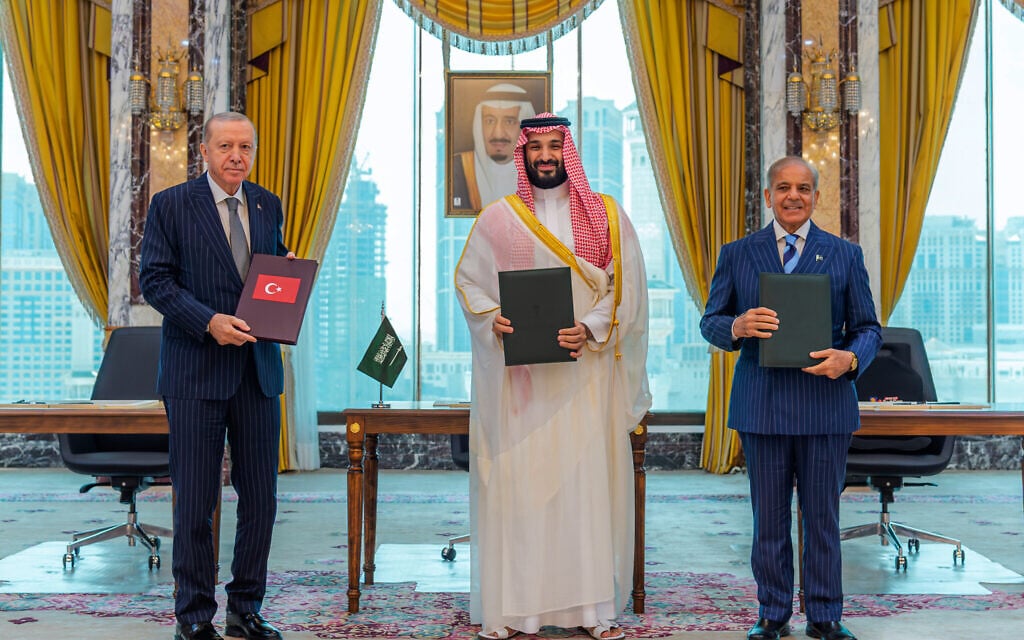
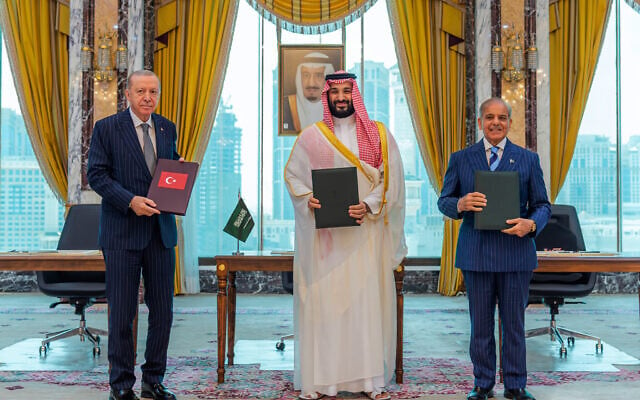
Iran on Monday said that it has no reason to be concerned about the new security pact between Pakistan, Turkey, and Saudi Arabia, arguing that it is “a sign of a change in the perception” of countries in the region toward the United States, and not a threat to Iran.
The three nations signed a mutual defense agreement on Friday against the backdrop of a five-month war between the US and Iran, which has drawn in much of the Middle East and disrupted global trade routes, greatly affecting the three signatories to the pact. Analysts have argued that the agreement seeks to deter an emboldened regime in Tehran and offset an unreliable backer in Washington.

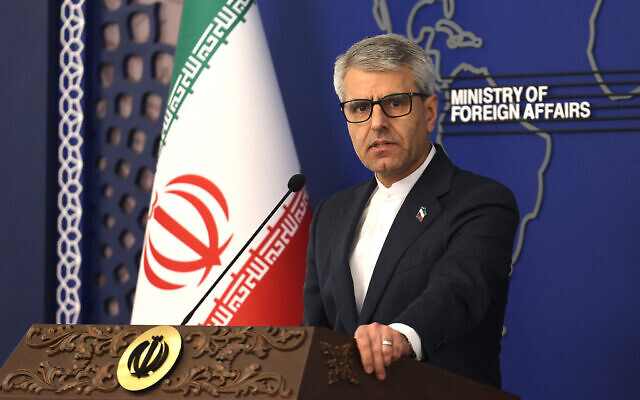
“The countries of the region have realized that security is not a commodity that can be bought from false brokers,” foreign ministry spokesman Esmaeil Baghaei said at a weekly press conference, referring to the US, an ally of the three signatories to the pact.
“Any plan that is based on the geopolitical and historical realities of the region, is comprehensive and inclusive, and correctly identifies the enemy and the threat, has a chance of helping to strengthen security and prevent instability and abuses by the Zionist enemy and its allies,” he added, referring to Israel.
“Countries in the region cannot rely on the claim of security provided by the US as in the past,” he added.
He also said Iran was not concerned that the pact could be aimed at it, highlighting “deep religious, historical, and civilizational ties” with Saudi Arabia, Turkey, and Pakistan.
While all three countries are key US allies in the region, only Turkey has relations with Israel, though it is perhaps the most vocally anti-Israel, with President Recep Tayyip Erdogan frequently comparing Prime Minister Benjamin Netanyahu to Nazi leader Adolf Hitler, accusing Israel of committing genocide in Gaza, and consistently offering diplomatic support for Hamas.
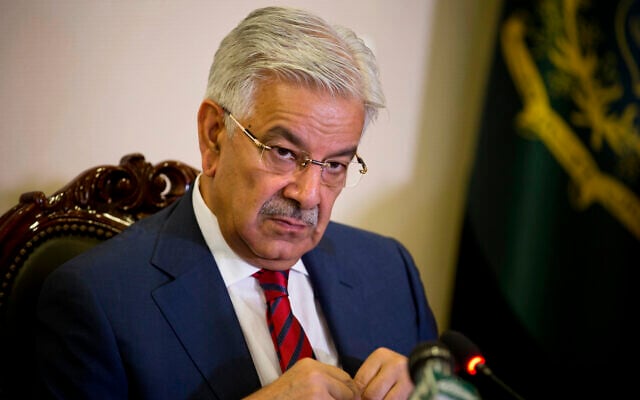
Pakistan has also upped its rhetorical attacks on Israel in recent months, with its defense minster calling Israel “a threat to the entire Muslim world,” and urging a “united military front” against it in Saturday comments.
As three of its most powerful regional neighbors signed a defense pact, Iran has been engaged in talks with Oman to temporarily reopen the Strait of Hormuz, which Baghaei said on Monday were “progressing smoothly and constructively.”
He said an agreement had been reached on a shipping route map, while some technical issues on a joint statement remained unresolved.
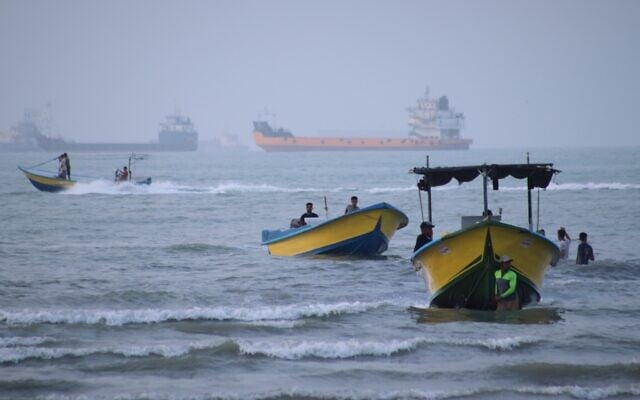
He said during his weekly press conference in Tehran that the discussions also covered mechanisms for safe navigation, environmental protection, maritime services, and combating crime, adding that such services would normally entail receiving payment in return.
Over the weekend, Iran laid out drastic new conditions for lifting the blockade on the Strait of Hormuz, which carried about one-fifth of the world’s commercial oil shipments before the war began, including a complete withdrawal of US forces from the region, an end to regional wars between US allies and Iranian proxies, and the lifting of all sanctions.
The new conditions stymied mediators’ hopes last week that Iran, Oman, and the US would announce a deal to reopen the key waterway, after reports that a deal could be announced as soon as last weekend.
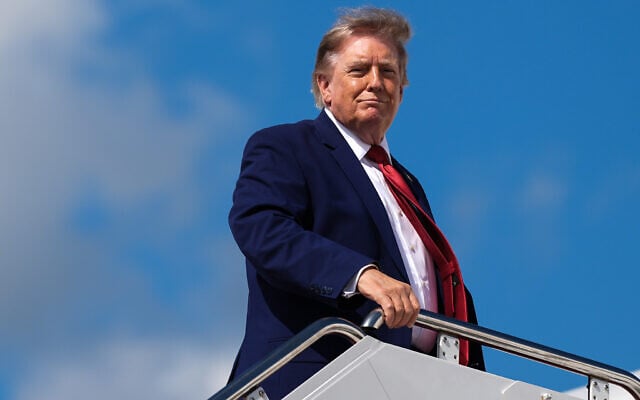
US President Donald Trump said Sunday that Washington was “low-keying” its approach to Iran and only “semi-negotiating” with the Islamic Republic, instead waiting for economic pressure to mount on Iran.
“We are just watching Iran with its huge inflation and the fact they have no money,” he said. “It will work out. It always works out. It’s like a chess game.”
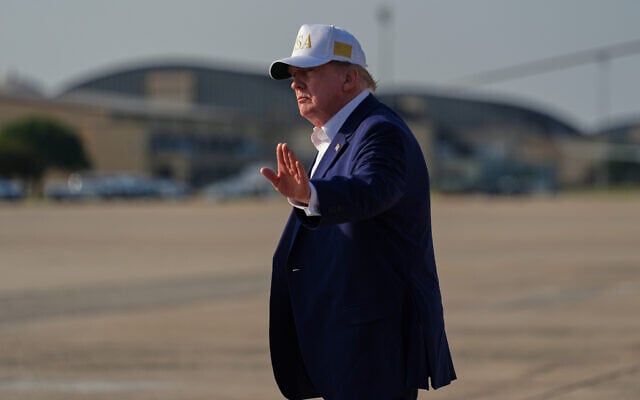
Responding to those comments, Baghaei said that Iranians have shown “they are professional chess players,” and are prepared to wait out the American pressure and keep the Strait of Hormuz closed.
He reiterated that “as long as the US naval blockade continues… as long as other violations by the United States continue, the necessary conditions for saying that the Strait of Hormuz has become a safe waterway will not exist.”
Later Monday, Iran’s President Masoud Pezeshkian described a nearly seven-hour meeting that he recently had with Ayatollah Mojtaba Khamenei, saying: “I discussed with him all of the country’s issues, including people’s livelihoods, the state of the market, employment, housing, sanctions, how we stand firm, the people’s support, unity and cohesion.”
Pezeshkian told the state-run IRIB that he and Khamenei emphasized unity among Iranians.
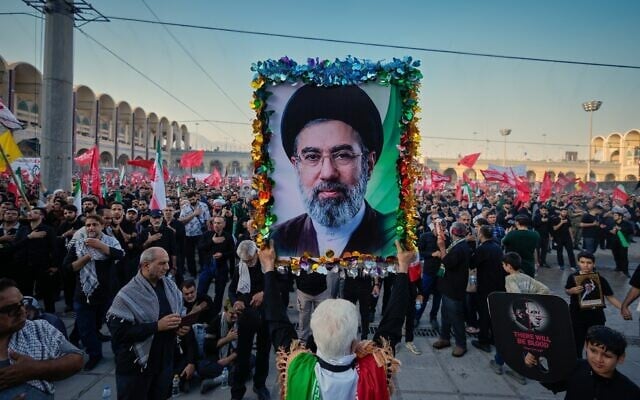
“All of the enemy’s plans are aimed at creating division,” Pezeshkian said. “What we have to do is prevent divisions from emerging.”
The meeting was also said to have focused on the repercussions of the war.
Mojtaba Khamenei has not made any public appearances since he became supreme leader, and no recordings of him speaking have been aired — only written statements attributed to him by state media. He was reportedly injured and possibly deformed in some manner during the attack that killed his father at the start of the war, and he has remained in hiding, reportedly communicating with other senior regime figures via a slow array of intermediaries to avoid being targeted.

As a multimedia journalist, my job is to take the quality, fact-based journalism produced by The Times of Israel newsroom and make it accessible across every platform — from Instagram posts to podcasts to short-form videos.
This is how many, especially young people, consume news these days. But misinformation is rampant on social media. Our team at ToI produces accurate, responsible short-form reporting on Israel and the Jewish world.
If you believe in the importance of factual social media journalism, please consider joining our reader support group, The Times of Israel Community. Your financial support is essential to sustain responsible multimedia reporting.
— Gabriella Jacobs, multimedia journalist

We’re really pleased that you’ve read X Times of Israel articles in the past month.
That’s why we started the Times of Israel – to provide discerning readers like you with must-read coverage of Israel and the Jewish world.
So now we have a request. Unlike other news outlets, we haven’t put up a paywall. But as the journalism we do is costly, we invite readers for whom The Times of Israel has become important to help support our work by joining The Times of Israel Community.
For as little as $6 a month you can help support our quality journalism while enjoying The Times of Israel AD-FREE, as well as accessing exclusive content available only to Times of Israel Community members.
Thank you, David Horovitz, Founding Editor of The Times of Israel


Iran has stated it is not concerned by the new security pact between Pakistan, Turkey, and Saudi Arabia, viewing it as a "sign of a change in the perception" of regional countries toward the United States, rather than a threat to Iran. Foreign ministry spokesman Esmaeil Baghaei emphasized that regional security cannot be "bought from false brokers" like the US and highlighted Iran's "deep religious, historical, and civilizational ties" with the signatory nations. Meanwhile, Iran's talks with Oman to reopen the Strait of Hormuz are "progressing smoothly," despite new conditions from Iran including a US withdrawal and an end to sanctions. US President Donald Trump, however, has demanded compensation from Iran for American casualties, instructing his representatives to include this in future negotiations.
© All rights to the original article belong to the source. Din Online shows a headline, an excerpt and a link only. The objectivity rating is computed automatically and is an estimate only.
Discussion
No comments yet — be the first to comment.