Iran said awaiting council’s approval for Hormuz deal with US and Oman
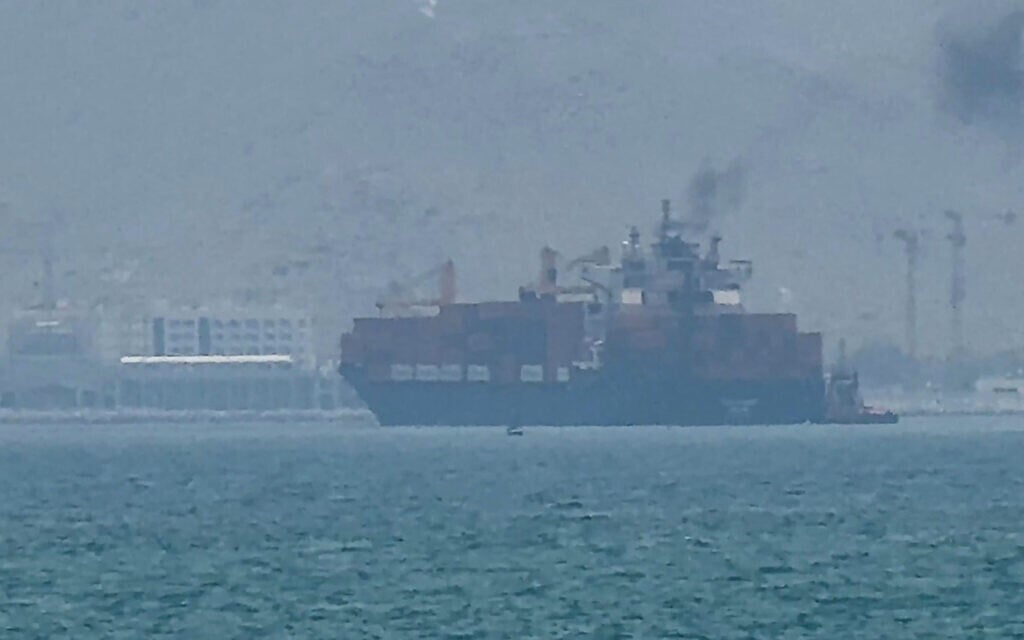
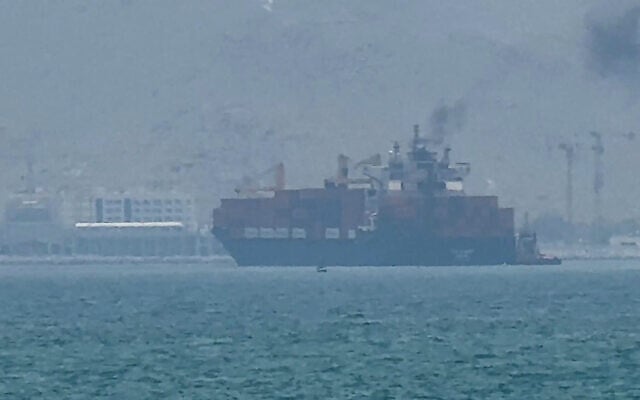
Iran is waiting for its Supreme National Security Council to approve a temporary agreement with the US and Oman on opening the Strait of Hormuz, and expects that okay to come shortly, Axios reported Friday, citing a diplomat from one of the mediating countries.
Earlier, MS Now (formerly MSNBC) had reported that a framework deal had been reached for Iran and Oman to jointly control the key waterway that Iran has obstructed since the beginning of its war with the US and Israel in late February.

Under the deal, ships would not be charged tolls. However, US support for the agreement was not guaranteed.
An unnamed Iranian government official said the deal would establish a new Iran-controlled entry route and an Oman-controlled exit route from the waterway, a critical oil trade route.
The same official added that the United States and the United Nations International Maritime Organization would be involved in the deal’s formal announcement if approved, although the timing isn’t yet known.
A US official was quoted as saying Washington will only support the deal if it includes no fees and also no “impediments — meaning no approvals or permissions.” The report didn’t say if the framework includes such provisions.
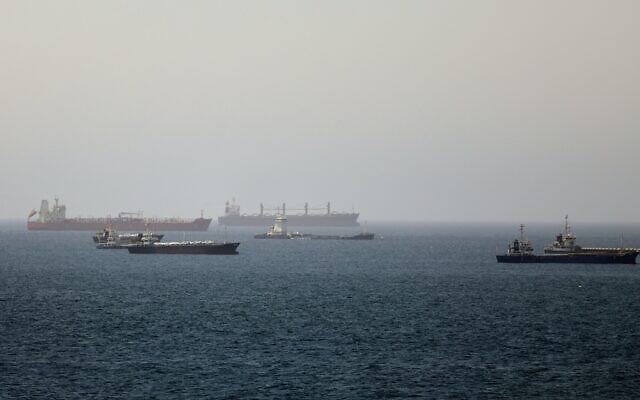
The members of the Gulf Cooperation Council have also endorsed the agreement, the report said, citing an unnamed Gulf government official.
Various outlets have reported progress in the talks and details of the deal for about a week. It is said to set a 60-day period in which the US and Iran will negotiate long-term arrangements and an end to the war that began in late February — similar to the memorandum of understanding signed in June, which later collapsed.
Meanwhile, Iran’s state-owned news outlet Press TV reported Friday that a parliamentary committee was reviewing a preliminary bill that would introduce fees for transit of the Strait of Hormuz, while barring US, Israeli and other “hostile” vessels from passing the waterway.
The report cited lawmaker Alireza Salimi, who said the bill would also place restrictions on any ships or cargo deemed to have been involved in “hostile actions” against Iran’s regional allies, including Lebanon’s Hezbollah terror group.
“It would also prohibit the entry and exit of military or warships, as well as vessels involved in espionage, spying, or actions deemed contrary to Iran’s national security,” he said.
The draft bill would impose fines of up to 20 percent of a ship’s cargo value for violations of the proposed restrictions.
The lawmaker said the legislation was still under expert review and that parliament had invited specialists to submit recommendations before the draft was finalized.
Also on Friday, the opposition-aligned IranWire outlet reported that Iranian Supreme Leader Mojtaba Khamenei hasn’t met any Iranian cabinet members since the US-Israeli strikes on February 28 that killed his father and predecessor, Ali Khamenei.
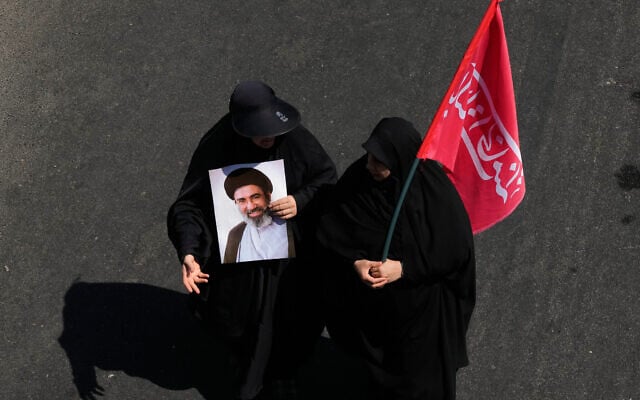
It cited two unnamed sources close to President Masoud Pezeshkian’s administration.
The sources claimed that “rumors that he is in extremely critical condition and could pass away at any moment are circulating widely within the highest levels of the regime.” One of the sources was quoted as saying: “We would not be surprised if we heard news of his martyrdom soon.”
There was no outside corroboration for the report.
Mojtaba Khamenei has not made any public appearances since he became supreme leader, and no recordings of him speaking have been aired — only written statements attributed to him by state media. He was reportedly injured and possibly deformed in some manner during the attack that killed his father, and has remained in hiding, reportedly communicating with other senior regime figures via a slow array of intermediaries to avoid being targeted.
Pezeshkian himself said in an interview aired by state TV on Wednesday that interaction with Khamenei was currently “very difficult.”
On Thursday, US President Donald Trump said that a deal had not yet been reached with Iran to reopen Hormuz, but that such an agreement could be inked soon.
Trump on Saturday said he’d called off a major offensive against Iranian energy sites, claiming that Mideast mediators had assured him that a deal to reopen the Strait of Hormuz was imminent. Then on Monday, he claimed that a deal could be signed on Tuesday. On Tuesday, he told reporters a deal could be signed on Wednesday or Thursday.
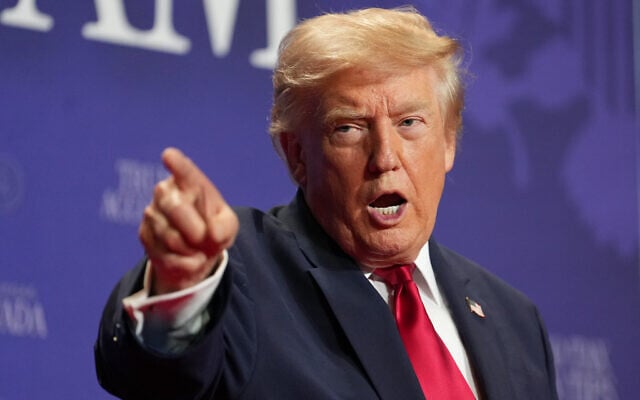
“We’re doing very well. I’m involved in the negotiation. I think we’re doing fine. It could be soon,” Trump said on Thursday while speaking to reporters in the Oval Office. In the meantime, the US will maintain its blockade of Iranian ports, he said.
Meanwhile, Iran’s chief negotiator in talks with the US, Mohammed Bagher Ghalibaf, posted a tweet mocking Trump for repeatedly threatening large attacks and then calling them off while citing a breakthrough in negotiations.
“‘Massive attack coming… wait, never mind, they want to negotiate.’ That’s theater diplomacy on loop,” Ghalibaf wrote. “Using bullying + broken promises + fake news as leverage is a failed strategy. Acknowledge the facts and fulfill your commitments. We don’t need more theater.”
Iran said Wednesday that no talks with the US have been held in recent days, but that it was finalizing a deal with Oman regarding Hormuz that could restore a ceasefire with Washington.
Officials who were briefed on the negotiations portrayed the agreement as a temporary solution to the dispute over the strait, but said it would pave the way for the US and Iran to resume negotiations on Tehran’s nuclear program.
Jacob Magid contributed to this report.

As a multimedia journalist, my job is to take the quality, fact-based journalism produced by The Times of Israel newsroom and make it accessible across every platform — from Instagram posts to podcasts to short-form videos.
This is how many, especially young people, consume news these days. But misinformation is rampant on social media. Our team at ToI produces accurate, responsible short-form reporting on Israel and the Jewish world.
If you believe in the importance of factual social media journalism, please consider joining our reader support group, The Times of Israel Community. Your financial support is essential to sustain responsible multimedia reporting.
— Gabriella Jacobs, multimedia journalist

We’re really pleased that you’ve read X Times of Israel articles in the past month.
That’s why we started the Times of Israel – to provide discerning readers like you with must-read coverage of Israel and the Jewish world.
So now we have a request. Unlike other news outlets, we haven’t put up a paywall. But as the journalism we do is costly, we invite readers for whom The Times of Israel has become important to help support our work by joining The Times of Israel Community.
For as little as $6 a month you can help support our quality journalism while enjoying The Times of Israel AD-FREE, as well as accessing exclusive content available only to Times of Israel Community members.
Thank you, David Horovitz, Founding Editor of The Times of Israel





Iran is reportedly awaiting approval from its Supreme National Security Council for a temporary agreement with the US and Oman to reopen the Strait of Hormuz. US officials anticipate a deal soon, which would lead to the lifting of the blockade on Iranian ports, contingent on Iran's adherence to commitments. The proposed deal, mediated by Oman, would establish Iran-controlled entry and Oman-controlled exit routes, with no tolls for ships. However, US support is conditional on the absence of fees or impediments. Concurrently, Iran's parliament is reviewing a bill to impose fees and restrict "hostile" vessels, including US and Israeli ships, from the strait. These developments occur amidst ongoing, albeit intermittent, negotiations aimed at a broader resolution to the conflict that began in late February.
© All rights to the original article belong to the source. Din Online shows a headline, an excerpt and a link only. The objectivity rating is computed automatically and is an estimate only.
Discussion
No comments yet — be the first to comment.