Iran’s leadership vacuum leaves two factions battling for control over war’s aim
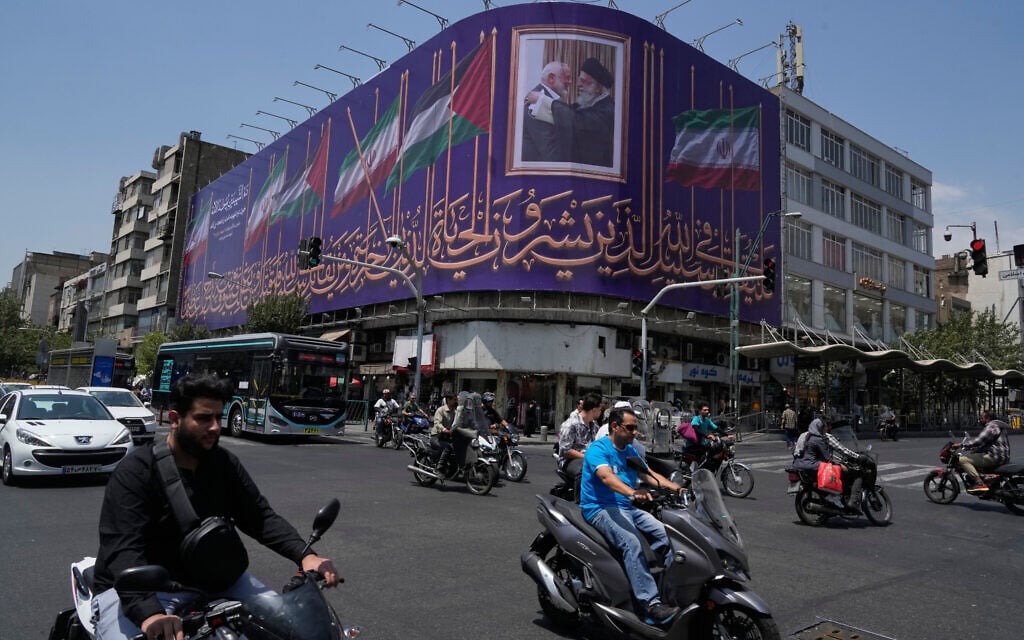
CAIRO (AP) — By escalating attacks against US bases and its allies over the past week, Iran’s leaders showed considerable unity over their war strategy: hanging tough, determined to show Iran can endure more than America and its allies can.
But within the leadership, there are sharp differences over what the endgame should be.

On one side, the ultra-hardliners who oppose any negotiations with the United States are pressing for total victory in the war. Known as the “Paydari” movement – Persian for “stability” – they are hard-core ideologues who want to enforce the Islamic Republic’s control over society.
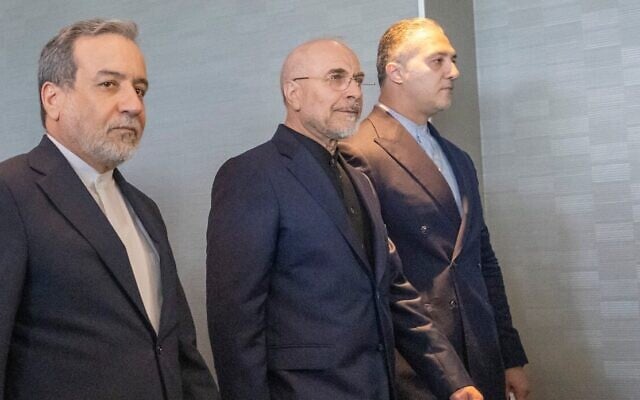
On the other, those who support President Masoud Pezeshkian and powerful parliament speaker Mohammad Bagher Ghalibaf — who doubles as Iran’s chief negotiator — see military pressure as a way to win a negotiated deal with the United States. This camp is also spurred by concern over the economic toll Iran is suffering from the war and the need to adapt to social change in the country.
“Negotiation is a political tool and a complement to military action to force the enemy to a point of compulsion and extract real concessions,” an adviser to Ghalibaf, Mahdi Mohammadi, wrote on his Telegram channel Thursday.
The unusually open rivalry within the theocracy’s leadership points to a struggle for control over Iran’s postwar future. A huge question mark is where the new supreme leader, Ayatollah Mojtaba Khamenei, stands. Reportedly injured in the strike that killed his father in the opening minutes of the war on Feb. 28, Khamenei remains in hiding, and both sides have claimed his support.
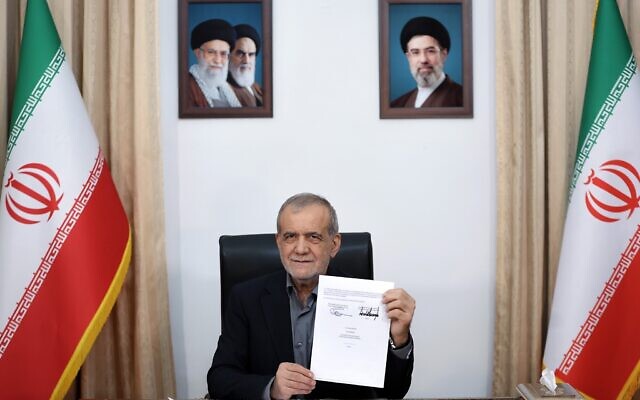
In a boost for Ghalibaf and Pezeshkian, the ceasefire deal reached with the US in April received strong backing in Iran’s top leadership body, the Supreme National Security Council. Twelve of its 13 members approved it, including senior figures in the Revolutionary Guard and the military.
The lone vote against the deal is widely believed to have come from Saeed Jalili, the most prominent figure in the Paydari movement.
But the ceasefire crumbled as the two sides traded strikes and as Iran pressed for control over passage through the Strait of Hormuz which before the war carried a fifth of the world’s traded oil and gas. Iran was also frustrated that financial promises under the deal – including the release of billions of frozen assets – didn’t materialize, and the American blockade was back in place.
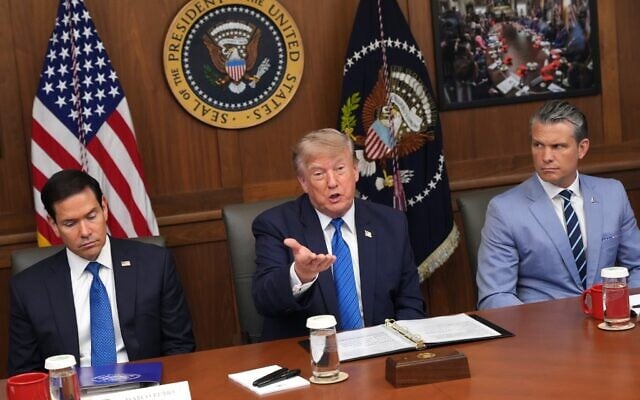
With US President Donald Trump’s late-night announcement that he was calling off a major strike on Iran since “the perimeters of a deal has been agreed to,” the path ahead still remains unclear for diplomacy between Washington and Tehran, whose efforts to reach an agreement have repeatedly stumbled.
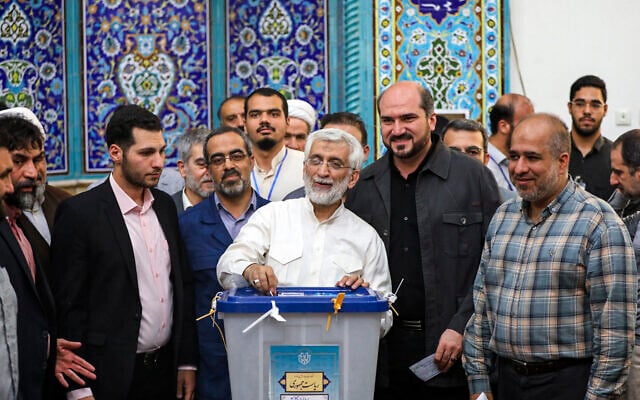
The funeral for slain Iranian supreme leader, Ali Khamenei, earlier this month appeared to show the strength of the ultra-hardline Paydari. Crowds called for revenge on the US and Israel for the war. Videos showed mourners in Tehran welcoming Jalili, while Pezeshkian was greeted at one point with insults and cries of “Death to the compromiser!”
The ultra-hardliners have used nightly rallies and their control of state television, known by the acronym IRIB, to drum up opposition to negotiations. At rallies and on TV, speakers have portrayed Iran as headed for total victory and denounced those who compromise with the Islamic Republic’s archenemy, the United States.
State television cut off a June 30 live broadcast with Ghalibaf as he discussed negotiations with Washington. Earlier this month, it cut off broadcasting a speech by Pezeshkian to businessmen seconds after he said that the elder Khamenei had given permission for renewed US talks before his death.
Pezeshkian and his camp have pushed back, portraying IRIB as dividing the country at the time of war. The president accused the broadcaster of making it like “the military are on one side, and the government is on another side.”
Last month, the president’s media office condemned state television for what it described as “censoring” the president and other government heads, signaling an open rift.
The hard-liners have sought to press their influence in other ways. In past weeks, authorities shut down cafes in central Tehran that were popular with residents during the ceasefire. Videos on Iranian social media showed many women at the cafes flouting mandatory veiling laws, and crowds mixing freely.
The closures were brief but signaled that “religious extremist parties” were showing their influence, said Mohamad Ali Abtahi, a reformist cleric and an aide to former president Mohammad Khatami, who is still widely considered to be the leader of Iran’s reformist groups.
While Jalili’s supporters are a minority, they are influential, said Vali Nasr, professor of International Affairs and Middle East Studies at Johns Hopkins University.
“They have a lot of money. They have a lot of power. They have put a lot of people in the bureaucracy” and developed connections in the Revolutionary Guard, Nasr said.
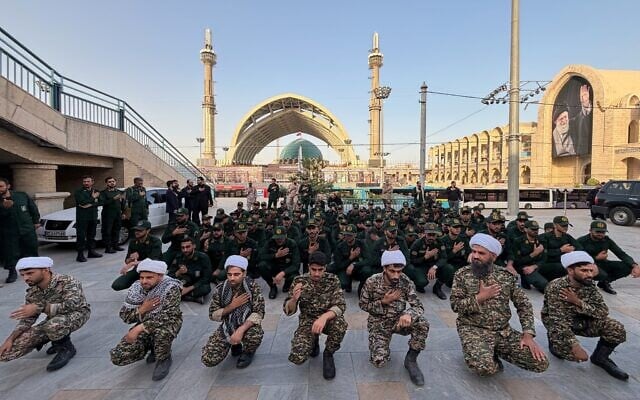
The more pragmatic camp argues that maintaining unity during the war requires addressing the public’s unhappiness over the economy as well as political and social repression. This, as Iran’s currency continues to slide, inflation spirals, and unemployment rises. A final agreement with the US could bring Iran a huge windfall with the lifting of sanctions and the return of billions in assets.
Small flashes of impatience with the war have emerged. In July, more than 250 former lawmakers, clerics, professors and other public figures signed an anti-war petition warning of the costs of the conflict. “We believe that the overwhelming majority of the Iranian people want peace and the right to a decent life,” the statement read. Others have spoken out against stepped-up executions of protesters following wide-scale anti-government protests in January.
A top reformist party that assisted Pezeshkian’s presidential campaign warned that the war’s domestic toll was “undermining internal social cohesion.” That brought a rebuke from Tasnim, a news agency close to the Revolutionary Guard, which said the statement amounted to blaming Iran for a war started by the United States.
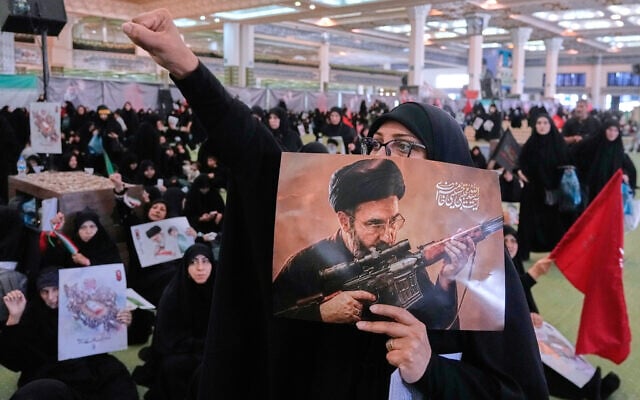
In mid-July, the president’s son and influential adviser, Youssef Pezeshkian, posted a series of messages about the need to balance realistic military aims with a weak economy. Referring to the decades of sanctions and confrontation with the West, he said Iran has “been prevented from growing and has suffered greatly. It has become sick.”
Ultimately, both sides are jockeying for power after the war, given the unusual uncertainty brought on by the change in the supreme leadership. Abtahi, the reformist cleric, said Mojtaba Khamenei’s real views are still not known, so while some believe he could be more radical than his father, others see the potential for him to bring moderate change.
The supreme leader, because of the power invested in him, could act as a “brake” to restrain the more extremist factions, Abtahi said. But over time, the confrontation with more radical factions could grow more dangerous “if that brake isn’t used.”
Times of Israel staff contributed to this report.
The war with Iran has been draining for all of us in Israel. But when I heard about a high casualty incident – ballistic missile impacts in Arad and Dimona that left nearly 200 people wounded – I drank a cup of coffee, packed a bag, and headed south.
There, I spoke with Shilgit, the head of an after-school program for underprivileged youth. Standing outside her destroyed center, Shilgit said it was a miracle that no children were hurt and spoke about the community coming together in the hours since.
As a Times of Israel reporter, I’m committed to telling stories of resilience like Shilgit’s. But my colleagues and I can't do this alone. If you value work like this, please consider joining our reader support group, The Times of Israel Community. Your financial support is essential to keep real human reporting like this going.
— Stav Levaton, military reporter

We’re really pleased that you’ve read X Times of Israel articles in the past month.
That’s why we started the Times of Israel – to provide discerning readers like you with must-read coverage of Israel and the Jewish world.
So now we have a request. Unlike other news outlets, we haven’t put up a paywall. But as the journalism we do is costly, we invite readers for whom The Times of Israel has become important to help support our work by joining The Times of Israel Community.
For as little as $6 a month you can help support our quality journalism while enjoying The Times of Israel AD-FREE, as well as accessing exclusive content available only to Times of Israel Community members.
Thank you, David Horovitz, Founding Editor of The Times of Israel
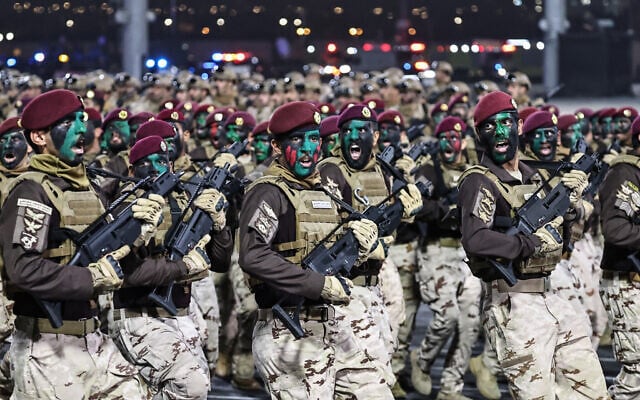



Following the death of Supreme Leader Ali Khamenei, Iran's leadership is divided into two factions regarding the war's endgame. The ultra-hardline "Paydari" movement seeks total victory and opposes negotiations with the United States, advocating for strict Islamic Republic control. Conversely, supporters of President Masoud Pezeshkian and Parliament Speaker Mohammad Bagher Ghalibaf view military pressure as a means to achieve a negotiated settlement with the US, driven by economic concerns and the need for social adaptation. An adviser to Ghalibaf, Mahdi Mohammadi, stated, "Negotiation is a political tool and a complement to military action to force the enemy to a point of compulsion and extract real concessions." This internal struggle for Iran's postwar future is further complicated by the unknown stance of the new supreme leader, Ayatollah Mojtaba Khamenei, who remains in hiding.
© All rights to the original article belong to the source. Din Online shows a headline, an excerpt and a link only. The objectivity rating is computed automatically and is an estimate only.
Discussion
No comments yet — be the first to comment.