Is Somaliland America’s next Kosovo?
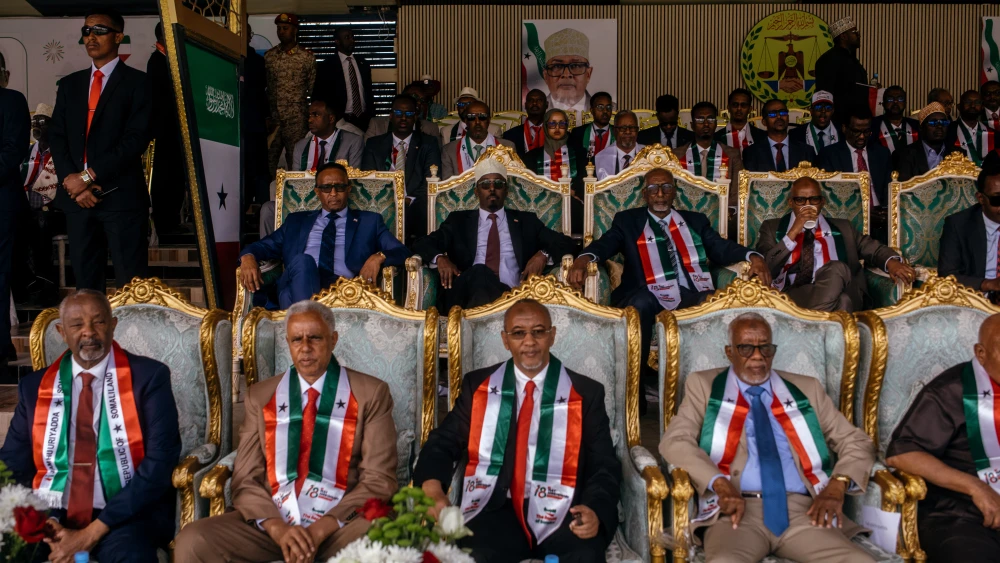

The argument over Somaliland has crossed a threshold. The question is whether the United States will recognize a functioning state beside one of the world’s most dangerous maritime corridors before the next chokepoint emergency becomes a catastrophe.
A Fox News report on Aug. 12 brought that choice into focus. Former British ambassador Edmund Fitton-Brown said that amid China’s presence in Djibouti, “Somaliland’s time has probably come.” Retired U.S. Maj. Gen. Ken Ekman argued that the Houthis “could compel a different U.S. strategy in Africa.” Bashir Goth, Somaliland’s representative in Washington, said its defense officials were in dialogue with the U.S. Africa Command over Red Sea security.
That is the real scoop: Somaliland recognition, U.S. force resilience in the Horn of Africa and the Houthi threat to maritime trade are becoming a Washington policy question.
The answer to that question should be recognition of Somaliland accompanied by a transparent maritime-security compact focused on surveillance, coast guard capacity, port protection and intelligence sharing—not in exchange for a permanent American or Israeli base. That is the difference between securing Somaliland and advertising it as a target.
The Fox News report must be read carefully. The official record confirms that AFRICOM Commander Gen. Dagvin Anderson met Somaliland President Abdirahman Mohamed Abdullahi and inspected Berbera’s port in November. Fox also reported a visit this month by Somaliland officials to AFRICOM headquarters, although AFRICOM did not confirm it.
The report does not establish that Washington has decided to recognize Somaliland or build a base. Anderson said on July 31 that “there are no plans to build a base in Somaliland.” Fox also appeared to recycle language from Anderson’s November visit as a new trip and dated one ship attack a day after publication. These inconsistencies counsel against presenting the report as confirmation of an imminent announcement.
Its deeper significance is that serious figures now discuss Somaliland as an answer to an operational problem.
Western policy has placed Hormuz, Yemen, the Red Sea and the Horn of Africa into separate bureaucratic boxes. Iran and its partners do not. When pressure intensifies on the Strait of Hormuz, shipping searches for alternatives. When the Houthis threaten the Bab el-Mandeb strait, that alternative becomes another trap. The two straits are part of a single energy, trade and military system.
Reuters reported that eight vessels crossed Hormuz on Aug. 11, compared with roughly 130 to 140 daily before its closure. Thirty crossed Bab el-Mandeb. A Houthi attack near Perim Island killed four crew members and two Yemeni rescuers.
Somaliland sits on the African shore of the Gulf of Aden, facing Houthi-controlled Yemen and the approaches to Bab el-Mandeb. Somaliland’s port of Berbera need not replace every American facility in Djibouti or the Gulf. It can add sovereign access, maritime awareness and operational redundancy to a dangerously concentrated system.
Camp Lemonnier hosts approximately 3,300 U.S. military and civilian personnel. Yet China’s Djibouti base enables a persistent regional presence, while Turkey has built an extensive military, political and economic position in Somalia. The new Mecca defense mechanisms linking Turkey, Saudi Arabia and Pakistan add exercises, defense-industrial cooperation and Red Sea coordination. They should neither be exaggerated nor dismissed.
Israel’s recognition of Somaliland this past December broke the wall of universal non-recognition. Washington must now decide whether to leave Israel as Somaliland’s only recognizing state or convert growing U.S.-Somaliland contact into a lawful partnership. Delay leaves Somaliland’s strategic space open while other powers organize the region around it.
Recognition should therefore be followed by a U.S.-Somaliland Maritime Security Compact. It should integrate coastal radar, satellite imagery, vessel data and patrol reporting in a Somaliland-led maritime fusion center; strengthen coast-guard patrols, communications, search and rescue and evidence handling; protect Berbera’s port and airport from physical, cyber, drone and missile threats; establish a vetted, auditable intelligence channel; and authorize mission-defined exercises, refueling, medical evacuation and emergency access.
Such cooperation must include transparent procurement, legislative oversight, land protections and clear rules for foreign personnel and the use of Somaliland’s territory. A radar picture, trusted coast guard, protected port and emergency access can deliver substantial value without a permanent garrison.
Somaliland must also resist marketing itself as an empty platform awaiting foreign warplanes. Houthi leader Abdulmalik al-Houthi has declared that any Israeli presence there would be treated as a “military target,” while Al-Shabaab has vowed to fight any Israeli use of Somaliland. Yet Somaliland Defense Minister Mohamed Yusuf Ali Ahmed told Reuters that Israel is providing training but has no military presence and is not negotiating a base.
Exaggerated base talk turns training, radar and coast-guard support into an offensive fortress; paints targets on civilian infrastructure; gives extremists a foreign-occupation narrative; and makes recognition appear to be the price of a lease. Somaliland is valuable not because it can rent a runway, but because it is a durable governing partner.
Is Somaliland America’s next Kosovo? Washington recognized Kosovo one day after its 2008 declaration, showing how quickly recognition can move once a president decides on it. Of course, that followed NATO intervention, U.N. administration and prolonged diplomacy.
Somaliland’s history is different. It became independent within defined borders in June 1960, received international recognition, voluntarily united with the former Italian-administered territory and restored its independence in 1991 after the Somali state collapsed. It has governed itself for more than three decades.
The comparison is not legal identity. It is that Washington can treat both as exceptional cases when an inherited diplomatic formula no longer serves stability. Under Zivotofsky v. Kerry, the president possesses exclusive recognition power, while Congress remains essential for funding and durable support.
That support is emerging. Sen. Ted Cruz (R-Tex.) has urged President Donald Trump to recognize Somaliland, citing navigation, counterterrorism, China and Taiwan. He has also pressed for a separate travel advisory. House bills addressing recognition and economic access, together with appropriations language urging deeper engagement, show that Somaliland has entered an emerging Republican Party policy architecture.
A responsible fast track would recognize Somaliland within its June 1960 borders, establish diplomatic relations, negotiate a public maritime-security framework before any larger access arrangement, and state that recognition grants no automatic right to a permanent base. Washington should preserve counterterrorism cooperation with Somalia while making clear that Somalia cannot indefinitely veto relations with territory it has not administered for more than three decades.
The Houthi threat has exposed the cost of separating African policy from Middle Eastern strategy. China in Djibouti, Turkey in Somalia, the Mecca mechanisms, Iran’s proxy network and the linked vulnerability of Hormuz and Bab el-Mandeb form one strategic geography. Somaliland is already inside it.
America’s “next Kosovo” should not mean copying Kosovo’s history. Instead, it should mean acting in best interests, as well as recognizing the convergence of an exceptional case, a functioning state and urgent security, and acting before delay becomes the more dangerous choice.
Recognize the state. Secure the sea. Do not turn Berbera into a billboard for somebody else’s war.



Get the latest updates in our WhatsApp group.







The U.S. is considering recognizing Somaliland as a sovereign state to address escalating maritime security threats in the Red Sea and Gulf of Aden, particularly from Houthi rebels. This move is driven by the need for a reliable partner in a critical shipping corridor, especially given China's presence in Djibouti and Turkey's influence in Somalia. While a Fox News report suggested imminent U.S. recognition and a potential base, U.S. Africa Command (AFRICOM) Commander Gen. Dagvin Anderson stated, "there are no plans to build a base in Somaliland." Instead, experts advocate for a transparent maritime-security compact focused on surveillance, coast guard capacity, port protection, and intelligence sharing, rather than a permanent U.S. or Israeli base, to avoid making Somaliland a target. Israel recognized Somaliland in December, breaking the wall of universal non-recognition. The article argues that recognizing Somaliland, which has governed itself for over three decades, would provide operational redundancy and sovereign access in a dangerously concentrated system, integrating African policy with Middle Eastern strategy to counter threats from Iran and its proxies.
© All rights to the original article belong to the source. Din Online shows a headline, an excerpt and a link only. The objectivity rating is computed automatically and is an estimate only.
Discussion
No comments yet — be the first to comment.