Israel braces for Perseid meteor shower spectacle
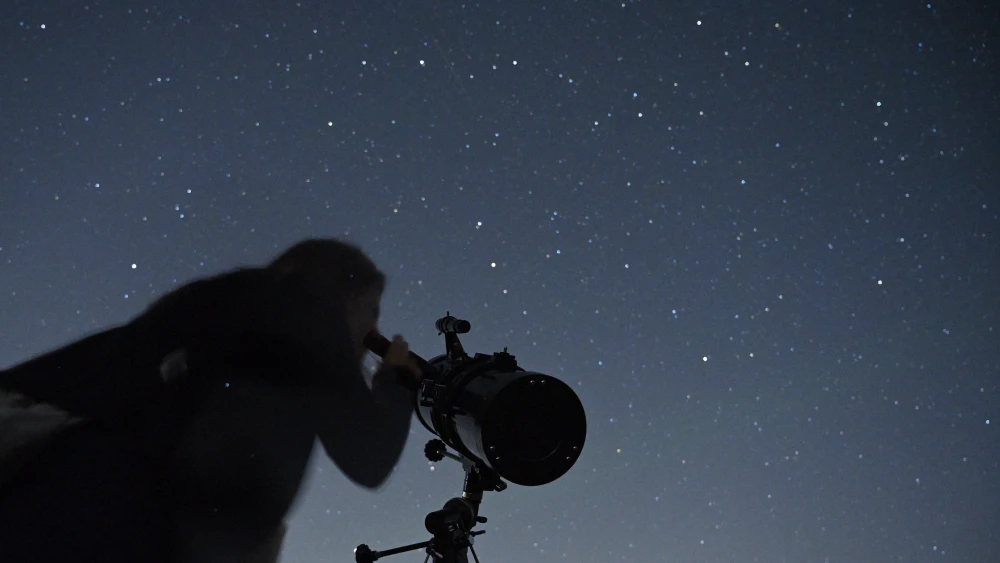
The richest meteor shower of the year will reach its peak in Israel overnight Wednesday, with expected visibility of 150 meteors per hour under ideal viewing conditions, according to the Israel Space Agency.
The meteors, remnants of comet Swift-Tuttle, are known as Perseids because of their apparent point of origin, the constellation Perseus, located in the Northern Hemisphere near Cassiopeia.

The Israel Space Agency is leading several free public events across the country, whose locations can be found on its website.
The agency advises the public to head to a place with as little artificial light as possible for the best sighting conditions, and has provided a map of light pollution levels across the country.
The Israel Nature and Parks Authority is also operating free overnight camping sites in light of the special occasion.
No binoculars or telescopes are necessary to watch the meteor shower. Observers can simply lie on their backs and look toward the northeast, where the meteors are expected to be most visible, the ISA continued.
Another factor for optimal viewing is a new moon that coincides with the event, clearing the skies of moonlight interference.
Meteoroids will enter the Earth’s atmosphere at a speed of roughly 36 miles per second, creating a spectacle that looks like “fireballs” passing through the sky.
The meteor rate is expected to increase as the night progresses, reaching its peak at midnight and the pre-dawn hours.



Get the latest updates in our WhatsApp group.







Israel is preparing for the peak of the Perseid meteor shower overnight Wednesday, with the Israel Space Agency (ISA) anticipating up to 150 meteors per hour under ideal viewing conditions. These meteors are remnants of comet Swift-Tuttle and appear to originate from the constellation Perseus. The ISA is hosting free public viewing events nationwide and advises seeking locations with minimal artificial light, providing a light pollution map. The Israel Nature and Parks Authority is also offering free overnight camping sites. No special equipment is needed; observers should look northeast. Optimal viewing is expected due to a new moon, which will minimize moonlight interference, with the meteor rate increasing towards midnight and pre-dawn hours.
© All rights to the original article belong to the source. Din Online shows a headline, an excerpt and a link only. The objectivity rating is computed automatically and is an estimate only.
Discussion
No comments yet — be the first to comment.