Israel, US Jewish military leaders launch training program for military rabbis
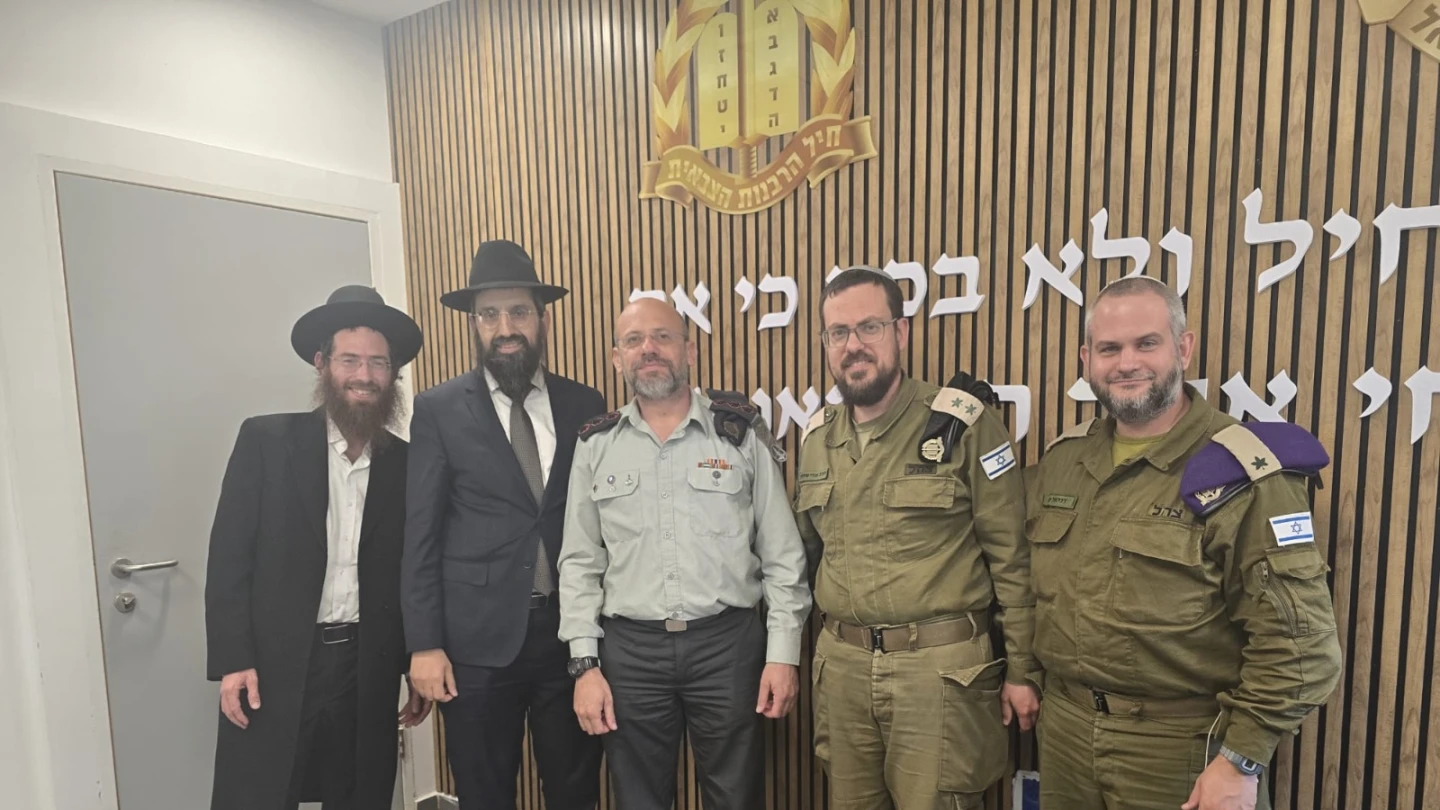
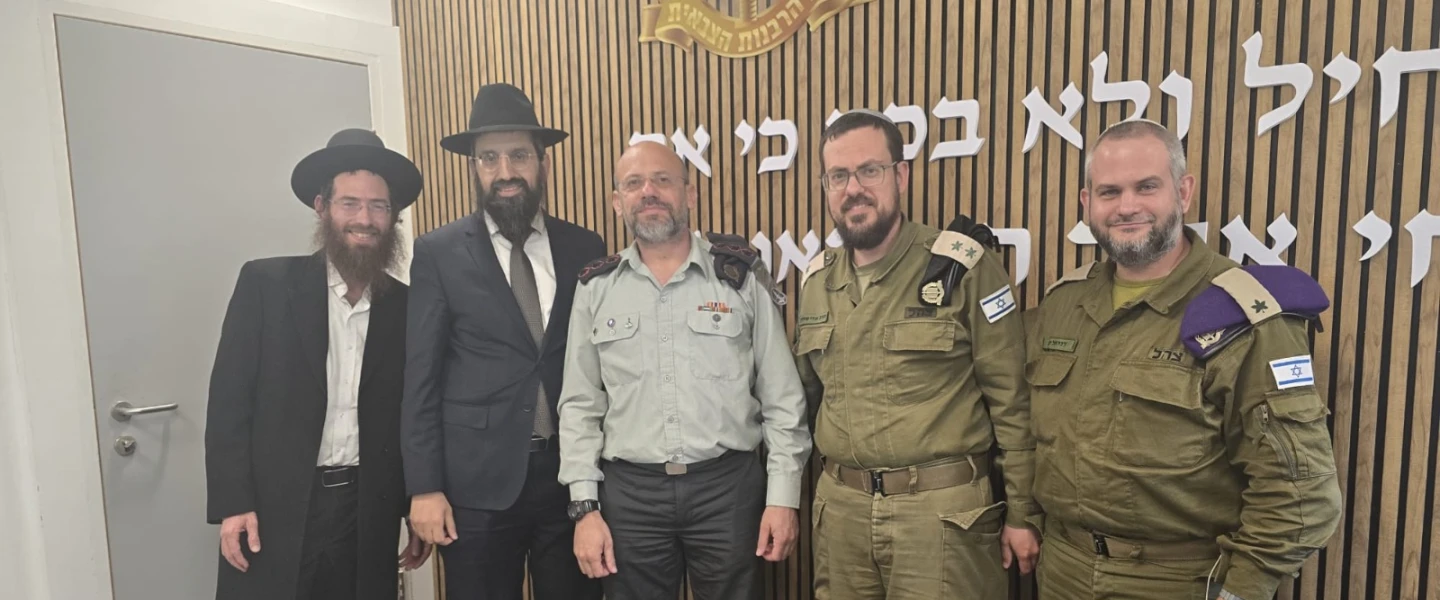
As Jewish service members around the world face increasingly complex religious questions while serving in modern militaries, a new international initiative aims to equip military rabbis and Jewish chaplains with the knowledge and resources needed to address them.
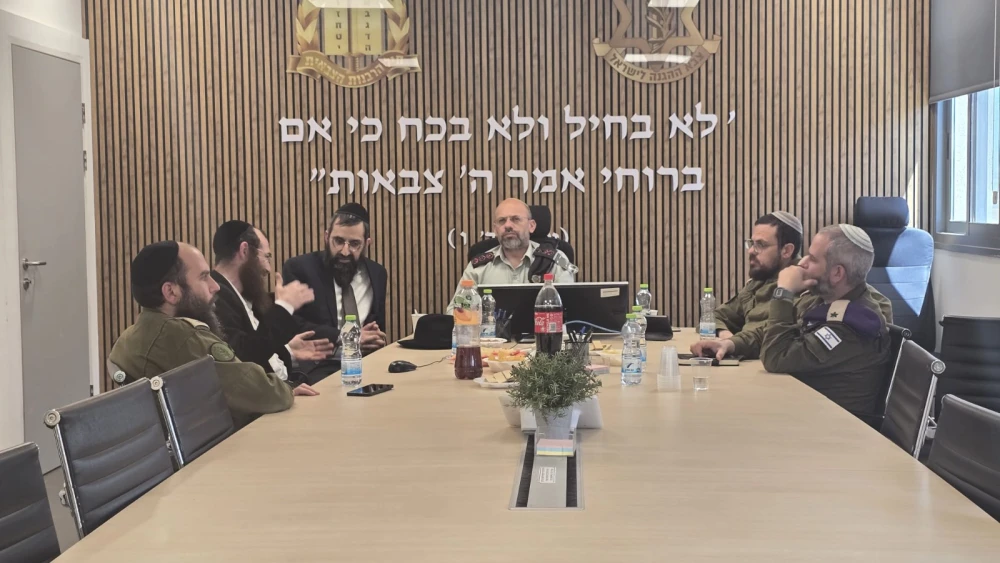
The program brings together the International Halacha Institute (IHI), a Jerusalem-based organization that develops practical halachic guidance and educational resources; Aleph Military, the military division of the U.S.-based Aleph Institute, which supports Jewish service members, veterans and their families; and representatives of the IDF Military Rabbinate.
Their goal is to develop training and practical halachic resources for rabbis serving Jewish soldiers, sailors and airmen facing unique military circumstances—from observing Shabbat during missions to maintaining kosher standards in remote locations.
The initiative builds on years of cooperation between Jewish military chaplains and the IDF Military Rabbinate.
‘Military life creates unique circumstances’
Chaplain Maj. Elie Estrin, United States Air Force Reserve and director of Aleph Military, told JNS the organization’s role is to ensure Jewish service members can maintain their religious identity while serving.
He said most rabbis rarely encounter the complex halachic questions that arise in military service.
“Military life creates unique circumstances, and we need rabbis who understand how to respond,” he said.
“Our responsibility is to make sure our chaplains are knowledgeable and prepared for this unique environment,” Estrin said. “The better we can educate our chaplains about halacha (Jewish law) in the military, the better we can ensure that Jewish service members remain connected to their source.”
Estrin noted that military halacha has been addressed for generations, including in the Chofetz Chaim’s Machane Yisrael, published in 1891 to guide Jewish soldiers serving in non-Jewish armies.
“Today’s questions are much more complex,” he said. “We need practical answers for the situations soldiers are actually facing.”
Dayan Avraham Yaakov Dadoun, founder and CEO of IHI and head of the South Florida Bet Din (rabbinical court), told JNS the initiative grew out of years of discussions about the need for specialized training and resources for Jewish military chaplains outside Israel.
One of the central components of the program will be translating and adapting Torah Machane—the IDF Military Rabbinate’s comprehensive guide to halacha in a military setting—into English.
The volume addresses practical questions soldiers face during military service, including prayer, Shabbat observance, holidays and other religious obligations during wartime conditions.
“The IDF has a system,” Dadoun said. “They have a branch that answers halachic questions, and they have been dealing with these issues for years. Since the beginning of the current war, they have received thousands of questions.”
Dadoun said the goal is not simply to translate the material, but to adapt it for Jewish military personnel serving in different countries and military systems.
“The challenge is making it applicable for the U.S. military chaplain who may face different circumstances and different questions,” he said. “That is what IHI does—we adapt it and present it in a professional way while maintaining the highest standards.”
Dadoun described IHI as a bridge between the IDF Military Rabbinate and Jewish military chaplains serving abroad.
The program is expected to include two tracks: one for advanced rabbinic scholars and another designed for chaplains seeking a broader practical understanding of halacha in military situations.
Estrin pointed to a recent Passover example illustrating the difference in scale between Jewish military support in the United States and Israel.
When approximately 60 Jewish service members stationed in the Middle East needed Passover supplies, Aleph Military worked with U.S. officials to ensure they received what they needed. When Aleph turned to the IDF Military Rabbinate, the response highlighted the different scale at which Israel’s military rabbinate operates.
“We had 60 Jews who needed Pesach (Passover) supplies,” Estrin recalled. “The IDF rabbi laughed and said his problem was that they had prepared three tons of shmura matzah (specially guarded matzah) and they needed four.”
“They have solutions we may never have considered,” he said. “They have been dealing with these issues for a long time, and we absolutely need to hear their perspective.”
Sharing decades of military experience
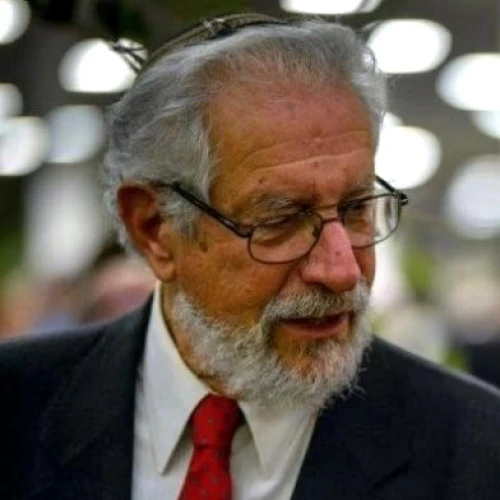
Col. Rabbi Chaim Weissberg, head of the IDF Military Rabbinate Department, told JNS the initiative represents a new form of military cooperation—one focused on sharing halachic expertise and operational experience while building a professional foundation for Jewish military chaplains around the world.
Through its Halachic Branch, the Military Rabbinate provides guidance on issues ranging from Shabbat and holidays to kashrut, mourning and spiritual support. Weissberg said this experience has taken on added significance since the Hamas-led terrorist attacks in southern Israel on Oct. 7, 2023, and the subsequent war, which created new challenges, including questions surrounding the identification of fallen soldiers.
“The Military Rabbinate is a center of knowledge,” Weissberg told JNS. “It has a very large foundation of knowledge that it has built and written over many years, and it encounters soldiers’ challenges in many different situations.”
He said the cooperation allows the IDF to share that experience with military rabbis abroad, particularly in the United States, where there has not traditionally been a formal educational framework preparing rabbis for military chaplaincy.
“Our cooperation provides a platform and creates a foundation that American military rabbis and others can rely upon,” Weissberg said.
At the same time, Weissberg emphasized that the partnership is not simply one-way.
“We are not only giving; we are also receiving a great deal,” he said.
He explained that American military chaplains often encounter situations Israeli military rabbis rarely face, including questions involving Jewish identity and lifecycle events.
“Someone may come to a chaplain and ask for help arranging a wedding, but the chaplain may not know whether the person they are marrying is Jewish or not,” Weissberg said. “These are things we almost never encounter in Israel.”
Through the exchange, Weissberg said rabbis from Israel and abroad can learn from one another and address complex halachic questions together.
Estrin emphasized that the initiative is intended to provide practical guidance, not simply academic study.
“Halacha in the military has to provide a quick response,” he said. “A soldier needs to know: Here is your answer and here is how you can maintain your Jewish identity while fulfilling your military responsibilities.”




Get the latest updates in our WhatsApp group.







A new international initiative has been launched by the IDF Military Rabbinate, Aleph Military (U.S.), and the International Halacha Institute (Jerusalem) to train military rabbis and Jewish chaplains. This program aims to address complex halachic (Jewish law) challenges faced by Jewish service members globally, such as observing Shabbat during missions or maintaining kosher standards in remote locations. Chaplain Maj. Elie Estrin of Aleph Military stated, "Military life creates unique circumstances, and we need rabbis who understand how to respond."
- A central component will be translating and adapting the IDF Military Rabbinate’s comprehensive guide, Torah Machane, into English for use by chaplains in different military systems.
- The program will offer two tracks: one for advanced rabbinic scholars and another for chaplains seeking practical understanding.
- Col. Rabbi Chaim Weissberg of the IDF Military Rabbinate noted the initiative shares halachic expertise and operational experience, particularly valuable since the October 7th attacks.
- The partnership is reciprocal, with Israeli rabbis learning from American chaplains about issues like Jewish identity verification, which are less common in Israel.
© All rights to the original article belong to the source. Din Online shows a headline, an excerpt and a link only. The objectivity rating is computed automatically and is an estimate only.
Discussion
No comments yet — be the first to comment.