Israel was being restrained before Hamas was disarmed
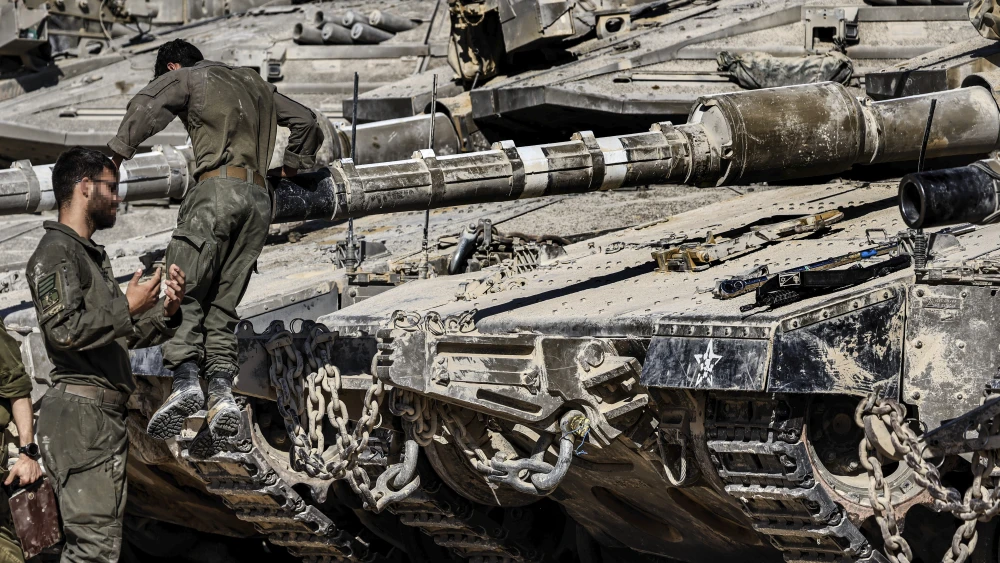

Israeli Prime Minister Benjamin Netanyahu rejected the 15-point Gaza roadmap on Sunday, insisting that Israel would not withdraw from territory it controls before Hamas is genuinely disarmed.
At the core of his disagreement with U.S. President Donald Trump’s plan is sequencing—that is, the question of whether Israel ought to relinquish military leverage and freedom of action while Hamas still retains weapons, tunnels and coercive power.
 ThirdReality Zigbee Smart Plug Review: Power Monitoring & Range Extending in 2026
See the review →
ThirdReality Zigbee Smart Plug Review: Power Monitoring & Range Extending in 2026
See the review →
Israel has good reason to refuse to withdraw, at least for the moment. Recently, I warned that deploying an International Stabilization Force before Hamas is substantially disarmed could end up stabilizing Hamas rather than the Gaza Strip. My concern was that, once an international mechanism was operating inside Gaza, every Israeli action would be portrayed as a threat to the diplomatic process.
This was demonstrated by events preceding Israel’s rejection of the roadmap. Hamas had not yet taken a single verified step toward disarmament, yet the pressure on Israel was already producing operational constraints. This risked turning the promise of demilitarization into a substitute for demilitarization itself.
Even before Netanyahu’s public rejection on Aug. 9, the operational consequences of this pressure were becoming clear. According to Israeli media reports, the Israel Defense Forces had significantly tightened its rules for targeted killings in Gaza. Israel has not stopped striking in Gaza, particularly in response to immediate threats. But the threshold for proactive action had reportedly changed: Targeted killings that were once authorized by the Southern Command chief or a division commander now required the personal approval of the IDF chief of staff.
The issue is not whether the chief of staff should approve a particular strike. Nor is every decision to exercise restraint necessarily mistaken. Military prudence and political timing are legitimate considerations. The real issue is sequence.
This policy change followed reports that Nickolay Mladenov, the Board of Peace official overseeing Gaza’s postwar transition, pressed Israel to halt its strikes as negotiations over Hamas’s supposed disarmament move forward. Egypt, Qatar and Turkey have simultaneously called on the international community to increase pressure on Israel.
The emerging asymmetry could not have been clearer: Hamas’s obligations were deferred, gradual, conditional and open to interpretation. Israel’s restraint was expected to be immediate, visible and enforceable. Hamas spoke of drafts, stages, guarantees and prior Israeli obligations. Its representatives have said that no disarmament will begin before an Israeli withdrawal from Gaza. Questions remained over whether weapons would be destroyed, transferred or merely stored, as well as who would control them.
Meanwhile, Jerusalem was expected to stop acting now. That is how diplomatic traps are built—not through one dramatic concession, but through an accumulation of temporary restrictions, each presented as necessary to protect the process.
It works like this: Israel is asked to reduce its operations as a gesture of good faith. Then a targeted strike becomes a threat to negotiations. Later, intelligence-driven action is condemned as a violation of the agreement. Eventually, Israel’s freedom to act is no longer treated as an inherent right of self-defense, but as an exceptional measure requiring international justification.
Western diplomacy too often makes the same strategic error: It confuses the appearance of a process with a change in reality. Its diplomats measure progress by declarations, committees, timelines, conferences and carefully choreographed announcements. Hamas measures progress differently. It asks whether it still has weapons, commanders, tunnels, money, loyal operatives and the power to frighten its opponents.
Cocktails and press conferences can manufacture momentum. They cannot manufacture disarmament. A communiqué may declare that Gaza is moving toward civilian governance. A conference may celebrate a new roadmap. A multinational force may pose for photographs beneath the flags of participating nations. But if Hamas retains the ability to kill rivals, threaten civilians, hide weapons and wait for international pressure to restrain Israel, then it remains the real power in Gaza.
The West sees a diplomatic process. Hamas sees time, protection and survival. For a terrorist organization, survival itself is victory. Hamas does not need to defeat Israel militarily. It needs to remain standing long enough for others to prevent Israel from finishing the job.
Every day that Hamas keeps its weapons while Israel’s hands are tied reinforces the organization’s central message to the people of Gaza and to the entire region: Violence works. Patience works. International pressure will eventually restrict Israel more effectively than any agreement restricts Hamas.
Israel should support a genuine mechanism for Gaza’s demilitarization and civilian reconstruction. But every concession must be linked to a verified, measurable and irreversible step. Not another declaration or promise. Not another roadmap. There must be a tunnel demolished, a weapons depot dismantled, a commander removed from power. A policing mechanism freed from Hamas coercion.
The agreement must also state clearly that Israel retains the right to act when Hamas violates its obligations or when an international force proves unwilling or unable to enforce them. An International Stabilization Force cannot become an international veto over Israeli self-defense.
A process that places new restraints on Israeli action while giving Hamas time to conceal its weapons is not demilitarization. It is managed immunity.
Thus, a genuine stabilization process must begin by reducing the power of Hamas, not by reducing Israel’s ability to confront it. Otherwise, the international community will not stabilize Gaza. It will stabilize the organization that made Gaza impossible to stabilize in the first place.



Get the latest updates in our WhatsApp group.







Israeli Prime Minister Benjamin Netanyahu rejected a 15-point Gaza roadmap, emphasizing that Israel would not withdraw from territory it controls before Hamas is genuinely disarmed. The core disagreement with the U.S. plan is the sequencing, specifically whether Israel should relinquish military leverage while Hamas retains weapons and power. Reports indicate that even before Netanyahu's public rejection, pressure on Israel led to operational constraints, with the IDF tightening rules for targeted killings in Gaza, requiring personal approval from the chief of staff for actions previously authorized by lower commanders. This policy change followed calls from international officials and countries like Egypt, Qatar, and Turkey for Israel to halt strikes. The article argues that Western diplomacy often confuses the appearance of a process with a change in reality, creating a situation where Hamas's obligations are deferred while Israel's restraint is expected to be immediate. The author warns that an International Stabilization Force deployed before Hamas is disarmed could inadvertently stabilize Hamas rather than the Gaza Strip, turning the promise of demilitarization into a substitute for actual demilitarization.
© All rights to the original article belong to the source. Din Online shows a headline, an excerpt and a link only. The objectivity rating is computed automatically and is an estimate only.
Discussion
No comments yet — be the first to comment.