Israeli scientists say they’ve discovered a unique immune system in sea anemones
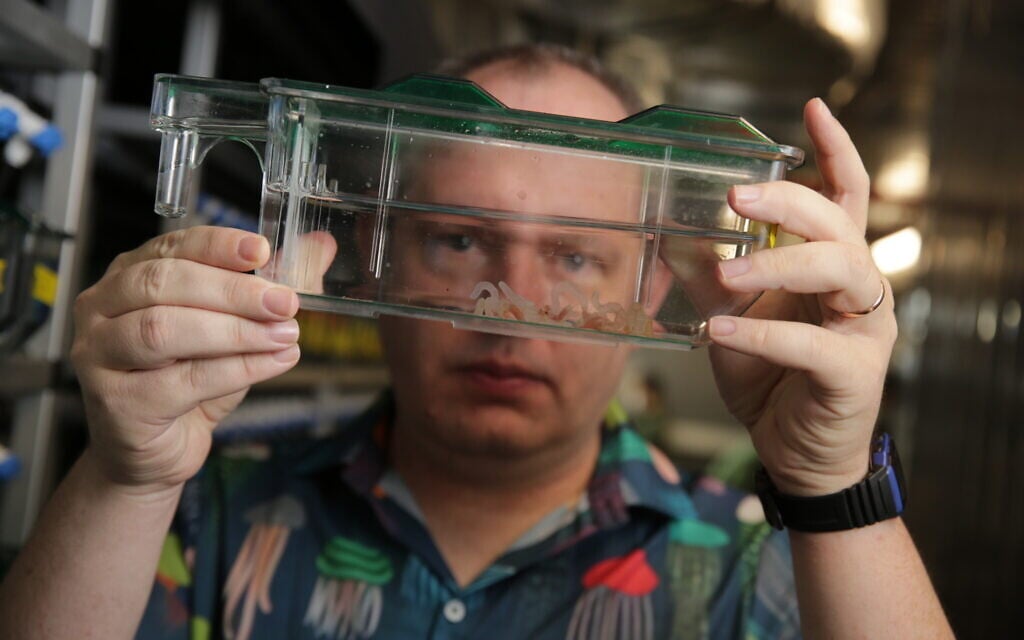
Evolutionary split 600 million years ago upends long-held scientific belief that all animals share one ancestral antiviral system; study can help save endangered coral reefs

Israeli scientists from the Hebrew University of Jerusalem, in collaboration with the University of North Carolina at Charlotte, have discovered a unique immune system in sea anemones, challenging the long-held assumption that all animal immune systems descend from a single ancestral antiviral system. Published in Nature Ecology & Evolution, the research identified a novel protein, named CARDIB, in the starlet sea anemone (Nematostella vectensis).
"We found a CARD protein — a structural building block we named CARDIB — that prevents unnecessary immune response by binding to the sensor for viruses,"
said lead author Ton Sharoni. Unlike the human MAVS protein, which acts as an "on" switch for the immune system, CARDIB functions as an "off" switch, constantly regulating the immune response. This discovery, funded by a €2 million grant from the European Research Council, could offer crucial insights into protecting coral reefs, as sea anemones are closely related to corals.
© All rights to the original article belong to the source. Din Online shows a headline, an excerpt and a link only. The objectivity rating is computed automatically and is an estimate only.
Discussion
No comments yet — be the first to comment.