Israeli startup looks to harness AI to decode the ‘language’ of the brain
Sharon Wrobel is a tech reporter for The Times of Israel
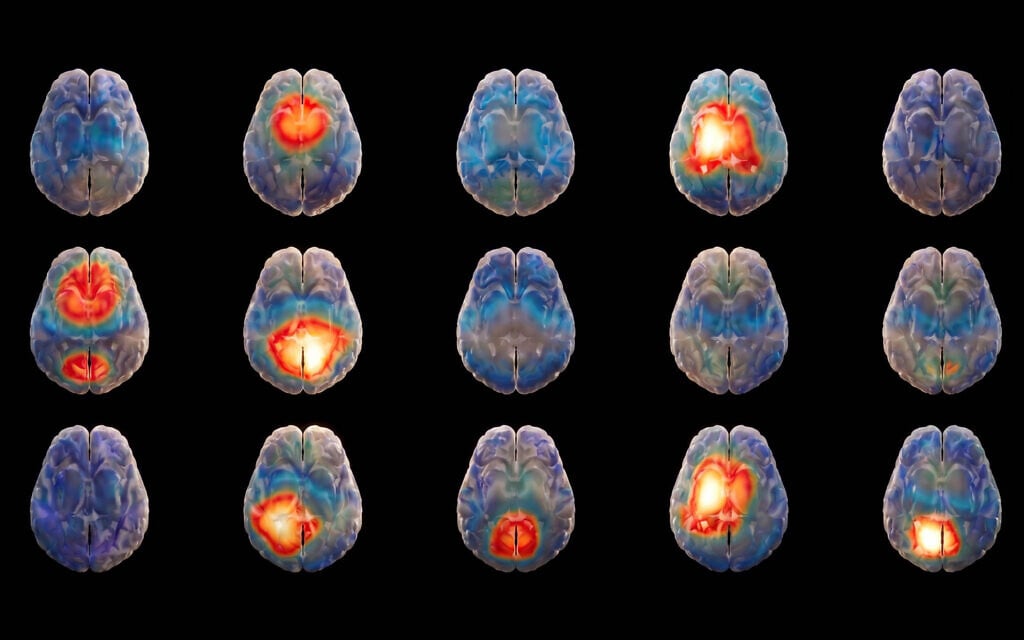
If the brain is our most important organ, why do most brain disorders such as depression and post-traumatic stress disorder (PTSD) still rely on subjective diagnosis and treatment based on questionnaires and a taxing trial-and-error process?
For over six years, the co-inventor of Apple’s FaceID recognition system and an Israeli-American computational neuroscientist pursued this question as their quest to build an artificial intelligence model, which they say promises to decode and understand the complex language of the brain.
After working under the radar, Gidi Littwin and Hagai Lalazar, the co-founders of Hemispheric have now come out with Descartes, which they say will be able to decipher the electrical activity of the human brain to help diagnose neurological and psychological conditions such as depression and PTSD.
Speaking to The Times of Israel, Littwin, and Lalazar, respectively CTO and CEO of the Israeli startup, said that the Descartes AI model is trained to interpret the brain’s electrical signals, or language, in the same way large language models process the semantic meaning of text or computer vision systems interpret images.
“The problem that we are coming to solve is really paramount to humanity, which is that our brain is the most complicated organ in our body, the largest disease burden, but we have no quantitative, non-invasive measurement of its function, of its health, and as a neuroscientist — that really bothered me,” said Lalazar. “When you visit psychiatrists, they still ask you how you feel, and neurologists still ask you to touch your nose with a finger, so with all the advancements we haven’t gotten to the accuracy needed to improve people’s lives.”
Littwin developed deep learning solutions for Apple’s augmented reality device Vision Pro, but left the Cupertino tech giant in 2020 and teamed up with Lalazar. The two sought to harness AI to build a generalized machine learning model designed to help infer brain function from electrical activity within the skull without invasive surgical procedures, such as implanting electrodes or chips. But they encountered a major issue: Lack of brain data to feed such an AI model.
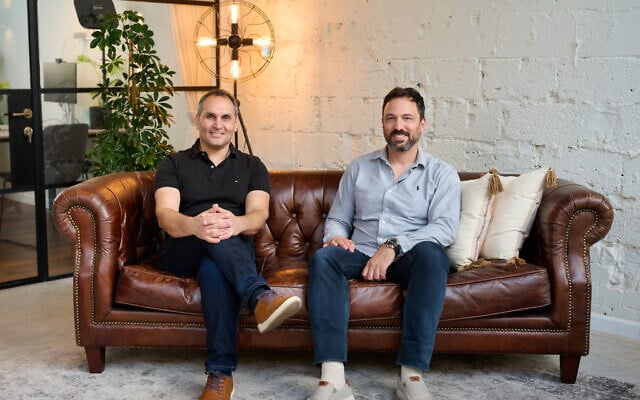
“In recent years, large language models have been trained on massive amounts of data to power applications like ChatGPT, but there is no available brain data to train deep learning models to decode brain activity,” said Littwin. “Over the past seven years, we built the world’s largest lab network for collecting brain activity data non-invasively, from 100,000 paid volunteers at sites across Asia, Israel and Boston.”
Hemispheric’s Descartes AI platform was fed and trained on more than 250,000 hours of electroencephalogram (EEG) brain data from participants, taking 6 billion parameters or variables into account, the startup said.
For more than 100 years, EEG, which directly monitors electrical activity from the brain using small electrodes placed on the scalp, has been the most common device to detect the brain’s neuronal activity. But the method has been shown to have spatial limits and shortcomings in terms of capturing and translating results into actionable insights that clinicians and researchers can act on accurately.
“The challenge has always been variability: the same brain signal can look completely different across individuals,” said Littwin. “At a very large scale, it becomes something you can model, making it possible to measure brain function accurately and use it in real-world settings without surgery.”
Using the Descartes platform requires no invasive procedures or lengthy protocols. Patients wear a dry EEG headset, similar to a bicycle helmet, for 15 minutes while interacting with an app on a tablet or phone.
“They play what are essentially neuroscience experiments, but that have been gamified, which activates the brain in interesting ways, and enables the model to see brain activity of different people and their different brain functions,” said Littwin.
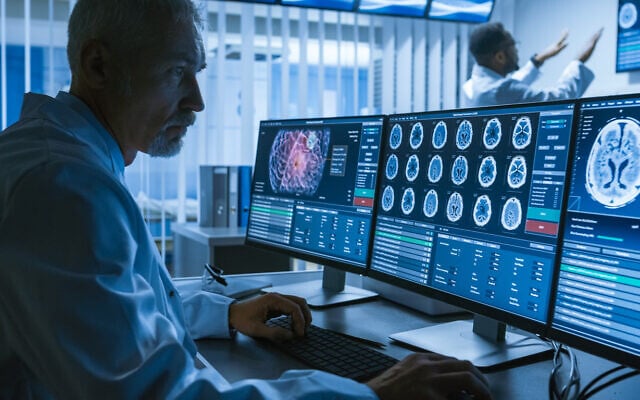
Lalazar and Littwin are confident that the AI model they have developed for decoding the language of the brain’s electrical signals more accurately holds the promise of generating objective results to help clinicians diagnose and treat neurological and psychological disorders, including depression, PTSD, Parkinson’s disease, and Alzheimer’s.
“Our model is good at figuring out the unique kind of personal profile of your brain, and that enables clinicians to predict the efficacy of treatments,” said Littwin, who previously founded RealFace, a facial recognition startup, which was acquired by Apple in 2017.
But Hemispheric has a long path to validate the technology and show that the results of the AI model hold up to their promise.
“With the advancements in AI, we are at the front of a wave of tremendous change that we are going to see in medicine,” said Dr. Nirit Lev, who heads the Neurology Department at Clalit-Meir Medical Center in Kfar Saba. “I think Hemispheric is still at an early phase and has a long way to go because although their numbers are big, they need to examine people at different ages, different cultures, different genders, and of course, minorities.”
“There will be a lot of variation between the patients and also in the patient himself, so we would need to know if we can rely on the signal and act on it, and whether the platform is clinically useful as a tool to diagnose between healthy and diseased conditions,” Lev added.
Additionally, Lev raised skepticism about how much data one could extract from just EEG readings.
“EEG captures only the scalp, and only some parts of the brain,” said Lev. “There is a long list of diseases and I’m not sure that it will capture everything, but it can shed some light on at least a few of them, especially those that have cognitive or emotional effects.”
Lalazar said that Hemispheric’s coupling of the data with an AI foundational model could be a breakthrough, noting that the field of invasive and non-invasive brain-computer interface technology is not new.
“But the approach has been primarily to try to build better sensors, or improve hardware solutions, while our breakthrough is our AI model and our proprietary dataset of brain activity,” said Lalazar. “Each person’s brain is unique, like a snowflake, which is why current attempts at one-size-fits-all treatments fall short.”
“We are working toward a future where you walk into your primary care office, get a brain test as routine as a blood draw, and leave with information you and your clinician can actually use to improve your health,” he added.
The startup employs 112 people with backgrounds in brain science, AI, software engineering, electronics, and medical systems.
Hemispheric recently held a new funding round, raising $52 million, which Littwin said it plans to use to advance regulatory approvals in the US, Europe, and Israel as well as pursue clinical studies to validate that its results meet high standards.
Among the US and Israeli venture capital funds and angel investors to buy into the startup were Hanaco Ventures, Arkin Capital, OurCrowd, Artofin VC, OneMind/Awareness Capital, Protocol Labs, L Catterton, Howard Morgan, Naomi Azrieli, Yasmin Lukatz, and Scott Belsky.
Littwin and Lalazar said the goal is to submit their first application for the study of PTSD to the US Food and Drug Administration for approval early next year to roll out the product later in 2027.

The war with Iran has been draining for all of us in Israel. But when I heard about a high casualty incident – ballistic missile impacts in Arad and Dimona that left nearly 200 people wounded – I drank a cup of coffee, packed a bag, and headed south.
There, I spoke with Shilgit, the head of an after-school program for underprivileged youth. Standing outside her destroyed center, Shilgit said it was a miracle that no children were hurt and spoke about the community coming together in the hours since.
As a Times of Israel reporter, I’m committed to telling stories of resilience like Shilgit’s. But my colleagues and I can't do this alone. If you value work like this, please consider joining our reader support group, The Times of Israel Community. Your financial support is essential to keep real human reporting like this going.
— Stav Levaton, military reporter
We’re really pleased that you’ve read X Times of Israel articles in the past month.
That’s why we started the Times of Israel – to provide discerning readers like you with must-read coverage of Israel and the Jewish world.
So now we have a request. Unlike other news outlets, we haven’t put up a paywall. But as the journalism we do is costly, we invite readers for whom The Times of Israel has become important to help support our work by joining The Times of Israel Community.
For as little as $6 a month you can help support our quality journalism while enjoying The Times of Israel AD-FREE, as well as accessing exclusive content available only to Times of Israel Community members.
Thank you, David Horovitz, Founding Editor of The Times of Israel









Israeli startup Hemispheric, co-founded by Gidi Littwin and Hagai Lalazar, has developed an AI model called Descartes to decode the brain's electrical activity for diagnosing neurological and psychological conditions like depression and PTSD. The model was trained on over 250,000 hours of non-invasive EEG brain data from 100,000 volunteers, creating the world's largest dataset of its kind. Patients wear a dry EEG headset for 15 minutes while interacting with a gamified app, allowing the AI to interpret brain function.
"The problem that we are coming to solve is really paramount to humanity, which is that our brain is the most complicated organ in our body, the largest disease burden, but we have no quantitative, non-invasive measurement of its function, of its health, and as a neuroscientist — that really bothered me," said Lalazar.
Hemispheric recently raised $52 million to pursue regulatory approvals in the US, Europe, and Israel, and plans to submit its first application for PTSD to the FDA early next year, aiming for a product rollout in late 2027. While promising, experts like Dr. Nirit Lev from Clalit-Meir Medical Center note the need for extensive clinical validation across diverse demographics and acknowledge the inherent limitations of EEG data.
© All rights to the original article belong to the source. Din Online shows a headline, an excerpt and a link only. The objectivity rating is computed automatically and is an estimate only.
Discussion
No comments yet — be the first to comment.