שבת, יולי 18, 2026 עברית|English Log in Free sign-up
LIVE
Residents evacuated in Jezreel Valley as fire spreads in West Bank, ignites firefighting truckIsrael is winning the World Cup of public diplomacy by aiding earthquake-hit Venezuela – opinionWhy did Iran claim to attack an abandoned US garrison in Syria? – analysisHiking in the Holy Land: Ein Haniya, an easy water outing outside JerusalemBelgium Approves Ban on Imports from Illegal Israeli SettlementsIsraeli army kills 3 Palestinians, expands occupied area in Gaza despite ceasefireReports: US-Israel tanker aircraft row at Ben Gurion Airport resolvedWildfire Sets 15 Homes in Israeli West Bank Settlement AblazeLebanese president departs for White House summitIsrael Welcomes US and Other Foreign Travelers by May 23Fetterman cites anti-Israel sentiment in Democratic Party as reason to potentially leaveCan Israel finally stub out smoking? Experts turn to AI, brain stimulation, and new drugsResidents evacuated in Jezreel Valley as fire spreads in West Bank, ignites firefighting truckIsrael is winning the World Cup of public diplomacy by aiding earthquake-hit Venezuela – opinionWhy did Iran claim to attack an abandoned US garrison in Syria? – analysisHiking in the Holy Land: Ein Haniya, an easy water outing outside JerusalemBelgium Approves Ban on Imports from Illegal Israeli SettlementsIsraeli army kills 3 Palestinians, expands occupied area in Gaza despite ceasefireReports: US-Israel tanker aircraft row at Ben Gurion Airport resolvedWildfire Sets 15 Homes in Israeli West Bank Settlement AblazeLebanese president departs for White House summitIsrael Welcomes US and Other Foreign Travelers by May 23Fetterman cites anti-Israel sentiment in Democratic Party as reason to potentially leaveCan Israel finally stub out smoking? Experts turn to AI, brain stimulation, and new drugs
News

Israeli study finds antibiotics can reverse salmonella damage to stem cells in mice
4h ago ·  Source: The Times of Israel 89Objectivity score89/100

Israeli study finds antibiotics can reverse salmonella damage to stem cells in mice

Reporter at The Times of Israel

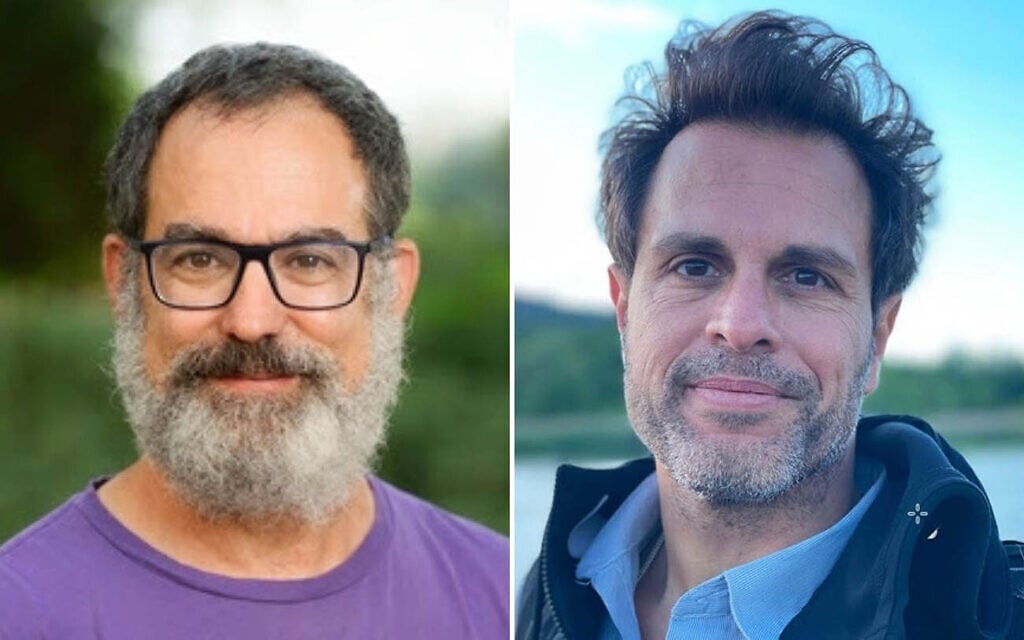
Prof. Roi Gazit, left, head of the stem cell laboratory at the Shraga Segal Department of Microbiology, Immunology, and Genetics, at Ben-Gurion University of the Negev (Courtesy/Dani Michalis), and Dr. Ofir Cohen, also from BGU’s Shraga Segal Department of Microbiology, Immunology, and Genetics.

Damage to stem cells caused by salmonella, a chronic bacterial infection affecting millions worldwide, can be completely reversed in mice that are treated with antibiotics, Israeli scientists say.

Using a breakthrough mouse model, a team of researchers at Ben-Gurion University of the Negev replicated how the chronic illness generally acts in humans.

The researchers found that once antibiotics were administered, the mice not only recovered, but their stem cells also returned to healthy levels.

“The experiment gives hope to people waiting for blood transplants and waiting for donors to get better,” Prof. Roi Gazit, who heads a stem cell laboratory at Ben-Gurion University and supervised the research, told The Times of Israel in a video call.

“Now that we have the model,” Gazit said, “we can gain more knowledge, and maybe we can improve bone marrow transplant as a whole.”

Gazit said the findings of the study, which was published in Cell Reports, are “very optimistic.”

תמונת סיקור

Around the world, about 90,000 stem cell transplants are done each year, according to the Worldwide Network for Blood and Marrow Transplantation.

In Israel, about 500 transplants are performed annually. The Bone Marrow Registry at Ezer Mitzion includes more than 1.3 million potential donors to help people struggling with leukemia, lymphoma, and other cancers. Stem cell transplants completely rebuild a patient’s blood and immune systems.

“People know that humans make new blood cells every day, every second throughout life,” Gazit said. “The rate is mind-blowing. It’s more than 1 million new blood cells every second. Even when you’re sitting, your bone marrow produces an astronomical number of new blood cells, and that’s merely to keep normal life in balance.”

However, the system of blood production relies on a minuscule, rare population of cells known as hematopoietic stem cells (HSCs) that reside in the bone marrow. These cells are the ultimate source of all red blood cells, white blood cells, and platelets.

When the body is healthy, these HSCs “rest and keep their potency by not proliferating,” Gazit said.

But when the body has an infection, the stem cells go into “an emergency, hyperactive state of constant division to churn out inflammatory white blood cells to fight the bacteria,” Gazit said.

The stem cells quickly exhaust themselves, Gazit said, and their ability to be transplanted in another “drops to nearly zero.”

Although scientists have been aware of the impact of a chronic bacterial illness on these HSCs, studying these diseased stem cells is challenging, Gazit said, because they are constantly changing.

Gazit’s team focused on adult stem cells infected by salmonella, a common foodborne bacterium. According to the World Health Organization, it affects one in 10 people each year.

The disease is usually characterized by an acute onset of fever, abdominal pain, diarrhea, nausea, and sometimes vomiting. Gazit said that standard laboratory mice typically experience salmonella as an acute, rapidly fatal illness, making long-term observation impossible.

To overcome this hurdle, Gazit said the BGU lab collaborated with Arizona State University’s Prof. Roy Curtiss III, who provided a specialized, modified strain of salmonella.

תמונת סיקור

BGU graduate student Erez Elfassy then established the lab model.

The mice became mildly ill. After 14 days, the infection caused severe weight loss and massively enlarged spleens.

In the mice’s bone marrow, the stem cells lost almost all their biological potency. They were pumping out inflammatory white blood cells at the expense of a healthy blood supply, and they were “flooded with signals linked to cellular distress,” Gazit explained.

Then, Elfassy, “because he’s a smart student,” Gazit said, treated the mice with antibiotics.

The mice recovered quickly, with their weight returning to normal and their enlarged spleens shrinking back to their proper size.

תמונת סיקור

The team then partnered with the laboratory of Dr. Ofir Cohen at BGU to utilize single-cell RNA sequencing, a technology Gazit likened to a “very fancy microscope,” to determine how the infection affected the stem cells.

“The genetic mapping confirmed that the antibiotics calmed down the hyperactive, exhausted stem cells,” Gazit said. “The mice completely recovered, and the potency of their stem cells to transplant also recovered.”

“That’s the basic science,” Gazit explained. “Let’s say I need a bone marrow transplant. My brother, who is a match for transplantation, is willing to donate, but he’s sick today. Our answer is simple: give him antibiotics and let him rest, and his stem cells will recover.”

תמונת סיקור

“My take-home message from this study is that it showcases the power of single-cell technologies to uncover how chronic inflammation reshapes HSCs at the molecular level,” Prof. Michael Milyavsky, a Tel Aviv University pathologist, told The Times of Israel.

Milyavsky was not involved in the research.

He said that beyond the biological insights, the work has “important translational implications,” suggesting that the inflammatory status of bone marrow donors “may be an important factor to consider before stem cell transplantation.”

“This raises the possibility that restoring stem cell fitness before transplantation could improve clinical outcomes,” he said. “While these findings still need to be validated in humans, they open an exciting avenue for developing strategies to optimize bone marrow transplantation.”

Gazit said that medical centers do not “really encourage” bone marrow transplant to people over 70 because it is a “formidable” procedure for people with other existing medical conditions.

“But many people today live past their 70s,” he said. “If we better understand the basic principles, we can suggest ways to allow bone marrow transplants in people who don’t get it today. This might save the lives of many people throughout Israel.”

תמונת סיקור

The war with Iran has been draining for all of us in Israel. But when I heard about a high casualty incident – ballistic missile impacts in Arad and Dimona that left nearly 200 people wounded – I drank a cup of coffee, packed a bag, and headed south.

There, I spoke with Shilgit, the head of an after-school program for underprivileged youth. Standing outside her destroyed center, Shilgit said it was a miracle that no children were hurt and spoke about the community coming together in the hours since.

As a Times of Israel reporter, I’m committed to telling stories of resilience like Shilgit’s. But my colleagues and I can't do this alone. If you value work like this, please consider joining our reader support group, The Times of Israel Community. Your financial support is essential to keep real human reporting like this going.

— Stav Levaton, military reporter

תמונת סיקור

We’re really pleased that you’ve read X Times of Israel articles in the past month.

That’s why we started the Times of Israel – to provide discerning readers like you with must-read coverage of Israel and the Jewish world.

So now we have a request. Unlike other news outlets, we haven’t put up a paywall. But as the journalism we do is costly, we invite readers for whom The Times of Israel has become important to help support our work by joining The Times of Israel Community.

For as little as $6 a month you can help support our quality journalism while enjoying The Times of Israel AD-FREE, as well as accessing exclusive content available only to Times of Israel Community members.

Thank you, David Horovitz, Founding Editor of The Times of Israel

A man shelters from the sun under an umbrella as he stands at an intersection around Tehran’s traditional main bazaar, Iran, July 16, 2026 (AP Photo/Vahid Salemi)
Hezbollah supporters wave Hezbollah and Iranian flags during a gathering in Beirut’s southern suburbs, Lebanon, July 8, 2026. (AP Photo/Mustafa Jamalddine)
US Senate candidate Jordan Wood takes part in a debate at the WCSH-6 television studio, July 16, 2026, in Portland, Maine. (AP/Robert F. Bukaty)
Hamas terrorist Abd al-Rahman Maher Abd al-Karim Ziyada is seen by an IDF tank on October 7, 2023, in a photo published by the military on June 28, 2026, stating that he was eliminated. (Israel Defense Forces)
Ofir Drori poses in Cameroon with elephant tusks seized from an African-Asian crime syndicate. (Courtesy, EAGLE)
Governor candidate Francesca Hong speaks on stage during Wisconsin Democrats 2026 Convention on June 14, 2026, in Madison, Wisconsin. (Daniel Boczarski/Getty Images for WisDems/AFP)
Swastika graffiti on the Upper West Side of Manhattan, New York City, March 4, 2026. (Luke Tress/Times of Israel)
This combination of images from video released by US Central Command, and annotated by the source, shows three Corsair unmanned surface vessels, also called one-way attack surface drones, fired by the US military, closing in on Bandar Abbas Naval Base, Iran, July 12, 2026. (US Central Command via AP)
X
google
apple
facebook
timesofisrael
google
apple
facebook
timesofisrael
timesofisrael
google
apple
facebook
timesofisrael
check your email
X
X
Confirm Mail
💬 רוצים להגיב ולהצטרף לדיון? הצטרפו — חינם, ומקבלים גם את הדיג׳סט השבועי.
This story is based on reporting by The Times of Israel.
Read the full article at the source →

© All rights to the original article belong to the source. Din Online shows a headline, an excerpt and a link only. The objectivity rating is computed automatically and is an estimate only.

Related

Discussion

No comments yet — be the first to comment.

Add a comment