Israelis are alarmed over the threat of political violence. Can it be averted?

Ben Sales is a news editor at The Times of Israel
When an assailant vandalized the office of Channel 12 news last week, smashing the door and leaving a note reading, “Someone will die,” it drew condemnations from the outlet, media advocacy organizations and politicians, including some who accused Prime Minister Benjamin Netanyahu’s government of inciting attacks against the press.
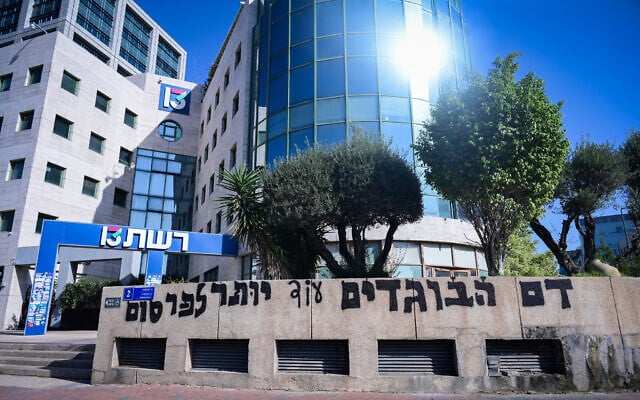
The shock, however, shouldn’t be mistaken for surprise. This was the latest in a string of physical assaults on press outlets that frequently air criticism of Netanyahu. Channel 12 had been attacked earlier in July, possibly by the same man, and so had the Haaretz newspaper, whose door was likewise smashed. Channel 13’s office was graffitied with the slogan “The blood of the traitors will be cleared for publication,” paraphrasing a term generally used by the IDF when it announces the deaths of soldiers.
The attacks — and their death-threat rhetoric — also point to a problem that scholars, observers, surveys and even President Isaac Herzog have been raising with increasing alarm as Israel’s October 27 election nears: The country’s public discourse and political culture, across the ideological spectrum, is growing increasingly toxic — and possibly even endangering Israeli voters.
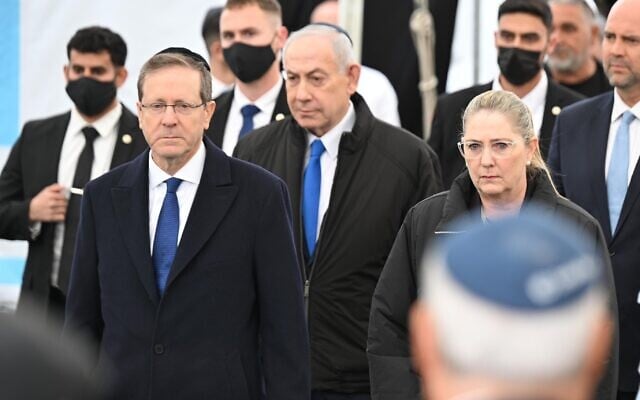
Those with their eye on this crisis aren’t mincing words: In a televised address to the nation, Herzog pleaded with citizens not to turn “rivals into enemies,” reminding them that “elections are not a “civil war” and warning of “dangerous violence rearing its head across the country.” The author Yossi Klein Halevi told The Times of Israel that the next government will face a “spiritual challenge” in trying to heal Israel’s rifts.
A recent poll found that 39 percent of Israelis ranked “violent conflict between groups” in Israel as one of the country’s leading threats, alongside a nuclear Iran.
“It’s violent in that you disqualify the other side just because it’s the other side,” the survey’s lead author, Yuval Eylon told the Times of Israel. “We have examples from both sides — some are more extreme or less extreme, let’s say — where you’re ready to torch the door of a newspaper [office] or — I don’t know about using a firearm — but definitely to punch someone.”
He added, “We’re already there, so it isn’t far away: Today it’s a fist, tomorrow it’s a baton, the day after tomorrow it’s a knife, and after that it’ll also be a gun.”
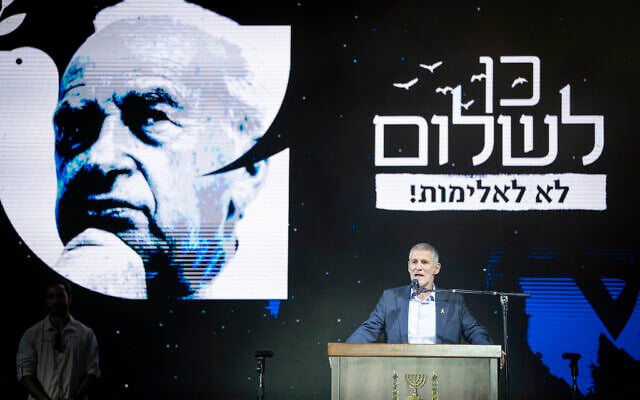
Eylon, a senior fellow at the Institute for National Security Studies at Tel Aviv University, said Israeli societal discourse is “much more violent” today than it was before the assassination of prime minister Yitzhak Rabin in 1995. Last week, a 75-year-old activist with the upstart Yashar party was attacked and suffered a brain hemorrhage for taking down a banner supporting Rabin’s assassin.
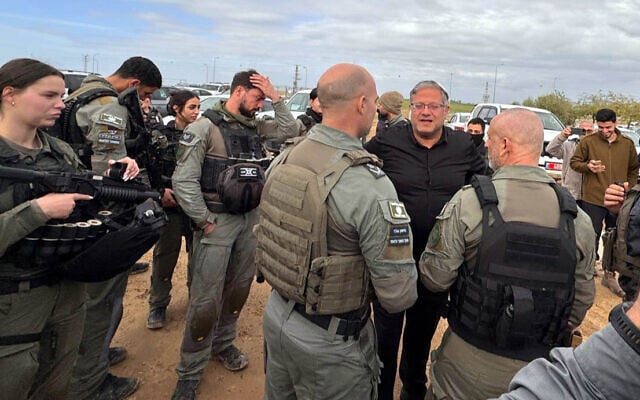
The anti-Netanyahu parties, and many of their supporters, lay blame for this inflammatory discourse at the prime minister’s feet, pointing to the far-right politicians in his cabinet (including a national security minister who had previously been convicted of incitement and supporting terrorism), in addition to the provocateurs his lawmakers hang out with, and the mass Haredi anti-draft protests that his coalition partners endorse and that have targeted the homes of public officials, sometimes destructively.
Klein Halevi said that he faults Netanyahu for having “turned schism into policy,” especially given the legacy of the Rabin assassination. Netanyahu’s critics accuse him of having fomented the incendiary discourse leading up to the assassination, which he denies.
“A growing feeling that people like me who have been in the opposition have had is that our physical well-being was being threatened by our government,” said Klein Halevi, a senior fellow at the Shalom Hartman Institute in Jerusalem. “That’s new. And this government — and I’m speaking specifically about Netanyahu — saw its political success as dependent on turning one part of the country against the other. That’s how it activated its base.”
To be sure, fears of growing political violence are coming against the backdrop of the unprecedented levels of bloodshed that have already scarred the country, both within and beyond its borders, over the past few years. In addition to the October 7, 2023, Hamas-led massacre and the subsequent multifront war, the Arab community has seen record levels of violent crime. Settler riots in the West Bank, sometimes deadly, have become a regular occurrence.
A large part of the opposition’s pitch is that it will not just shift policy but inaugurate a new era in Israeli discourse — and, indeed, Israeli society — focused on unity and reconciliation. In the first official speech of his campaign, former IDF chief Gadi Eisenkot promised to open “a new and much better chapter in Israel’s history. We will write it together,” and said he would “do everything to unify the nation.”
“There is awareness [of violence], but it’s like, ‘What is the other side doing to my side?’ No one’s looking in the mirror.”
Opposition leaders have paired those promises with pledges of concrete policies meant to strengthen what they see as the guardrails of democracy and create space for a healthier civic debate. Eisenkot’s party has said it will enact term limits, end patronage in government offices and take other steps to strengthen what it calls “the rules of the game.” The center-right B’Yachad party, led by former prime ministers Naftali Bennett and Yair Lapid, says it will enact a constitution as well as term limits.
But the opposition isn’t the only group complaining of an atmosphere of extremism and incitement. To the pro-Netanyahu camp, the opposition isn’t attempting to protect democracy and civic debate but to squelch it, entrenching processes that allow an unelected elite in the court, the media and beyond to overrule those representing the will of the majority.
Disunity, they charge, was fueled by the loud and rowdy demonstrators who took to the streets with megaphones to rage against planned changes to the judiciary, lighting fires, fighting with cops and politicizing the military by encouraging reservists to shirk their duty in protest. They point to assassination plots against Netanyahu, including one by an activist in those very protests.
And they accuse activists and politicians of blocking any attempt to enact legislation that would ensure the will of the right-wing electorate can be enacted.
Netanyahu has lately taken to promising a “broad national government” if he’s reelected.
The absence of a shared worldview between the sides, Eylon said, manifests in how voters view the issue of political violence. His survey showed that both sides believe it’s a problem — but that both sides also say blame lies with their opponents.
“Everything is black and white. We don’t have a discourse that even allows us to exchange opinions,” he said. “There is awareness [of violence], but it’s like, ‘What is the other side doing to my side?’ No one’s looking in the mirror.”
For months, pre-election polls haven’t afforded either side a majority of the Knesset, though the opposition comes closer. But some parts of Israel’s political culture will likely stay the same regardless of who wins at the ballot box. And experts caution that changing laws will not be enough to reverse what they call the deteriorating civic discourse that has taken hold across the spectrum in Israel — with more than a few voters saying they’d consider leaving the country if the other side wins.
Gideon Rahat, chair of the political science department at the Hebrew University of Jerusalem, noted that during the 18 months when Netanyahu was out of power in 2021-22, “there was still tension and incitement.”
To depart from that poisonous debate, Klein Halevi said, an opposition-led government will need to try to speak not just for its own voters but for what he characterizes as the solid majority of Israelis who believe in a Jewish and democratic state, a group that cuts across religious and political demographics. That also means working with members of the opposing camp, he said, such as a post-Netanyahu Likud Party.
“The challenge for the government is going to be how to include elements of the previous government into an expanded coalition that could really help in the healing of the country,” he said. He added later, “What the next government needs to do is recreate the Jewish democratic majority, and that is certainly a political challenge, but more deeply a cultural and I would even say a spiritual challenge.”
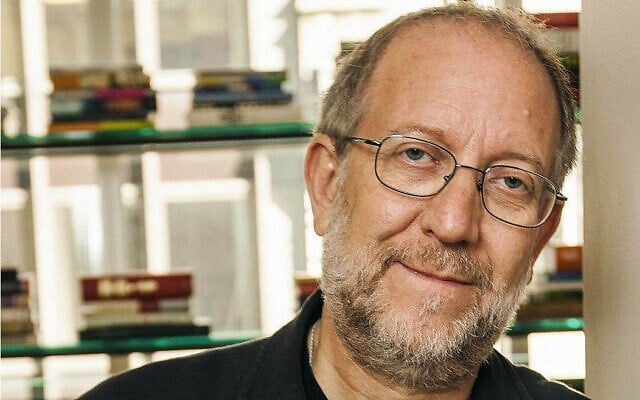
If the opposition wins, Rahat said, it should refrain from partisan, antagonizing steps like firing appointees of the previous government en masse. Left-wing politician Yair Golan vowed last year to fire the current Shin Bet chief if elected, and Bennett pledged to purge officials he deems “political.”
“They need to try to see if they can work with at least some of the appointees who stay,” Rahat said. “Decapitation is not a good recipe for unity.”
What if Netanyahu wins reelection? Klein Halevi told The Times of Israel, “I can’t even allow myself to think about the possibility,” and cited record emigration figures that he feared could continue under another Netanyahu government.
“The man who declared war on Israeli solidarity can’t be the one to heal us,” he added.
In a sign of how polarized the discourse has become, a significant number of Israelis are floating emigration if the other side wins. Tamar Hermann of the Israel Democracy Institute think tank described a sense of fatalism among the opposition when faced with the prospect of another Netanyahu victory.
“It seems to people on the center-left and left that if they are going to lose these elections, this is it, that this is irreversible,” Hermann, director of IDI’s Viterbi Family Center for Public Opinion and Policy Research, said in a June webinar.
She pointed to an IDI poll showing 17% of Israelis would consider leaving Israel if their side loses the election — including 26% of centrists and 41% of left-wingers.
One style that nearly all parties on both sides of the aisle have adopted, Rahat said, is what he called “personality politics,” or political campaigns based around one leader, as opposed to a broader party and its institutions.
“They need to try to see if they can work with at least some of the appointees who stay. Decapitation is not a good recipe for unity.”
Affording power to a leader, he said, raises the risk of demagoguery and could erode democracy, while political parties buttress the democratic system. He added that the way this plays out in Israel is especially conducive to polarization and a heated public discourse, because it divides society based on voters’ feelings about one person: Netanyahu.
“The problem with our personal politics is that they’re very focused,” he said. “It’s all about Bibi or not Bibi. And that focus is dangerous to democracy. Democracy is based on checks and balances, not on something like that.”
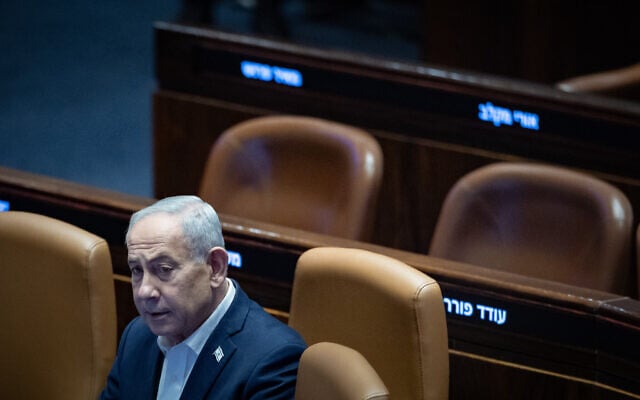
The two leading opposition parties, led by Bennett and Eisenkot, are both centered on their leaders and haven’t held primaries. But term limits, Rahat said, could encourage leaders to look beyond their own tenure and build institutions that will carry forward their legacy after they’re gone, rather than focusing on how to stay in power.
For now, he worries that no matter which side wins, personality politics will endure, along with the polarization it brings.
“The test of these guys, if they manage to win, is if they’ll be tempted to continue this politics, especially the personal kind,” he said. “Because most of the parties right now are personal platforms and not really parties.”
He added, “In the end, democracy doesn’t exist because of one leader or another, but because of institutions and rules.”
If the opposition wins, it will face a contradiction: On one hand, it has pledged to unite the country and appeal to its better angels. On the other hand, it has promised to conscript Haredi men, which will unquestionably touch off — or escalate — a fierce domestic conflict in Israel and exacerbate surging unrest.
Some opposition proposals also call for requiring national service for Arab Israelis — a community that has long felt disenfranchised, is demonized by many politicians and is struggling with a crime epidemic in its streets.
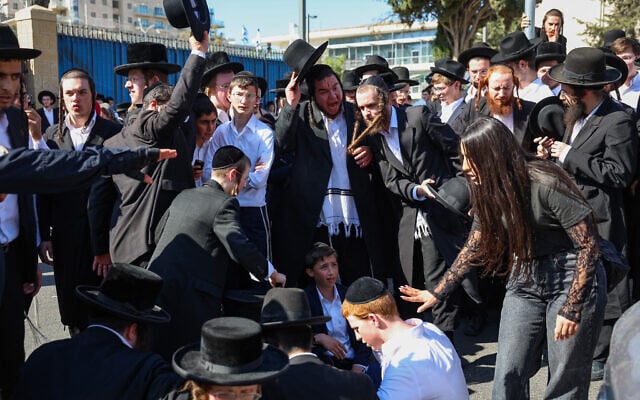
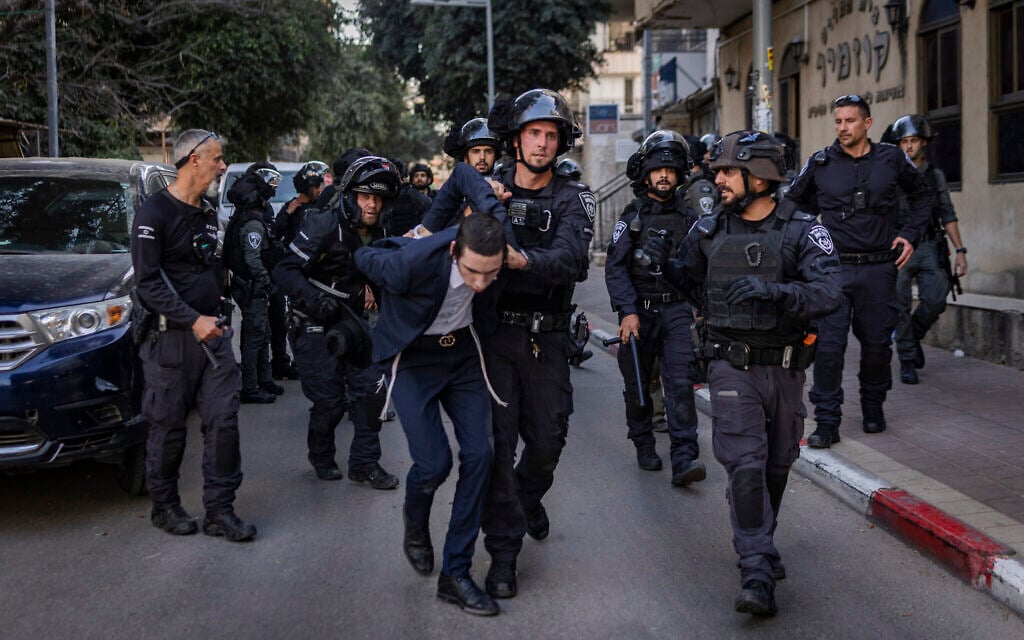
Drafting Haredim will be at or near the top of the agenda if the opposition wins, which almost certainly means Israelis can expect more conflict in the streets. The government’s relatively modest efforts to arrest draft evaders have already led to giant Haredi protests by men who have vowed to “die rather than enlist,” and who have blocked highways and rioted at the homes of public officials.
A more energetic effort to draft Haredim, including legislation doing away with the draft exemptions they’ve long enjoyed, will trigger massive resistance, what Klein Halevi calls a “very bitter struggle” that could last years.
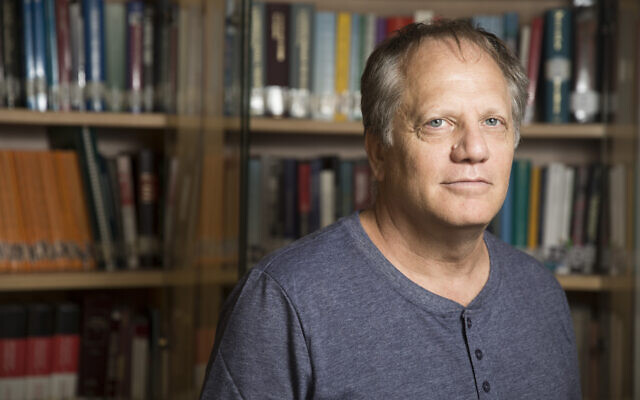
The tension could be mitigated, he suggested, by politicians speaking in “a language of respect and love” that voices appreciation for the Haredi dedication to Torah study, instead of antagonizing their Haredi opponents.
“To speak with pain and regret rather than anger or, God forbid, hatred, that’s a different tone,” Klein Halevi said. “And it’s not going to change the immediate nature of the confrontation, which is going to be very bitter. But it could create the basis for a long-term transformation in our relationship.”
Everyone who has discussed the rifts cleaving Israeli society acknowledges that the point of politics is not for everyone to get along. But they also share Herzog’s fear that Israelis, separated into groups that feel disenfranchised, discriminated against and aggrieved, are now seeing their political rivals not as ideological competitors but as enemies.
Everyone also acknowledges that such divides are not new. When Haredi protesters rioted at Supreme Court Justice Noam Sohlberg’s home, his wife Meira asked through tears, “What is this, Kristallnacht?”
Herzog, as well as Eylon, both referenced the destruction of the Second Temple, a time two millennia ago when internecine fighting led to the fall of a Jewish commonwealth in the land of Israel.
For generations, leaders have asked whether the Jewish people have learned the lessons of that historical period. Now, Eylon isn’t sure Israel has even learned the lesson of one of its own greatest tragedies from a far more recent era: the assassination of Rabin 31 years ago.
Instead, he worries the country has regressed. Once nearly all Israelis rejected political assassination. Now, he fears, that consensus may be gone.
“I don’t want to be a prophet, and I don’t want, God forbid, for that to happen,” he said. “But if it happened now, I don’t know how many people would disavow it.”
The war with Iran has been draining for all of us in Israel. But when I heard about a high casualty incident – ballistic missile impacts in Arad and Dimona that left nearly 200 people wounded – I drank a cup of coffee, packed a bag, and headed south.
There, I spoke with Shilgit, the head of an after-school program for underprivileged youth. Standing outside her destroyed center, Shilgit said it was a miracle that no children were hurt and spoke about the community coming together in the hours since.
As a Times of Israel reporter, I’m committed to telling stories of resilience like Shilgit’s. But my colleagues and I can't do this alone. If you value work like this, please consider joining our reader support group, The Times of Israel Community. Your financial support is essential to keep real human reporting like this going.
— Stav Levaton, military reporter

We’re really pleased that you’ve read X Times of Israel articles in the past month.
That’s why we started the Times of Israel – to provide discerning readers like you with must-read coverage of Israel and the Jewish world.
So now we have a request. Unlike other news outlets, we haven’t put up a paywall. But as the journalism we do is costly, we invite readers for whom The Times of Israel has become important to help support our work by joining The Times of Israel Community.
For as little as $6 a month you can help support our quality journalism while enjoying The Times of Israel AD-FREE, as well as accessing exclusive content available only to Times of Israel Community members.
Thank you, David Horovitz, Founding Editor of The Times of Israel





Israel is experiencing growing alarm over political violence and increasingly toxic public discourse, as evidenced by recent attacks on news outlets and death threats. President Isaac Herzog warned against turning “rivals into enemies,” stating, “elections are not a civil war” and highlighting “dangerous violence rearing its head across the country.” A recent poll indicated that 39% of Israelis view “violent conflict between groups” as a leading threat. Both sides of the political spectrum blame the other for the escalating tensions, with some experts, like Yuval Eylon, suggesting the discourse is “much more violent” than before the 1995 Rabin assassination. The upcoming October 27 election has intensified these concerns, with calls from opposition leaders for unity and a new era of discourse, while others caution that legislative changes alone may not be enough to heal the country's deep divisions.
© All rights to the original article belong to the source. Din Online shows a headline, an excerpt and a link only. The objectivity rating is computed automatically and is an estimate only.
Discussion
No comments yet — be the first to comment.