Israel’s UN envoy sparks Spain spat with accusation of ‘colonial enclaves’ in Africa
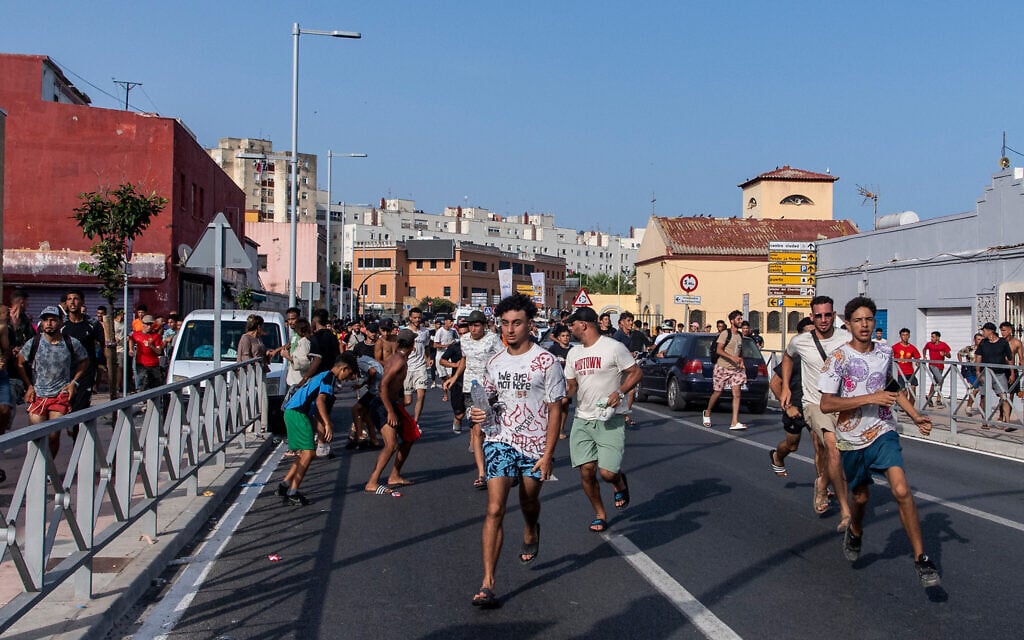
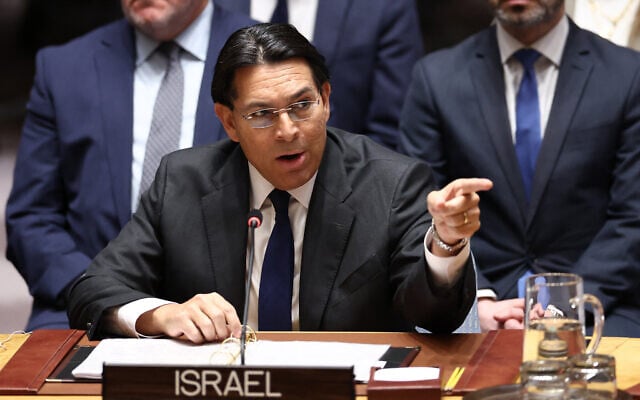
Diplomatic tensions flared between Spain and Israel on Friday after Israeli Ambassador to the United Nations Danny Danon slammed the Spanish government for its handling of the country’s migrant crisis, prompting backlash in Madrid and a public rebuke from Israel’s top diplomat in Spain.
“Spain, which never misses an opportunity to lecture Israel, has declared a state of emergency in Ceuta following the crisis over its immigration policy,” Danon wrote on X. “Maybe before it continues lecturing us, it’s time it explained to the world why it still maintains colonial enclaves in Africa.”
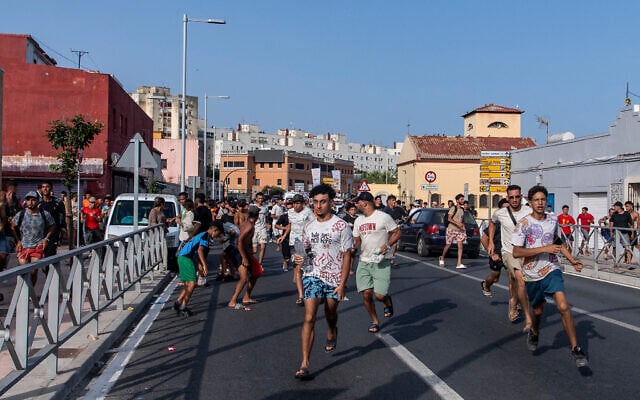
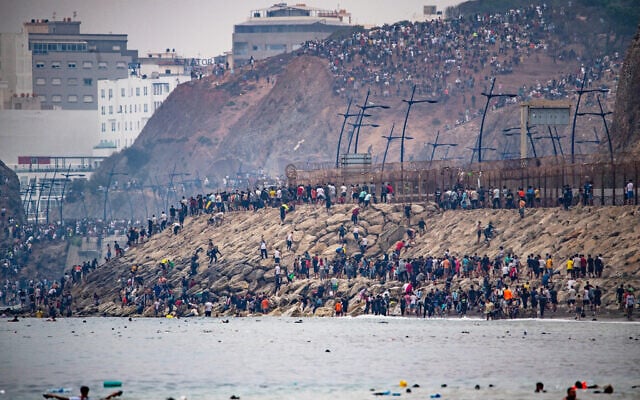
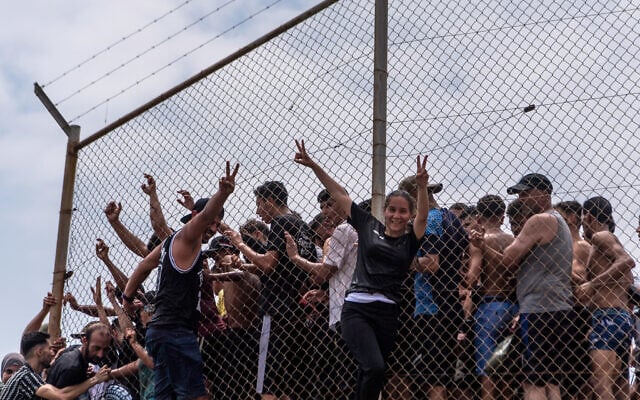
His remarks came after tens of thousands of migrants illegally crossed the border from Morocco into Ceuta, a Spanish enclave in North Africa.
Spain’s Interior Ministry said on Friday that around 50,000 people had entered Ceuta since Thursday morning, and estimated that nearly all of them, 48,000, had already turned and gone back. The Spanish government’s representative in Ceuta said 57 bodies of people killed during the incident had been recovered on the Spanish side of the border and that there could be additional casualties on the Moroccan side. It said some drowned and some were crushed while trying to climb the breakwater that holds the border fence.
Spanish Transportation Minister Óscar Puente Santiago responded to Danon’s post directly, writing, “Well, things are starting to get pretty clear.”
Though vague, Puente’s remark was largely interpreted as supporting the growing conspiracy theory that Israel and the United States helped orchestrate the large-scale migrant incursion, despite no public evidence supporting the accusation.
“It is a coordinated attack between Morocco, the United States, and Israel, with the collaboration of the European and Spanish far right, as retaliation for [Prime Minister] Pedro Sánchez’s trip to Algeria and, in passing, with the intention of annexing Ceuta and Melilla,” Spanish political commentator Carolina Alonso wrote on X, referring to Sánchez’s recent visit to Algeria, the first in four years, after relations ruptured in 2022 when Spain abandoned its longstanding neutrality on Western Sahara and backed Morocco’s sovereignty claim for the disputed territory.
Ceuta and Melilla are Spanish enclaves on Morocco’s Mediterranean coast whose sovereignty is claimed by Rabat but rejected by Madrid.
Alonso was responding to a post by Italian Deputy Prime Minister Antonio Tajani calling for Spain to be removed from the Schengen Area due to its migrant crisis.
The Schengen Area is a zone of 29 European countries that have abolished passport checks at their mutual borders, allowing passport-free travel — meaning migrants who enter Spain can more easily move onward to other participating countries.
Italy later announced it had suspended its Schengen agreement with Spain, with Italian officials saying the suspension would take effect on Saturday and last for one month.
The conspiracy theory surrounding Spain’s migrant crisis was further promoted by spokesperson of the Republican Left of Catalonia party Gabriel Rufián, who wrote on X, “The Moroccan dictatorship, in the service of the US and Israel, is once again blackmailing Spain and Europe this summer by turning its own people into disposable cannon fodder.”
Following the backlash, Israel’s Ambassador to Spain Dana Erlich publicly distanced Jerusalem from Danon’s remarks. Writing on X in both Spanish and English, she said she was monitoring the situation in Ceuta, adding, “The comment made by Israel’s Ambassador to the UN on the issue does not represent the position of the State of Israel.”
Diplomatic tensions between Madrid and Jerusalem have reached an all time high in recent years.
Spain has been among Europe’s most vocal critics of Israel’s actions in Gaza since the Hamas-led October 7, 2023, atrocities triggered the two-year long war there. In May 2024, it formally recognized a Palestinian state, joining a growing number of European countries advocating greater international recognition of Palestinian self-determination. Sánchez, a socialist, has been at the forefront of that push, emerging as one of Europe’s leading critics of Israel’s conduct in the war.

The war with Iran has been draining for all of us in Israel. But when I heard about a high casualty incident – ballistic missile impacts in Arad and Dimona that left nearly 200 people wounded – I drank a cup of coffee, packed a bag, and headed south.
There, I spoke with Shilgit, the head of an after-school program for underprivileged youth. Standing outside her destroyed center, Shilgit said it was a miracle that no children were hurt and spoke about the community coming together in the hours since.
As a Times of Israel reporter, I’m committed to telling stories of resilience like Shilgit’s. But my colleagues and I can't do this alone. If you value work like this, please consider joining our reader support group, The Times of Israel Community. Your financial support is essential to keep real human reporting like this going.
— Stav Levaton, military reporter

We’re really pleased that you’ve read X Times of Israel articles in the past month.
That’s why we started the Times of Israel – to provide discerning readers like you with must-read coverage of Israel and the Jewish world.
So now we have a request. Unlike other news outlets, we haven’t put up a paywall. But as the journalism we do is costly, we invite readers for whom The Times of Israel has become important to help support our work by joining The Times of Israel Community.
For as little as $6 a month you can help support our quality journalism while enjoying The Times of Israel AD-FREE, as well as accessing exclusive content available only to Times of Israel Community members.
Thank you, David Horovitz, Founding Editor of The Times of Israel
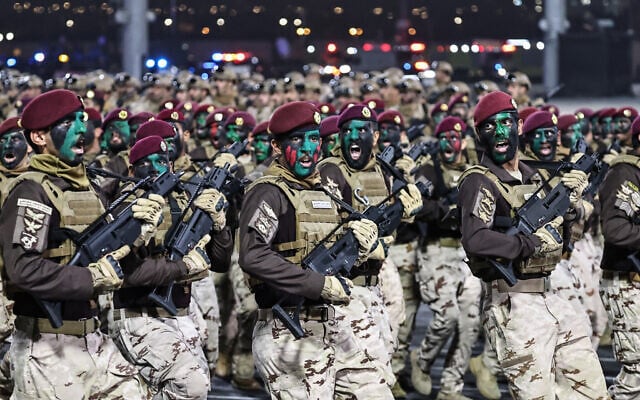
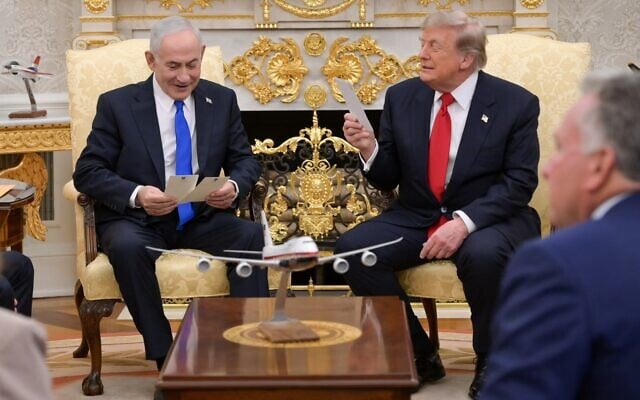
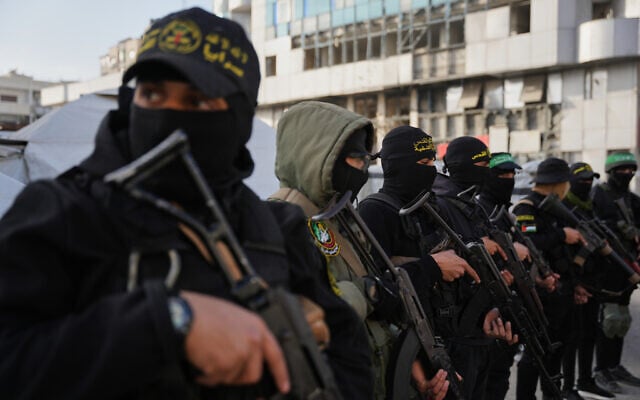




Diplomatic tensions arose between Spain and Israel after Israel's UN Ambassador Danny Danon criticized Spain's handling of a migrant crisis in Ceuta, a Spanish enclave in North Africa. Danon stated, "Maybe before it continues lecturing us, it’s time it explained to the world why it still maintains colonial enclaves in Africa." This followed tens of thousands of migrants crossing from Morocco into Ceuta. Spanish officials and commentators, including Transportation Minister Óscar Puente Santiago, interpreted Danon's remarks and the migrant influx as supporting a conspiracy theory that Israel and the US orchestrated the incursion as retaliation for Spain's shift on Western Sahara. Israel's Ambassador to Spain, Dana Erlich, publicly disavowed Danon's comments, stating they "does not represent the position of the State of Israel." This incident further strained already high tensions between Madrid and Jerusalem, exacerbated by Spain's recent recognition of a Palestinian state.
© All rights to the original article belong to the source. Din Online shows a headline, an excerpt and a link only. The objectivity rating is computed automatically and is an estimate only.
Discussion
No comments yet — be the first to comment.