Jerusalem has another ancient defender
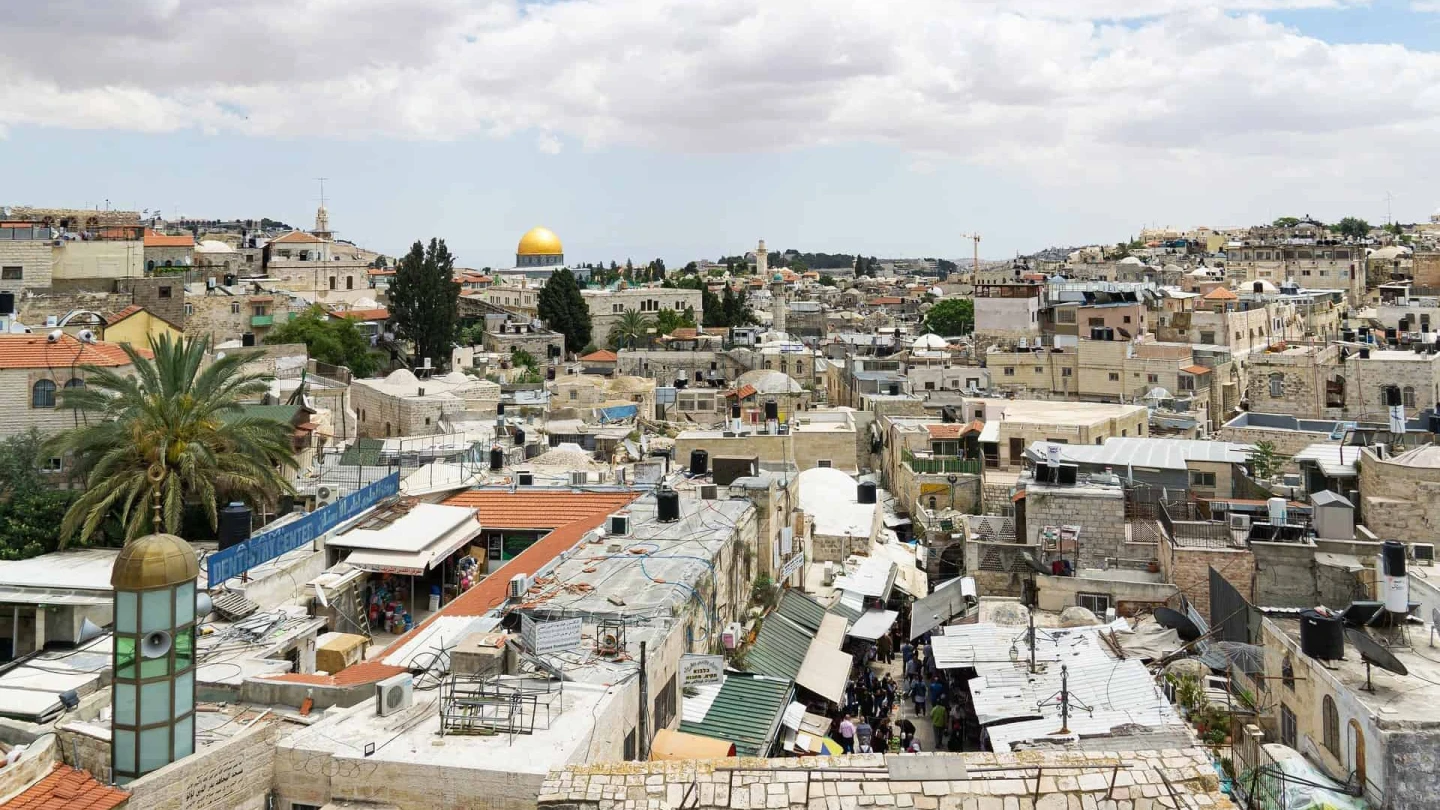
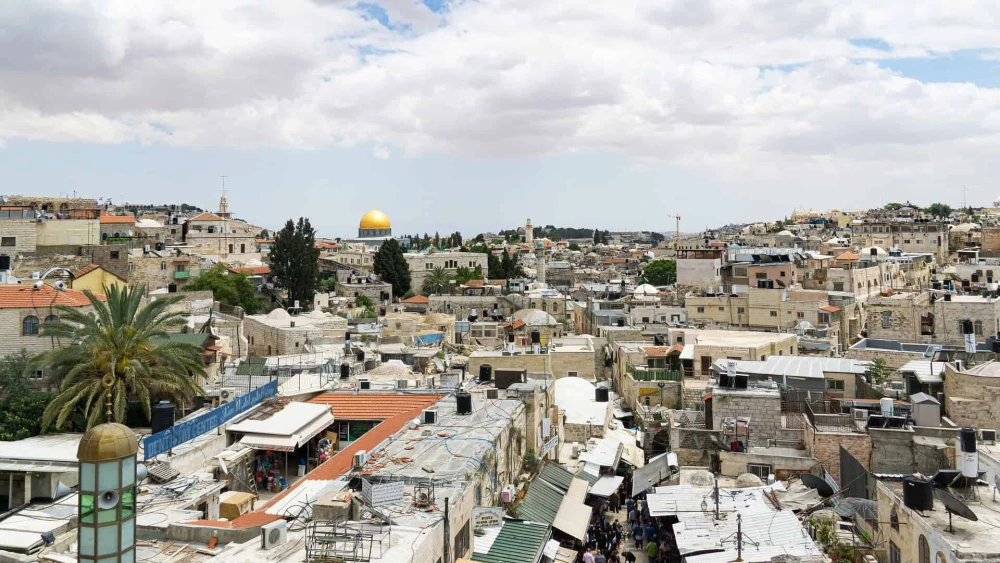

A few weeks ago, a rabbi came to my home to perform the circumcision of my newborn son. During our conversation, he remarked that many Israelis assume circumcision is practiced primarily by Jews. Then he paused and said, “But I know the Tigrinya also practice circumcision in Eritrea.”
That brief exchange stayed with me because it revealed how little most Israelis know about the Tigrinya people and their Orit tradition (a canon of biblical scriptures). Circumcision is only one example of a wider worldview shaped by the Tabot (a representation of the Ark of the Covenant), the Orit and Jerusalem.
The Tigrinya have preserved an Orit-centered religious tradition in which the Tabot occupies the spiritual center of religious life. Jerusalem is regarded not as a distant foreign city but as part of their own civilizational inheritance.
That conversation with the rabbi inspired me to write this essay. While Israelis understandably view Iran through the lens of national security, few realize that another ancient civilization on the Red Sea also sees Jerusalem as part of its own identity and Iran’s imperial expansion as an existential threat to its historical and strategic future.
To many Israelis, Iran represents an existential threat because of its declared objective of eliminating the Jewish state. For the Tigrinya of Eritrea and northern Ethiopia, the Iranian threat is connected to a much older memory: The struggle for control of the Red Sea and an Orit tradition that places Jerusalem at the center of their civilization.
The struggle for the Red Sea did not begin with the Houthis.
In the sixth century, the Aksumite Empire, whose heartland was home to the ancestors of today’s Ge’ez/Tigrinya people, confronted the Sassanian Persian Empire in a contest over South Arabia and the Bab el-Mandeb strait. Both understood the same strategic reality: whoever controlled the southern gateway to the Red Sea controlled a vital geopolitical corridor.
Fifteen centuries later, the geography has not changed. Through its Houthi proxies, Iran has pushed its influence back to the Bab el-Mandeb, bringing Persian power once again into the ancient maritime backyard of Aksum. To the Tigrinya, this is not merely a new geopolitical contest; it is the return of an old struggle over the same crossroads that shaped their history.
The second dimension of this story is even less understood.
The religious tradition of the Tigrinya cannot be fully understood through conventional categories alone. Its lived practice preserves a distinctive Orit tradition: Circumcision, the centrality of the Tabot, the authority of the Orit, Old Testament laws and rituals, and the enduring significance of Jerusalem form an integrated religious tradition.
For the Tigrinya people, Jerusalem is not simply the birthplace of Christianity. It is part of their sacred inheritance.
This creates a rarely recognized civilizational bond with the Jewish people. Both peoples view Jerusalem not merely as territory but as central to their collective identity. That shared attachment has geopolitical consequences.
The leadership of the Islamic Republic of Iran has consistently defined Jerusalem as central to its ideological struggle with Israel. Its opposition to Jewish sovereignty over the city has shaped decades of regional policy, proxy warfare and strategic messaging.
For the Tigrinya, this raises a larger question: If Jerusalem forms part of their own civilizational inheritance, and if the Red Sea once again becomes a central arena of Iranian influence, can they remain indifferent?
From a Tigrinya perspective, the answer is no.
Iran’s march to the Red Sea is not just Israel’s nightmare. It is a growing danger for the Tigrinya people as well. Tehran’s Islamist revolutionary project is extending its reach toward a homeland that has guarded the southern Red Sea for centuries; the homeland of a proud people whose Orit heritage places Jerusalem at the very heart of their historical memory and identity.
For Israel, recognizing the Tigrinya is not only an act of historical appreciation but a strategic opportunity. Few peoples combine an attachment to Jerusalem with a homeland positioned at the gateway of the Red Sea.
The deeper reality is that both civilizations have preserved ancient biblical traditions and regard Jerusalem as inseparable from their identity. The Tigrinya combine this attachment to Jerusalem with a homeland overlooking the Bab el-Mandeb, creating a rare convergence of faith and geography that gives them a distinctive place in Red Sea history.
Bab el-Mandeb, Aksum, the Orit, the Tabot and Jerusalem are not separate chapters of history; they are parts of a single civilizational story. Understanding one without the others is impossible.
Much of the world’s attention remains focused on Iran’s nuclear ambitions and the existential threat they pose to Israel. But the consequences of a nuclear-capable Iran extend beyond Israel, reaching the Red Sea and the Horn of Africa, where an ancient people preserves a tradition that regards Jerusalem as part of its own sacred inheritance.
Today, this ancient civilization faces an unprecedented crisis. Tigray remains scarred by devastating conflict, while Eritrea suffers under a totalitarian regime enforcing indefinite national service akin to modern slavery. Tragically, abandoning its historic connection to Jerusalem and the Red Sea, Eritrea’s dictator has aligned with Iran and its proxies, deepening his anti-American and anti-Western orientation.
If Jerusalem falls, the Orit civilization of the Horn of Africa loses part of its own inheritance. If the Bab el-Mandeb falls under hostile domination, Israel loses its southern strategic shield.
The destinies of the Jewish people and the Tigrinya have therefore become intertwined; not because of modern diplomacy, but because history placed both civilizations at opposite ends of the same sacred corridor.
The struggle over Jerusalem and the struggle over the Red Sea have never been separate stories. They are two fronts in the same civilizational narrative, linking an ancient people of the Levant with an ancient people of the Horn of Africa through a shared attachment to Jerusalem and a shared stake in the security of the Red Sea.



Get the latest updates in our WhatsApp group.







© All rights to the original article belong to the source. Din Online shows a headline, an excerpt and a link only. The objectivity rating is computed automatically and is an estimate only.
Discussion
No comments yet — be the first to comment.