Katz’s police plan for Judea and Samaria: A step toward sovereignty—or politics?
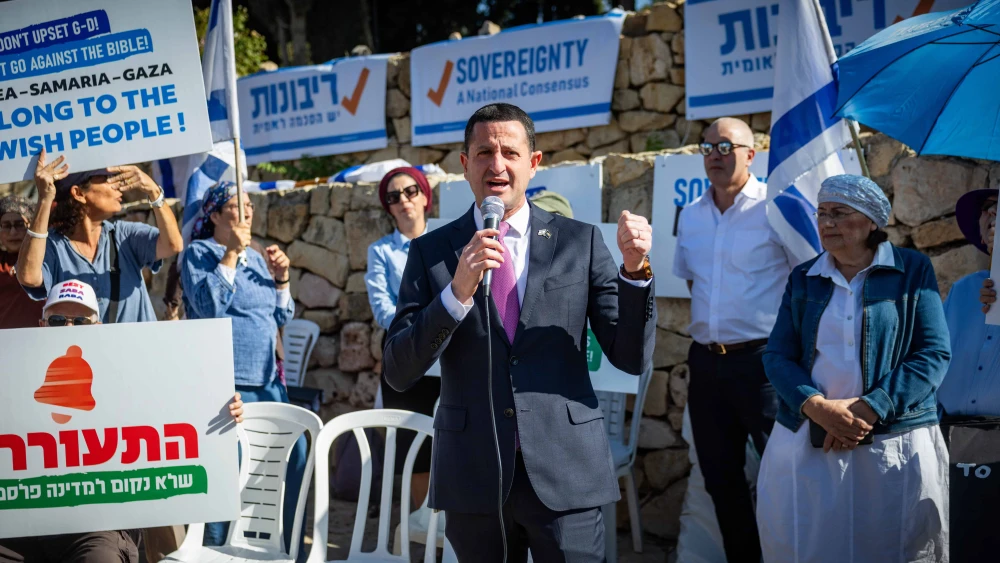

Defense Minister Israel Katz on Friday instructed the IDF to prepare a plan to transfer civilian law-enforcement responsibilities in Judea and Samaria to the Israel Police, as is the case elsewhere in Israel. The IDF would continue to focus on combating Palestinian terrorism and defending Israeli communities and borders.
Under the existing setup, Israeli civilian institutions operate in Judea and Samaria alongside the IDF, which retains responsibility for civilian law enforcement and other aspects of administration in the territory.

Transferring civilian law enforcement to the police would not, by itself, change the underlying legal status of Judea and Samaria or transfer the IDF’s responsibility for security in the territory.
The proposal was praised by lawmakers and activists who support Israeli sovereignty in Judea and Samaria, viewing it as a step toward greater Israeli control over civilian affairs in the region.
The Palestinian Authority immediately condemned the announcement, with Vice President Hussein al-Sheikh saying on X that it violated international law, international resolutions and signed agreements, and sought to impose what he described as illegitimate Israeli sovereignty over the West Bank.
Yehudit Katsover and Nadia Matar, the heads of the Sovereignty Movement, see the proposal as another practical step toward greater Israeli governance in Judea and Samaria, even without a formal change in Israel’s legal status there. They explained to JNS that transferring law enforcement from the military to a civilian authority would strengthen Israeli governance while allowing the IDF to focus on its “true mission” of providing security and combating terrorism.
“After decades in which the military has been responsible for law enforcement, the enforcement mechanism is now being transferred to civilian hands,” they said. “This represents another layer of sovereignty in practice, even if not yet formally.”
They described the move as “another step in chipping away at the anomalous military rule that has governed more than half a million Israeli citizens in Judea and Samaria for nearly 60 years.”
They said they hope the next step will be to transfer law enforcement involving both Jewish and Arab residents to the Israel Police, which they described as a move toward “full Israeli responsibility for the territory, the dismantling of the Palestinian Authority, and the application of Israeli sovereignty.”
Katsover and Matar called Katz’s decision “an important step toward equalizing the civil rights of the residents of Judea and Samaria with those of all other Israeli citizens.”
Religious Zionism Party Knesset member Ohad Tal told JNS that the proposal would bring the treatment of Israeli residents in Judea and Samaria closer to that of Israelis elsewhere in the country by placing greater civilian law-enforcement authority in the hands of the Israel Police. He described the change as an important step toward the practical application of Israeli sovereignty.
Tal explained that for nearly 60 years, Judea and Samaria have remained under military control, with the IDF Central Command serving as the governing authority and the police operating under its direction and guidelines. He said Katz’s proposal would further advance the practical application of Israeli sovereignty on the ground.
“An Israeli citizen living in Judea and Samaria deserves to have the police operate in exactly the same way as they do in ‘smaller Israel.’ The law in Beit El must be the same as the law in Tel Aviv! The law in Ma’ale Adumim must be the same as the law in Netanya!” he said.
Yisrael Ganz, head of the Binyamin Regional Council and chairman of the Yesha Council, focused on the practical and security implications of the proposal. He welcomed the transfer as a long-overdue move that would put criminal investigations and enforcement involving Israeli communities in the hands of the Israel Police, allowing the IDF to concentrate on protecting communities and combating terrorism rather than performing routine policing duties.
“I commend Defense Minister Israel Katz for the important and long-overdue decision to transfer responsibility for law enforcement in Israeli communities in Judea and Samaria to the Israel Police. Criminal activity must be investigated, prosecuted and dealt with by the police and law enforcement authorities, just as it is everywhere else in the State of Israel.”
Ganz added that the change should be followed by broader political steps, including repealing the Oslo Accords and applying Israeli sovereignty in Binyamin, Judea and Samaria.
‘Significantly greater funding required’
However, Maurice Hirsch, director of the Initiative for Palestinian Authority Accountability and Reform at the Jerusalem Center for Security and Foreign Affairs (JCFA) and former director of the Military Prosecution for Judea and Samaria, told JNS that while transferring civilian law enforcement to the police is the correct approach, he does not view it as a step toward Israeli sovereignty.
He said the change would bring greater normalcy to the lives of Israelis in Judea and Samaria, but argued that its implementation would require significantly greater funding, manpower and equipment for the police. Hirsch said the basic division of responsibilities is straightforward: Israeli police should enforce the law against Israeli citizens, while the IDF should continue providing perimeter and security support. The challenge, he explained, is that the police force has not expanded sufficiently to keep pace with the growth of the Israeli population and communities in Judea and Samaria.
He pointed to the recent confrontation in Qusra, a Palestinian village in Samaria where Israeli civilians established an unauthorized outpost, as an example of how the system could work, saying the IDF should have provided perimeter security while police or Border Police officers entered the area to arrest Israelis suspected of criminal activity.
Hirsch also questioned Katz’s motivations, saying the proposal has become entangled in political considerations involving Katz and National Security Minister Itamar Ben-Gvir. He noted that he personally had worked on the same idea in the early 2010s, but that previous efforts repeatedly stalled over disputes between the Defense Ministry and the ministry responsible for the police over funding, personnel and jurisdiction. According to Hirsch, the police cannot effectively assume the additional responsibility without receiving the budget, equipment and manpower needed to carry it out.
He said the current proposal faces the same practical obstacle, while also being shaped by political considerations. Hirsch suggested that Katz does not want to bear responsibility for issuing administrative-detention orders against Israelis, which allow suspects to be held without criminal charges or trial on security grounds, while Ben-Gvir would be reluctant to oversee arrests of Israelis accused of targeting Arabs. In his view, the timing of Katz’s announcement, amid the tensions in Qusra, reflects those competing political interests more than a genuine effort to change the system.
“Yes, it is the right move. And it would bring additional normalcy, which could be erroneously understood as sovereignty, to the Israelis living in Judea and Samaria. But at the moment, it’s just cheap political maneuvering by Katz, with very little real chance of realization,” Hirsch said. “I personally don’t think it contributes to sovereignty in any way, shape or form.”
Judea and Samaria District Commander Deputy Commissioner Moshe Pinchi said the growth of the Israeli population in Area C, including the expansion of agricultural farms outside established communities, requires changes to the current law-enforcement structure. He said civilian enforcement responsibilities should be transferred to the Israel Police, provided the force receives the necessary resources, personnel, deployment and authority to carry them out.
Pinchi also called for the permanent institutionalization of the interagency “Task Force Command,” which brings together the Shin Bet, Israel Police and IDF Central Command to address and prevent incidents of extreme violence in Judea and Samaria. He said the framework, established at the prime minister’s direction, has proven effective in areas where it has operated in recent months.
“These are significant and necessary steps to thwart terrorism and hostile terrorist activity, strengthen governance, improve services to citizens and reinforce the rule of law in Judea and Samaria, while freeing the IDF to carry out its primary missions,” Pinchi said.



Get the latest updates in our WhatsApp group.







Defense Minister Israel Katz has instructed the IDF to prepare a plan to transfer civilian law-enforcement responsibilities in Judea and Samaria to the Israel Police, allowing the IDF to focus on combating terrorism. This proposal is seen by some, including the Sovereignty Movement, as a practical step toward greater Israeli governance and "another layer of sovereignty in practice, even if not yet formally."
- Lawmakers like Ohad Tal and Yisrael Ganz support the move, viewing it as a way to equalize civil rights for residents and allow the police to handle criminal activity.
- The Palestinian Authority condemned the announcement, calling it a violation of international law.
- Maurice Hirsch, a legal expert, believes the transfer would bring normalcy but not advance sovereignty, questioning Katz's motivations as "just cheap political maneuvering" and highlighting the need for significant police funding and resources.
- Deputy Commissioner Moshe Pinchi supports the transfer, provided the police receive necessary resources, and also advocates for the institutionalization of an interagency task force to address violence.
© All rights to the original article belong to the source. Din Online shows a headline, an excerpt and a link only. The objectivity rating is computed automatically and is an estimate only.
Discussion
No comments yet — be the first to comment.