Lessons Israel still hasn't learned from the Ukraine war


On May 3, Prime Minister Benjamin Netanyahu ordered the creation of a special counter-drone project, allocating 2 billion shekels ($670 million) for the initiative. His announcement came exactly one week after a Hezbollah drone killed IDF Sgt. Idan Fooks, 19, and wounded six others, four of them seriously, in Southern Lebanon.
What stands out about the announcement is its late date. The drone that killed Fooks has been used in the Russia-Ukraine war since 2024.
 Xiaomi Smart Band 10 Review: The Ultimate Budget Fitness Tracker for 2026
See the review →
Xiaomi Smart Band 10 Review: The Ultimate Budget Fitness Tracker for 2026
See the review →
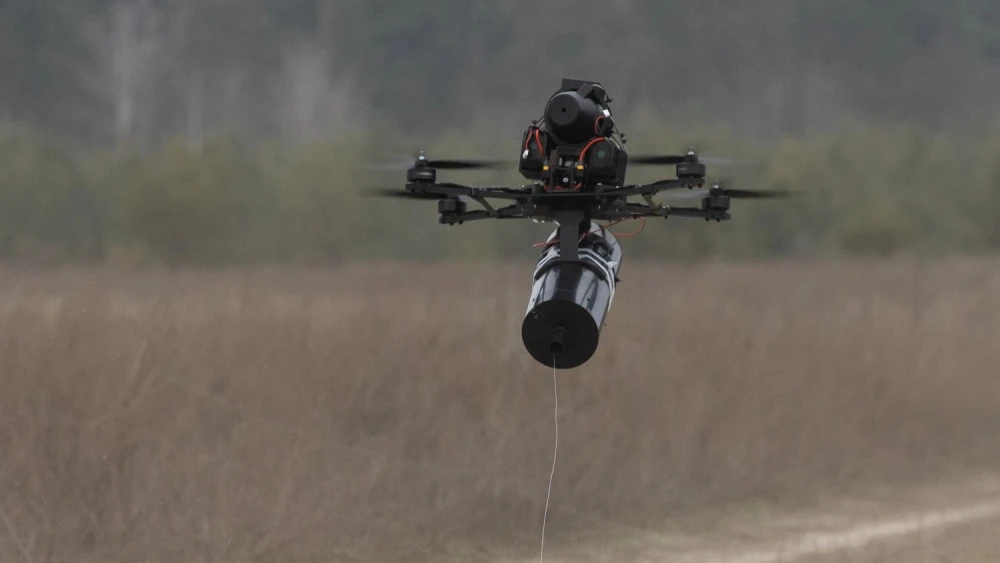
Sgt. Fooks was killed by a First Person View (FPV) drone operated by a fiber-optic cable. As the drone flies, the wire unspools. The physical link between aircraft and operator renders the drone immune to electronic jamming. The downside is its limited range, about 9 miles. Russia and Ukraine are pushing the envelope on this limitation. In May 2025, Ukrainian drone operators hit a Russian tank at a record distance of 26 miles.
Fiber-optic FPV drones have become a staple of the war in Ukraine. So pervasive is their use that forests, buildings and fields are covered in used fiber optic cables. Images of the vast, spider web-like netting are commonplace on the internet, making Israel’s delayed reaction harder to justify.
“Israel’s response has been slow in the past, is slow in the present, and will be slow in the near future,” Ran Baratz, who teaches military doctrine at the IDF’s National Defense College and founded the Hebrew language magazine Mida, told JNS.
Israel’s Defense Forces had 19 months before the Oct. 7, 2023, Hamas invasion to learn from the Ukrainian example. “The fact that there were active drones on Oct. 7, and we weren’t prepared for any such threat, neither on the static border, nor when we started the operation, shows that we just didn’t take it seriously,” Baratz said.
Making Israel’s failure to prepare still less defensible is that Hamas used fiber-optic drones on Oct. 7 to target observation towers. The Israeli State Comptroller’s Office twice warned of the drone threat. In 2017, it said Israel wasn’t prepared for the emerging danger, and in 2021, it issued a follow-up report criticizing the snail’s pace at which Israel addressed the problem.
“The issue is the bureaucracy,” Baratz said.
The DDR&D (Directorate of Defense Research and Development), the governmental body in charge of developing military weapon systems, moves at a deliberative pace. When it farms out projects, it chooses Israel’s largest companies, which are also slow-moving. The company develops a solution, sends it back to the DDR&D, which studies it and then sends back comments. “It’s a big bureaucratic mess,” Baratz said.
“The soldier on the ground will see the results of those 2 billion [shekels Netanyahu allocated for a counter-drone initiative] two years after it was given, which is far from satisfactory in any military sense.”
Israel’s problem is better described as “an adaption curve” than a learning curve, Baratz said. The IDF understands the danger from drones. Its ability to adapt is what’s slow. The entities involved are just too cumbersome. Decision-making is delayed. A “slimmer” security establishment is needed, he argued.
Israel should do it the “Israeli way,” relying on small, innovative companies that look at problems from a different angle and develop ingenious solutions, he said. They then take those solutions to the bigger companies with large production lines that can produce at scale.
Israel’s military gives the impression that the Ukraine war is under intense scrutiny. Reports have been filed, seminars held. Baratz is dismissive. “The IDF is pretty good at PR,” he said. “If Israel’s military was serious, every high-ranking officer would be involved. Call a few and ask them if they’re part of an implementation of Ukraine’s lessons. You will see it’s not as serious as they make it out to be.”
Baratz is convinced that the Ukraine war’s most important lesson has not been absorbed, namely, the volume of drones needed in a future conflict. Israel specializes in producing small numbers of expensive, high-tech weapons. While they’re extremely effective, it’s the inexpensive, off-the-shelf drone that dominates Ukraine’s front lines. In 2024, Ukraine produced 2.2 million FPV drones. In 2025, the number surpassed 3 million.
“You can’t go into a war with 200,000 or 300,000 drones and a production line that produces 100,000 a year, which is what the Israelis are saying now,” Baratz said. “It will be depleted almost instantaneously if a war breaks out.”
Israel needs to change its mindset and look at the drone as a munition, more a bullet than a weapon. “Once you realize that, you understand drones need to be produced in the millions,” he said.
Israel isn’t the only country struggling to adapt to a drone-saturated battlefield. The United States is also playing catch-up. In 2025, the U.S. announced a Drone Dominance Program, a $1 billion-plus initiative. Yet, it has been forced to buy off-the-shelf, made in China drones for training purposes.
The U.S. is still licking its wounds from its defeat by Ukrainian drone units during a spring training exercise in Germany. And in May of last year, 12 NATO countries saw their forces beaten by Ukrainian drone operators at an Estonian exercise. “Multiple sources told the story of one commander, who observed the drill and concluded, ‘We are f—,’” The Wall Street Journal reported.
“I’m not downplaying the threat. It’s a very effective weapon,” Baratz said. “The next generation of drones will be still more effective, because they won’t need guidance. They will be given a mission and then they will carry it out using artificial intelligence. They will be autonomous.”
Intercepting long-range missiles was once thought to be unsolvable, until it was, Baratz said. The drone, too, is a “solvable challenge.” Once solved, the enemy is sure to introduce another. “It’s a race. And the only thing that’s important in a race is to be fast.”



Get the latest updates in our WhatsApp group.







Israel is criticized for its slow adaptation to new drone threats, despite being considered militarily innovative. This delay was highlighted on May 3 when Prime Minister Benjamin Netanyahu ordered a 2 billion shekel ($670 million) counter-drone project, a week after a Hezbollah fiber-optic FPV drone killed an IDF soldier and wounded six others in Southern Lebanon. These drones, immune to electronic jamming, have been extensively used in the Russia-Ukraine war since 2024, a conflict Israel has reportedly failed to learn from effectively.
“Israel’s response has been slow in the past, is slow in the present, and will be slow in the near future,”
said Ran Baratz, a military doctrine instructor at the IDF’s National Defense College. Hamas also utilized fiber-optic drones on October 7, 2023, to target observation towers, a threat the Israeli State Comptroller's Office had warned about in 2017 and 2021. Baratz attributes this slow response to bureaucracy within the Directorate of Defense Research and Development (DDR&D) and its reliance on large, slow-moving companies. He advocates for a “slimmer” security establishment that leverages small, innovative Israeli companies to develop solutions quickly and emphasizes the need for Israel to produce drones in the millions, viewing them as munitions rather than expensive, high-tech weapons, to prepare for future conflicts.
© All rights to the original article belong to the source. Din Online shows a headline, an excerpt and a link only. The objectivity rating is computed automatically and is an estimate only.
Discussion
No comments yet — be the first to comment.