Netanyahu's congressional call for a NATO-style alliance to counter Iran gives way to a Sunni state alliance

When Israeli Prime Minister Benjamin Netanyahu stood at the podium before a joint session of the U.S. Congress in July 2024, he laid out a bold vision for the future security architecture of the Middle East. Confronting what he described as an existential struggle between civilization and barbarism, Netanyahu called on Washington to help build a permanent regional defense coalition, a NATO-style alliance designed explicitly to neutralize the existential threat posed by the Islamic Republic of Iran.
“In the Middle East, Iran’s axis of terror confronts America, Israel and our Arab friends,” Netanyahu told lawmakers. “America and Israel can forge a regional security alliance in the Middle East to counter the growing Iranian threat. All countries that are at peace with Israel and all those countries that will make peace with Israel should be invited to join this alliance.”

Netanyahu dubbed this vision the “Abraham Alliance,” pointing to the historic April 2024 interception of over 300 Iranian drones and missiles by an ad hoc coalition of American, Israeli, Arab and Western forces as proof that such a coalition was not merely a theoretical pipe dream, but an operational necessity.
At the time, the geopolitical logic seemed central. For decades, Iran had been creating a Shi’ite terror crescent, stretching from Tehran through Baghdad, Damascus and Beirut, down to the Bab el-Mandeb Strait in Yemen, that was destabilizing the entire Middle East. The regime’s ring of fire, powered by proxies such as Hezbollah, Hamas, Iraqi Shi’ite militias and the Houthis, threatened the Jewish state and moderate Sunni Arab regimes alike. The ultimate counterweight appeared to be a unified front led by Israel—the region’s acknowledged military and technological powerhouse—alongside key Arab signatories of the Abraham Accords and, crucially, the Kingdom of Saudi Arabia.
Fast forward to the present reality, and the regional chessboard has taken a dramatic, unexpected turn. Rather than an Israel-anchored “Abraham Alliance,” what has emerged on the ground is a sweeping mutual defense arrangement forged entirely among major Sunni Muslim powers—specifically Saudi Arabia, Turkey and Pakistan.
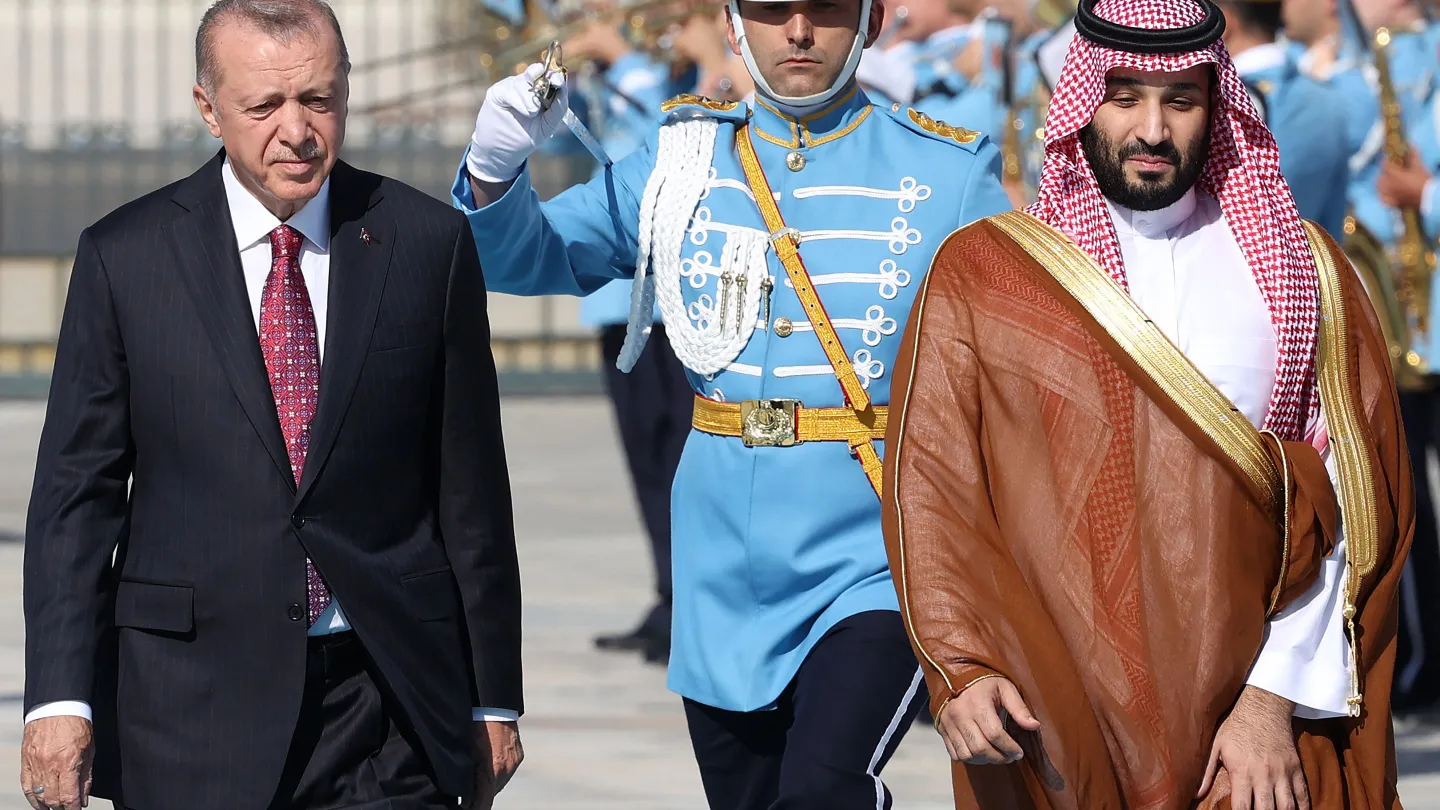
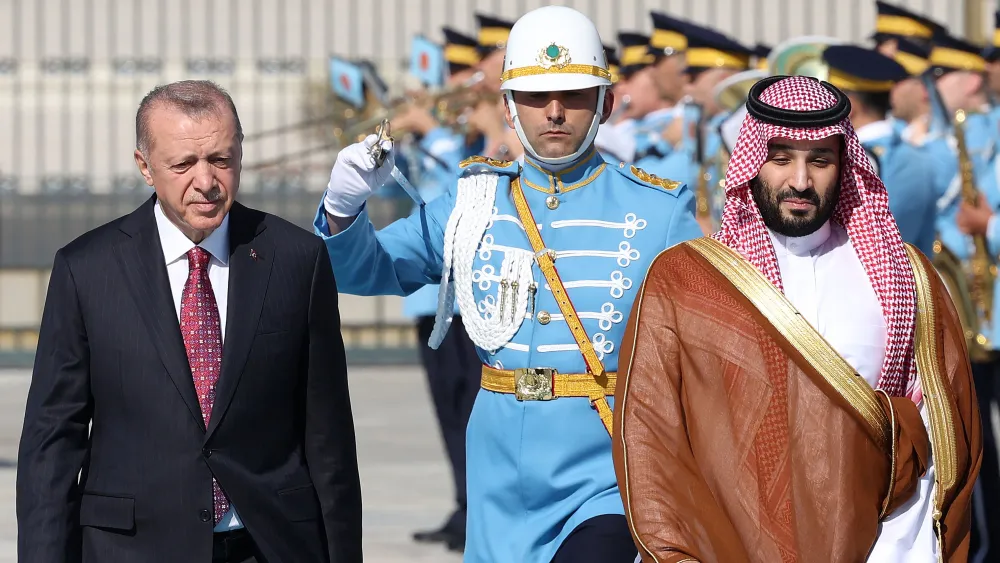
In a development that has sent shock waves through international diplomatic circles, Saudi Arabia, Turkey and Pakistan recently signed a comprehensive mutual defense agreement. The pact explicitly declares that an armed attack against any one of the three nations will be regarded as an attack against all three, a provision that Turkish Foreign Minister Hakan Fidan noted is technically equivalent to NATO’s famous Article 5 collective defense clause.
The composition of this coalition has profound significance. Saudi Arabia is the financial heavyweight of the Arab world and the custodian of Islam’s holiest sites; Turkey brings NATO’s second-largest standing military to the table; and Pakistan is the Muslim world’s sole nuclear-armed state. All three are prominent Sunni-majority nations.
The catalyst for Riyadh’s turn toward Ankara and Islamabad—leaving Israel on the sidelines of its primary formal alliance structure—lies in the escalating regional violence perpetrated by Iran’s proxy network. Despite heavy blows dealt to Iran’s offensive capabilities over months of conflict, Iranian-backed Houthi rebels in Yemen have stepped up direct cross-border attacks on Saudi territory, alongside attacks from Iranian-backed militias in Iraq. Fearing an impending, large-scale direct strike from Tehran or its proxies, Saudi Arabia sought immediate, concrete security guarantees.
Strategic implications and caution for Jerusalem
For Israel, this new Sunni alignment presents a complex strategic calculus that requires careful navigation. While Riyadh’s primary motivation is containing Tehran, Jerusalem must watch this alliance closely. Any defense arrangement heavily influenced by Turkey demands deep scrutiny, given President Recep Tayyip Erdoğan’s long-standing hostile rhetoric toward Israel.
President Donald Trump previously noted that his administration worked to keep Turkey from entering the broader regional war, a scenario where Turkish forces could have targeted Israel directly. Yet, within the framework of this new Sunni pact, Turkey’s military weight is now re-anchored against a different target. Instead of directing its forces southward, Turkey may ultimately be drawn into confronting Israel’s primary strategic adversary, Iran, should Tehran or its proxies attack Saudi Arabia.
At the same time, this pact does not mean Saudi Arabia has abandoned its long-term trajectory toward normalization with Israel. Riyadh remains firmly opposed to Iranian hegemony and continues to operate within the broader orbit of states aligned with Washington. Signing a mutual defense agreement with Turkey and Pakistan does not preclude Saudi Arabia from pursuing future diplomatic ties with Israel, nor does it automatically turn the pact as a whole into an active offensive threat to the Jewish state.
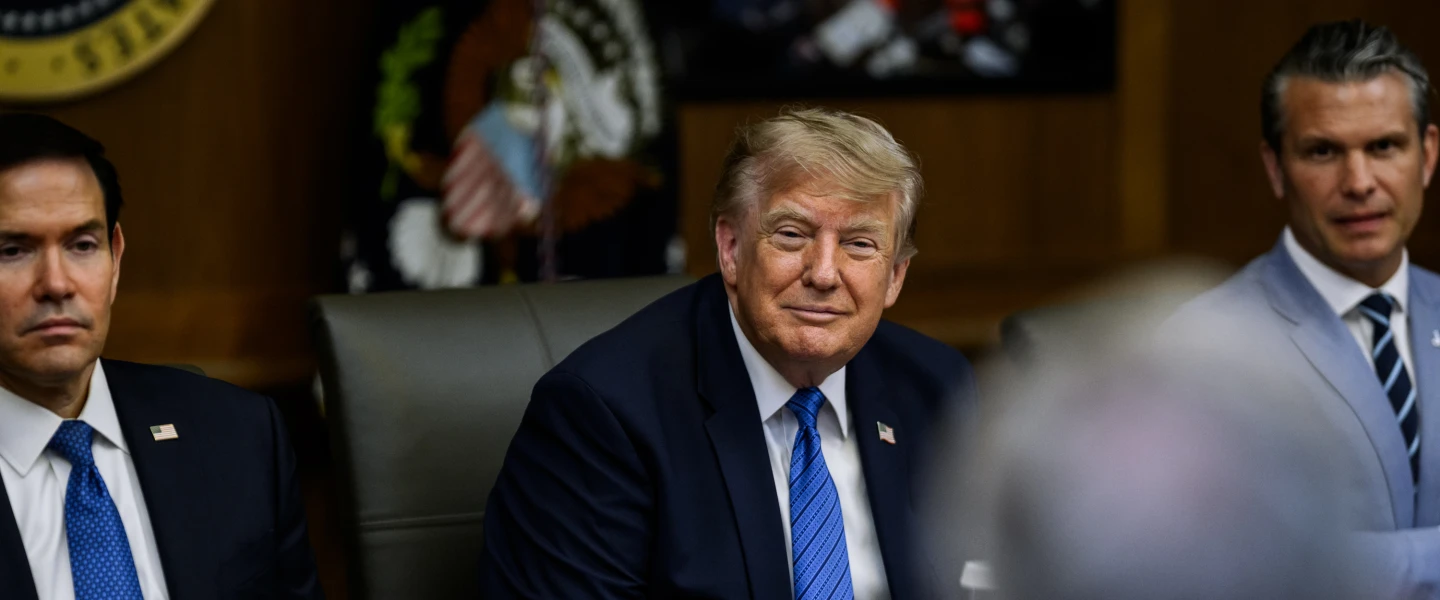
Furthermore, there is reason to believe the United States is not merely an observer, but potentially a quiet facilitator of this dynamic. Washington maintains strong ties with Ankara, Riyadh and Islamabad, with President Trump frequently citing his strong personal relationships to both Erdoğan and Pakistan’s military leadership. By supporting a Sunni defense bloc, the U.S. establishes a powerful regional containment mechanism against Iranian aggression without necessitating a heavier deployment of American ground forces.
The Shi’ite crescent vs the Sunni bloc
The geopolitical reality of the Middle East is being rapidly rewritten. For years, Iran’s strategy relied on exploiting regional divisions to build its Shi’ite terror crescent, encircling Israel and threatening Gulf monarchies through asymmetric proxy warfare. By weaponizing proxies across Lebanon, Syria, Iraq and Yemen, Tehran destabilized the region while keeping its homeland largely insulated from direct cost.
Today, that dynamic has inverted. The Iranian economy is on the brink of absolute collapse, its proxy network has been severely battered, and its strategic depth is eroding. Instead of confronting a fragmented Middle East, Tehran faces a dual front: on one side, an uncompromising Israeli military “locked and loaded” to defend its sovereignty; on the other, an emerging defense bloc of three major Sunni military powers backed by global weight.
While Prime Minister Netanyahu’s explicit vision of a formal “Abraham Alliance” with Israel at the center has evolved into a distinct Sunni state alliance, the strategic core of his message to Congress remains unchanged: The push to isolate and counter Iran has become the defining axis of Middle Eastern security. Whether through formal treaties or operational alignment, the nations of the region are recognizing that confronting Tehran’s destabilizing agenda is the nonnegotiable prerequisite for long-term regional stability.



Get the latest updates in our WhatsApp group.






In July 2024, Israeli Prime Minister Benjamin Netanyahu proposed a NATO-style "Abraham Alliance" to the U.S. Congress, aiming to counter Iran's regional threat. He stated, "America and Israel can forge a regional security alliance in the Middle East to counter the growing Iranian threat." This vision was inspired by the April 2024 interception of Iranian drones and missiles by a coalition including American, Israeli, and Arab forces. However, a new development has seen Saudi Arabia, Turkey, and Pakistan form a mutual defense agreement, effectively a Sunni axis, with a provision similar to NATO's Article 5.
- This new Sunni alliance, driven by Saudi Arabia's need for security against escalating Iranian proxy attacks, presents a complex situation for Israel.
- While Turkey's involvement requires scrutiny due to President Erdoğan's past rhetoric, the alliance's focus on containing Iran could align with Israel's strategic interests.
- The U.S. is seen as a potential quiet facilitator, supporting a regional containment mechanism against Iran without direct American ground forces.
- This shift counters Iran's long-standing strategy of a Shi'ite terror crescent, now facing a dual front from Israel and the emerging Sunni defense bloc.
© All rights to the original article belong to the source. Din Online shows a headline, an excerpt and a link only. The objectivity rating is computed automatically and is an estimate only.
Discussion
No comments yet — be the first to comment.