Netanyahu’s takedown of Barkat: A chronicle of a political elimination foretold

Shalom Yerushalmi is the political analyst for Zman Israel, The Times of Israel’s Hebrew current affairs website

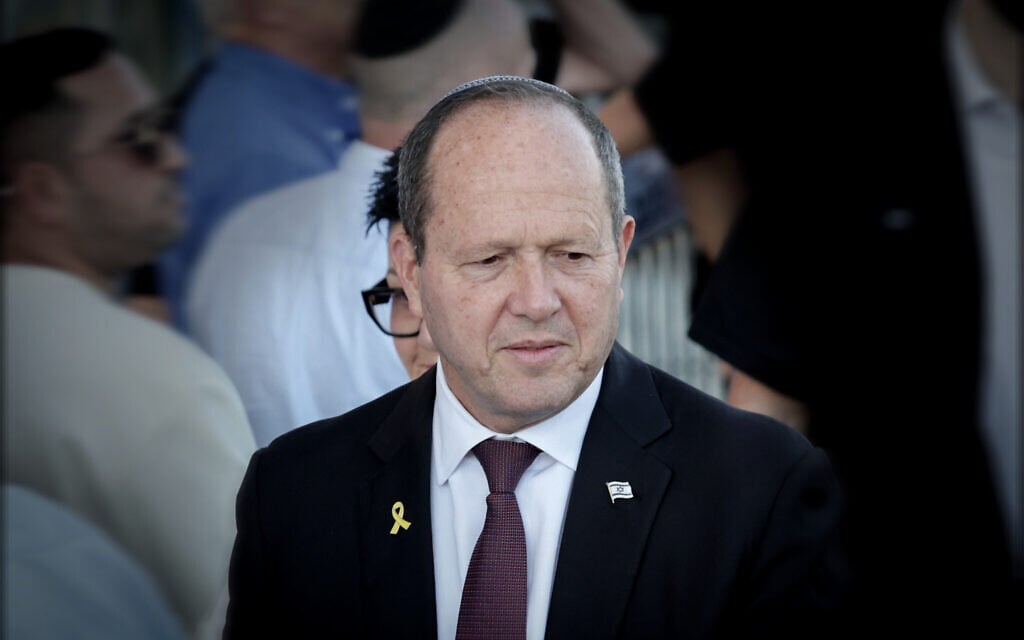
The script for the clash between Prime Minister Benjamin Netanyahu and Economy Minister Nir Barkat was written well in advance, and none of it should come as a surprise.
In their highly dysfunctional relationship, everything has unfolded with predictable precision. The trajectory has been clear and meticulously documented over the years — especially in the aftermath of the October 7 Hamas massacre — and the dramatic climax heading into the August 17 Likud party primaries shouldn’t shock anyone.
It is abundantly clear that Netanyahu is finally seizing the opportunity he has been waiting for: to throw Barkat under the bus, just like the premier did with all his other enemies, or at the very least relegate him to the margins of the party slate after years of systematically eroding his standing.
The schemes Barkat previously devised to remove Netanyahu from the premiership only fueled the prime minister’s boundless appetite for revenge. In Monday’s internal elections, both men will face their moment of truth. For now, the target is locked and the political hit job is well underway. We’ve watched it play out across television channels and social media all week.
The October 7 disaster found Barkat — a self-made tech billionaire who amassed a fortune as an early investor in Check Point Software before serving as mayor of Jerusalem — in a distinct state of mind. Like many Israelis, he simply could not fathom why Prime Minister Netanyahu didn’t immediately convene a special press conference and announce his resignation.
Barkat was already convinced back then that Netanyahu was a walking disaster and that every additional day he remained in power endangered the country. Barkat argued that Netanyahu’s conciliatory policy toward Hamas had led directly to the horrific catastrophe in the Gaza border communities and on every other front. The colossal failure, he told associates in private, would inevitably bring ruin upon Likud, as Netanyahu stood zero chance of reelection.

At the end of May 2024, Zman Israel — The Times of Israel’s sister site in Hebrew — reported on Barkat’s thinking and the practical steps he was initiating. Those who met him during those days encountered a man seething with rage at Netanyahu over the failure and tragedy, no less angry than the speakers addressing the mass protests against the judicial overhaul on Tel Aviv’s Kaplan Street a year earlier, the epicenter of the movement against the coalition.
Barkat believed the crisis offered a natural opening for him to oust the man responsible for everything that had happened. He wagered that public fury at Netanyahu would only intensify, seeping into the right-wing electorate and Likud voters, ultimately paving Barkat’s own path to the leadership of both the party and the government.
At the time, Barkat had a clear strategy: push for early Likud primaries, where he would easily defeat Netanyahu, aided in no small part by his virtually unlimited financial resources.
Barkat firmly believed Likud members would embrace the alternative he offered rather than allow themselves to be dragged toward political oblivion. According to internal polls he presented to Likud Knesset members and prominent party activists — of whom he commands a loyal following — Barkat was the only figure capable of securing 30 seats and preserving right-wing rule for the long haul.

Simultaneously, Barkat was quietly engineering a constructive vote of no-confidence that would allow the Knesset to topple a sitting prime minister, but only if a majority simultaneously votes to install a specific alternative leader, thereby replacing the government without triggering a snap general election.
Barkat planned to bring down the government in cooperation with the opposition and rally behind the candidacy of senior Likud MK Yuli Edelstein, then the chairman of the Foreign Affairs and Defense Committee and a former Knesset speaker. Edelstein has long been a formidable internal opponent of Netanyahu.
Following this maneuver, Barkat planned to hold Likud primaries a year later, where he expected to sweep the board.
That plan never materialized. Edelstein told me at the time: “It has no chance whatsoever. Everyone in our party is afraid to go against Netanyahu.”
Barkat’s alternate plans also fizzled. Netanyahu began to politically recover and mount a counter-offensive. He successfully cultivated a narrative among his base that he was the victim of a trap laid by the senior defense establishment, and the Likud grassroots increasingly rallied back to his side.

Barkat, whom Netanyahu had deliberately excluded from any influence over diplomatic or security affairs, refusing even to appoint him as a guest observer in the security cabinet, still tried to stake out independent positions and attack Netanyahu from the right, per his advisers’ instructions. But every such statement came back to hit Barkat like a boomerang.
In an interview with the fiercely pro-Netanyahu, right-wing Channel 14 on Wednesday, Barkat again claimed his past opposition toward Netanyahu had been purely substantive, reiterating his refusal to allow tens of thousands of Palestinian laborers back into Israel. He argued that Netanyahu was failing to remove bureaucratic hurdles to recruiting foreign workers from countries at peace with Israel.
Netanyahu responded through the Likud spokesperson’s office: “While the prime minister is leading the war effort in the face of enormous international pressure, Barkat is joining those who malign Prime Minister Netanyahu in order to win an embrace from the media.”
And there was more. Barkat met with Druze Likud activists early in the war and declared, “Netanyahu and Defense Minister [Yoav] Gallant are leftists disguised as right-wingers. They are cowards. [Hezbollah leader Hassan] Nasrallah can smell their weakness.” Netanyahu shot back harshly. “Barkat knows nothing and is only encouraging our enemies to get a headline,” the Prime Minister’s Office stated at the time.

Following that clash, Barkat gradually lowered his profile. He eventually realized this battle could cost him dearly, precisely because of Netanyahu’s resurgent popularity within the Likud base. He soon capitulated, pivoting to lavish the prime minister with effusive, sometimes embarrassing, praise — including this week — commending Netanyahu for his “wise and courageous diplomatic and security leadership.”
Barkat went even further, making a high-profile appearance at the Tel Aviv District Court where Netanyahu was testifying in his ongoing corruption trial. Barkat claimed on camera that the cases were fabricated and the trial was unnecessary. In a subsequent interview on Channel 12, Barkat even referred to Netanyahu as the “supreme leader.”
But the prime minister’s inner circle remembers everything and forgets nothing.
Last November, as the long primary campaign began with internal elections for party convention delegates, Barkat allied with his longtime rival, Regional Cooperation Minister Dudi Amsalem. Amsalem is a highly influential Likud power broker, particularly within the party’s powerful Jerusalem branch, and Barkat sought his help in a bid to seize control of the local apparatus.
Throughout that local contest, the prime minister’s son, Yair Netanyahu, sent messages from his home in Miami to prominent Jerusalem activists, demanding they not support “someone who wants to bring down my father.”

Netanyahu and his loyalists now want to add Barkat to the long list of senior figures who have been thrown under the bus and left to grope their way through the political wilderness — a list that includes Gallant, Edelstein, former ambassador to the UN Gilad Erdan — and many others over the years. As far as the Netanyahu camp is concerned, Barkat remains a clear and present danger.
In conversations Yair Netanyahu held with Likud activists in November, he reportedly argued that if the coming general election produces no decisive result, Barkat will once again move to oust Netanyahu simply to prevent Likud from ending up in the opposition.
On Monday, we will find out how the campaign against Barkat concludes. For now, unfortunately for him, another front has opened up: nearly all of the senior journalists at Channel 12, Israel’s most-watched mainstream commercial network, are hounding Barkat relentlessly.
The reason appears to be a bitter legal dispute currently being waged between Barkat and the network. Blow after blow is landing on Barkat from two opposing directions, and not all of it is being conducted strictly within the boundaries of journalistic or political ethics.

Barkat is now one of 33 ministers and MKs desperately fighting over just 15 or 16 remaining realistic spots on the Likud slate in the upcoming internal primary elections. In the previous primaries, he finished a respectable seventh, and he has worked the grassroots relentlessly ever since, signing up members and hosting lavish conferences.
Netanyahu, for his part, just delivered another calculated jab at Barkat. The only external candidate Netanyahu has so far reserved a guaranteed spot for on the Likud slate is Oren Dobronsky, a Silicon Valley tech entrepreneur and a star investor on Israel’s television show version of Shark Tank. Dobronsky occupies the exact high-tech innovator niche Barkat claims for himself.
Netanyahu also publicly announced that Dobronsky will serve as a minister in the next government. Anyone who thinks this is a random announcement with no connection to Barkat, just days before the primaries, should think again.

As a multimedia journalist, my job is to take the quality, fact-based journalism produced by The Times of Israel newsroom and make it accessible across every platform — from Instagram posts to podcasts to short-form videos.
This is how many, especially young people, consume news these days. But misinformation is rampant on social media. Our team at ToI produces accurate, responsible short-form reporting on Israel and the Jewish world.
If you believe in the importance of factual social media journalism, please consider joining our reader support group, The Times of Israel Community. Your financial support is essential to sustain responsible multimedia reporting.
— Gabriella Jacobs, multimedia journalist

We’re really pleased that you’ve read X Times of Israel articles in the past month.
That’s why we started the Times of Israel – to provide discerning readers like you with must-read coverage of Israel and the Jewish world.
So now we have a request. Unlike other news outlets, we haven’t put up a paywall. But as the journalism we do is costly, we invite readers for whom The Times of Israel has become important to help support our work by joining The Times of Israel Community.
For as little as $6 a month you can help support our quality journalism while enjoying The Times of Israel AD-FREE, as well as accessing exclusive content available only to Times of Israel Community members.
Thank you, David Horovitz, Founding Editor of The Times of Israel


Prime Minister Benjamin Netanyahu is actively working to politically sideline Economy Minister Nir Barkat ahead of the August 17 Likud party primaries, a move described as a "political elimination foretold." This action stems from Barkat's past attempts to oust Netanyahu, particularly after the October 7 Hamas attack, when Barkat privately argued that Netanyahu's policies led to the catastrophe and that he should resign. Barkat's strategy included pushing for early Likud primaries and engineering a constructive vote of no-confidence to replace Netanyahu with Yuli Edelstein, a plan that ultimately failed. Netanyahu's counter-offensive, coupled with his son Yair's direct intervention against Barkat, has significantly weakened Barkat's standing. Despite Barkat's recent efforts to praise Netanyahu and align himself, the prime minister's inner circle remains wary, viewing Barkat as a continued threat. Barkat is now contending for one of the limited realistic spots on the Likud slate amidst a campaign against him, including a legal dispute with Channel 12.
© All rights to the original article belong to the source. Din Online shows a headline, an excerpt and a link only. The objectivity rating is computed automatically and is an estimate only.
Discussion
No comments yet — be the first to comment.