Palestinian Authority banks to expedite 4.5-billion-shekel transfer to Bank of Israel, sources tell JNS
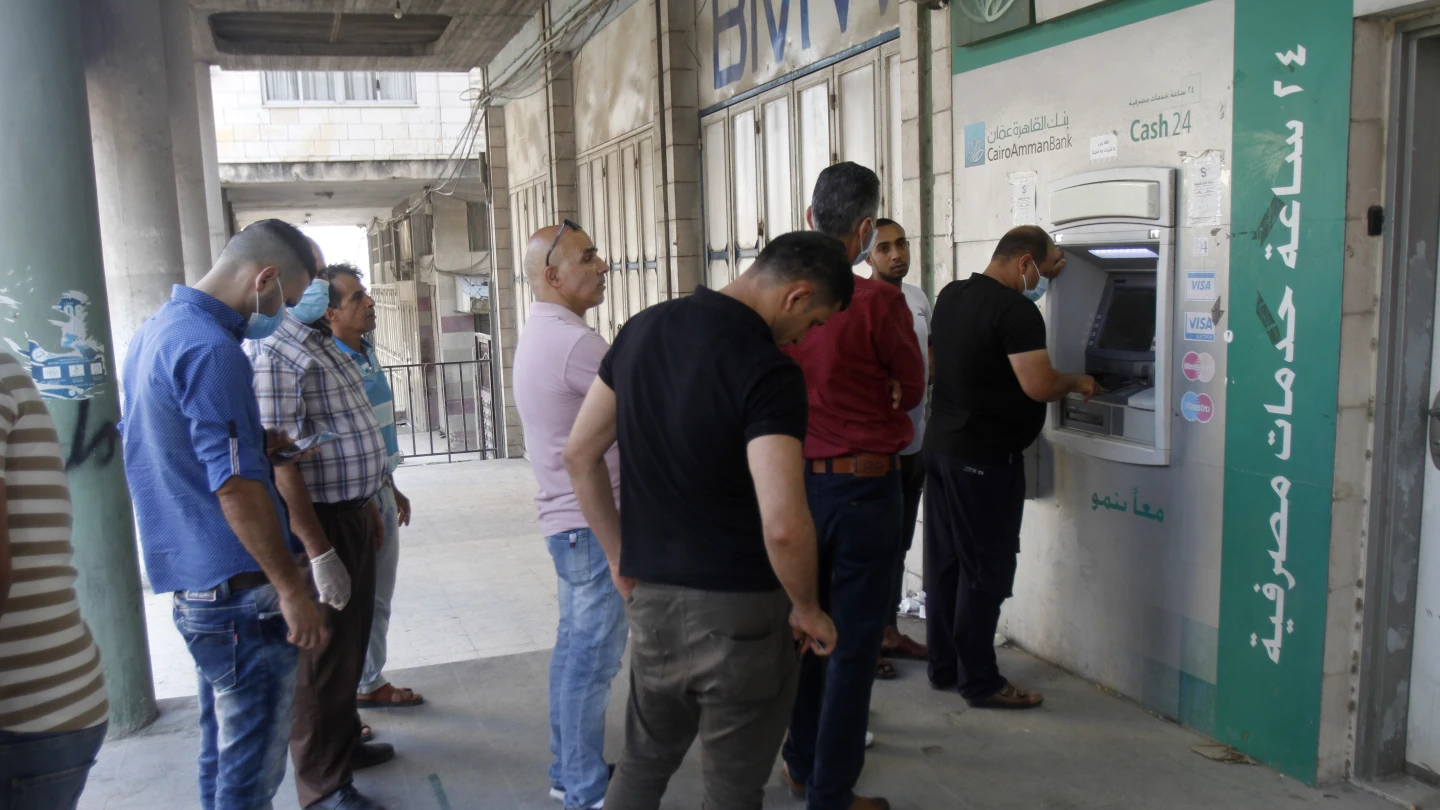
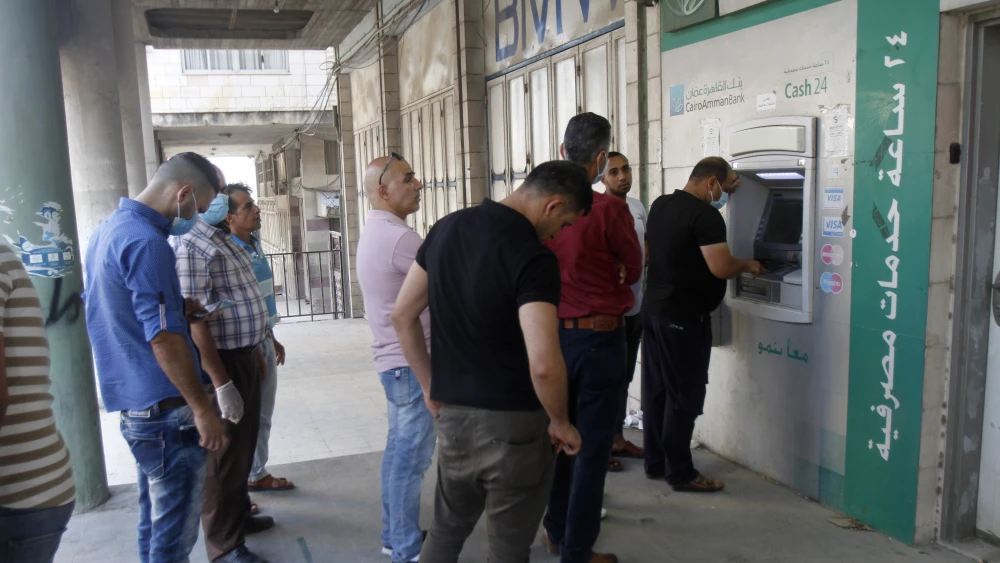
The Bank of Israel on Thursday declined to comment on a Palestinian Authority announcement that Israeli authorities had agreed to bring forward the transfer of some 4.5 billion shekels ($1.5 billion) in surplus cash accumulated in P.A. banks.
P.A. monetary chief Yahya Shunnar said on Tuesday that the decision moves up the fourth-quarter shipment of excess shekels to the Bank of Israel, crediting “intensive interventions” by the P.A. leadership in coordination with “international partners,” the P.A.'s official Wafa news agency reported.
The decision will “ease pressures resulting from the accumulation of excess shekels, improve banks’ ability to manage liquidity, support the needs of citizens and the private sector for banking services and enhance financial market stability during the current period,” he added, per Wafa.
Israeli officials have not publicly confirmed the decision to expedite the transfer, which sources told JNS was approved in recent days.
The P.A. announcement came as two Israeli banks are expected to end correspondent banking services provided to their Palestinian counterparts in the coming weeks, a move expected to cut Palestinian banks in Judea and Samaria off from the shekel-clearing system and disrupt cross-border payments and access to international banking channels.
Shunnar in the Wafa report described the expedited shekel transfer as an “urgent measure” rather than a fix, saying it underscored the need to reduce reliance on the shekel and expand the use of electronic payment methods.
Under agreements signed with Israel, Palestinian banks have no direct access to the Jewish state’s payment system and cannot clear shekel transactions on their own. They rely on the Bank of Israel to take in surplus banknotes and credit their accounts, and on Israel Discount Bank and Bank Hapoalim for correspondent clearing and cross-border payments.
The Bank of Israel accepts up to 18 billion shekels a year in notes, while an economist who has advised the P.A. told the Associated Press last month Palestinian banks take in an estimated 30 billion annually. The rest sits in vaults, earning nothing and unavailable for loans, transfers or paying Israeli suppliers.
The 4.5 billion approved for transfer this week is one quarter’s worth of that 18 billion ceiling and does not represent an increase or an additional transfer beyond it.
Israeli Finance Minister Bezalel Smotrich has repeatedly vowed to collapse the P.A. financially over Ramallah’s “pay for slay” policy that rewards terrorism against Israelis and its actions against the Jewish state in international fora. Asked by JNS whether he would seek to block the early transfer, a spokesperson for Smotrich’s office did not respond by time of publication.
Israel Discount Bank and Bank Hapoalim provide correspondent services to Palestinian banks under a Finance Ministry indemnity that shields them from liability stemming from Israeli terror-financing law.
Last year, Smotrich ordered then-Accountant General Yali Rothenberg to cancel the indemnity waiver, citing what he described as the P.A.'s “delegitimization campaign” against the Jewish state.
However, amid reported pressure from the Trump administration, Smotrich reportedly extended the indemnity through the end of 2026.
Nevertheless, Israel Discount Bank notified its Palestinian counterparts in July that it would end correspondent banking services starting Sept. 1, with Bank Hapoalim following on Oct. 1, with the former citing elevated risk due to the absence of a permanent solution.
Israel Discount Bank told local media it had provided the services “on a temporary basis” for years while waiting on an official arrangement the state had failed to deliver.
Successive governments have pointed to the Company for Correspondence Services, a state body established under Israeli Prime Minister Benjamin Netanyahu in 2019, as the permanent solution. However, it has never begun operating because the Knesset has not passed the legislation required for it to do so, and with parliament dissolved ahead of the Oct. 27 elections, that legislation is unlikely to pass in the coming months.
The Israeli Prime Minister’s Office declined to comment to JNS on Thursday on the progress regarding a permanent solution that would allow the Palestinian Authority continued access to the Israeli financial system.




Get the latest updates in our WhatsApp group.
Test yourself on one question pulled from JNS reporting. New puzzles daily.







The Palestinian Authority (P.A.) announced that Israeli authorities have agreed to expedite the transfer of approximately 4.5 billion shekels ($1.5 billion) in surplus cash from P.A. banks to the Bank of Israel. P.A. monetary chief Yahya Shunnar stated this decision, which moves up a fourth-quarter shipment, was a result of "intensive interventions" by the P.A. leadership and international partners. This measure aims to "ease pressures resulting from the accumulation of excess shekels, improve banks' ability to manage liquidity, support the needs of citizens and the private sector for banking services and enhance financial market stability during the current period."
- The expedited transfer comes as two Israeli banks, Israel Discount Bank and Bank Hapoalim, are expected to cease correspondent banking services to Palestinian banks in the coming weeks, potentially disrupting shekel-clearing and cross-border payments.
- Palestinian banks rely on the Bank of Israel to accept surplus banknotes and credit their accounts, and on Israeli correspondent banks for clearing.
- Shunnar described the expedited transfer as an "urgent measure" rather than a permanent solution, emphasizing the need to reduce reliance on the shekel and expand electronic payment methods.
- A permanent solution, the Company for Correspondence Services, established in 2019, has not become operational due to a lack of necessary legislation.
© All rights to the original article belong to the source. Din Online shows a headline, an excerpt and a link only. The objectivity rating is computed automatically and is an estimate only.
Discussion
No comments yet — be the first to comment.