Qatar as an enemy state: From recognition to strategy

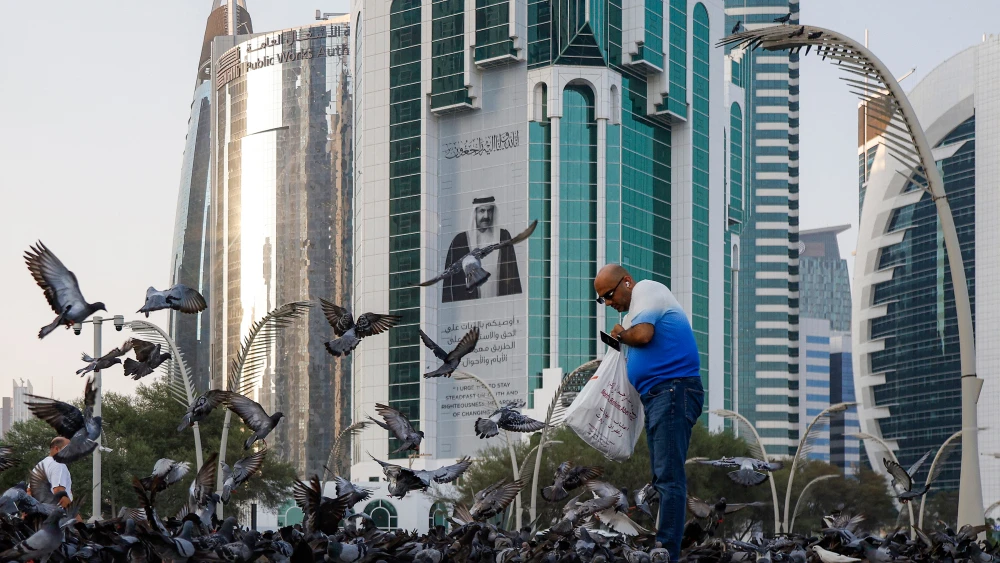
Israel has gradually awakened to the danger posed by Qatar, and that understanding has now gained broad public acceptance. Turning that recognition into policy will require careful planning, a deeper understanding of the Qatari threat, and a coherent strategy for countering it.
The case for treating Qatar as an enemy state rests on Doha’s sustained pattern of action against Israel. Doha hosts the Hamas leadership and controls, directly or indirectly, a broad media ecosystem that includes Al Jazeera, beIN Sports, Middle East Eye, AJ+ and Middle East Monitor.

It has sought to shape Western media coverage, financed anti-Israel education in Western schools and universities, assisted organizations promoting boycotts of Israel, supported international legal initiatives against it, and backed anti-Israel campaigns in the arts and cultural sphere, including the 2026 Venice Biennale.
Other reports have linked Qatar to efforts to derail Israeli defense deals in Germany, influence United States policy toward Iran, and strengthen hostile organizations such as Hamas and Hezbollah. Some reports have alleged that Qatari money has reached not only Hamas but also Hezbollah and Iran’s Islamic Revolutionary Guard Corps.
Recognizing the danger posed by Qatar is only a starting point; what Israel does with that recognition matters just as much.
Qatar operates through an extensive network spanning the West, the Middle East, the Balkans and Asia, so slogans and tough declarations will not be enough. Dealing with Doha requires a sustained, comprehensive policy effort to chart the interests at stake, identify Qatar’s principal channels of influence and areas of vulnerability, and determine which tools are best suited to each arena. In most cases, the response should rely not on military force but on diplomatic, economic, geopolitical, legal and media instruments.
For nearly three decades, Israeli governments misread both Qatar’s methods and the scale of the challenge it posed. Again and again, Israel accepted short-term gains at the expense of long-term interests without fully reckoning with the strategic price it might eventually pay. Reversing that failure requires a multidimensional strategy, not a new set of slogans.
The Israeli political establishment’s recent change of course is welcome, but it risks replacing complacency with oversimplification. The proposal to designate Qatar as an enemy state has not even begun to resolve the practical questions that would be raised by doing so.
Can Israel continue to depend on Doha as a mediator? How should it treat the formal intelligence and military cooperation that, according to reporting, still exists between the two countries? And what should it do about Qatari capital invested indirectly in Israel through international entities—for example, through Jared Kushner’s investment funds?
Any decision to designate Qatar an enemy state must grapple with the geopolitical implications illustrated by this last example. It also exposes a deeper danger in Qatar’s mediation model. Doha has made the advancement of personal and public economic interests an integral part of the process. That added layer of complexity calls for a carefully framed designation that identifies the risks involved rather than reducing the issue to a slogan.
The emerging election debate over Qatar could become an opportunity to build a broader strategic doctrine. Declaring Qatar an enemy state would be only the beginning.
Israel would then need legislation, institutions and planning mechanisms that would enable mapping of Qatari influence, identification of vulnerabilities and risks, and dealing with the complexities of the Qatari issue through disciplined, consistent, long-term policy. Declarations alone will accomplish little.
Legislation should therefore establish a single body responsible for integrating every aspect of the Qatari challenge. Qatar is a highly centralized state. Israel cannot confront it through a fragmented system in which each ministry and intelligence agency develops its own policy. The response must combine several instruments and shift the emphasis as circumstances require, at times toward economic pressure, at others toward legal, media, intelligence or diplomatic tools.
None of this calls for kinetic action or offensive threats. Israel should proceed carefully, combining measures designed for immediate effect with others intended to shape the longer term. It must also recognize that Qatar’s standing in Washington is stronger than ever. The most promising strategy may therefore be to learn from the highly successful Qatari playbook.
Qatar has repeatedly revealed how sensitive it is to targeted pressure, even when the measure itself appears modest compared with the scale of Doha’s influence, as was the case for example with a Times Square billboard in 2024 aimed at Sheikha Moza bint Nasser of Qatar, the mother of Emir Tamin bin Hamad Al Thani, that appeared with a picture of the Israeli hostage Kfir Bibas and called on her to “release the hostages,” and with critical coverage in The New York Times.
Rather than launch broad public diplomacy campaigns aimed at damaging Qatar’s reputation—campaigns that are unlikely to work and would risk a confrontation with a Washington establishment protective of Doha—Israel could follow Qatar’s example and target specific businesses and institutions linked to Qatar in the U.S. and Europe. Qatar has long embedded commercial interests in its diplomatic relationships, especially in its mediation efforts. Israel can turn that same logic against it.
The objective should not be a frontal assault on the center of Qatari power, but pressure on the smaller nodes through which that power operates. Measures such as closing a campus, blocking a transaction, or exposing a problematic conference would impose greater and more painful costs on Qatar, and illustrate how Israel can outmaneuver Doha without provoking an escalation with the U.S. American administrations have often turned a blind eye to hostile coverage of the U.S. by Qatari media, and to other subversive activities.
Israel can invoke that precedent to justify a similarly strategy vis-à-vis Qatar. Jerusalem should argue that restraining Qatar would also serve Washington by encouraging more balanced Qatari conduct toward the U.S. administration. To build that case, Israel should work with the more forceful voices in American public debate and with figures close to the administration who have already warned of the Qatari threat.
A sophisticated, well-coordinated campaign could restrain and weaken a dangerous state that acts against Israel on multiple fronts and has, for the most part, faced no meaningful response.
Originally published by the Jerusalem Institute for Strategy and Security.



Get the latest updates in our WhatsApp group.




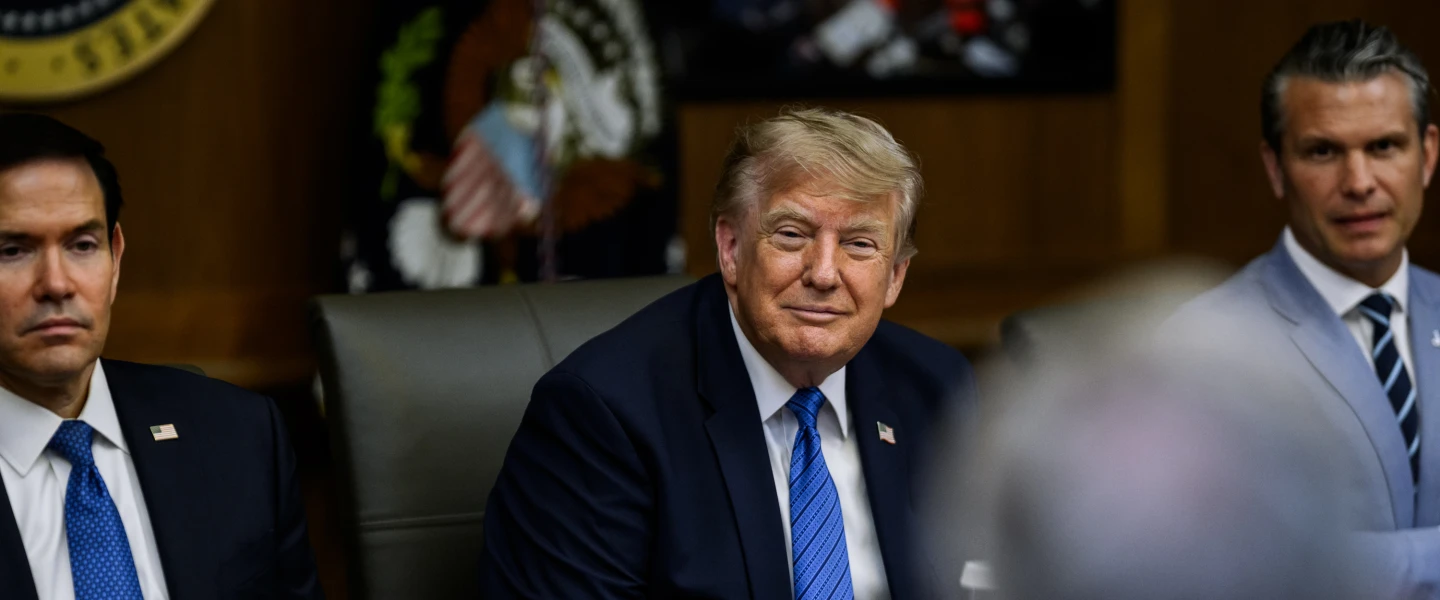


Israel is increasingly recognizing Qatar as an enemy state due to its sustained actions against Israeli interests, including hosting Hamas leadership, controlling anti-Israel media outlets like Al Jazeera, and financing anti-Israel education and boycotts. While this recognition is growing, translating it into effective policy requires a comprehensive, multidimensional strategy rather than mere declarations. The Jerusalem Institute for Strategy and Security emphasizes that a long-term approach is needed to counter Qatar's extensive network of influence across various regions.
- Israel needs to move beyond slogans and develop a coherent strategy that utilizes diplomatic, economic, geopolitical, legal, and media instruments, rather than military force.
- The strategy must address complex issues such as Qatar's role as a mediator, existing intelligence and military cooperation, and Qatari investments in Israel.
- A single, integrated body should be established to coordinate Israel's response to Qatar's highly centralized operations.
- Israel could learn from Qatar's playbook by applying targeted pressure on specific businesses and institutions linked to Qatar in the U.S. and Europe, rather than engaging in broad public diplomacy campaigns.
© All rights to the original article belong to the source. Din Online shows a headline, an excerpt and a link only. The objectivity rating is computed automatically and is an estimate only.
Discussion
No comments yet — be the first to comment.