Rubio: Progress made in talks to reopen Hormuz, but there’s still some work to do
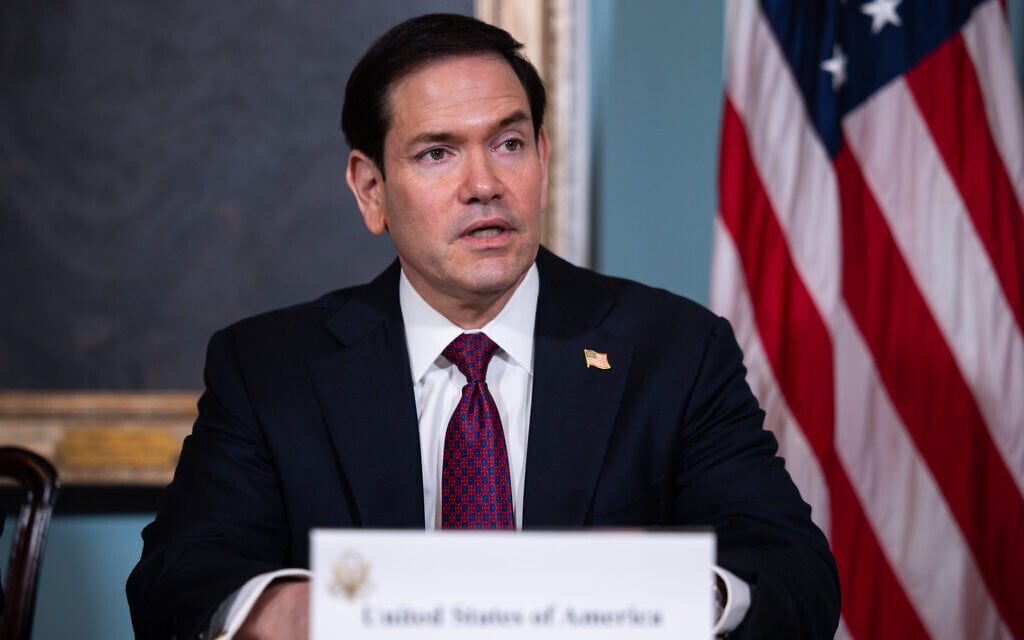
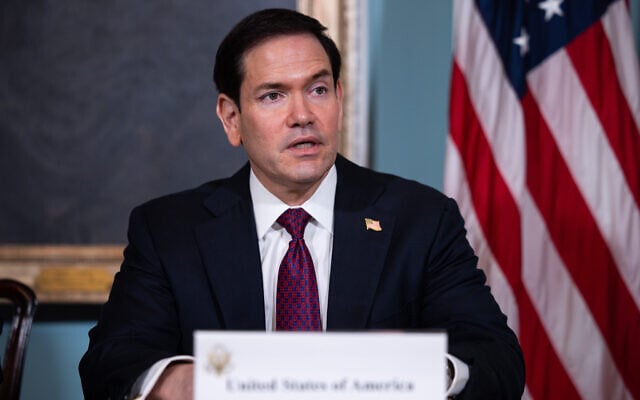
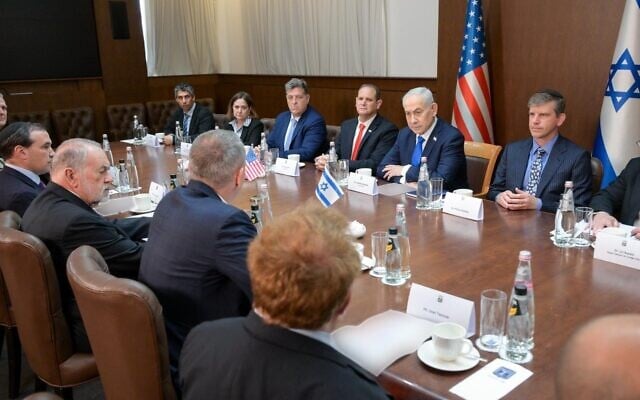
US Secretary of State Marco Rubio on Tuesday said progress had been made on a deal with Iran to fully reopen the Strait of Hormuz, though there still was some work to go, after President Donald Trump and other senior administration officials suggested a deal could be reached in the coming days.
“There’s been progress made in those talks, but not finality yet. We’re hoping that will happen very shortly,” Rubio told reporters at the State Department.
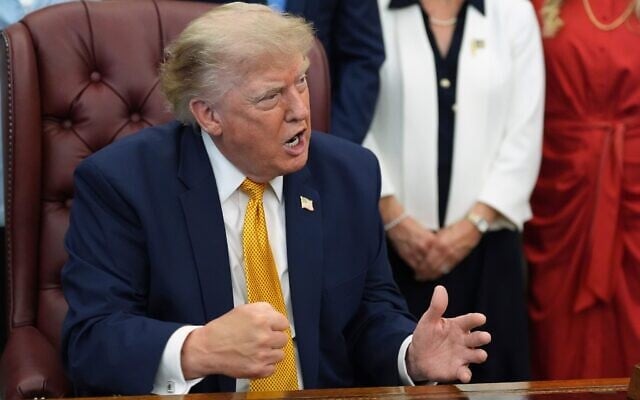
Trump claimed on Saturday that a deal was imminent when he decided to pull back from his latest threat to bomb Iran. Then on Monday, he claimed that a deal could be signed on Tuesday, when his Treasury Secretary Scott Bessent declared the agreement could be sealed on Wednesday.
Rubio reiterated that the agreement under discussion only deals with Hormuz and that an additional deal will need to be signed pertaining to Iran’s nuclear program.
He also said the United States was involved in negotiations between Oman and Iran on increasing traffic through the Strait of Hormuz, as the latter two reported making progress toward a deal.
Under the emerging agreement, ships would enter the Persian Gulf through an Iranian-controlled route and exit through a route controlled by Oman, with service fees charged for providing security and preserving the maritime environment, two regional officials told The Associated Press.
They said negotiations were still underway and that the final agreement could take a different form, with any deal linked to lifting the US blockade on Iran’s ports. The officials spoke on condition of anonymity to discuss the sensitive negotiations unfolding behind closed doors.
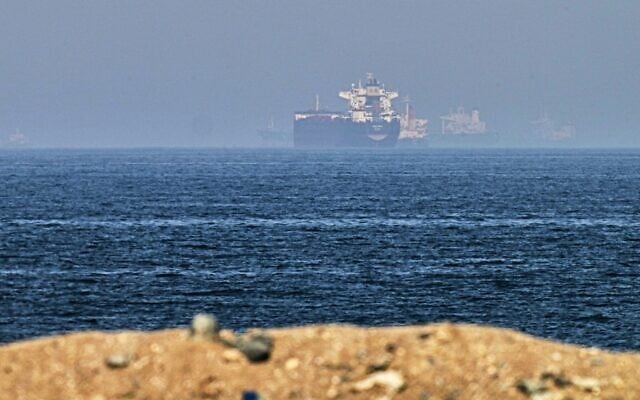
Any agreement formalizing Iran’s control of the strait would mark a significant strategic victory for Tehran. For that reason, the US could seek to block the deal by refusing to lift the blockade. The strait was an open international waterway before the US and Israel attacked Iran on February 28.
Iranian Foreign Ministry spokesman Esmail Baghaei said the bilateral talks with Oman were focused on “establishing safe inbound and outbound shipping lanes,” routes that “uphold sovereign rights while also addressing the national security considerations of both Iran and Oman.”
“The final results of these negotiations will be announced once concluded,” he added, in remarks carried by Iran’s state-run IRNA news agency.
A US official familiar with the negotiations said that any “temporary” routes established through the strait would not involve approvals by Iran or charges. The official, who was not authorized to comment publicly and spoke on condition of anonymity, said the US remains committed to returning to the status quo in which “no party controls the lanes or the ability to transit through them.”
Qatar, which has been mediating negotiations, confirmed that diplomatic efforts were ongoing but that no direct Iran-US talks were planned.
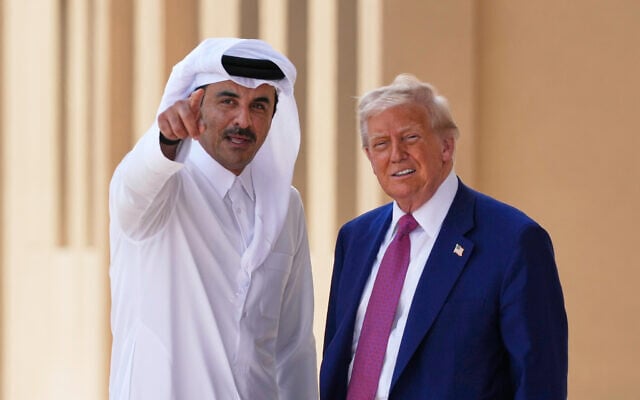
Its leader, Sheikh Tamim bin Hamad Al-Thani, spoke with Trump by phone on Tuesday, with Doha saying they discussed “efforts to deescalate tensions.”
Earlier Tuesday, Britain’s maritime security agency UKMTO said an unnamed cargo vessel had been struck by an “unknown projectile” in the Strait of Hormuz off the coast of Oman.
Iran continues to impose an effective blockade on the strait and insists ships coordinate crossings with it.
The disruptions in Hormuz have only placed greater importance on shipping lanes through the Red Sea, where Iran-backed Houthi rebels in Yemen have declared a maritime blockade on Saudi Arabia.
The Saudi Red Sea port of Yanbu has enabled it to keep up shipments to global markets by circumventing Hormuz entirely.
But since the Houthis announced their blockade, they have claimed attacks on multiple ships they say are in violation.
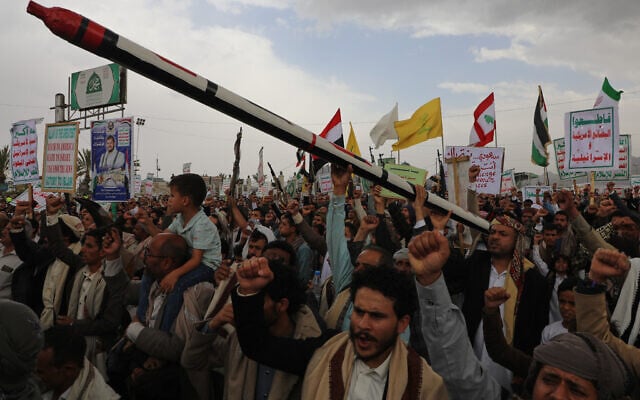
On Tuesday, the Indian ship MSV Faize Noore Oliya sank in the Red Sea off Yemen following an unattributed attack, with all of its crew rescued.
The Red Sea is a gateway to the Suez Canal, and a previous campaign of Houthi attacks on commercial vessels during the Israel-Hamas war in Gaza forced shippers to instead take lengthy detours around the southern tip of Africa.
Times of Israel staff contributed to this report.

The war with Iran has been draining for all of us in Israel. But when I heard about a high casualty incident – ballistic missile impacts in Arad and Dimona that left nearly 200 people wounded – I drank a cup of coffee, packed a bag, and headed south.
There, I spoke with Shilgit, the head of an after-school program for underprivileged youth. Standing outside her destroyed center, Shilgit said it was a miracle that no children were hurt and spoke about the community coming together in the hours since.
As a Times of Israel reporter, I’m committed to telling stories of resilience like Shilgit’s. But my colleagues and I can't do this alone. If you value work like this, please consider joining our reader support group, The Times of Israel Community. Your financial support is essential to keep real human reporting like this going.
— Stav Levaton, military reporter

We’re really pleased that you’ve read X Times of Israel articles in the past month.
That’s why we started the Times of Israel – to provide discerning readers like you with must-read coverage of Israel and the Jewish world.
So now we have a request. Unlike other news outlets, we haven’t put up a paywall. But as the journalism we do is costly, we invite readers for whom The Times of Israel has become important to help support our work by joining The Times of Israel Community.
For as little as $6 a month you can help support our quality journalism while enjoying The Times of Israel AD-FREE, as well as accessing exclusive content available only to Times of Israel Community members.
Thank you, David Horovitz, Founding Editor of The Times of Israel





US Secretary of State Marco Rubio announced on Tuesday that “progress made” in negotiations to fully reopen the Strait of Hormuz, though a final agreement has not yet been reached. President Trump and other officials had previously suggested a deal was imminent. The emerging agreement, which involves Oman and Iran, would establish Iranian-controlled entry and Omani-controlled exit routes, with service fees for security and environmental preservation. However, a US official stated that any “temporary” routes should not involve Iranian approvals or charges, emphasizing a return to the status quo where no party controls transit. Rubio clarified that this deal is separate from discussions on Iran's nuclear program. Meanwhile, an unnamed cargo vessel was struck by an “unknown projectile” in the Strait of Hormuz, and an Indian ship sank in the Red Sea following an unattributed attack, highlighting ongoing maritime security concerns.
© All rights to the original article belong to the source. Din Online shows a headline, an excerpt and a link only. The objectivity rating is computed automatically and is an estimate only.
Discussion
No comments yet — be the first to comment.