Saa'r: Colombia’s recognition of Israeli sovereignty over Golan Heights ‘historic'
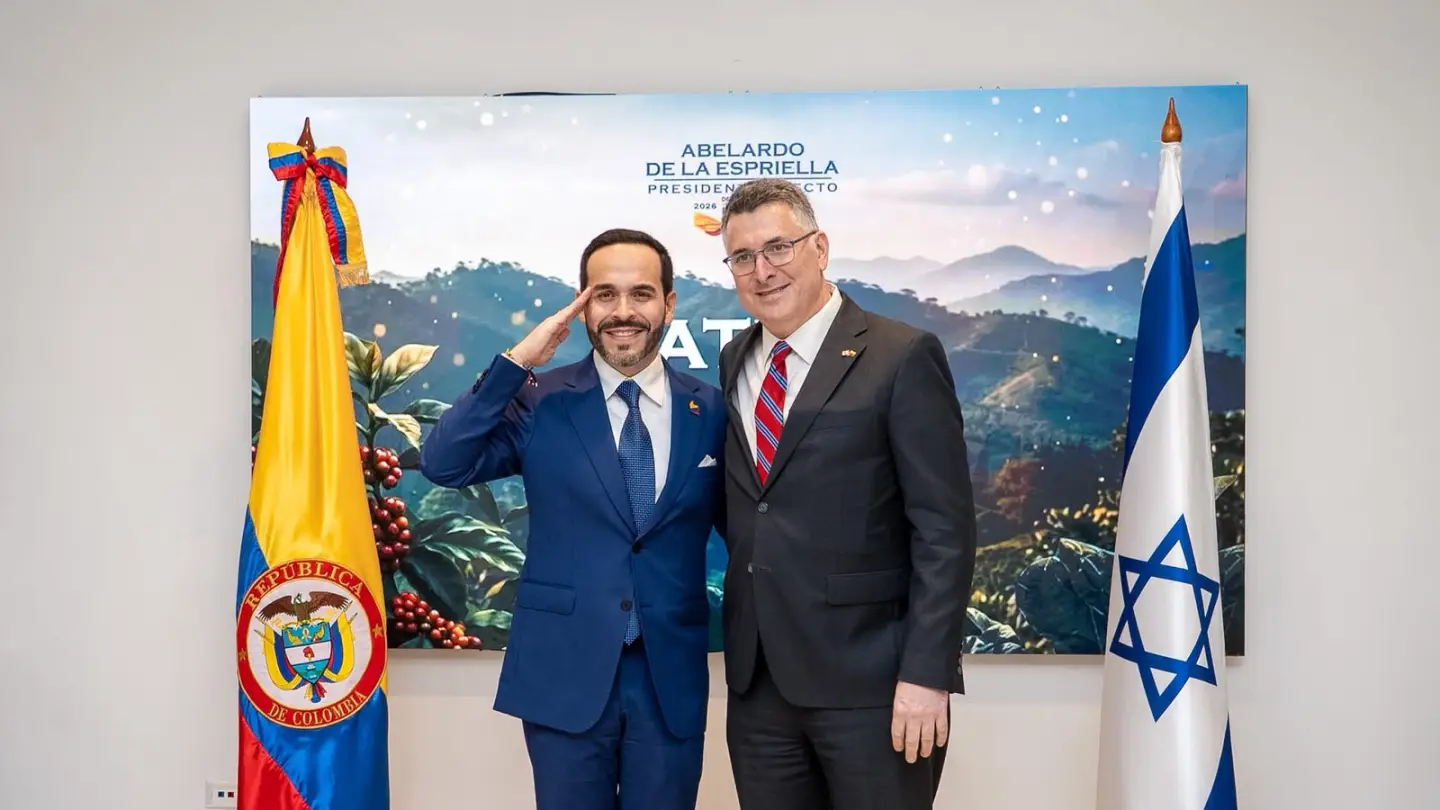

Israeli Foreign Minister Gideon Sa’ar welcomed on Monday Colombia’s announcement recognizing Israel’s sovereignty over the Golan Heights, calling it a “historic decision.”
Israel’s top diplomat said in a statement that the decision followed his meeting last week with Colombia’s newly elected president, Abelardo de la Espriella. Sa’ar visited the Latin American country to attend the presidential inauguration ceremony.

“I will continue working so that more countries join the United States, under [U.S.] President [Donald] Trump, and Colombia, under President de la Espriella, in recognizing Israeli sovereignty over the Golan Heights, where Israeli law was applied 45 years ago,” Sa’ar said.
Bogota said in an official statement, “In light of the continuing regional instability in the Middle East, and considering the strategic importance of the Golan Heights to Israel’s security, the government of Colombia recognizes Israel’s sovereignty over this territory, as well as the state’s right to defend itself against external threats.”
It added, “For decades, Israel has faced persistent and existential security challenges along all of its borders. These threats have intensified significantly in recent years, culminating in the horrific terrorist attack of Oct. 7, [2023,] which demonstrated both the severity and the evolving nature of the dangers facing the Israeli people. Within this regional security context, Colombia recognizes that Israel’s continued control and sovereignty over the Golan Heights constitutes an essential component of its national security and its ability to defend its citizens and safeguard their security.”
The decision regarding the Golan Heights is but one of a series of diplomatic developments between Israel and Colombia, according to Israel’s Foreign Ministry.
The new arrangements agreed between Sa’ar and the Colombian leadership include the full and immediate restoration of relations between the countries; immediate appointment of ambassadors; relocation of Colombia’s embassy to Jerusalem; abolition of visa requirements between the countries; a free-trade agreement; Colombia’s withdrawal from South Africa’s case against Israel at the International Court of Justice and from the “Hague Group;” and tightening of collaborations in diplomatic, security and economic matters.
Earlier on Monday, Sa’ar spoke over the phone with his Colombian counterpart, Omar Bula Escobar, during which he expressed solidarity with Colombia and its people following the recent earthquake and offered Israel’s assistance, the ministry said.
The moves represent a dramatic reversal from the policies of defeated President Gustavo Petro, who severed diplomatic ties with Israel during the war against Hamas in Gaza and repeatedly criticized the government of Prime Minister Benjamin Netanyahu.
Colombia had long been considered one of Israel’s closest partners in Latin America, maintaining extensive cooperation in trade, agriculture and security before relations deteriorated under Petro.
De la Espriella’s election signals a return to that partnership. During his campaign, he pledged to restore ties with Israel and move Colombia’s embassy to Jerusalem.
The rapprochement between Israel and Colombia is part of Israel’s broader initiative to strengthen its ties with Latin America.
As part of this effort, 2026 has been designated by the Israeli Foreign Ministry as the “Year of Latin America,” establishing a strategic focus on expanding Israel’s engagement across the region.




Get the latest updates in our WhatsApp group.
Test yourself on one question pulled from JNS reporting. New puzzles daily.





Colombian President Abelardo de la Espriella announced Colombia's recognition of Israeli sovereignty over the Golan Heights, a decision Israeli Foreign Minister Gideon Sa’ar called "historic." This follows Sa'ar's meeting with de la Espriella last week. Colombia stated that "Israel’s continued control and sovereignty over the Golan Heights constitutes an essential component of its national security." This move is part of a broader diplomatic rapprochement between Israel and Colombia, reversing the policies of the previous Colombian administration.
- Other agreements include the immediate restoration of full diplomatic relations, appointment of ambassadors, relocation of Colombia’s embassy to Jerusalem, abolition of visa requirements, and a free-trade agreement.
- Colombia will also withdraw from South Africa’s case against Israel at the International Court of Justice and from the “Hague Group.”
- These developments signal a return to the strong partnership Israel and Colombia shared before relations deteriorated under former President Gustavo Petro.
- The Israeli Foreign Ministry has designated 2026 as the "Year of Latin America" to strategically expand engagement across the region.
© All rights to the original article belong to the source. Din Online shows a headline, an excerpt and a link only. The objectivity rating is computed automatically and is an estimate only.
Discussion
No comments yet — be the first to comment.