Segalovitz will only join Ra’am if it recognizes Israel as a Jewish state
Shalom Yerushalmi is the political analyst for Zman Israel, The Times of Israel’s Hebrew current affairs website
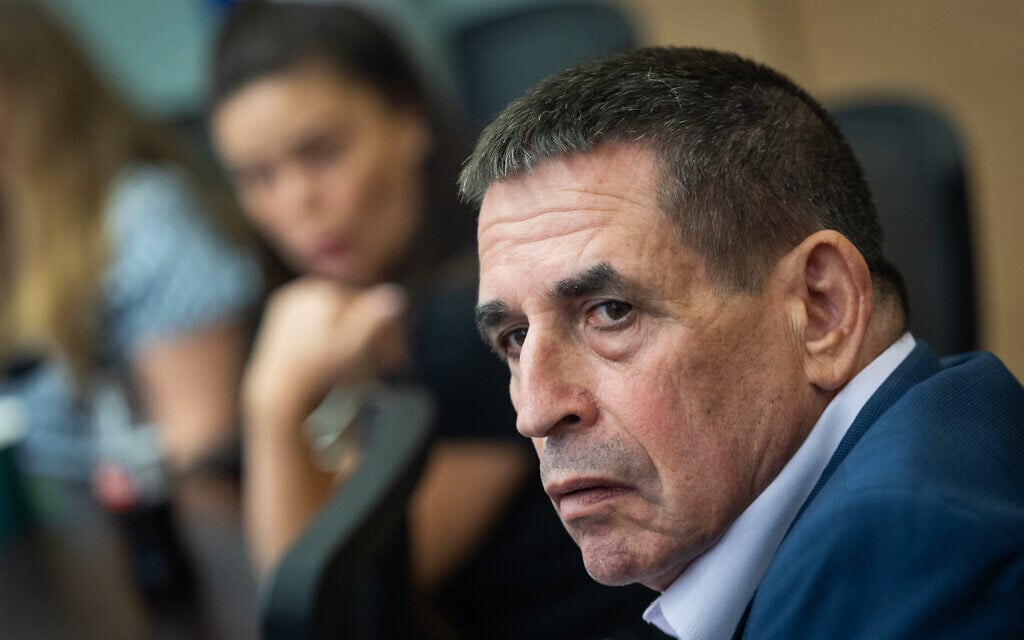
During his appearances at various parlor meetings, MK Yoav Segalovitz likes to talk about Soroka Medical Center – the sprawling hospital in southern Israel renowned for serving a deeply mixed Jewish and Bedouin population. What happens at the hospital helps him explain the ideological vision he is currently pursuing.

“At Soroka Medical Center, in every department, there is no distinction between Jews and Arabs,” Segalovitz tells his audiences. “The doctors come from both peoples, and so do the patients. No one waves their identity around. Everyone shares the same fate. Everyone is Israeli.”
Segalovitz, a former police assistant commissioner (a rank equivalent to a major general in the IDF), deputy security minister and currently a Knesset member in Naftali Bennett and Yair Lapid’s centrist Together alliance, intends to replicate the reality of Israel’s hospitals within Arab Israeli society. He envisions an intercommunal partnership that could grow into a watershed political event, breaking once and for all the paradigm in which an entire population is excluded from the state’s decision-making process.
In other words, Segalovitz is considering joining the Islamist Ra’am party to demonstrate and embody a shared capacity to jointly run the country and the government. The chances of this coming to fruition are indeed slim, but they exist, and Segalovitz intends to pursue the initiative all the way.
Someone suggested to me over the weekend the historical figure Segalovitz may be seeking to emulate: legendary defense minister Moshe Dayan, who sensationally crossed the aisle from the left-wing Labor Party to Menachem Begin’s right-wing Likud after the 1977 election in order to advance the historic peace agreement with Egypt.
For now, no agreement has been signed between Ra’am leader Mansour Abbas and Segalovitz, and the obstacles are immense.
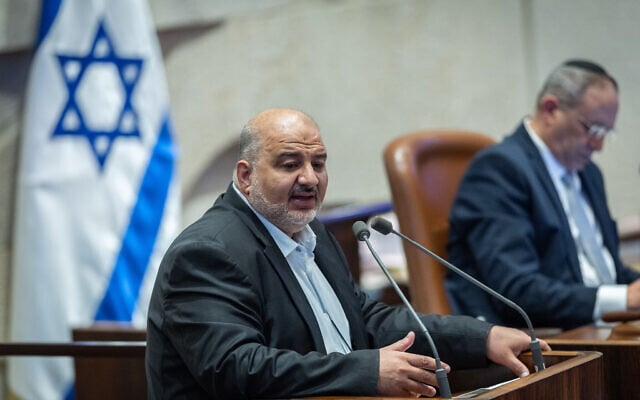
Segalovitz intends to generate a revolution within Ra’am. He will not move forward with his plan, nor will he join a party that does not recognize Israel as a Jewish and democratic state and support national civilian service – an alternative to the military draft – for Arab citizens of Israel. It is safe to assume that these thorny issues came up during the in-depth discussions Segalovitz and Abbas have held in recent months, and they are far from simple.
If Abbas does eventually announce his support for national civilian service for Arab citizens, Segalovitz will be able to chalk up a massive Zionist achievement – certainly as compared to the ultra-Orthodox parties, which are unwilling to accept even this type of non-military conscription. That is exactly the moment Segalovitz is waiting for.
Abbas promised Segalovitz he would carry out an internal revolution within Ra’am’s ranks, severing the party from the Islamic Shura Council (its religious guiding body), establishing alternative secular institutions, and holding primaries at the movement’s convention on August 22.
These dramatic moves are naturally encountering considerable internal opposition. Over the weekend, Abbas published a reserved statement that somewhat cooled the enthusiasm surrounding the entire initiative.
“Ra’am is currently focused on the primaries and completing the establishment of its independent institutions. We will only discuss the matter of independent candidates further down the road, and in accordance with the political and ideological reality,” Abbas wrote.
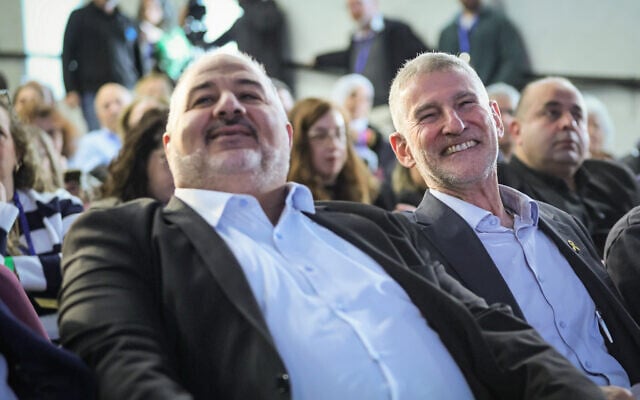
Segalovitz is indeed one of the most popular Jewish figures in the Arab sector – Abbas even has internal polling to support this – largely due to his success as a deputy minister in the war against organized crime in Arab society.
But Segalovitz remains a decidedly mainstream Israeli and Zionist, in stark contrast to the far-left Jewish lawmakers who have partnered with Arab parties over the years. Ra’am has yet to fully come to terms with this kind of alliance with a former senior police officer, considering the police force is historically one of the most detested institutions on the Arab street.
The softening of attitudes needs to happen on both sides, and it is not certain it will succeed.
In their talks, Segalovitz and Abbas raised the possibility that their alliance might actually boost voter turnout in the sector and increase Ra’am’s power, as voters cling to a beacon of hope coming from an unexpected direction with promising implications.
Beyond that, a Ra’am-Segalovitz ticket could sharply clarify the distinctions between Ra’am and the other Arab factions – the communist-aligned Hadash, the secular-nationalist Balad, and Ta’al.
Segalovitz’s presence in Ra’am could also temper the opposition within the broad anti-Netanyahu “change bloc” to adding the Islamist party to a post-election coalition, and perhaps that is the entire point. Right-wing bloc leaders like Naftali Bennett and Yisrael Beytenu’s Avigdor Liberman have declared they will only sit with Zionist parties; Segalovitz could stand before them and ask, “Who is more Zionist than I am?”
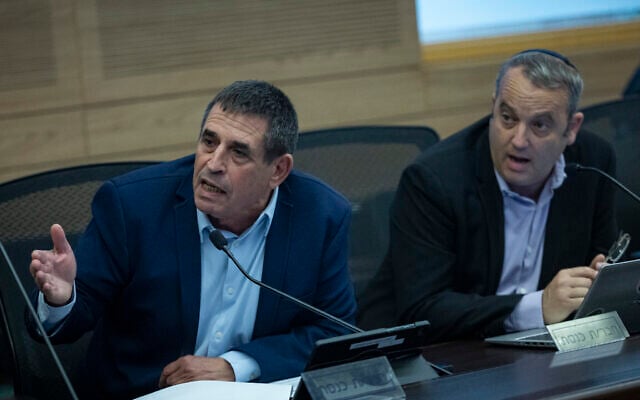
In various conversations, Segalovitz has argued that the ultra-Orthodox factions are less Zionist than the Ra’am party in which he would be a partner, if and when that happens. In these talks, he recounts Abbas’s visits to families of hostages held in Gaza – families that representatives from the far-right Religious Zionism and ultra-Orthodox parties did not visit.
Furthermore, both Bennett and Liberman already sat with Abbas and Ra’am in the previous 2021–2022 iteration of the change government. This time, it would therefore be even easier to assemble a coalition majority with a Ra’am bolstered by Segalovitz. Prime Minister Benjamin Netanyahu also famously negotiated with Abbas and Ra’am to form a government in 2021, an effort that ultimately failed only because of a veto by Religious Zionism leader Bezalel Smotrich.
Political commentator Hanan Crystal assessed on Sunday that the right-wing parties, which have already started smearing the move, will inevitably try to have Ra’am disqualified by the Central Elections Committee as a terror-supporting party.
“The coalition has a majority on the Central Elections Committee. We must hope that the committee chairman, Supreme Court Justice Noam Sohlberg, will not lend a hand to this disqualification move.” If Sohlberg opposes disqualification, this “would make it easier for the High Court of Justice to overturn such a decision if it is made,” Crystal said.
Segalovitz is currently on vacation in Bangkok with his wife, Dorit, and will return to Israel on Tuesday to step back into the political maelstrom created by his possible candidacy. Throughout the weekend, both positive and negative repercussions followed him all the way to Thailand.
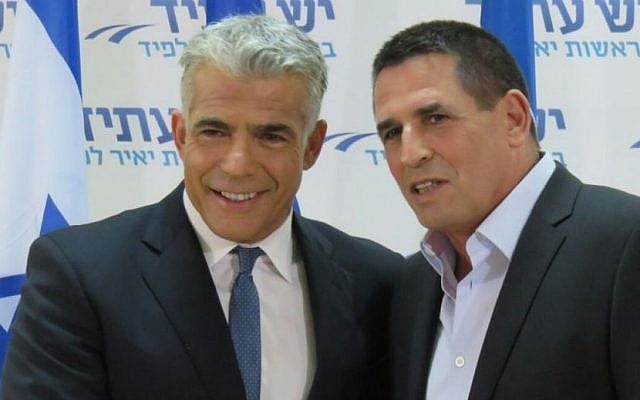
Yesh Atid has welcomed the initiative, and it is safe to assume that party chairman Lapid is fully privy to the discussions and deliberations.
A senior Yesh Atid official told me on Sunday: “It is an excellent idea. Ra’am has taken steps to distance itself from the Muslim Brotherhood and recognizes that it exists in a Jewish state. Ra’am can be a partner in the government.”
At this moment, the position of Bennett – chairman of the “Together” partnership with Yesh Atid and the new alliance’s candidate for prime minister – remains unclear, as does the position of former IDF chief Gadi Eisenkot, who is currently the change bloc’s leading candidate for prime minister.

The war with Iran has been draining for all of us in Israel. But when I heard about a high casualty incident – ballistic missile impacts in Arad and Dimona that left nearly 200 people wounded – I drank a cup of coffee, packed a bag, and headed south.
There, I spoke with Shilgit, the head of an after-school program for underprivileged youth. Standing outside her destroyed center, Shilgit said it was a miracle that no children were hurt and spoke about the community coming together in the hours since.
As a Times of Israel reporter, I’m committed to telling stories of resilience like Shilgit’s. But my colleagues and I can't do this alone. If you value work like this, please consider joining our reader support group, The Times of Israel Community. Your financial support is essential to keep real human reporting like this going.
— Stav Levaton, military reporter

We’re really pleased that you’ve read X Times of Israel articles in the past month.
That’s why we started the Times of Israel – to provide discerning readers like you with must-read coverage of Israel and the Jewish world.
So now we have a request. Unlike other news outlets, we haven’t put up a paywall. But as the journalism we do is costly, we invite readers for whom The Times of Israel has become important to help support our work by joining The Times of Israel Community.
For as little as $6 a month you can help support our quality journalism while enjoying The Times of Israel AD-FREE, as well as accessing exclusive content available only to Times of Israel Community members.
Thank you, David Horovitz, Founding Editor of The Times of Israel




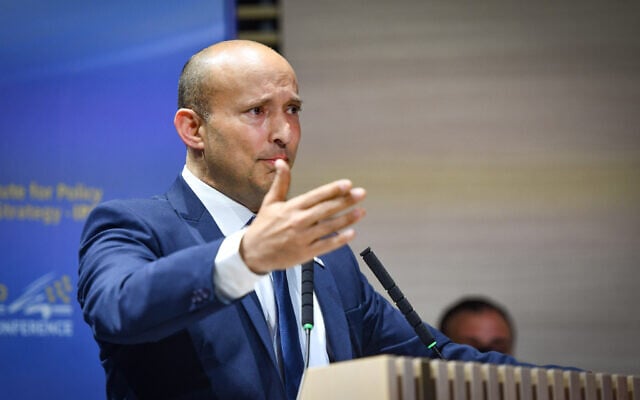





MK Yoav Segalovitz is considering joining the Islamist Ra’am party, aiming to foster intercommunal partnership and integrate Arab society into Israel's decision-making process. Segalovitz, a former police assistant commissioner, insists on several conditions for this alliance: Ra’am must recognize Israel as a Jewish and democratic state and support national civilian service for Arab citizens. Ra’am leader Mansour Abbas has reportedly promised internal reforms, including severing ties with the Islamic Shura Council and establishing secular institutions. However, Abbas's recent statement indicated that discussions on independent candidates would occur later, reflecting internal opposition. Segalovitz believes this alliance could boost Arab voter turnout and distinguish Ra’am from other Arab factions, potentially easing its inclusion in future coalitions. The initiative has garnered support from Yesh Atid, with a senior official stating, “Ra’am can be a partner in the government.”
© All rights to the original article belong to the source. Din Online shows a headline, an excerpt and a link only. The objectivity rating is computed automatically and is an estimate only.
Discussion
No comments yet — be the first to comment.